

Affiliate & Media Buying
Bid Adjustments by Device & Geo: Modifiers That Move ROAS
A flat bid across every device and geo is subsidizing your worst segments with your best. Here's how to build device and geo modifiers that actually move ROAS.
A flat bid across every device and geo is subsidizing your worst segments with your best. Here's how to build device and geo modifiers that actually move ROAS.

70/20/10 gets repeated as gospel, but the right testing vs scaling split depends on your winner inventory and fatigue rate, not a fixed percentage. Here's the framework instead.

Performance across publishers in the same native campaign can vary 5x or more. Publisher-level bidding is the underused lever that turns that variance into profit instead of waste.

Q4 pushes native ad CPCs up across most verticals as holiday and year-end budgets compete for the same inventory. Ecommerce and finance advertisers feel it hardest.

The CPC on your network dashboard is only one line item. Landing pages, creative refresh cycles, tracking tools and research time all add up to the real cost of running native ads.

Ten dollars a day on native ads buys a small trickle of clicks, enough to check your tracking and rough CPC, but not enough to declare an offer dead or profitable on day one.

Automated CPA bidding can work on native networks, but native auctions are thinner than search or social, so the volume threshold for it to work is higher than most media buyers expect.

Most bid mistakes come from moving too often on too little data. Here's the cadence, thresholds and signals that separate a real trend from normal auction noise.

Native ad pricing isn't your bid amount, it's a live auction shaped by predicted CTR, floor prices and competing demand. Here's the mechanics behind why your CPC moves.

The learning phase is when a native campaign's delivery is least predictable, and also when media buyers do the most damage by touching it too much. Here's how to survive it.

CPC and CPM solve different problems. Here's how to pick the right one for a native campaign, plus how eCPC and smart bidding blend the two.

One look at a competitor's ad is a photograph. Watching it change over weeks is a video, and the video is what actually shows you their test results.

Optimization has a ceiling; fresh creative supply doesn't. Here's what a creative volume strategy actually looks like, and how much volume is enough.

Judging a creative test too early is the most expensive mistake in native media buying. Here's how to size your testing budget around conversions, not guesswork.

Coming up with a new angle isn't a creativity problem, it's a framework problem. These nine repeatable structures, each with a live example, cover most of what actually runs on native.

Pageviews and bounce rate are the wrong numbers to watch on a pre-lander. Here's what actually predicts whether one is converting, and how to set up tracking that separates the pre-lander event from the offer event.

Forget the benchmark number you saw in a forum post. Here's how to separate ad CTR, prelander CTR and full-funnel CVR, and build a baseline from your own traffic.

Rented agency ad accounts solve a real access problem, but they shift ownership, appeal rights and payment risk onto you while the agency keeps control. Here's what actually goes wrong.

CPA marketing isn't a rival to affiliate marketing, it's a payout structure inside it. Here's how CPA, CPL and revshare actually differ, and which one fits native ad traffic best.

Media buying is one of the few marketing careers you can start without a job offer. Here are the two real paths in, the skills that matter, and how to build proof of skill on a small budget.

Should a new media buyer start in Tier 1 or Tier 3? Here's the budget-based framework experienced buyers actually use, plus how to scale between tiers once an angle proves out.

The channel isn't saturated, but plenty of specific vertical-geo-angle combinations are. Here's how to tell which situation you're actually in before you spend a testing budget finding out.

Native ad affiliate income spans a huge range, from steady losses during testing to real full-time revenue for a small top tier. Here's what actually separates those outcomes.

Buying cheap native traffic and monetizing it with AdSense display ads still works for a narrower set of buyers than it used to. Here's what changed, what still holds up, and the alternative most media buyers moved to.

Whitelisting locks your native campaign to publisher placements you've already proven convert, instead of letting the algorithm spread budget across untested inventory. Here's when that trade-off pays off.

There's no fixed number of campaigns that guarantees profitability, but there is a realistic range and a way to test that actually produces usable signal. Here's the framework.

Not every affiliate network fits native traffic. Here's what actually separates a network worth joining for Taboola, Outbrain or MGID campaigns from one that will waste your time.

Paid traffic pays off in affiliate marketing only when the payout, conversion rate and testing budget line up on paper first. Here's the framework for checking your own numbers before you spend.

Most swipe files die within a month because they're just screenshots with no context. Here's how to build one organized by pattern, with metadata attached, that you'll actually reopen.

Finding out about a new competitor by accident means you're already weeks behind. A fixed weekly check on your category's ad inventory closes that gap.

Search volume tells you people are curious. Ad intelligence tells you whether anyone has found a profitable way to advertise into that curiosity. Here's how to check before you spend.

Tier-2 native networks carry a fraction of Taboola or Outbrain's inventory, which cuts both ways. Here's the real size gap, when smaller networks pay off, and how to test one without wasting budget.

There's no fixed CPC for the Microsoft Audience Network. Here's how its auction actually prices your ads, and what the live data shows about demand.

Yahoo doesn't publish one universal DSP minimum spend figure. Here's what actually determines it and how to get a real answer before you budget.

No published minimum, but direct and agency access carry very different practical floors. Here's how to budget a real test on MediaGo.

Two ways in: direct self-serve signup or an agency relationship. Here's what each requires and which one actually suits your budget and vertical.

MediaGo runs like Taboola or Outbrain but with its own publisher footprint and vertical mix. Here's what advertisers need to know before testing it.

There's no published Revcontent rate card. Here's how the bid auction, floors and geo tiers actually shape what you pay, with realistic ranges to plan around.

Revcontent isn't a smaller Taboola. It's a different audience with its own winning verticals, its own review quirks, and its own budget math for affiliates.

Revcontent traffic quality is inconsistent by design, some placements convert as well as any premium native network, others are pure volume filler. Here is how to tell them apart before you spend.

MGID and Outbrain get lumped together as native networks, but the inventory, the verticals and the cost structure behind each one are genuinely different. Here is what the data shows.

Scaling an Outbrain campaign by just raising the daily budget is the fastest way to blow up your CPA. Here is the sequence that holds performance while spend goes up.
Outbrain can work for B2B, but as a top-of-funnel awareness channel, not a direct lead engine. Here's what content angles convert, realistic cost expectations, and where it fits alongside other B2B channels.
Outbrain conversion tracking is simple to set up and easy to quietly break. Here's pixel vs postback tracking, a step-by-step setup, and the redirect and attribution mistakes that hide real performance.

Outbrain can work for ecommerce, but it's a discovery channel built for curiosity-driven creative, not purchase-intent traffic. Here's what formats, angles, and tracking setups actually hold up.

Section blocking stops future spend on Outbrain publishers that never convert. Here's how to find the data, build a block list without guessing, and know when whitelisting is worth the reach you'll lose.

Outbrain ranks ads on predicted value, not bid alone, so creative and section-level cuts move your CPC more than the bid field does. Here is the order of operations that works.

A working reference for Outbrain's image ratio, headline length, ad formats, and the moderation rules that decide whether a creative gets approved or rejected.

Outbrain's bidding runs on manual CPC, Conversion Bid Strategy (three modes), and Engagement Bid Strategy. Here is how each works and which one fits your account's data volume.

Outbrain manufactures curiosity on publisher pages; Google Ads captures intent that already exists. Here is where each channel wins, and how performance buyers sequence the two together.

Outbrain Amplify is the self-serve side of Outbrain's ad platform, where any advertiser can fund a budget and bid on native placements without a sales rep. Here is how it works end to end.

Scale a winning Taboola campaign the wrong way and CPC climbs fast. Here's the staged budget-increase method, horizontal vs vertical scaling, and the signs you're pushing too hard.

Taboola offers two ways in: self-serve Backstage with no fixed minimum, or a managed account with a dedicated strategist and a higher budget commitment. Here's how to pick based on your spend and goals.

Whether Taboola fits a lead-gen model, how to set up a campaign for it, realistic cost expectations, and what to do about lead quality being colder than search traffic.
Taboola Smart Bid predicts conversion likelihood per impression and bids accordingly, but it needs real conversion volume to work. Here's when to trust it and when to stay manual.

Native ad targeting isn't one mechanism, it's five or six overlapping layers: contextual, interest, retargeting, geo, device and schedule. Here's how each one actually works.

CTR alone will mislead you. Here's the full metric stack for measuring native advertising, plus the one signal, ad longevity, that doesn't exist in search or social reporting.

Native CPCs run lower than Facebook or Google because you're bidding on attention instead of intent, across far more inventory. That's also exactly why a cheap click can still be a wasted one.

Native ads are more forgiving to start with than Facebook or Google, but the format's simplicity hides real work in angle testing, compliance, and patience.

Native buys you cheap, context-driven reach at the cost of targeting precision and creative consistency. Here's a practical checklist for when that trade is worth making, and when it isn't.

CTR benchmarks vary too much by context to answer this honestly. Observed run length is the better proof: advertisers don't keep funding creative that isn't converting, and plenty of native ads run for weeks.

Native advertising gets you lower CPCs, format resilience and platform diversification, but weaker targeting, slower testing and a real brand-perception issue come with it. Here's the honest tradeoff.

Incrementality testing isolates how much of a reported conversion an ad channel actually caused, using a holdout group as the baseline for comparison.

Analyzing one competitor ad with AI tells you almost nothing. Here's the batch-based prompt sequence that actually surfaces which hooks and claims a competitor is leaning on.

There's no single best AI ad creative tool, because the job splits into image, video, copy, and research. Here's how media buyers should actually split the stack.

AI-generated ads are genuinely useful for production speed and genuinely bad at inventing a hook from nothing. Here's where they actually help, where they fail, and how to test them fairly.

Eighteen real questions marketers ask about native advertising — what it is, what it costs, whether Taboola works, the labeling rules, and how to research competitors — answered without fluff.
Yahoo DSP, StackAdapt, Zemanta, The Trade Desk, DV360 — the DSPs that genuinely buy native inventory, and a straight decision framework for when a self-serve network is the smarter buy.

What native ad agencies actually do, the four types you'll meet, how pricing models tilt incentives — and the one-hour ad-library audit that verifies an agency's real work.

Agencies need different things from an ad spy tool than solo buyers: multi-vertical coverage, client-ready evidence, shared boards and sane seat pricing. Here are the five workflows where the tool earns its fee, and the checklist to buy against.

Bot traffic doesn't spread evenly across a native campaign — it concentrates in a handful of placements. Here are the placement-level red flags, a weekly detection workflow, and the campaign structure that keeps invalid clicks from mattering.

AI Overviews are ending the search contract: your content feeds the answer, the click never comes. Here is why native advertising is the natural hedge for search-dependent businesses, and a 30-day plan to build it.
OpenAI has the leadership, commerce rails and audience for an ads business. What advertisers can verify today, why the ad unit will likely look native, and five ways to prepare.

Most native creatives die within days; a thin band survives five weeks. How to tell fatigue from a losing creative, and the refresh cadence that keeps winners alive.

Direct linking is faster; a landing page converts cold native traffic. When each one wins, what traced funnels show by vertical, and the math a pre-lander has to beat.

Payout tables don't tell you which CPA networks work on native traffic — redirect-chain evidence does. The affiliate networks whose offers keep running behind live native campaigns, and how to vet an offer before funding it.

Roofing, gutter, solar and remodel offers are a natural native vertical. The live angle library, the zip-code funnel that converts, and the seasonality that times it all.

Casino and betting offers do run on native networks — inside a strict geo-licensing frame. Where iGaming native advertising actually happens, and the compliance rails that keep accounts alive.

Yes, $500 buys a real native ads test — on the right network, in one geo, on one device, measured as data rather than profit. Here is the network-by-network viability call and the phase-by-phase plan.

A stage-gate framework for scaling native campaigns: what each budget level must prove before the next, which levers to pull vertically and horizontally, and the spend signals that say a winner can absorb more.

Buy cheap native clicks, monetize them at a higher RPM — the arbitrage model has shifted from display listicles to RSOC search feeds. Live examples from the ad index show who is running it and how.

Native, search, social, push, pop — ranked for affiliates on the five criteria that matter: scale, click economics, intent, funnel tolerance, and whether you can see the competition before you spend.

On native networks, the placement report moves CPA more than any bid or creative change. Here are the placement-quality signals that matter and a weekly blacklisting workflow that compounds.

One campaign per offer, geo, and device; five to ten creatives built as angle clusters; whitelist campaigns for proven publishers. The working default, plus what creative-count patterns among long-running advertisers reveal.

Voluum, RedTrack, Binom, and Keitaro from a native buyer's seat: cloud versus self-hosted economics, cost sync with Taboola and MGID, redirect latency, and the setup decisions that determine whether your data is trustworthy.

Taboola offers Smart Bid Max Conversions, Smart Bid Target CPA, and Fixed CPC. An independent guide to how each behaves, the data each one needs, and the campaign types where automation fights you instead of helping.

Native ad units are a thumbnail and a headline, so testing order decides how fast you learn. What to test first, how to split traffic on networks that won't do it for you, and what the index shows top advertisers actually rotating.

From December 26 to mid-January, ad auctions get cheap while attention peaks — the fifth quarter. What drives the window, which offers convert, and the launch plan that has to be ready before Christmas.

Native auction prices climb through Q4, cliff-drop after Christmas, and reset through the year — with Medicare enrollment, tax season and resolution season layered on top. A month-by-month planning map for media buyers.

No universal native CVR benchmark survives contact with real funnels. Compute your breakeven conversion rate, sanity-check it against funnel-type patterns, and verify with live longevity data.

MGID and Revcontent will take your $500 seriously; Taboola mostly won't notice it. Where starter budgets actually go furthest in native — and how to spend one without burning it.

The join key between your ad spend and your conversions is a macro. Here is the full Taboola set, the Outbrain, MGID and Revcontent equivalents, and the template mistakes that quietly break tracking.

MGID optimization is a cutting exercise: launch wide, cut widgets on a spend rule, whitelist what converts, then scale through bids and geo clones. The full loop, with the launch settings that make it possible.

Five categories of AI tooling genuinely save media buyers time in 2026 — research copilots on live ad data, variant generation, translation, threshold rules and creative clustering. The rest is a chat box on a dashboard.

Travel is the only native vertical where the price does the selling from inside the headline. Live examples — including a $5,299 vs $5,999 split test caught mid-flight — and how to read a vertical built on creative churn.

SmartNews sells native ads inside one of the most-downloaded news apps in the US and Japan. Here is what the platform offers, what it costs in practice, and who should actually test it.

NewsBreak runs a CPC auction with a $10/day minimum. Here is what buyers report paying, the budget a real test requires, and how costs compare with Taboola and Meta.

Microsoft Audience ads run on a CPC auction where clicks cost a fraction of Bing search. What buyers report paying, how much a fair test needs, and the bid settings that matter.

Baidu's MediaGo hands your budget to a deep-learning bidder on premium portal feeds. We reviewed it against 6,571 live MediaGo creatives: who runs there, what it costs, and who should skip it.

Revcontent promises cheaper native clicks and lighter competition. We judged it against 15,789 live Revcontent ads in our index — the advertiser mix, reported costs, and where the network breaks.

Revcontent publishes no rate card — your CPC comes out of an auction that rewards creative CTR. Here are the ranges buyers commonly report, deposit mechanics, and the budget math for a test that actually concludes.

Site-level reporting, postbacks and cost sync decide whether native campaigns scale or stall. How the major hosted and self-hosted ad trackers compare for native buying.

A working pricing table for native CPCs by geo tier — the bands media buyers commonly report for Tier-1, Tier-2 and Tier-3 countries, and how to validate a geo with live ad data before spending.

Native ads compliance has three layers — FTC rules, network policies, and vertical-specific traps. This checklist audits all three across the ad unit, the pre-lander and the landing page.

Most native campaigns that die in week one fail on tracking or economics, not creative. This seven-phase pre-flight checklist catches those failures before the first dollar is spent.

Same articles, opposite economics. How native advertising and content marketing actually differ in speed, cost and control — and how the best teams run them as one discipline with two throttles.

Search captures demand people already have; native creates demand they didn't know they had. The cost economics, creative demands, and funnel roles of each — and the playbook for running them together.

Taboola sells performance clicks from content feeds; Teads — the merged Outbrain-Teads company — sells premium in-article attention. How the two differ on formats, cost, advertiser mix, and when each is the right buy.

Meta finds your buyer fast and burns creative in days; Taboola's cheaper clicks feed advertorial funnels that run for weeks. How the two channels differ on cost, intent, creative, and risk — and the playbook for running both.

Same-looking native ad unit, completely different machinery: Taboola's open-web publisher network versus Microsoft's own surfaces powered by Bing intent and LinkedIn profile targeting. Live index data on both feeds.

Taboola is the scale play; MediaGo is Baidu's algorithm-first native platform riding premium Microsoft-weighted supply. Live index data on both networks, and a sequencing playbook for using each where it wins.

Most native networks accept crypto advertising — conditionally. A practitioner's map of how Taboola, Outbrain, MGID, MediaGo and MSN treat the four crypto offer classes, why geo is the real policy layer, and the compliance checklist that keeps campaigns alive.

Native networks drive app installs as a web-to-store funnel, not a store-direct channel. Live examples — a fitness app on a 30-day run, a AAA game publisher tying the index longevity record — plus the attribution plumbing and the math.

The longest-running ads in the native ecosystem overwhelmingly target the 55+ audience. Here is why native is the senior channel, the headline and funnel patterns behind the 38-day runners, and the compliance lines you cannot cross.

Native feeds don't sell job-title targeting — the B2B advertisers who win make the headline and the funnel do the qualifying. Live examples from the index, the three plays that keep working, and how to pick a network.

Solar is native's highest-payout, highest-scrutiny lead vertical. Funnel mechanics, angles that survived the 2025 federal credit sunset, lead economics, geo strategy and the compliance bar for 2026.

Home-services lead gen is native's most reliable qualification play. The angles running 38 days straight, the ad-to-sold-lead funnel, network mix, and the compliance rails that keep accounts alive.

Nutra lives or dies by traffic-source choice. A native-first ranking of Taboola, Outbrain, MGID, Revcontent, Meta, push and search — grounded in what 24,000+ live health creatives show is actually running.

Finance is the second-largest native ad vertical, with 24,068 live creatives in the index. Where the money runs, the five angles that dominate, and how to build a funnel that survives compliance.

Ranked by evidence, not opinion: which traffic sources actually carry insurance lead generation, based on 22,427 live insurance creatives across 49 networks — with per-source economics and a budget sequencing plan.

NewsBreak's self-serve Ad Manager puts native ads inside the biggest US local-news feed. Here is the full setup — account review, structure, local targeting, bids, creatives and tracking — from a native buyer's perspective.

Since the Outbrain merger, Teads is one buying point for outstream video, display and the native feed. Here is how access, formats, targeting, pricing and your first campaign actually work.

MediaGo pairs premium portal feed inventory with deep-learning bidding. Here is the full setup — account, tracking, targeting, creatives and Smart Bid discipline — the way a working media buyer runs it.

Entertainment isn't just MGID's biggest vertical — at 13,987 classified live creatives it outweighs the next five combined, several times over. A data study of what actually runs on the network and what it means for buyers.

A practitioner's walkthrough of launching on MGID: account funding, campaign targeting, the moderation rules that trip up new buyers, and a day-by-day first-week playbook.

Outbrain targeting in four layers — environment, audience, context, and supply — with the launch-day defaults, the options to earn with data, and the bid strategy pairings that keep the algorithm fed.

Account, pixel, structure, bids, creatives, review, section optimization — the complete Outbrain campaign setup walkthrough, with the practitioner details the official onboarding skips.

Taboola targeting is a different animal from social: geo, device, audiences, publisher controls and SmartBid. Here is what each lever does and the campaign structure practitioners actually run.
AI ad creative works when it's grounded in live market data and filtered hard. A five-step production pipeline from angle research to launch cadence.

AI has already taken the mechanical middle of media buying. What's genuinely automated, what structurally isn't, and how the role is being reshaped.

You don't need a fraud vendor to catch most bot clicks — you need your tracker, your analytics and a placement-level report read the right way. Here is the full detection stack, from cheap signals to hard proof.

There is no single honest number for bot traffic in native advertising — it ranges from negligible to campaign-killing depending on where in the supply chain you buy. Here is how the risk actually distributes, and how to measure yours.

The sticker minimum and the real minimum are different numbers. Here is what each major native network commonly requires to open an account — and what you actually need to run a test that produces a decision.

Break-even ROAS is 1 ÷ margin — everything else is context. Realistic native ROAS targets by business model, plus the six levers to pull when you're short.

Your first native bid should buy data, not margin. Commonly reported starting ranges for Taboola, Outbrain, MGID and Revcontent by geo and device — and the adjustment playbook that follows.

Test budgets are a formula: target CPA × conversions per cell × cells, plus buffer. Here is how to compute yours — and how research shrinks it before you spend a dollar.

CPC increases have nine common causes across three buckets — your account, the auction, and measurement. Here is the telltale signal for each and the fix that actually works.

A/B test duration is arithmetic, not folklore: required sample divided by daily volume. Here is the sample-size math made usable, plus the floors, ceilings, and kill rules that keep tests affordable.

Half of what buyers treat as fatigue is something else. How to confirm the diagnosis, the cheapest-first refresh ladder that fixes it, and the pipeline habit that keeps it from becoming an emergency.

The number that matters is not how many ads you launch but how many real angles you test. The working counts by scenario, the budget math behind them, and the kill rules that keep testing honest.
Rejection notices are vague; the reasons behind them are not. The ten things reviewers actually reject landing pages for, the fix for each, and how to resubmit without hurting your account.

Networks review the whole click path, not just the creative. Here are the landing page rules every major native network enforces, how the review actually works, and where each network sets the bar.

Tier-1 payouts, Tier-2 margins, Tier-3 volume: how to pick native ad geos on the payout-to-click-cost spread, and how to validate a market before spending a dollar.

Campaigns die from indecision, not bad luck. The stop-loss framework native buyers use to decide — before launch — exactly when a creative, placement or campaign gets killed.

Breakeven CPC converts an offer's terms into a maximum bid: payout × conversion rate. The formula, worked examples across funnel types, the pre-lander multiplication, and the per-segment discipline that separates scaling from donating.

Trackers are join engines, not magic. Here is the honest threshold for when a spreadsheet and sub-IDs are enough, the five signs you've outgrown them, and what native networks specifically demand from your tracking setup.

Whitehat and blackhat affiliate marketing differ less in ethics than in risk profile: one compounds into a business, the other runs on borrowed time. Here is what each actually looks like, the grey zone between, and the economics the course screenshots leave out.

Direct linking is a validation tool; landing pages are a scaling tool. Here is the math that separates them, what live native funnels actually do, and a five-question test to pick the right setup for your campaign.

Nobody publishes their native ROI, so most benchmarks are fiction. The breakeven math, per-model margin profiles, and public spend signals that show what profitable really looks like.

The easy-arbitrage era is dead; the market isn't. What live capture data says about who still profits from native ads in 2026 — and the math that separates them from everyone else.

Minimum deposits say hundreds; reality says more. The click-level math behind a real native ads starting budget, where the money goes, and how research cuts the number.

A spy tool competes against your testing budget, not your software budget. Here is the break-even math, the cases where it clearly pays, and the cases where you should keep your money.

MSN feed traffic is Tier-1, older, desktop-heavy and cheap — and most of its bad reputation is a setup problem. What 281,000+ live MSN creatives say about who actually makes it pay.

The Microsoft Audience Network holds the largest live native footprint we track — bigger than Taboola's. Who its older, wealthier audience actually converts for, and who should pass.

The $100/day rule is a filter, not a fee. What Revcontent's minimum really covers, the arithmetic of a meaningful test, and when to start on a cheaper network instead.

Revcontent is a tenth of Taboola's size and proud of it. What 15,789 live creatives reveal about who profits on the network — and who is funding them.

MGID has no rate card — geo floors, vertical competition and your CTR set the price. Commonly reported ranges by tier, plus the levers that actually move your click cost.

MGID rewards a specific affiliate operating model: cheap Tier-2/3 clicks, wide creative testing and real moderation. Here is what 62,000+ live MGID ads say about running it profitably.

MGID traffic is mostly real humans — but placement quality varies wildly. The signals that expose junk widgets and the 7-step framework profitable buyers use to build whitelists.

The $100 MGID minimum deposit buys you an account, not an answer. Here's the budget math that actually validates an offer — and the cost stack around the platform spend.

Outbrain has no rate card — geo sets the price. Practitioner-reported CPC ranges by country tier, what actually drives the differences, and a one-week method to find your real number.

Outbrain rewards affiliates who run compliant advertorial funnels for lead-gen and considered purchases. The rules, the verticals that convert, and the math to run before you spend.

Outbrain built its name on premium news placements, but its exchange spans a long tail where quality varies wildly. What actually determines the traffic you get — and how to audit it.

The platform will accept the minimum; it just won't teach you anything at that spend. How to size an Outbrain test from your CPA instead of from the floor.

Placement waste is the quiet killer of Taboola accounts. Here's the block-list workflow practitioners actually use: spend-based thresholds, block vs bid-down, and graduating winners to whitelists.

Ecommerce is the fourth-largest vertical on Taboola. The live data shows exactly which product archetypes sustain spend on native feeds — and the advertorial funnel they all share.

Cutting your Taboola bid starves delivery. The levers that actually lower CPC: creative CTR, surgical site-level cuts, honest campaign splits, and Smart Bid fed with real conversion data.

There is no official Taboola CTR benchmark — but there are working bands buyers rely on, auction math that makes CTR your main cost lever, and a way to benchmark against live ads instead of hearsay.

Google Ads captures demand; Taboola creates it. Here is how the two platforms differ on cost, creative and funnel fit — and a sequencing playbook for running both without wasting budget.

Taboola offers affiliates premium-publisher scale in exchange for media-buyer discipline: owned advertorials, compliant claims, server-side tracking and real budgets. Here is the full operating manual.

Taboola sends real human clicks from mainstream publisher sites — cold ones, with huge variance between placements. What quality actually means on the network, and how the buyers who stay profitable handle it.

The platform's enforced minimum and the budget you actually need are two very different numbers. Here is the arithmetic that sets the real one, and how to stretch a small budget without starving the test.

Taboola has no rate card — every click clears in an auction. Here is what buyers commonly report by geo, device and vertical, and the math that decides what a click is worth to you.

Insurance and finance dominate native because lead gen works there. The ad-to-form funnel, backward CPL math, quality controls and compliance lines for native lead generation.

Mobile owns native volume; desktop often owns conversion quality. How to split campaigns, bids, creative and landers by device — and read competitors' device strategy before spending.

Forget the mythical average. Stage-by-stage native conversion benchmarks, the levers that actually move CVR, and how to benchmark against competitors whose long-running ads prove their funnels convert.

GDN buys cheap banner reach; native buys deliberate editorial clicks. A practitioner's comparison of cost, click quality, targeting and creative — with decision rules for choosing.

Native ads work — conditionally. The evidence from 725,000+ live creatives across 49 networks, where the channel wins and fails, and a 20-minute check to run before you spend.

Six calculations cover almost every native ads budgeting question: break-even CPC, click volume, campaign budget, test spend, break-even ROAS and CPA forecasting — with worked examples you can copy.

SOFTWARE is a top-six vertical on almost every major native network we track. Who actually runs B2B native, which networks fit, and the playbook that makes the lead economics work.

Image generators, copy models, remix engines and the research layer that feeds them — how the AI creative stack actually fits together for native ads, from a team that ships one.

SOI, DOI or CC-submit — sweeps economics are decided by which user action the advertiser pays for. A practitioner's guide to running sweepstakes offers on native traffic without burning accounts.

Search arbitrage is a spread trade on click prices: buy cheap native clicks, monetize them with search-feed ads. Here is how RSOC funnels actually work, with live examples captured from Yahoo and MediaGo.

The honest version of native CTR benchmarks: practitioner-reported bands by device and placement, the factors that genuinely move click-through rate, and the market signals you can verify.

What it really costs to start on each native ad network — entry models, commonly reported deposits and daily floors, and the test-budget math that actually matters.

How to go from broad Taboola buys to a proven-site whitelist in three phases — and how to shortcut the expensive discovery phase with observation data.

An independent Outbrain optimization playbook: platform splits, headline testing, section pruning and conversion bidding — illustrated with live, long-running Outbrain creatives.
The five levers that actually move Taboola performance — structure, creative rotation, site pruning, bidding and conversion feedback — benchmarked against what 30-day advertisers visibly do.

NewsBreak sells in-feed native ads inside a US local-news app read mostly by the over-45 crowd. An honest look at formats, targeting, strengths and hard limits.

MGID has no rate card — your CPC is set by auction, geo and creative CTR. Here are the ranges media buyers commonly report by tier, the deposit mechanics, and how to size a test budget that actually produces a verdict.

An evidence-backed verdict on who advertises with Outbrain, what it costs, where it shines, and where it can waste your budget after the Teads merger.

Outbrain prices clicks by auction, not rate card. Here are the CPC ranges buyers actually report, the real cost of a decision-grade test, and how the network's premium-editorial skew and Teads merger shape what you pay.

Taboola runs a cost-per-click auction with no rate card. Here are the CPC ranges media buyers actually report, what a decision-grade test really costs, and the five variables that move your price most.

Native ads earn engagement by looking like content; display ads buy visibility in banner slots. How the two formats differ on cost, creative, attention, and funnel role — and when each one is the right buy.

GDN is the broadest cheap-reach machine in advertising; Taboola is a native feed that supports advertorial funnels banners cannot. A practitioner framework — backed by live ad data — for deciding which job to give each channel.

One is an open-web recommendation network spanning thousands of publisher sites; the other is a single US local-news app. That structural difference decides which channel performs for you.

No tool can hand you a competitor's exact native ad budget, but ad volume, placement breadth, creative longevity and geo spread are observable proxies that get you to a defensible spend tier.

Spend charts only update after the race is over, so to see what advertisers are scaling right now you read live native ad capture for longevity, spread, and variant signals. Here is the method, with real numbers from 589,000+ captured creatives.

The "Sponsored" widget hides a real roster of advertisers; here's how to surface who actually buys placements on any site, and what their longevity tells you.

Ad intelligence turns the public ads running across the web into structured competitive data: the creative, the network behind it, the advertiser, the landing page, and the spend signals, and here's the full pipeline plus why native is the hard part.

The image and headline patterns that actually move click-through on Taboola, Outbrain and the rest of the native feed, pulled from the 589,000+ live creatives we've captured and sorted by the verticals where each one wins.

If Meta is 90% of your spend, you don't have a marketing channel, you have a single point of failure; here's how to add native as a second engine and use competitive recon to de-risk every step.

Native advertising wins for a narrow slice of dropshipping products, and here's the data-backed case for when it beats social, drawn from live native ad captures.

Native traffic arrives cold and curious, so the brands that win ecommerce on Taboola and Outbrain sell the next click, not the product, and route every visitor through an advertorial before the cart.

Geo expansion is the cheapest scaling lever in native media buying, and here is how to duplicate a proven campaign into a new market using geo-tagged capture that shows where offers already run and where the whitespace sits.

Vertical scaling pushes more budget into a proven ad set while horizontal scaling clones the winner across new geos, networks, and angles, and reading competitor expansion patterns tells you the exact order to do it in.

Scaling is where most affiliate ROI dies, so here's a disciplined framework (gentle budget steps, horizontal duplication, and new-geo expansion) plus how to use live native-ad spy data to find proven demand before you spend.
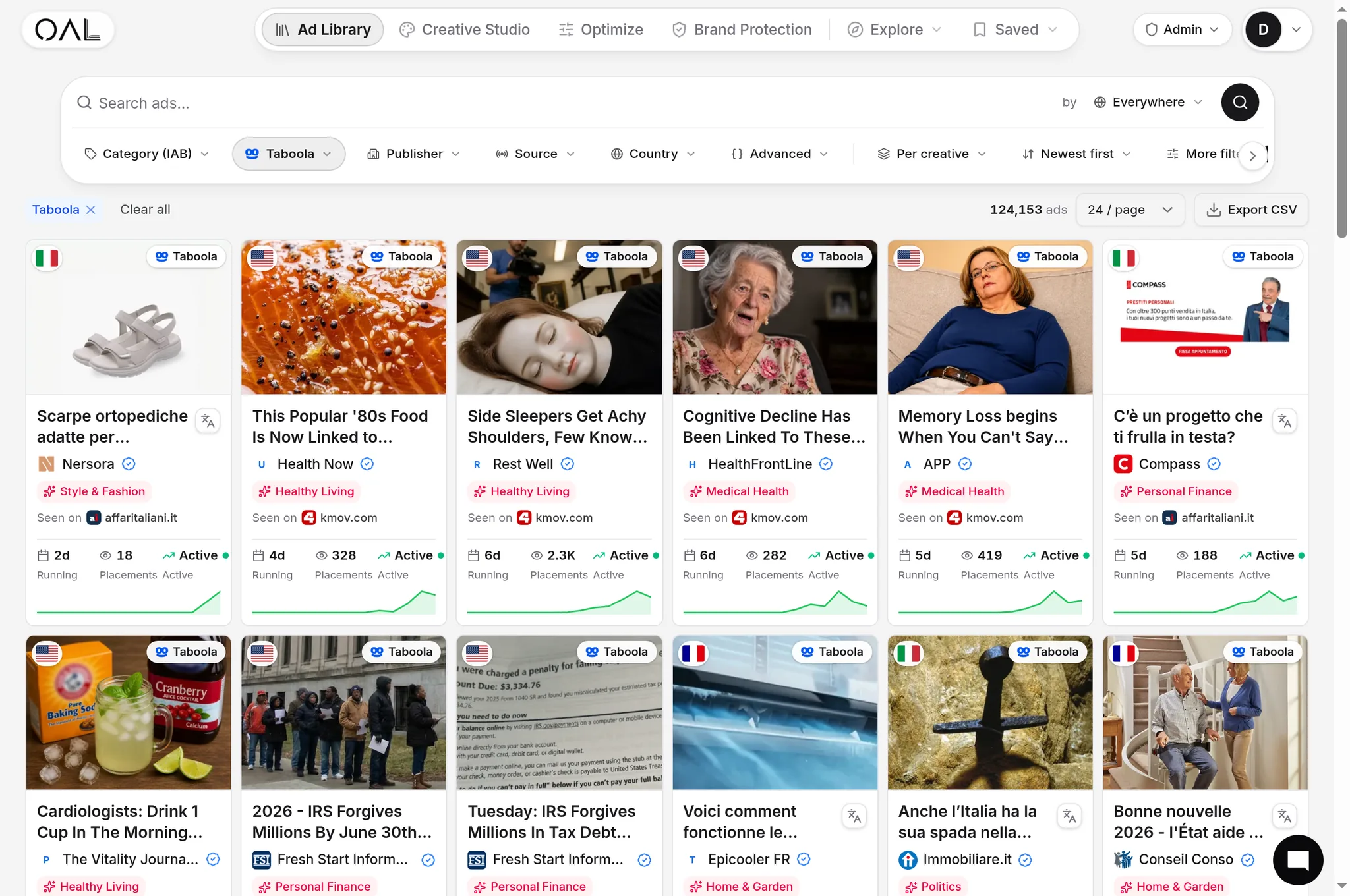
Most Taboola guides stop at "write a curiosity headline." This one walks the full Realize setup, budget math, Maximize Conversions, targeting, tracking, then shows what winning native creatives actually look like using live captured ads.

Native media buying is a four-part loop (offer, creative, bid, scale), and this 2026 playbook walks each step with concrete settings, live cross-network examples, and the metrics that actually move money.

Twelve native ad headline formulas, each matched to a real ad running right now across Taboola, Outbrain and the Microsoft Audience Network, so you can see the structure work before you swipe it.
You can't see another affiliate's ROI, but you can see what they keep paying to run; here is how to turn ad longevity and creative saturation into a repeatable offer-validation checklist.

The angle is the strategic bet your whole campaign rides on, not the headline, and here's how to reverse-engineer the recurring angles that scale in nutra and finance from live native ad captures.
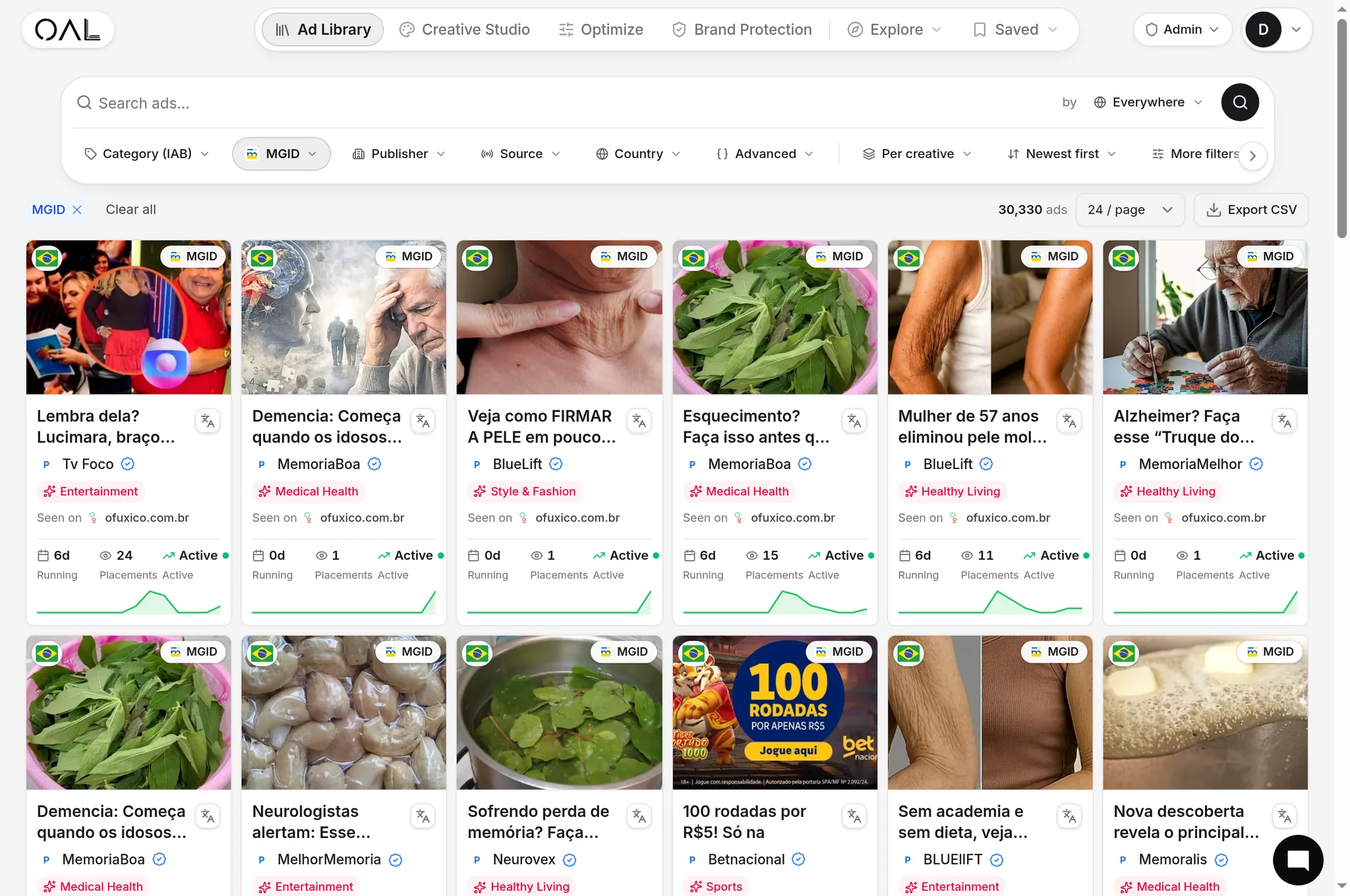
MGID and Revcontent are where smart media buyers diversify after Taboola and Outbrain, and here is how to spy on both properly using real captured longevity, geo, and advertiser data.
A practitioner's breakdown of what native advertising really costs in 2026: minimum deposits, CPC ranges and the test budgets that actually decide whether you win, grounded in live ad data from Taboola, Teads, MGID and Revcontent.
MGID lets you test from $100; Taboola realistically needs ~$300/day to clear its learning phase, and our capture index shows Taboola running three times the creatives MGID does.
Taboola is the scale incumbent and Revcontent the lower-floor challenger; we compare reach, entry cost, and the real advertiser mix on each using ads captured live (157,727 Taboola creatives vs 11,478 on Revcontent in our June 2026 index).

A media buyer's honest comparison of native ads and Facebook ads for DTC in 2026, covering CPC, iOS signal loss, creative, and intent, backed by the live native volume OpenAdLibrary tracks across Taboola, Outbrain, MGID, and Revcontent.
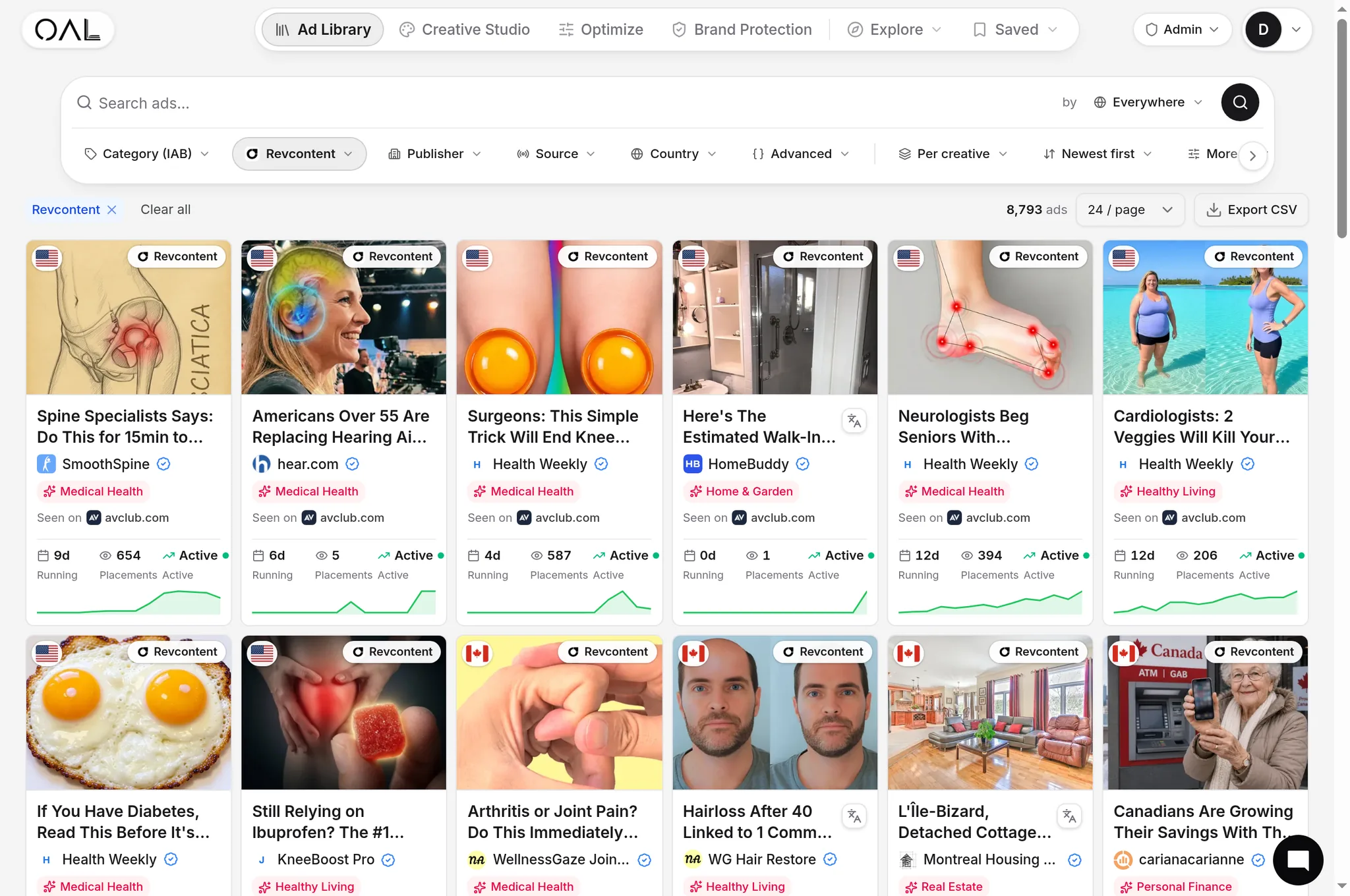
Revcontent serves native ads through publisher widgets you bid on one by one, and here is how its delivery, site-level targeting, CPC bidding and optimization levers actually work, with real captured ads.
A media buyer's walkthrough of MGID's native formats, contextual targeting and low entry CPCs, backed by the real creatives and tracker stacks we capture on live MGID placements.
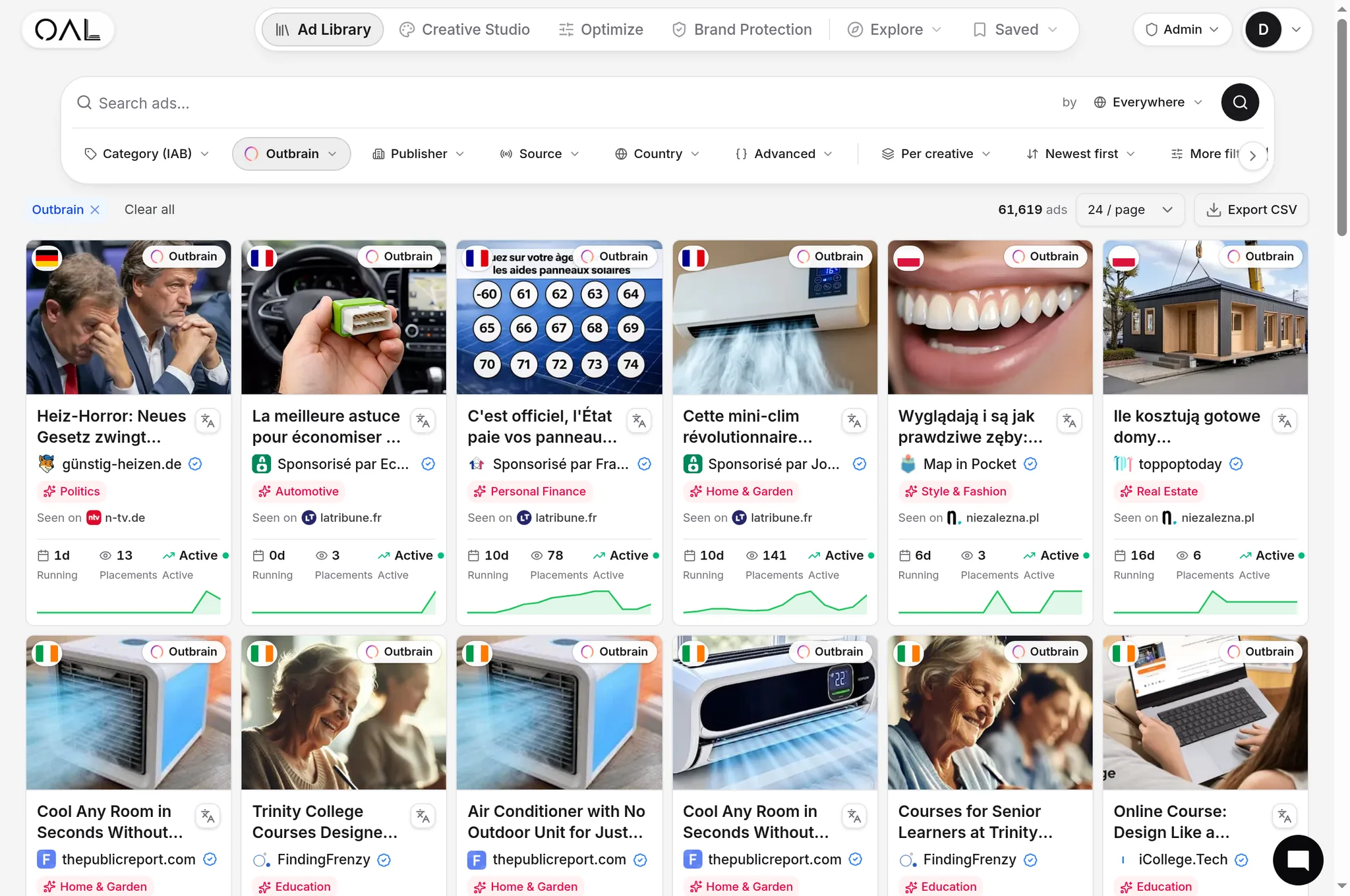
Outbrain is now Teads on paper, but the native engine underneath is the same auction, and here is how its bidding, formats, pricing, and live creatives actually work for advertisers in 2026.
A working media buyer's breakdown of how Taboola native ads actually run in 2026: the auction, the widget, CPC pricing, and the tracker chain behind every click, shown with live creatives we captured instead of vendor mockups.
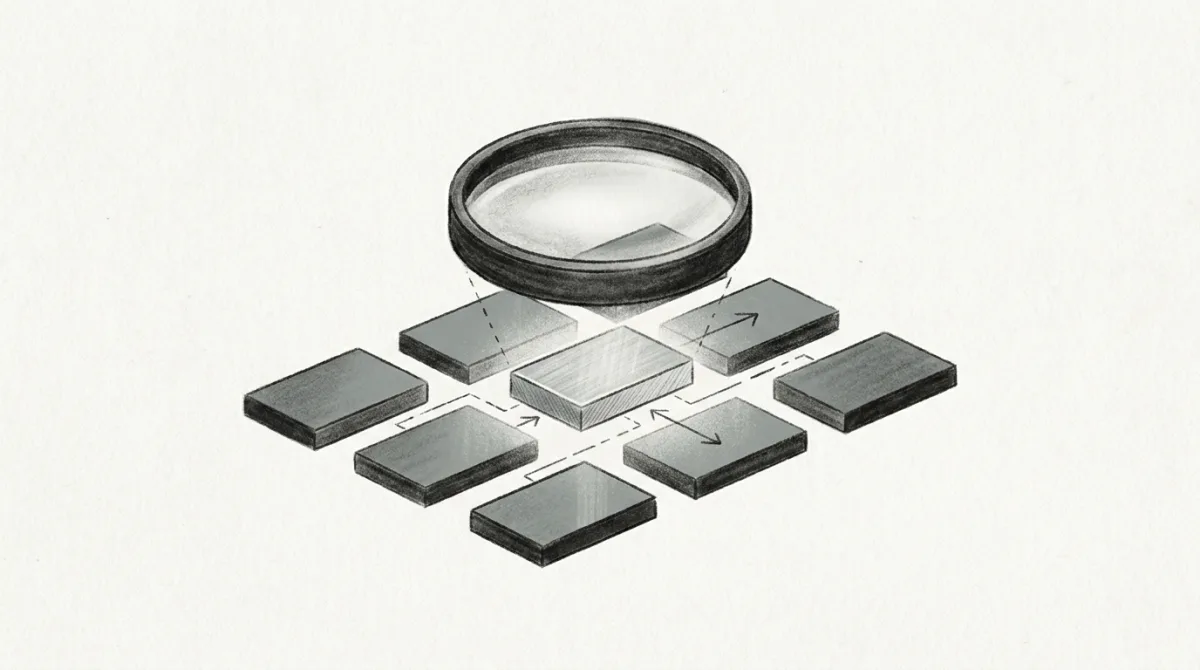
A practitioner's four-stage framework for turning a competitor's live native ads into a ranked list of winning angles, a relative-spend estimate, and a creative backlog you can test next week.

The buyers who consistently find winners do not spy when they are stuck, they run a 45-minute weekly routine that turns scattered ad-checking into pattern recognition you can act on.

Most teams check competitor ads once a quarter and call it research; a real intelligence workflow runs every week with a scoped watchlist, a fixed cadence, a creative scoring rubric, and a clean handoff into media buying.

A native ad is just the doorway; here is how to walk the full chain behind it, from creative to SSP to click tracker to pre-lander to offer page, and read what each link reveals about a competitor's strategy.

A practitioner's walkthrough for finding the ads a competitor is actively running: search by brand or domain to surface live native creatives, the networks behind them, and the landing page each ad points to, plus exactly where Meta and TikTok go dark.

A media buyer's guide to native advertising: what it is, the formats and supply chain behind it, real captured examples, FTC disclosure rules, and how to spy on the native ads actually winning right now.

The pre-lander is the page between a native ad and the offer, and on cold traffic it does the persuasion the ad can't: here's how advertorial funnels work and how to reverse-engineer the ones that win.
A practitioner's playbook for running native profitably as an affiliate in 2026: offer selection, creative angles, pre-landers, the test loop, and using live competitor ads to find proven winners and new geos.

We ranked the major native ad networks by the only metric that predicts where your money goes: how many live ads each one is actually running right now, pulled straight from OpenAdLibrary's index of 589,000+ captured creatives.
A practitioner's guide to native advertising in 2026: the formats, the networks, how the auction really works, and how to read winning ads straight off the live market.
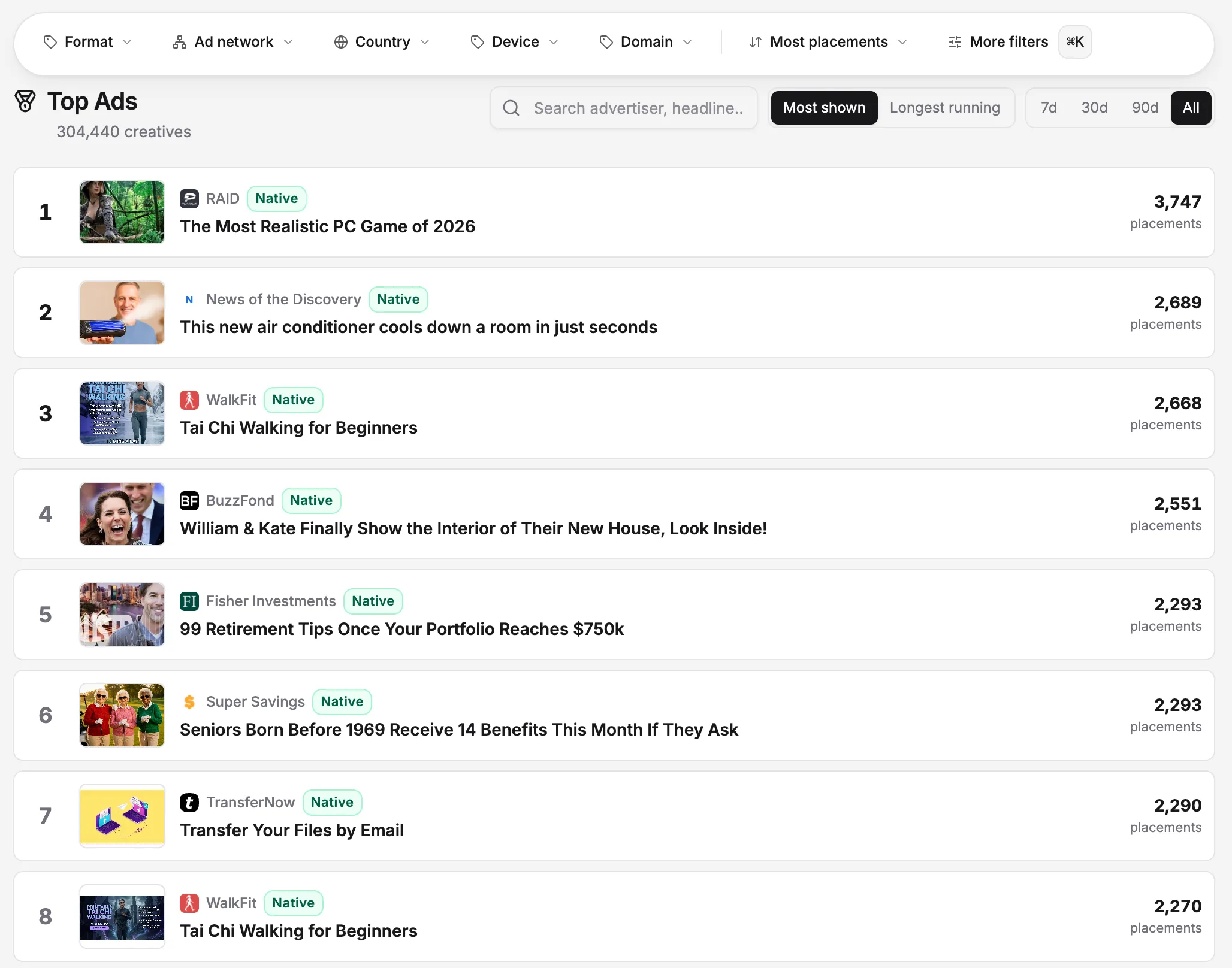
A practitioner's guide to spying on competitor ads across native, display and social: what to capture, how to tell real winners from noise, where the legal lines sit, and a weekly workflow that turns scattered screenshots into decisions.

Competitive intelligence in advertising is gathering and analyzing rivals' ads, channels, and spend signals to sharpen your own creative and media strategy.
An ad spy tool captures and archives competitors' live ads across networks so you can study their creatives, offers, and landing pages in one searchable database.
Ad intelligence is the collection and analysis of competitors' live ads, creatives, and landing pages to inform creative and media-buying decisions.

Scaling in media buying means increasing spend on a proven-profitable campaign while keeping its cost-per-result and margins intact.
Media buying is the process of purchasing ad placements across networks and platforms to reach a target audience at the lowest effective cost.
Affiliate marketing is a performance model where partners earn a commission for each sale or lead they drive to an advertiser's offer.

A traffic source is the ad platform a media buyer buys clicks or impressions from to send visitors to an offer or landing page.
Ad arbitrage is buying traffic through paid ads and monetizing it with higher-paying ads, profiting on the gap between acquisition cost and ad revenue.
Traffic arbitrage is buying web traffic cheaply and monetizing it for more than you paid, profiting on the spread between acquisition cost and revenue.
Cloaking in affiliate marketing is serving one page to ad networks and a different page to real traffic, often to run offers networks would reject.
Geo tiers group countries by purchasing power and ad cost: Tier 1 is wealthy and expensive, Tier 2 mid-range, Tier 3 cheap with low payouts.
Geo targeting restricts ad delivery to users in specific geographic locations, from whole countries down to cities, postal codes, or radius zones.

Supply Path Optimization (SPO) is the practice of choosing the shortest, cheapest, and most transparent route to buy a given ad impression.

A tracker is software that records every ad click, ties conversions back to the exact ad and placement, and routes traffic to the right offer.
Click tracking records every click on an ad by routing it through a tracking server before the user reaches the landing page.
Direct buy vs programmatic contrasts manually negotiated, fixed-price ad deals with automated, auction-driven inventory buying.
Programmatic direct buys reserved ad inventory at a fixed, pre-negotiated price through automated workflows rather than an open auction.
Programmatic advertising is the automated buying and selling of digital ad inventory through software, usually settled in real-time auctions.

EPC (earnings per click) is the average revenue an affiliate or media buyer earns for each click sent to an offer, calculated as earnings divided by clicks.
CPC (cost per click) is the amount an advertiser pays each time a user clicks their ad, calculated as total spend divided by total clicks.
Creative fatigue is the decline in an ad's performance over time as the audience sees it too often and stops responding.