Español
 Português (Brasil)
 Français
 Deutsch
 Italiano
 Nederlands
 Polski
 Svenska
 Türkçe
 Русский
 日本語
日本語 한국어
한국어 Tiếng Việt
 Bahasa Indonesia
 Čeština
 Dansk
Dansk Norsk (bokmål)
 Suomi
Suomi Ελληνικά
 Română
 Magyar
 Українська
 ไทย
ไทย हिन्दी
 العربية
 עברית
עבריתNative Ads vs Facebook Ads for DTC: Which Wins in 2026?
A media buyer's honest comparison of native ads and Facebook ads for DTC in 2026, covering CPC, iOS signal loss, creative, and intent, backed by the live native volume OpenAdLibrary tracks across Taboola, Outbrain, MGID, and Revcontent.

If you buy paid media for a DTC brand, you have watched the same chart for years: Meta CPMs going up and to the right while your attribution gets blurrier. So the question is fair. In 2026, does it still make sense to park most of your budget on Facebook, or has native advertising grown into a channel that genuinely competes for DTC dollars?
This is not a "native is the hack Facebook doesn't want you to find" piece. Both channels work. They work differently, they fail differently, and the brands that win treat them as one system instead of picking a side. Here is the practitioner breakdown across the four things that actually move CAC: click economics, iOS signal-loss resilience, creative format, and buyer intent. The native numbers come from what we see live at OpenAdLibrary, where the index currently holds 589,036 captured native creatives from 25,933 advertisers across 42 networks (OpenAdLibrary index, June 2026).
The short answer#
Native ads win on raw CPC and on resilience to iOS signal loss. Facebook still wins on speed of creative testing and on retargeting warm, high-intent audiences. Neither replaces the other for a serious DTC brand. The right move is to run native for cheap, cookieless cold-traffic discovery, then feed those winners into Facebook's retargeting and lookalike machinery.
These two channels aren't fighting over the same moment#
Get the mental model right before you look at a single benchmark, because the most expensive DTC mistake is treating native as "cheaper Facebook."
Facebook is an interruption channel. The user came to scroll their feed. Your ad has to derail that scroll with something loud enough to stop a thumb. The targeting is identity-based: Meta knows who the person is and predicts who converts.
Native is a discovery channel. The user is reading an article, and your ad sits in the recommendation widget below or beside it, dressed to match the editorial around it. The targeting is mostly contextual: the page topic, the publisher, the section, the device, the geo. The user isn't searching and isn't being profiled into a buyer segment. They're being handed something adjacent to what they're already reading. If you want the full mechanics of how those widgets, auctions, and supply chains fit together, our complete guide to native advertising walks the whole ecosystem, and the Native Advertising glossary entry gives you the one-paragraph version.
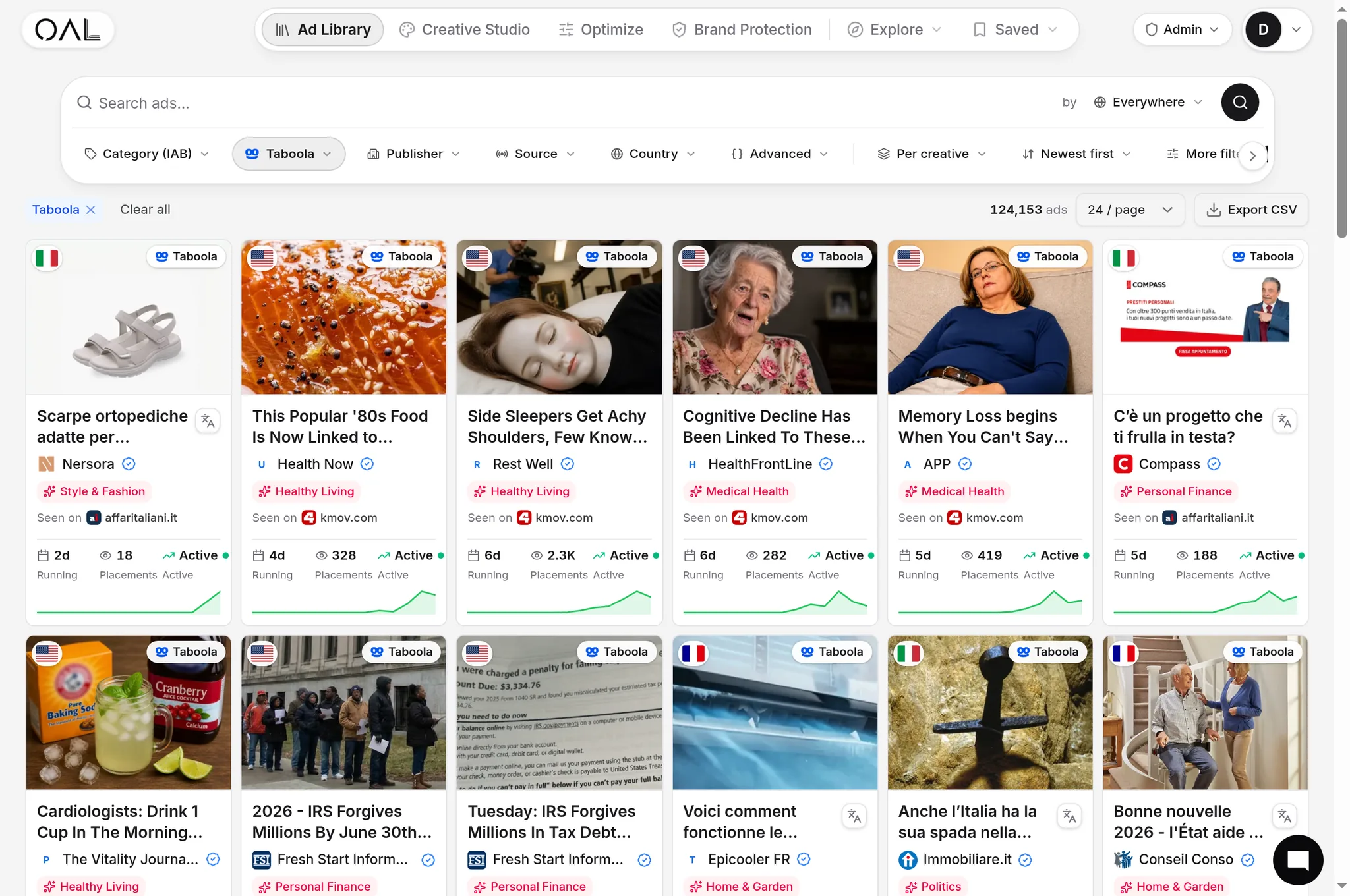
You can see the difference in the creatives themselves. Here is a live one from our index: a finance offer dressed as a news flash, not a brand ad.

Treat native as a discovery engine, not a discount feed. The brands that lose money on native are the ones who grabbed a Facebook creative, pointed it at a cold widget audience, and expected feed-level conversion rates. The mismatch is the whole story.
Round 1: CPC and click economics#
This is where native earned its reputation, and the math holds up.
| Metric (2026, US) | Native networks | Facebook / Meta |
|---|---|---|
| Typical CPC | ~$0.10 to $0.90 | ~$0.70 (traffic), ~$1.92 (lead gen) |
| Typical CPM | low single digits to low teens | ~$16.80, up ~20% YoY |
| Targeting basis | contextual (page, section, geo, device) | identity / behavioral |
| CTR pattern | lower, content-matched | higher, feed-native |
Across Taboola, Outbrain, MGID, and Revcontent, native CPCs usually sit between roughly $0.10 and $0.90 depending on device, geo, and vertical. Desktop premium placements on tier-1 publishers run higher; mobile and broad-reach inventory sits at the floor. Facebook averages around $0.70 CPC for traffic objectives and closer to $1.92 for lead generation in 2026, with CPMs near $16.80 and climbing about 20% year over year as the auction gets more crowded.
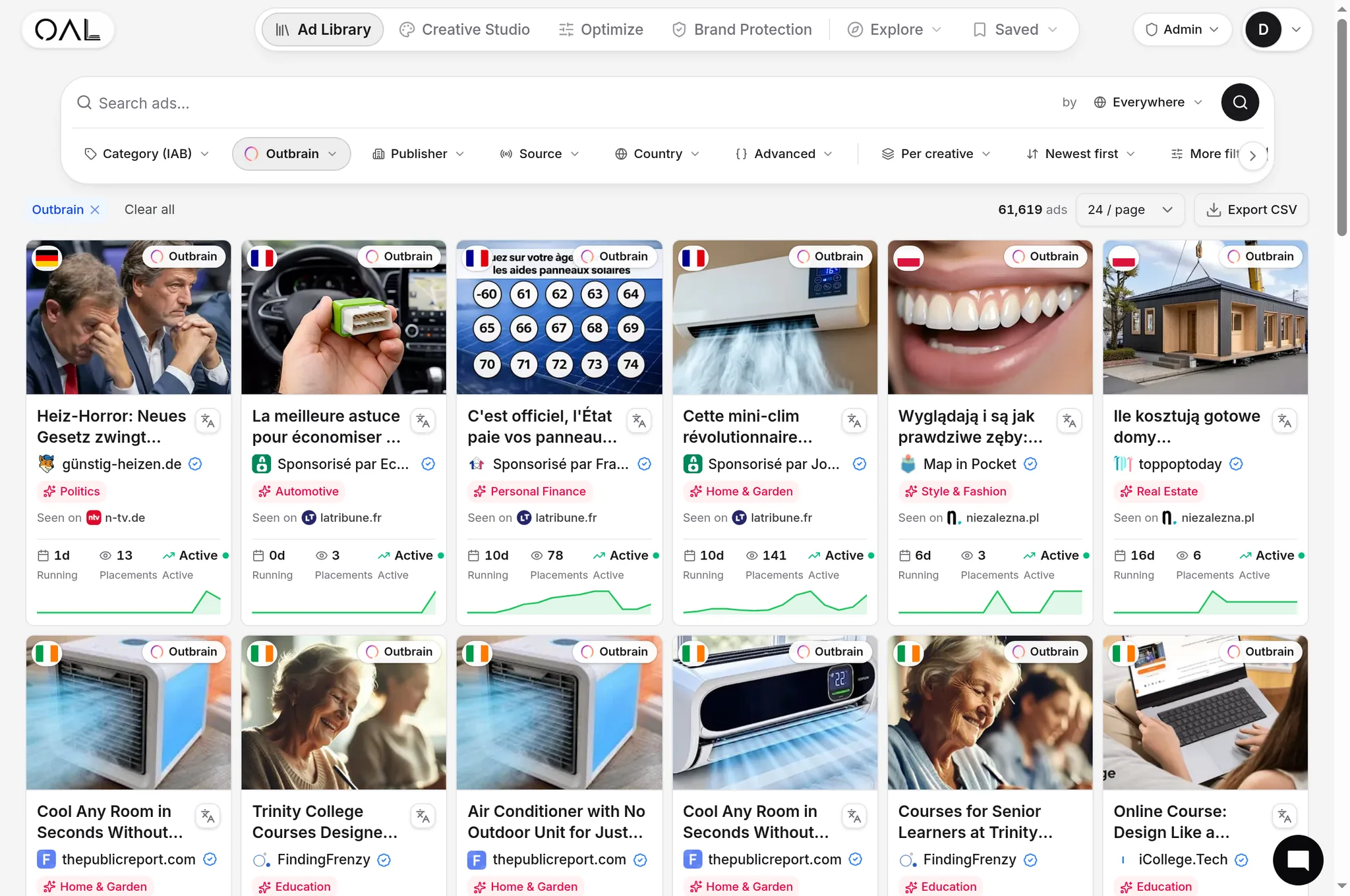
Volume tells you the same story from the supply side. Taboola alone accounts for 157,727 of the creatives in our index and Outbrain another 84,252 (OpenAdLibrary index, June 2026). That is a deep, liquid market, not a niche you have to scrape for inventory.
Now the honest caveat: cheaper clicks are not automatically cheaper conversions. Native traffic is colder and sits mid-funnel, so a $0.20 native click and a $0.70 Facebook click can land at the same CPA if your native landing experience doesn't do the persuasion the feed would have done. The CPC advantage is real. You only bank it when the post-click flow (pre-lander, advertorial, or product page) carries the weight. The per-platform economics differ too, so read how Taboola ads work and how MGID native ads work for the bidding floors and minimum-spend realities on each.
Round 2: iOS signal-loss resilience#
This is the dimension that quietly rewired the DTC media mix, and it is where native has a structural edge.
Apple's App Tracking Transparency stripped out the deterministic user-level signal that Meta's optimization and reporting were built on. The industry estimates 20% to 30% of conversions go unobserved on signal-degraded inventory, which inflates apparent CPA and hides the cheap conversions Meta can no longer see. Call it an invisible tax on every iOS-heavy account. You feel it as reporting you no longer fully trust and an algorithm optimizing on partial data.
Native barely felt it, because it never leaned on the IDFA in the first place. Its targeting and bidding run on contextual and first-party publisher signals: what the page is about, who the publisher is, the device and geo. None of that is what Apple's privacy changes touched. By 2026, more than three-quarters of global traffic lives in environments where third-party cookies are limited or gone, and contextual native is one of the few performance channels that hardly notices. For a DTC brand whose audience skews iPhone, that resilience shows up as steadier performance and cleaner attribution math.
- Facebook: optimization and reporting degrade with iOS opt-outs; modeled conversions patch the gaps but add uncertainty.
- Native: contextual bidding is cookieless by design; performance and reporting stay comparatively stable.
- Practical upshot: native is a hedge against platform and regulatory shocks, not just a cheaper click.
This is also why programmatic native advertising keeps absorbing budget. The native ad auction clears on signals that survive privacy changes.
Round 3: creative format and what actually gets clicked#
The creative that wins on Facebook usually dies on native, and the reverse. This trips up more DTC teams than the targeting ever does.
Facebook rewards thumb-stopping motion: fast-cut UGC video, bold static, a hook in the first second, branding that announces itself. The ad is supposed to look like an ad good enough to stop a scroll.
Native rewards the opposite instinct. The creative, an image plus a headline inside a native ad widget, earns the click by blending with the articles around it. Editorial imagery, a curiosity-driven headline, the visual grammar of journalism instead of advertising. It reads more like a recommended-article thumbnail than a feed ad. Drop a polished Facebook video straight onto a native placement and it screams "ad" inside a content context, and CTR falls off a cliff.
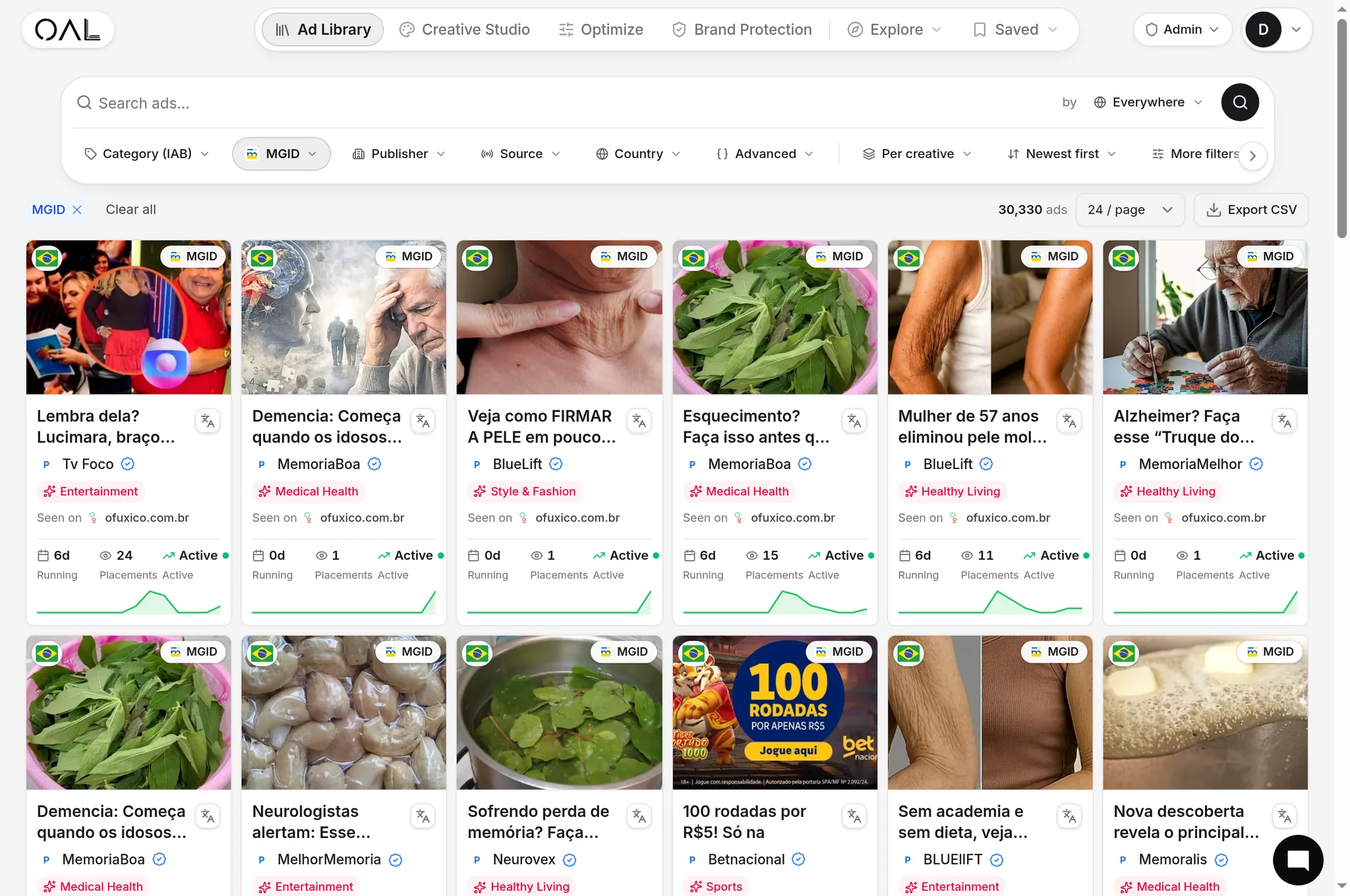
The two ads below are textbook native. Both look like service journalism. Neither would survive as-is in a Facebook feed.


The takeaway for production is concrete: you need a separate creative track for native, built around headline testing and editorial imagery, not a recut of your social assets. This is exactly where competitive intelligence earns its keep. Instead of guessing which angles land on native, you study the creatives competitors are running right now and, more importantly, which ones have stuck around.
Round 4: intent, funnel position, and where each channel belongs#
Map the channels to funnel jobs and the "which wins" question dissolves:
- Cold top-of-funnel discovery. Native wins. Cheap, cookieless reach against people consuming relevant content. This is where you find net-new audiences Facebook's algorithm has already saturated for you.
- Mid-funnel education. Strong for native through advertorial and pre-lander flows; strong for Facebook through video sequencing. Roughly a draw, decided by your creative.
- Warm retargeting and lookalikes. Facebook wins decisively. Nothing matches Meta's ability to re-engage site visitors and clone converters.
The winning DTC architecture in 2026 is a loop, not a fork. Drive cheap cold volume through native, capture and pixel those visitors, then let Facebook close them with retargeting and expand them with lookalikes. Native fills the top of the funnel that rising CPMs have priced you out of. Facebook converts the warm audience native created.
How to run native intelligently (where OpenAdLibrary fits)#
Native's catch has always been opacity. Facebook's Ad Library hands you competitor social ads on a plate; native was a black box, which is exactly why so many DTC teams stayed put on Meta out of pure visibility. That gap is closeable now.
A native ad spy tool lets you see the native market the way you already see the social one. OpenAdLibrary captures live public native placements across Taboola, Outbrain, MGID, Revcontent, Teads, Yahoo, and MSN, preserves the real creative image at full quality, classifies the ad-tech supply chain behind each placement, and traces the click through to the advertiser's landing page or pre-lander, all without clicking live ads. The index now holds 5.4 million ad observations and 926,259 landing-page captures (OpenAdLibrary index, June 2026), which is the raw material that turns a hunch about a competitor into evidence.
The signal that matters most is longevity and spread. An ad running for weeks across many publishers is almost certainly profitable, because nobody burns budget on a loser that long. In our current index the longest-running creatives we are continuously observing have held for about 28 days each. One example: a SmartAsset finance teaser on Outbrain, "Ask a Pro: How Can I Avoid Paying Taxes on IRA Withdrawals?", that has stayed live across publishers for 28 straight days of observation.

A quick honesty note on benchmarks: that 28-day figure is the real span of continuous observation in our index, not the "90-day winner" you'll hear quoted in native circles. The 90-day rule of thumb is general industry lore. The 28 days is what we can actually point to in the data.
The verticals tell their own story about where native money concentrates. Finance leads our overall index with 17,232 creatives, followed by insurance (15,629) and health (14,895), all classic high-LTV, high-margin categories where a cheap cold click can still pencil out (OpenAdLibrary index, June 2026). If you sell into those spaces, native isn't optional, it's where your competitors already live.
From there, Creative Studio helps you build native-native creative instead of recycling social assets, Copy DNA breaks down the headline and offer patterns that keep recurring among winners, and Optimize plus the API and MCP let you fold all of it into your own workflow. It is open and cheap: $29.99/month, with a free tier to browse 200 ads and no card required, against the $80 to $400/month legacy native spy tools.
For the platform-level context behind the networks above, see our guides to how Outbrain works now that it's part of Teads, what Teads is after the merger, plus the native ad network and Yahoo Native glossary entries.
The verdict for 2026#
There is no single winner, and any article that crowns one is selling you something. Native wins on CPC and on iOS-era resilience. Facebook wins on creative-testing velocity and warm-audience conversion. The DTC brands compounding their CAC advantage in 2026 run native for cookieless cold discovery, Facebook for retargeting and lookalikes, and a separate creative track for each, using competitive intelligence to skip the expensive guesswork on the native side.
If your media mix is still 90% Meta because native felt like a black box, the box is open. Start free, browse 200 live native ads with no card, and see for yourself which creatives, offers, and advertisers are quietly winning the channel your competitors aren't watching.