Español
 Português (Brasil)
 Français
 Deutsch
 Nederlands
 Polski
 Svenska
 Türkçe
 Русский
 日本語
日本語 한국어
한국어 简体中文
简体中文 Tiếng Việt
 Bahasa Indonesia
 繁體中文
繁體中文 Čeština
 Dansk
Dansk Norsk (bokmål)
 Suomi
Suomi Română
 Magyar
 Українська
 ไทย
ไทย हिन्दी
 العربية
 עברית
עבריתNative Advertising DSPs: The Landscape and How to Choose
Yahoo DSP, StackAdapt, Zemanta, The Trade Desk, DV360 — the DSPs that genuinely buy native inventory, and a straight decision framework for when a self-serve network is the smarter buy.


A native advertising DSP is a demand-side platform that buys native ad placements programmatically — one dashboard bidding across many supply sources through OpenRTB, instead of separate logins for Taboola, Outbrain, and MGID. The realistic 2026 shortlist for native: Yahoo DSP, StackAdapt, Zemanta, The Trade Desk, and Google Display & Video 360, plus Amazon DSP for commerce-adjacent brands. The honest caveat up front: most performance buyers do not need a DSP. If your spend concentrates on one or two networks, those networks' self-serve platforms give you better access to their optimization algorithms and their full inventory. DSPs earn their place at multi-network scale, when frequency control, unified reporting, and first-party data activation start paying for the extra fees and complexity.
What a DSP does that a native network doesn't#
A demand-side platform sits on the buy side of the open programmatic market. It connects to many supply-side platforms and exchanges, receives bid requests in the OpenRTB protocol — including the native ad object, which carries headline, image, and description as structured components — and bids on each impression individually. One seat, one pixel container, one report, many sources of supply.
A native network's self-serve platform is the opposite model: a walled garden. When you buy inside Taboola Ads or Outbrain's Amplify dashboard, you buy only that network's publisher relationships, optimized by that network's own algorithm, with that network's data. Programmatic native through a DSP trades that depth for breadth.
| Dimension | Self-serve network | Native DSP |
|---|---|---|
| Supply | One network's publishers | Many exchanges and SSPs |
| Algorithm | The network's conversion optimizer, tuned to its own inventory | Your bidder settings + the DSP's general-purpose optimization |
| Fees | Baked into the CPC you pay | Platform fee layered on top of media cost |
| Reporting | Per-network silo | Unified cross-channel view |
| Data | Network's contextual and behavioral signals | Your first-party data, portable across supply |
| Best at | Going deep on one network | Going wide across several |
Neither is "more advanced." They are different tools, and the fee structure means a DSP has to add real value — deduplication, data activation, supply breadth — before it beats simply mastering a network's own console.
The native DSP landscape#
Yahoo DSP — the native incumbent#
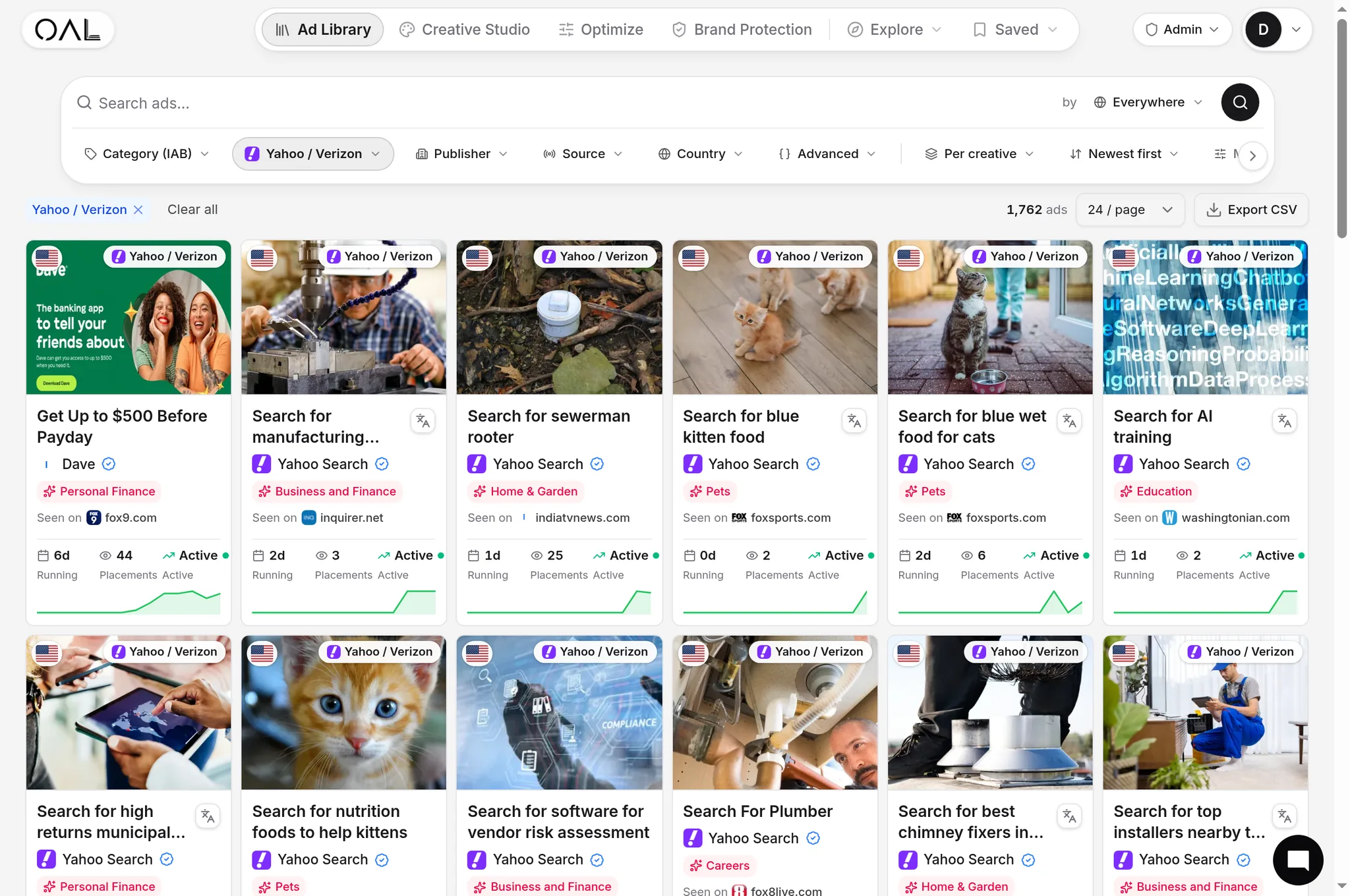
When Yahoo retired its Gemini self-serve platform, native access to Yahoo's owned-and-operated properties (Yahoo home, Mail, Finance, Sports) moved into Yahoo DSP — the full story is in what happened to Yahoo Gemini. That makes Yahoo DSP the only way to buy some genuinely large native surfaces, alongside standard omnichannel supply. If Yahoo's audience matters to your offer, this is less a choice and more a requirement; our guide to how Yahoo native ads work covers the placements themselves.
StackAdapt — the mid-market default#
StackAdapt built its early reputation specifically on native before expanding omnichannel, and it remains the DSP that mid-size agencies and in-house teams reach for first: self-serve friendly, reasonable entry requirements, and a UI closer to a network console than an enterprise trading desk. Access terms change, so verify current minimums with them directly.
Zemanta — Outbrain's DSP#
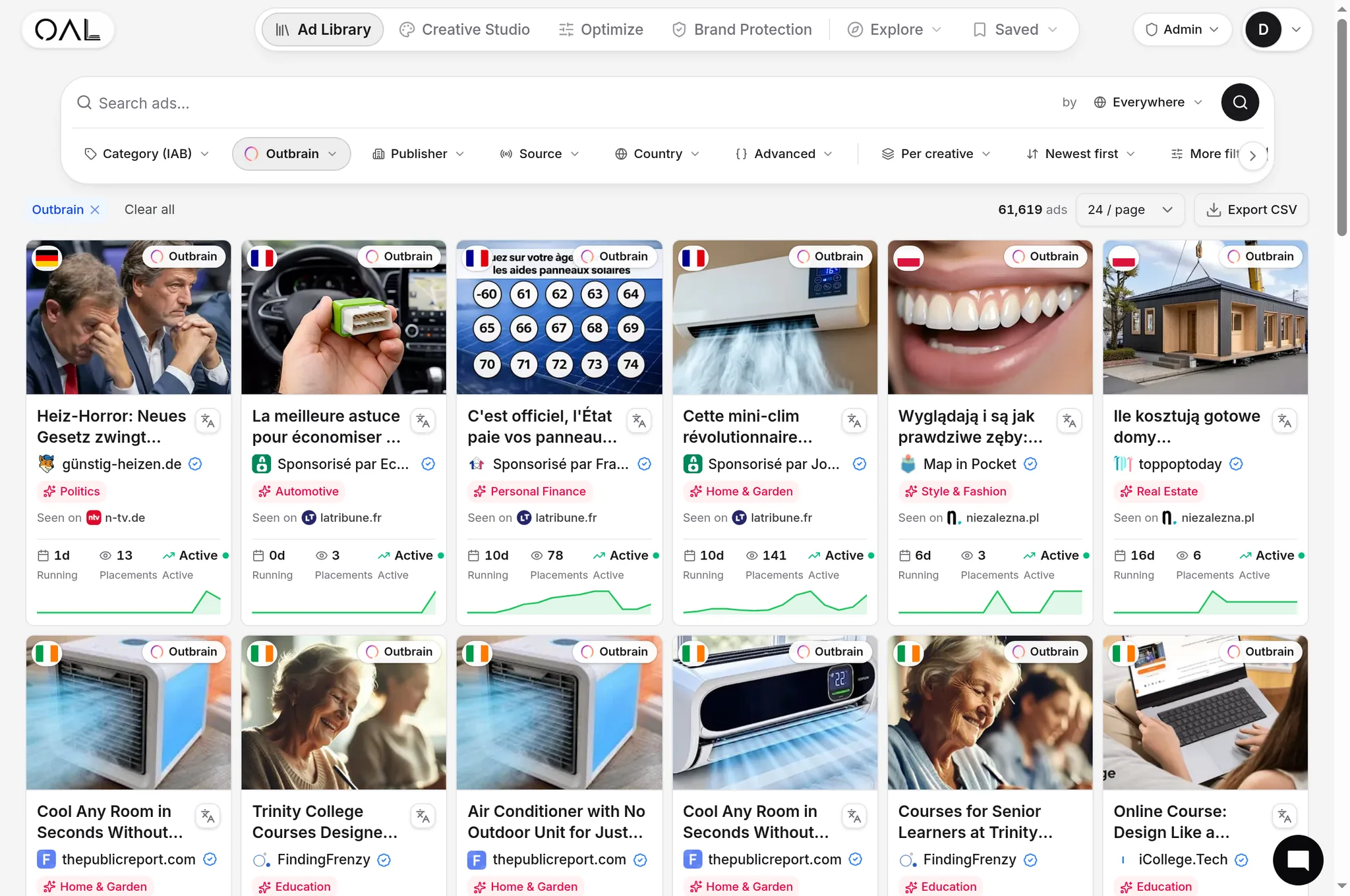
Zemanta is owned by Outbrain, which gives it an unusual position: a real DSP with programmatic supply breadth, plus privileged closeness to one of the two biggest content-recommendation networks. If your strategy is "native-first, everywhere," Zemanta was designed for exactly that buy. Understanding how Outbrain works helps you judge how much of Zemanta's edge is relevant to you.
The Trade Desk — the enterprise omnichannel seat#
The Trade Desk treats native as one channel among CTV, display, audio, and DOOH. It is historically oriented toward agencies and larger advertisers, and native is rarely the reason someone opens a TTD seat — but if you already run one, extending into native supply through it is straightforward and keeps frequency and attribution unified.
DV360 and Amazon DSP — the ecosystem plays#
Google's Display & Video 360 supports native formats and makes sense for teams already deep in the Google stack. Amazon DSP matters when retail signals matter: commerce brands can apply Amazon's shopper data to native-style placements on and off Amazon properties. Both are ecosystem decisions first and native decisions second.
When a self-serve network beats a DSP#
For a large share of native buyers — especially affiliates and lead-gen teams — self-serve is the right answer:
- Your spend concentrates on one network. Network conversion optimizers need conversion volume concentrated in their own campaigns to learn. Splitting the same budget across a DSP's fragmented supply starves the algorithm. See how Taboola ads work for how much of that platform's value is the optimizer itself.
- You test creatives faster than you change supply. Native is a creative-led channel; winners come from hooks and angles, not from supply-path cleverness. Self-serve consoles iterate creatives with less friction.
- Budget realism. Media buyers commonly report that DSP fees and minimums only make sense once monthly native spend is well into five figures; below that, the fee drag outweighs the tooling. Treat that as a heuristic, not a rule — your economics decide.
- You want a rep who knows the inventory. Network account managers can whitelist publishers, unlock betas, and troubleshoot policy issues on their own supply. A DSP rep can't do that for someone else's network.
The fundamentals of running the channel this way are covered in our media buying guide for native ads.
When the DSP is the right call#
- Multi-network scale. You are live on three or more native sources and losing money to duplicate reach and inconsistent reporting.
- First-party data activation. You need to retarget site visitors or CRM segments across native supply — walled-garden consoles keep data trapped per network.
- Frequency and brand safety control. One cap, one exclusion list, applied everywhere.
- Deal-based buying. Curated supply through private marketplace deals with specific publishers is a DSP-native motion that self-serve consoles mostly can't replicate.
How to choose: five questions#
- Where does my category's demand actually run? If the advertisers who look like you spend on Taboola, that is evidence the inventory converts for your vertical — go direct first.
- What is my realistic monthly budget? Fee drag on small budgets is the most common DSP regret.
- Do I have data worth activating? No meaningful first-party data means one of the biggest DSP advantages is worth zero to you.
- Who runs the seat? DSPs assume a hands-on trader. If nobody on the team has run programmatic before, the network console's guardrails are a feature.
- Can I get out? Prefer month-to-month self-serve access over spend commitments until the channel has proven itself for your offer.
One more diligence item that buyers skip: the supply path. Programmatic native inventory frequently passes through resellers before it reaches a DSP's bid stream, and every intermediary takes a cut of your media dollar. Ask any DSP you evaluate what share of its native supply is direct-to-publisher versus resold, and whether it exposes supply-path reporting. The same placement bought through a shorter path is simply cheaper — and on native, where margins on cold traffic are thin to begin with, path efficiency is not an academic concern.
Look at the inventory before you commit#
The cheapest due diligence is seeing what actually runs. OpenAdLibrary's index of 725,000+ live native creatives across 49 networks (July 2026) shows which advertisers, verticals, and creative styles fill each network's supply — the same inventory a DSP will resell you with a fee on top. Browse a network's live ads with the native ad spy tool, or use the ad intelligence platform to check whether competitors in your category are buying the supply you're about to pay for. Ten minutes of looking at real placements answers "is my vertical alive on this supply?" better than any sales deck.
The short version: master one network's self-serve console first. Add a DSP when — and only when — coordination across networks, data activation, or deal-based buying becomes the bottleneck. The platforms will still be there when you need them.