 Español
 Português (Brasil)
 Français
 Deutsch
 Italiano
 Nederlands
 Polski
 Svenska
 Türkçe
 Русский
 日本語
日本語 한국어
한국어 简体中文
简体中文 Tiếng Việt
 Bahasa Indonesia
 繁體中文
繁體中文 Čeština
 Dansk
Dansk Norsk (bokmål)
 Suomi
Suomi Ελληνικά
 Română
 Magyar
 Українська
 ไทย
ไทย हिन्दी
 العربية
 עברית
עבריתNative Ad Creative Best Practices: Images and Hooks That Convert
The image and headline patterns that actually move click-through on Taboola, Outbrain and the rest of the native feed, pulled from the 589,000+ live creatives we've captured and sorted by the verticals where each one wins.

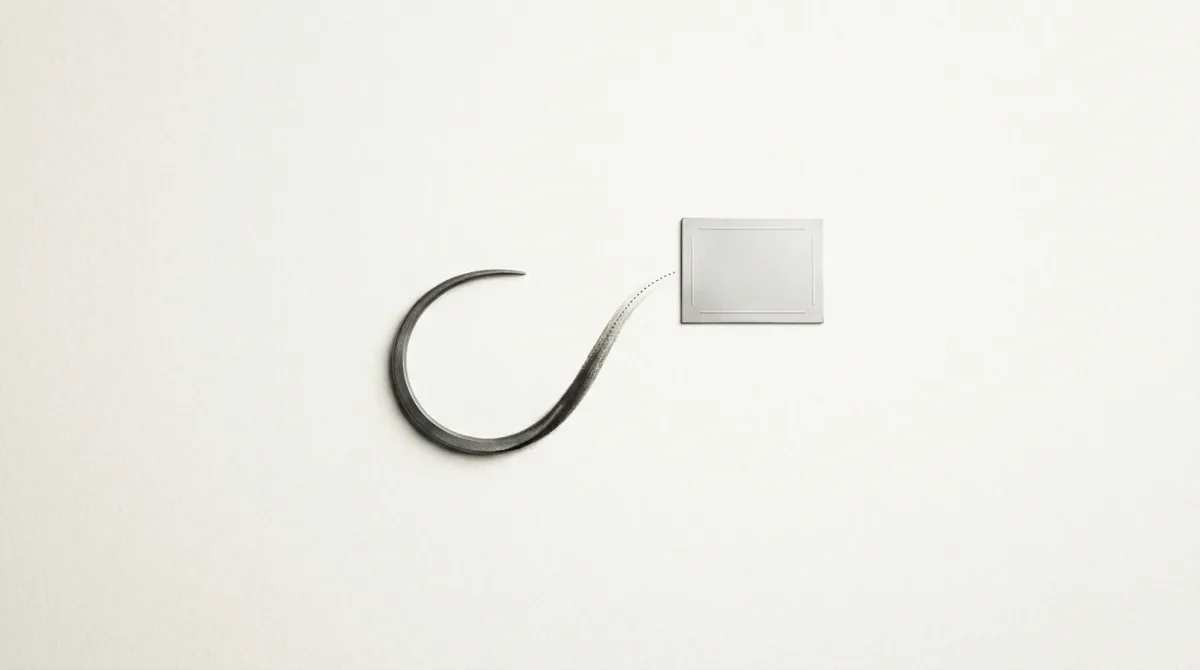
Open any native widget at the bottom of a news article and you can usually guess, within a second, which thumbnails were built by someone who gets the channel and which got dragged over from a Facebook campaign. The native feed has its own visual grammar. Ads that obey it get clicked. Ads that look like ads get scrolled past.
This guide pulls the image and hook patterns we see over and over in our index, which currently holds 589,036 captured native creatives from 25,933 advertisers across 42 networks (OpenAdLibrary, June 2026). Taboola alone accounts for 157,727 of those creatives and Outbrain another 84,252, so a lot of what follows leans on those two feeds. Two questions drive everything here: what does a winning image look like, and what does a winning hook say. Then which verticals each pattern tends to own, and how to tell a real winner from a brand-new test that just happens to be sitting next to it.
What separates a high-converting native ad creative#
A high-converting native ad creative pairs an image that reads as editorial content, not an advertisement, with a headline that opens a specific curiosity gap or makes a concrete, believable claim. The image earns the glance. The hook earns the click. Both have to survive a thumbnail-sized render in a feed the reader never came to shop.
That last part is the whole game. Native isn't search and it isn't social. The reader showed up to read an article, the widget is peripheral, and your creative gets a sliver of soft attention. Everything below is downstream of that one constraint. For the formal definition of the unit you're building, see our glossary entries on the ad creative and on native advertising itself.
The image patterns that win#
Across the creatives we capture, a handful of image archetypes keep showing up on ads brands actually keep running. They're less tricks than consequences of the channel.
- The curiosity-gap image. Something is half-shown, oddly framed, or visually unresolved: a hand holding an unidentified object, a before/after with the "after" cropped, an ordinary scene with one thing out of place. The brain wants to close the gap, and the only way to close it is the click.
- The authentic, non-studio look. Uneven lighting, a real kitchen or driveway, a phone-camera feel. Over-produced studio photography screams "advertisement," and the feed's regular readers have trained themselves to skip it. Slightly imperfect images consistently beat glossy ones.
- The single dominant focal point. Native thumbnails render small, often under 300 pixels wide inside a native ad widget. Busy compositions turn to mush. One clear subject, high contrast, almost no text baked into the image.
- Faces and hands. A human face pulls the eye. A hand demonstrating or holding a product adds scale and use-context. This is strongest when the product is small or abstract.
- The as-seen-in-the-wild object. The product photographed where it's actually used, not floating on white seamless. A gadget on a cluttered desk beats the same gadget on a gradient every time.
Here's a finance example doing several of these at once. It looks like a stock news photo, not a product shot, and the headline does the heavy lifting:

The fastest way to tank native CTR is to upload your best brand photography. The feed rewards images that look like they belong next to a news story, not images that look expensive.
A practical note on text overlay: small, sparing, high-contrast text can lift performance, but most platforms render thumbnails at sizes where a sentence becomes illegible. If you overlay text, make it a one- or two-word punch, not a second headline.
Where each image pattern dominates#
The archetype that wins is heavily vertical-dependent, and finance, insurance and health dominate the volume. In our index those three verticals run 17,232, 15,629 and 14,895 creatives respectively (OpenAdLibrary, June 2026), so they set the tone for what "normal" looks like in the feed. Here's how the patterns map:
| Image pattern | Dominant verticals | Why it fits |
|---|---|---|
| Curiosity-gap / partially-shown | Survival, "weird trick," gadgets, finance | The gap is the entire value proposition of the click |
| Authentic non-studio look | Supplements, skincare, DIY, home services | Reads as a real person's result, not a brand claim |
| Before/after | Beauty, weight management, home renovation | Transformation is the offer; the image is the proof |
| Faces & expressions | Health, relationships, personal finance | Emotion and relatability carry the message |
| Object-in-context | Consumer electronics, kitchen, automotive | Establishes scale, use-case and "this is real" |
| Charts / news-style graphics | Crypto, investing, insurance | Borrows the authority of editorial data visuals |
Home and garden is a smaller category at 7,707 creatives, but it's a clinic in the object-in-context look. This solar-battery ad has run 27 days in our index and shows the hardware on an actual house wall, not a render:

None of this is a license to mislead. Disclosure and accuracy still matter, and the funnel guidance below covers that, but inside honest bounds the image's only job is to belong in the feed.
The hook patterns that win#
If the image earns the glance, the ad hook earns the click. A hook isn't the whole headline so much as the mechanism inside it: the reason a reader feels they have to know more. The recurring ones:
- The curiosity gap. "MDs Identify 10 Medications Now Attached to Memory Problems In Seniors (See the List)" withholds the payoff, which is exactly why it works. Use it sparingly and honestly. A gap the landing page can't pay off destroys trust and craters conversion downstream.
- Specificity as credibility. Numbers and concrete detail beat vague superlatives. "Tested: Does This $138 AC Run On Almost No Power?" reads as real because the price is exact. Round, generic claims read as hype.
- Pattern interrupt. A statement that contradicts expectation stops the scroll because it conflicts with what the reader assumes is true. "Americans Are Ditching Hearing Aids for This New Device" works on the word "ditching."
- Localization. Inserting a city, region or country makes the ad feel relevant and editorial. "Australians looking for life insurance should read this" is a clean example, and native platforms make this swap trivial. It reliably lifts CTR in services and finance.
- The implied story. "I was skeptical until day 19" promises a narrative. Story hooks pair naturally with advertorial funnels because the pre-lander continues the story the hook started.
Look at how the health-curiosity hook and image work together here. The photo is a tight, real-looking close-up, and the headline frames a switch everyone-is-making instead of a sales pitch:

On length: most high-performing native headlines we capture land roughly in the 40-to-70-character range, enough to set up the mechanism, short enough to dodge truncation in the widget. Treat that as a guideline, not a law, and check it against the live render, because cutoffs differ by placement.
Match hooks to angles, not just to products#
The deeper lever is the creative angle underneath the hook. The same supplement can run an authority angle ("what a longevity researcher takes"), a personal-story angle ("a teacher's 90-day experiment"), and a conflict angle ("the industry doesn't want this priced low"). Each angle implies different images and different hooks. Scaling in native is mostly the disciplined work of testing angles against each other, then testing images and hooks inside the winning angle, not flinging unrelated creatives at the wall.
Image and hook must agree, then the funnel must agree too#
The most common failure we see isn't a weak image or a weak hook on its own. It's a mismatch: a curiosity-gap image stapled to a literal, no-mystery headline, or a story hook leading to a hard product page that abandons the story. Congruence is what compounds.
The chain is image, then hook, then pre-lander, then offer. Each step has to honor the promise of the one before it. A "doctors are stunned" hook needs a pre-lander that reads like editorial coverage, not a checkout page. If you're building that chain, our breakdowns of high-converting advertorial landing pages and the six pre-lander formats that win on native traffic cover the next two links in detail.
How to tell a winner from a guess#
Here's the trap that sinks most "swipe the competition" workflows: a brand-new test ad and a proven six-figure winner look identical in a single screenshot. Static galleries of native ads are close to useless for exactly this reason. They show you what someone tried, not what worked.
The only reliable signal is behavioral, and it comes in two forms:
- Longevity. A creative an advertiser has kept live for weeks is almost certainly profitable, because nobody pays to keep losing ads running. First-seen and last-seen dates are the closest thing to a public conversion signal native has.
- Spread. A creative running across many publishers, in multiple geos, on multiple devices has earned that distribution by performing. Breadth is a paid vote of confidence.
A reality check on the numbers, since longevity claims float around the industry untethered. The "90-day winner" is general lore, not something to attribute to a specific tool. What we can say from our own data is more modest and more honest: our continuous-observation window currently tops out around 28 days per creative, and the ads sitting at that ceiling are telling. SmartAsset has held this finance "Ask a Pro" creative at the top of its run for the full 28 days we've watched it:

That 28-day survivor is a different kind of evidence than a thumbnail you found in a static swipe file. This is the gap ad-transparency tooling is built to close. OpenAdLibrary captures live native creatives at full image quality, records when each was first and last seen and how many publishers ran it, identifies the real advertiser behind the placement (we've tracked 5,424,757 ad observations and followed 926,259 landings to date), and follows the click through to the actual landing page. So you sort by what survived instead of guessing from a picture. Walkthroughs: finding competitor landing pages from native ads and analyzing a competitor's full ad funnel.
Plan for fatigue from day one#
Even a perfect creative decays. As frequency builds on a placement, the same audience sees the same image, CTR slides and CPMs drift up. That's classic creative fatigue. Refresh on the metric, not the calendar: watch for a sustained CTR decline on stable placements and keep a backlog of tested variations ready so a refresh is a swap, not a fire drill.
The practical cadence:
- Keep three to five live variations per winning angle so you're always rotating, not restarting.
- When fatigue hits, change the image first. It's the cheaper variable and usually the one that's worn out.
- Preserve the winning hook and angle until the data says the angle itself is done. Don't throw away a proven message because one image got tired.
A working checklist#
Before you push a native creative live, run it against this:
- Does the image read as editorial content, not an advertisement, at thumbnail size?
- Is there a single, high-contrast focal point that survives a small render?
- Does the hook open a specific gap or make a concrete, believable claim, in roughly 40 to 70 characters?
- Do the image and hook tell the same story?
- Does the pre-lander pay off the exact promise the hook made?
- Have you validated the angle against captured competitor winners with real longevity and spread, not single snapshots?
Get those six right and you're already ahead of most of the feed.
Want to see which native creatives are actually surviving in your vertical, with first-seen dates, publisher spread and the real advertiser behind each one? Start free and browse 200 live ads, no card required.