
 Español
 Português (Brasil)
 Français
 Deutsch
 Italiano
 Nederlands
 Polski
 Svenska
 Türkçe
 Русский
 日本語
日本語 한국어
한국어 简体中文
简体中文 Bahasa Indonesia
 繁體中文
繁體中文 Čeština
 Dansk
Dansk Norsk (bokmål)
 Suomi
Suomi Ελληνικά
 Română
 Magyar
 Українська
 ไทย
ไทย हिन्दी
 العربية
 עברית
עבריתNative Ads for Home Services: Solar, Roofing, Bath & HVAC Leads
Home-services lead gen is native's most reliable qualification play. The angles running 38 days straight, the ad-to-sold-lead funnel, network mix, and the compliance rails that keep accounts alive.

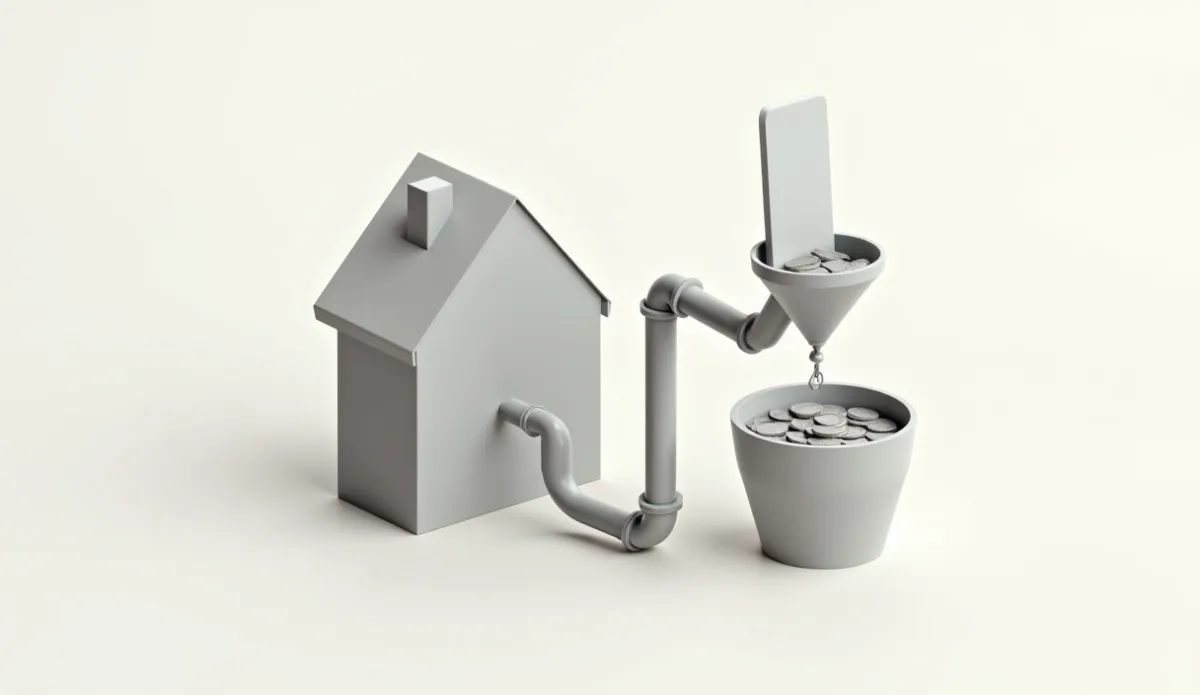
Native ads are one of the most reliable lead sources for home services — solar, roofing, bathroom remodels, HVAC, windows — because the channel's audience and the industry's buying model line up almost perfectly: older homeowners reading news content, met by qualification-style ads ("see if your zip code qualifies") that feed a per-lead economy of installers and aggregators. The pattern is visible in the data: home & garden is a top-eight vertical in OpenAdLibrary's live index with 11,032 creatives (July 2026), and the longest-running ads we have captured anywhere include a bathroom-upgrade qualification ad that had run 38 straight days on the Microsoft Audience Network. This guide covers the funnel, the angles that persist, network selection, compliance, and how to research live competitor funnels before building your own.
Why home services and native fit#
- The audience is homeowners by default. Native supply concentrates on news sites, MSN/Outlook inventory and portals whose readers skew 45+ — a demographic that owns homes at high rates and owns older homes needing roofs, bathrooms, and HVAC. You get homeowner density without any targeting sophistication.
- The unit economics tolerate lead-gen math. A roofing, solar, or walk-in-tub job is a four-to-five-figure ticket. Contractors and aggregators therefore pay meaningful money per qualified lead — enough to absorb a native CPC, a lander conversion rate, and a margin. The mechanics of buying clicks to sell leads are the core CPL model.
- Geo control is native's strength. Home-services demand is local; native networks target by country, state/region and DMA, and campaigns split cleanly by geo. Your buyer's coverage map can drive your targeting list directly.
- Qualification framing suits the format. Native readers respond to editorial-shaped promises. "You may qualify" reads like news; "Buy a bathtub" reads like an ad.
The funnel: how a click becomes a sold lead#
Nearly every home-services native campaign runs some version of this chain:
- The ad — a curiosity or qualification hook, almost never branded.
- The pre-lander or advertorial — frames the program or problem ("Why thousands of homeowners are upgrading their bathrooms this year"), then pushes to a check-eligibility CTA. Formats and structure: pre-lander examples that win on native.
- The quiz lander — zip code first (it commits the visitor and routes by geo), then qualifying questions: own or rent, single-family or apartment, timeframe, sometimes utility spend or roof age.
- Contact capture with consent — name, phone, email plus consent language for calls/texts.
- Monetization — the lead is sold (shared or exclusive) to installers or aggregators, transferred live as a call, or booked as an appointment. Exclusive and call-verified leads price highest; the payout also depends on service line, state, and the buyer's rejection rules.
Who runs these funnels: lead-gen affiliates working with aggregator payouts, pay-per-call operations, and — increasingly — contractors and franchise groups generating their own leads to escape aggregator pricing. The full architecture of ad-to-offer chains is mapped in landing page funnels for native traffic.
The angles that run longest (live index data)#
Longevity is the tell. An ad still spending after 30 days is almost certainly converting — the logic is laid out in ad longevity as a winning signal. Here is what the durable home-services ads in our index look like (days running at capture, July 2026):
| Angle | Live example (headline) | Network | Days running |
|---|---|---|---|
| Zip-code qualification | "Seniors Are Eligible For Bathroom Upgrades if They Own A Home In These Zip Codes" — Fetchapro | Microsoft Audience Network | 38 |
| Rebate / incentive | "This government Rebate May Cover Part of Your Health Premium" — Golden Aussie Health (insurance, identical mechanics) | Microsoft Audience Network | 38 |
| Tradesman secret | "A Window Cleaner Explained Why Sprays Make Your Glass Worse" | Taboola | 23 |
| Cost-transparency content | "How Much Does House Cleaning Cost in 2026? See Average Rates" — Loop of Now | MediaGo | 22 |
| Direct offer | "Your Dream Yard, Done in 1 Day" — Moon Valley Nursery | Teads | 17 |
Notes a practitioner should take from that table:
- Qualification beats selling. The two 38-day runners — among the longest-running ads in the entire index — both sell eligibility, not product. "You may qualify if you own a home in these zip codes" flips the power dynamic: the reader applies rather than being pitched, and the zip-code device doubles as the first quiz question.
- The senior + safety + home-equity intersection is the deepest well. Bathroom safety upgrades, walk-in tubs, and accessibility remodels aimed at older homeowners are persistent because the audience is precisely native's core demographic.
- Cost-content is the white-hat workhorse. Loop of Now runs a whole family of "House Cleaning Rates..." variants on MediaGo — same angle, many headline permutations — which is what systematic variant testing looks like from the outside. A "what does X cost in 2026" article pre-sells the estimate request without a single aggressive claim.
- Tradesman-secret angles buy attention for anything. The window-cleaner construction (insider debunks common practice) ports across every service line: roofer, plumber, HVAC tech.
Web leads vs pay-per-call: two monetization shapes#
The same native click can monetize two ways, and the choice changes the whole campaign:
- Web leads (form fills) are the default: lower payout per unit, higher volume, tolerant of imperfect traffic. The quiz does the qualification, and the buyer's rejection filters do the rest. Best when you are still learning which angles and geos convert.
- Pay-per-call flips the funnel toward urgency: the lander's CTA is a phone number (or a "call me now" button), payouts are a multiple of data-lead rates, and payment usually requires a minimum call duration. Calls suit service lines where the homeowner's problem is acute — a leaking roof, a dead furnace in January — and suit older demographics who prefer phones to forms anyway, which is exactly who native reaches. The catch: call campaigns are unforgiving of junk traffic (short calls pay nothing), and call centers keep business hours, so dayparting stops being optional.
Most durable operations run both: form funnels for planned-purchase lines (bath remodels, windows) and call funnels for distress lines (HVAC repair, plumbing), often from the same angle library.
Seasonality: the calendar is a targeting parameter#
Home-services demand is scheduled by the weather and the fiscal year, and the ad economics follow:
- HVAC peaks twice — first sustained heat wave, first hard cold snap — with CPCs and lead prices spiking together. The buyers pay most exactly when clicks cost most; the edge goes to whoever has creative tested before the season turns.
- Roofing follows storm seasons regionally; spring hail belts and post-hurricane windows create short, intense geo-specific demand spikes.
- Solar and windows lean on spring/summer (installation weather) plus a year-end financing push.
- Bath and accessibility remodels are the counter-cyclical workhorse — demand is need-driven and steady, which is why senior-safety angles run for weeks without fatigue, as the 38-day example shows.
Plan tests in the off-season shoulder weeks when clicks are cheaper, so proven creative is ready when lead prices peak.
Vertical-by-vertical notes#
- Solar. The highest payouts and the hottest compliance zone in the category — incentive claims must be current and geo-accurate, and consent handling is under real scrutiny. It deserves its own playbook (see the related article on solar lead gen below).
- Roofing. Storm- and season-triggered. The strongest funnels tie into inspection framing ("homeowners in [state] should check their roofs after this winter"). Insurance-claim angles exist but sit close to the compliance line — implying guaranteed insurance coverage is a fast way to lose a network account.
- Bathroom / walk-in tubs. The proven senior-safety angle set, per the 38-day example above. Financing and grant-style framing dominate; accessibility need makes urgency honest.
- HVAC. Sharply seasonal — replacement angles peak with the first heat wave and cold snap. Financing hooks ("new system for $X/month" style framing — with real terms) outperform rebate hooks between seasons, and repair-urgency angles route naturally to pay-per-call rather than forms.
- Windows, gutters, siding. Energy-savings and "never clean gutters again" convenience angles; mid-ticket, so shared leads and appointment models are common. Financing framing widens the audience meaningfully here because the ticket sits just above impulse range.
Where to run: network mix for home services#
Live home & garden creative counts from the index (July 2026):
| Network | Home & garden creatives | Read |
|---|---|---|
| Taboola | 4,414 | The volume leader for the vertical — 40% of all home & garden creatives we track. Start here for scale. |
| Outbrain (Teads) | 1,545 | Premium supply; direct-brand offers (the Moon Valley type) sit comfortably. |
| Revcontent | 789 | Cheap testing ground for aggressive angle variants. |
| MediaGo | 301 | Small network, outsized home-services share (301 of its 6,571 creatives) — Baidu-operated supply adjacent to MSN inventory. |
| Microsoft Audience Network | — | Home & garden isn't in its top verticals by count, yet the longest-running home-services ads we capture live here. MSN/Outlook reach is older-homeowner-dense; see the MSN native ads guide. |
On price: media buyers commonly report home-services native CPCs running higher than content-arbitrage clicks — the lead value pulls bids up — but still a fraction of what the same intent costs on search, where home-services keywords are notoriously among the most expensive clicks sold. Treat any specific number as geo- and season-dependent.
You can verify the current advertiser mix on any of these networks yourself — the Taboola index and MediaGo index are browsable by vertical and geo.
Compliance: the part that kills accounts#
Home-services lead gen has two distinct compliance surfaces, and both bite:
- Lead-transfer consent (TCPA). Leads monetize through calls, and calling a consumer requires documented prior express written consent naming who may call. The regulatory details around one-to-one consent have been litigated and revised repeatedly — build the strict version regardless of where the rules sit this quarter: named buyer(s) on the form, clear disclosure, stored proof of each consent event. Buyers increasingly reject or claw back leads without it.
- Claim accuracy (FTC). The angles that work — rebates, eligibility, government-sounding programs — are exactly the ones that get operators in trouble when exaggerated. Never imply government affiliation you don't have, never invent deadlines, and keep incentive claims current per program and state; the FTC's business guidance is explicit about deceptive door-opener claims. Networks enforce this too: advertorial-style landers must satisfy disclosure rules — covered in our guide to FTC advertorial disclosure requirements — and repeat violations burn the account, not just the campaign.
The durable operators run angles that are aggressive in framing but literal in fact: there really is a program, the zip really is served, the quote really is free.
Research live funnels before building yours#
Every element above — angle, quiz order, consent language — is observable in the wild before you spend:
- Pull the vertical. Filter the live index to home & garden, pick your geo, and sort by longevity. The long-runners are your validated-angle shortlist.
- Trace the landing pages. Each captured ad links to its traced destination (the index holds 1.3 million+ landing captures) — map the pre-lander → quiz → consent chain step by step. Method: how to find competitor landing pages.
- Diff the variants. When one advertiser runs many headline permutations of one angle (the Loop of Now pattern), read the set as a live A/B test and note which variants persist longest.
- Watch the category weekly. New angles from proven lead-gen operators surface in the index within days; the broader long-runner corpus is summarized in the longest-running native ads.
The asymmetry here is worth stating plainly: your competitors' entire testing history — which angles they kept funding, which quiz structures they settled on, which states they concentrate in — is public information the moment their ads run. A weekly hour of index review replaces months of paid trial-and-error, and the ads that have survived 30+ days of someone else's budget are the closest thing lead gen has to a published answer key.
Two closing habits separate the operators who last in this vertical from the ones who cycle out:
- Treat buyer feedback as targeting data. Every rejection reason — renter, out-of-area, disconnected number — is a quiz question, a geo exclusion, or a publisher block waiting to be implemented. Funnels that metabolize rejection data get structurally cheaper every month; funnels that don't just pay the same tax forever.
- Keep a paper trail per lead. Timestamped consent records, the exact lander version each lead saw, and the ad creative that sourced it. When a buyer disputes quality or a compliance question lands, the operator with records wins; the one without eats the clawback.
Home services rewards operators who treat it as a logistics business with an advertising department: the angle gets the click, but consent hygiene, lead quality feedback, and geo discipline decide whether the checks keep clearing.