Español
 Português (Brasil)
 Français
 Deutsch
 Italiano
 Nederlands
 Polski
 Svenska
 Türkçe
 Русский
 日本語
日本語 한국어
한국어 简体中文
简体中文 Tiếng Việt
 Bahasa Indonesia
 繁體中文
繁體中文 Čeština
 Dansk
Dansk Suomi
Suomi Ελληνικά
 Română
 Magyar
 Українська
 ไทย
ไทย हिन्दी
 العربية
 עברית
עבריתCPC vs CPM Bidding: Which Model Fits Your Goal?
CPC and CPM solve different problems. Here's how to pick the right one for a native campaign, plus how eCPC and smart bidding blend the two.

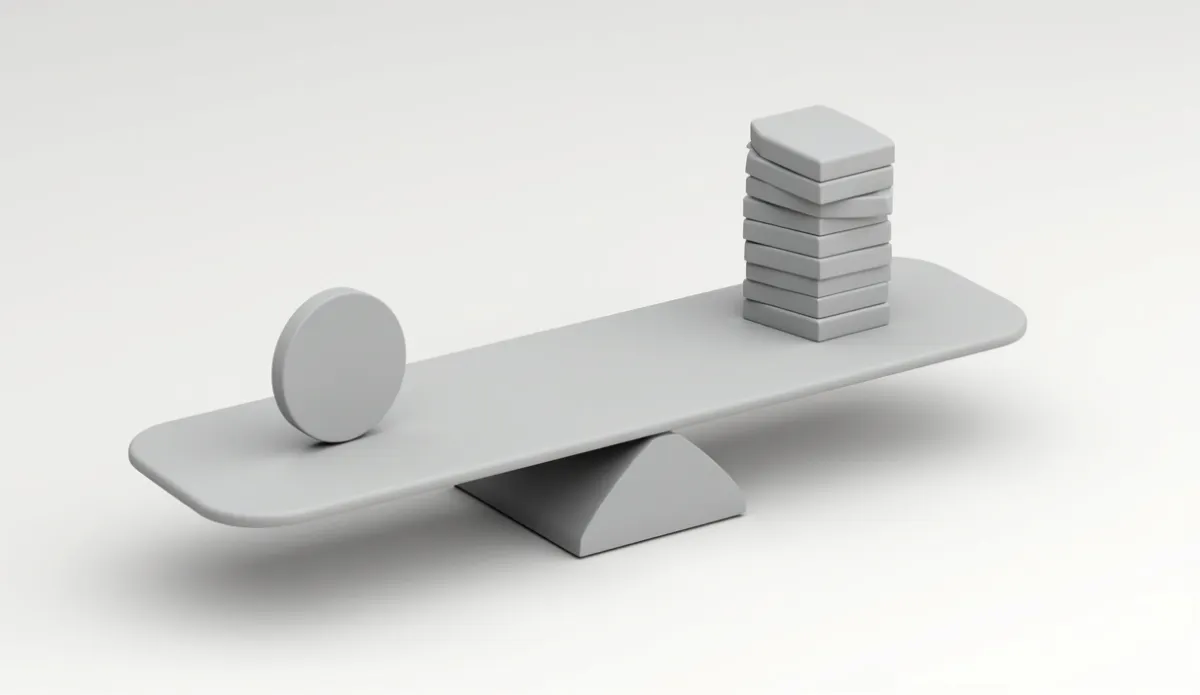
Bid CPC when the campaign's success depends on a specific action you can trace back to the click, like a lead form or a purchase; bid CPM when you're paying for reach or attention and don't need every impression to convert on its own. Most native campaigns default to CPC because most native buyers are running direct-response or affiliate offers, but CPM has a real, narrower use case that gets overlooked.
How CPC and CPM actually work on native networks#
CPC (cost per click) means you only pay when someone clicks the ad; the network absorbs the risk of impressions that get seen but ignored. CPM (cost per mille, or cost per thousand impressions) means you pay for delivery regardless of whether anyone clicks, which shifts the performance risk onto you.
Both models feed the same underlying auction: your bid, combined with the network's predicted CTR for your creative, determines an effective CPM that competes against every other advertiser targeting the same inventory. A low CPC bid paired with a high predicted CTR can outbid a higher CPM bid with weak creative, which is why creative quality moves delivery on both models, not just cost.
When CPC is the better fit#
CPC fits almost any campaign where you can measure a conversion event: affiliate offers, lead-gen forms, ecommerce checkouts, app installs. You're paying only for traffic that already showed intent by clicking, and you can calculate a rough breakeven CPC directly from your known CPA target and conversion rate. If your funnel converts at 2% and your target CPA is $40, your ceiling CPC is roughly $0.80; anything you pay above that erodes margin before the campaign even has a chance to prove itself.
CPC also protects you from a network's own targeting mistakes. If the algorithm shows your ad to an audience that scrolls past without clicking, you haven't paid for those impressions. That's the core reason most affiliate and DTC media buyers on Taboola, Outbrain and MGID default to CPC as the standard model.
There's a second, less obvious reason CPC dominates native media buying specifically: native inventory sits inside content the reader is already engaged with, which means baseline CTR is generally low compared to a dedicated ad placement. A CPM bid on low-CTR inventory means paying for a large number of impressions that never convert into anything measurable, which is a harder cost to justify when your entire business model runs on a traceable CPA.
When CPM is the better fit#
CPM makes more sense when the goal is reach or brand recall rather than an immediate click-through action, or when your creative's CTR is genuinely strong enough that CPM works out cheaper than CPC per click. A high-CTR creative running on CPM can produce a lower effective cost per click than the same creative running on CPC, because you're not paying the network's built-in premium for click-guaranteed delivery.
CPM is also the only option on some placements and networks that don't offer CPC bidding at all, particularly certain display-adjacent native placements and video-forward outstream units. If you're running an awareness campaign where the KPI is impressions delivered to a defined audience rather than clicks, CPM is the more honest match for what you're actually optimizing.
There's also a scale argument for CPM that gets overlooked. Once a creative has a long, proven track record and you're confident in its conversion rate across a large volume of traffic, CPM bidding can remove the friction of the network's own click-prediction layer entirely. You're no longer paying a premium for the network's guarantee that a click happened; you're buying the raw inventory directly and trusting your own historical data on how it converts. This only works once you have enough of that historical data to trust it, which rules it out for a brand-new campaign.
eCPC and hybrid bidding: the middle path#
Several networks offer eCPC (effective cost per click) or automated smart bidding modes that let you set a CPC target while the algorithm optimizes delivery toward conversions, adjusting the effective bid up or down per auction based on predicted conversion likelihood. This is functionally a hybrid: you're still thinking in CPC terms for budgeting purposes, but the network is managing bid-level decisions impression by impression.
Smart bidding tends to need more conversion data to calibrate than manual CPC, so it works better once a campaign has cleared its learning phase with a reasonable volume of conversion events already logged, not from day one.
The tradeoff with any automated bidding mode is visibility. Manual CPC gives you a direct lever and a direct explanation when something changes: you moved the bid, delivery moved with it. Smart or automated bidding hands that lever to the algorithm, which means when performance shifts, you're often reading tea leaves rather than tracing a clear cause. That's a reasonable trade once you trust the conversion data feeding it, and a frustrating one if you're still trying to diagnose why a campaign underperforms.
Budgeting the two models differently#
CPC and CPM require different budget math even before the campaign launches. On CPC, your budget planning starts from a target CPA and works backward through your funnel's conversion rate to a maximum viable CPC, the same math covered in detail above. On CPM, the math runs the other direction: you decide how many impressions you want to buy against a defined audience, multiply by your CPM rate, and treat any resulting clicks or conversions as a secondary benefit rather than the primary success metric.
Mixing these two mental models is where a lot of confused post-campaign analysis comes from. A CPM campaign judged purely on CPA will almost always look worse than a CPC campaign run alongside it, not because CPM performed badly, but because it was never optimized against that metric in the first place.
Network-by-network notes#
| Network | Primary bidding model | Notes |
|---|---|---|
| Taboola | CPC (primary), CPM available on some placements | Largest native network by creative volume in the index; CPC is the default for most advertiser accounts |
| Outbrain / Teads | CPC (primary) | Merged entity as of the Teads acquisition; see how the merger changed things |
| MGID | CPC (primary) | Mid-tier network with looser moderation on some verticals; full mechanics guide |
| Revcontent | CPC (primary) | Smaller reach, often lower floor CPCs than Taboola |
| Microsoft Audience Network (MSN) | CPC and CPM both common | Runs largely as resold demand through the Microsoft ad stack, CPM more common on branding placements |
Check each network's current documentation before assuming a model is available; interfaces and default options change more often than the underlying auction mechanics do.
Switching bid models mid-campaign#
Switching from CPC to CPM (or the reverse) mid-flight resets a meaningful chunk of the algorithm's delivery calibration, since it's now optimizing against a different signal. Treat a bid-model switch the same way you'd treat launching a fresh campaign: expect a short re-learning window and don't judge performance on the first day or two of data after the switch.
If you're testing whether CPM would outperform CPC for a specific high-CTR creative, it's usually cleaner to duplicate the campaign and run both models in parallel on a split budget rather than flipping the live one back and forth.
Common mistakes#
- Defaulting to CPC without checking whether the creative's CTR justifies CPM. A genuinely strong creative can be cheaper per click on CPM once CTR clears a certain threshold, and most buyers never test it.
- Judging a CPM campaign by CPA alone. If the campaign's actual goal is reach, measuring it purely on cost-per-conversion misrepresents what it was bid to do.
- Switching models during the learning phase. Give a campaign time to establish a baseline before changing the bidding mechanism underneath it.
- Ignoring that the underlying auction is the same regardless of model. A weak creative with a low CPC bid still loses the auction to a strong creative with a comparable effective CPM, so creative quality isn't optional under either model.
Before setting a starting bid on either model, it's worth checking what other advertisers are actually paying and running in your vertical rather than guessing from a network's suggested bid range, which tends to skew toward the network's own revenue interest.