10 MSN Native Ad Examples Captured Live (Microsoft Audience Network)
Ten real creatives from the Microsoft Audience Network — advertisers, observed run times, and the headline mechanics that keep each one spending.
Explainers, how-it-works guides, network-vs-network comparisons, pricing benchmarks, and per-network spy playbooks for Taboola, Outbrain/Teads, MGID, Revcontent, Yahoo, MediaGo and MSN.

Ten real creatives from the Microsoft Audience Network — advertisers, observed run times, and the headline mechanics that keep each one spending.

Microsoft Audience ads run on a CPC auction where clicks cost a fraction of Bing search. What buyers report paying, how much a fair test needs, and the bid settings that matter.

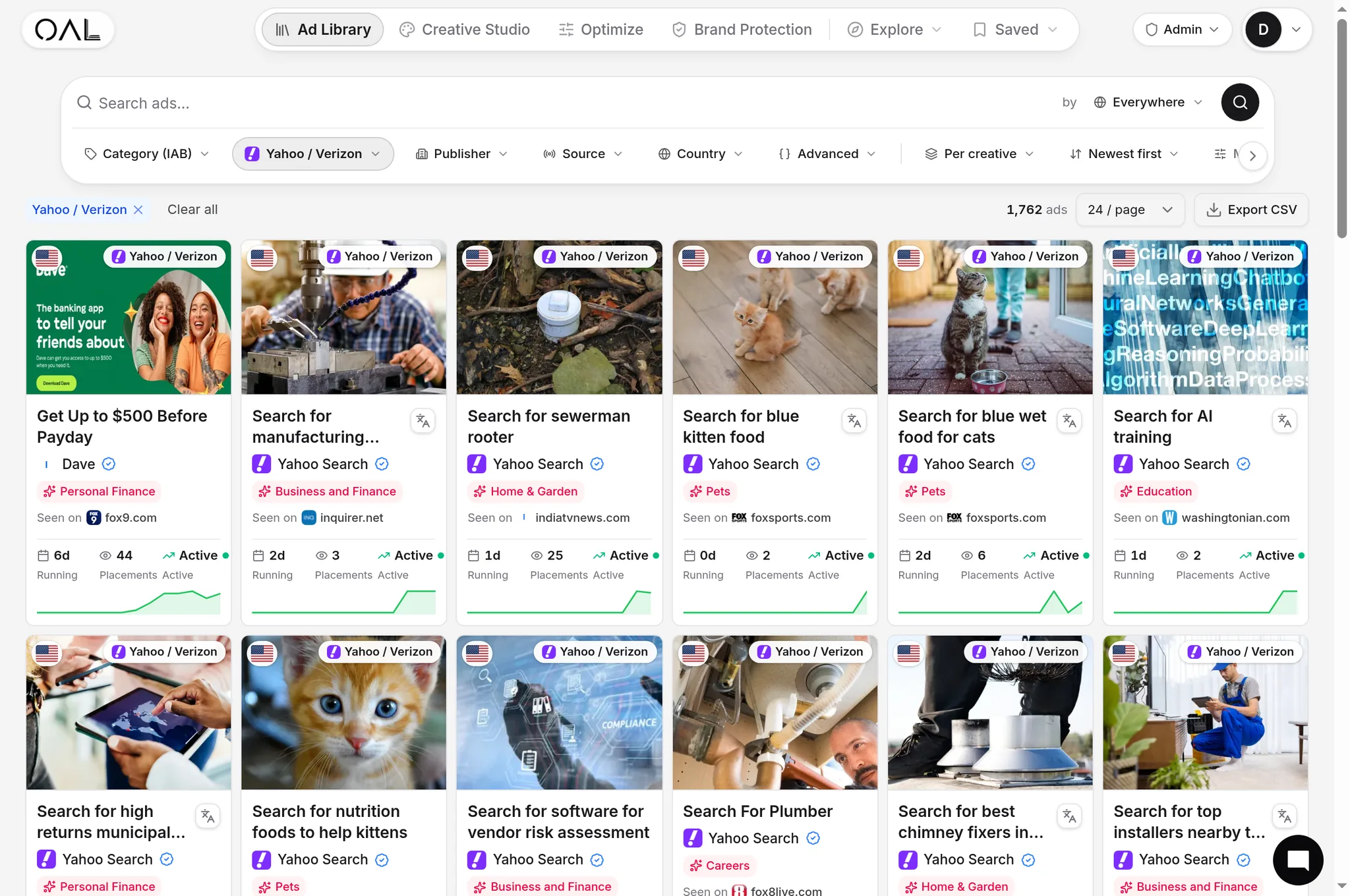
Yahoo folded native advertising into its omnichannel DSP after Gemini's sunset. What that means for buyers, what the platform actually offers, and what 5,926 live Yahoo native ads show.

The Outbrain–Teads merger produced one omnichannel platform under the Teads name. What advertisers actually get, how it compares with the feed networks, and who should buy it.

Teads sells premium in-article attention on a CPM model. Here is how its pricing actually works, what minimums to expect on each buying route, and the cost ranges buyers report.

Baidu's MediaGo hands your budget to a deep-learning bidder on premium portal feeds. We reviewed it against 6,571 live MediaGo creatives: who runs there, what it costs, and who should skip it.

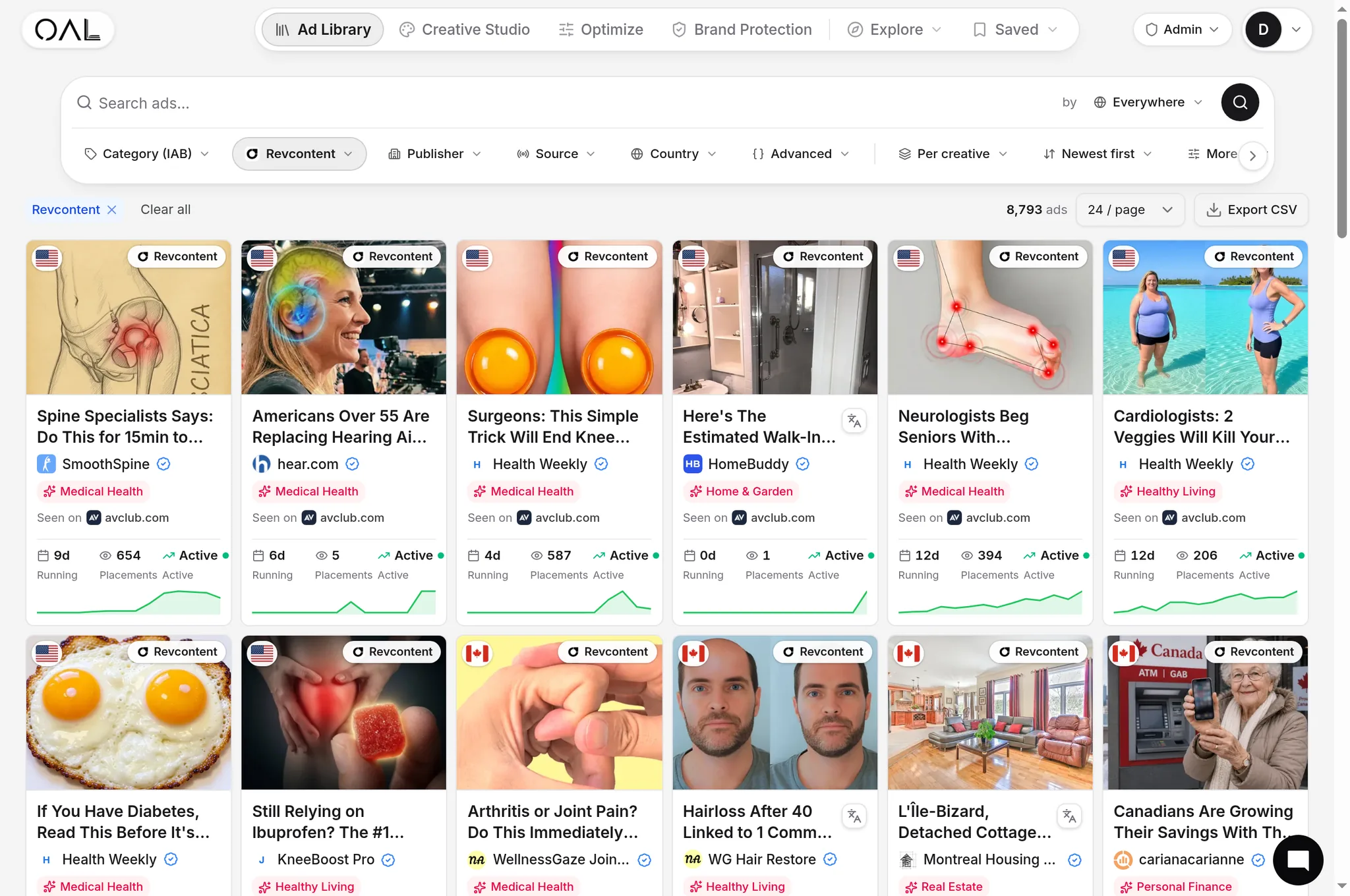
Revcontent promises cheaper native clicks and lighter competition. We judged it against 15,789 live Revcontent ads in our index — the advertiser mix, reported costs, and where the network breaks.

Revcontent publishes no rate card — your CPC comes out of an auction that rewards creative CTR. Here are the ranges buyers commonly report, deposit mechanics, and the budget math for a test that actually concludes.

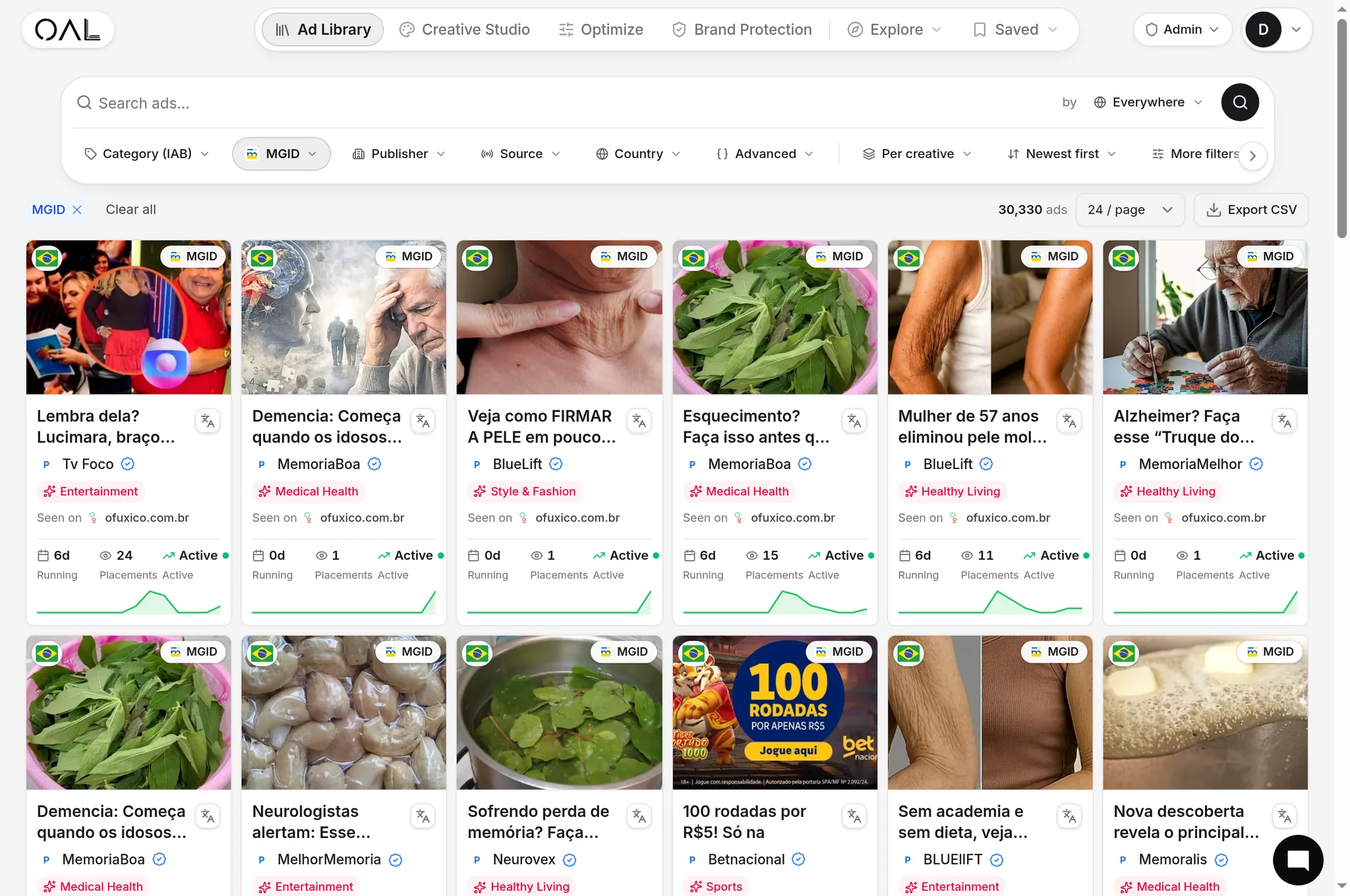
Ten real MGID ads pulled from a live index of 62,765 MGID creatives: exact headlines, the advertisers behind them, how long each has run, and the angle patterns worth stealing.

Realize is Taboola's 2025 rebrand of its advertiser platform — a strategic repositioning from 'content discovery' to performance advertising. Here is what genuinely changed, what didn't, and how to evaluate it.

Taboola ads live in sponsored feeds on publisher sites — below articles, mid-article, on homepages — and extend into Yahoo and Apple supply. Here is the placement map, and how to see exactly where any advertiser runs.

NewsBreak's self-serve Ad Manager puts native ads inside the biggest US local-news feed. Here is the full setup — account review, structure, local targeting, bids, creatives and tracking — from a native buyer's perspective.

The full build for standalone Microsoft Audience campaigns — UET tracking, campaign settings, ad-group targeting, multi-ratio image ads and the first two weeks of management — in the order that actually matters.

The Microsoft Audience Network is the only native channel with LinkedIn profile targeting. Here is how every targeting family works — in-market, remarketing, customer match, demographics — and how buyers layer them without choking volume.

Since the Outbrain merger, Teads is one buying point for outstream video, display and the native feed. Here is how access, formats, targeting, pricing and your first campaign actually work.

MediaGo pairs premium portal feed inventory with deep-learning bidding. Here is the full setup — account, tracking, targeting, creatives and Smart Bid discipline — the way a working media buyer runs it.

Revcontent is the selective mid-tier native network: harder to join than MGID, cleaner than the bottom tier. The requirements publishers actually report, RPM drivers, and the health-heavy demand mix from 15,789 live ads.

Taboola, Outbrain (Teads), Revcontent, MediaGo, Microsoft Audience Network, Yahoo, Dianomi and TripleLift — eight MGID alternatives compared with live ad counts, entry bars and honest fit guidance.

A practitioner's walkthrough of launching on MGID: account funding, campaign targeting, the moderation rules that trip up new buyers, and a day-by-day first-week playbook.

Outbrain enforces the strictest creative and landing-page policies in native advertising. Here is why ads get rejected, how the review process actually works, and the checklist that gets you approved.

Outbrain monetizes publisher sites with sponsored-content feeds. Here is what it takes to get accepted, what actually drives RPM, and the contract terms to check before signing.

Outbrain targeting in four layers — environment, audience, context, and supply — with the launch-day defaults, the options to earn with data, and the bid strategy pairings that keep the algorithm fed.

Account, pixel, structure, bids, creatives, review, section optimization — the complete Outbrain campaign setup walkthrough, with the practitioner details the official onboarding skips.

Taboola reviews every ad and landing page as a pair. Here are the policies that matter in practice, the eight rejection reasons behind most failures, and the checklist that passes review the first time.

What it really takes to run Taboola as a publisher: the acceptance bar, the RPM drivers nobody quotes, the exclusivity trade-offs, and how to inspect the actual ads before you sign.

Taboola targeting is a different animal from social: geo, device, audiences, publisher controls and SmartBid. Here is what each lever does and the campaign structure practitioners actually run.

A native ad networks list with receipts: the seven major networks of 2026 — Taboola, Outbrain (Teads), MGID, RevContent, the Microsoft Audience Network, MediaGo and Yahoo — each with live creative counts from OpenAdLibrary's million-creative capture corpus, who each network suits, and the churn data that governs them all.

MSN feed traffic is Tier-1, older, desktop-heavy and cheap — and most of its bad reputation is a setup problem. What 281,000+ live MSN creatives say about who actually makes it pay.

The Microsoft Audience Network holds the largest live native footprint we track — bigger than Taboola's. Who its older, wealthier audience actually converts for, and who should pass.

The $100/day rule is a filter, not a fee. What Revcontent's minimum really covers, the arithmetic of a meaningful test, and when to start on a cheaper network instead.

Revcontent is a tenth of Taboola's size and proud of it. What 15,789 live creatives reveal about who profits on the network — and who is funding them.

MGID has no rate card — geo floors, vertical competition and your CTR set the price. Commonly reported ranges by tier, plus the levers that actually move your click cost.

MGID rewards a specific affiliate operating model: cheap Tier-2/3 clicks, wide creative testing and real moderation. Here is what 62,000+ live MGID ads say about running it profitably.

MGID traffic is mostly real humans — but placement quality varies wildly. The signals that expose junk widgets and the 7-step framework profitable buyers use to build whitelists.

The $100 MGID minimum deposit buys you an account, not an answer. Here's the budget math that actually validates an offer — and the cost stack around the platform spend.

MGID is a real, 18-year-old ad network — not a scam. But the reviews aren't wrong about variance. What the complaints actually describe, and the checklist that keeps your budget safe.

Outbrain has no rate card — geo sets the price. Practitioner-reported CPC ranges by country tier, what actually drives the differences, and a one-week method to find your real number.

Insurance, finance and health dominate Outbrain — 108,000+ live creatives say so. What the live vertical data shows, why the ranking holds, and how to pick a vertical you can win.

Outbrain rewards affiliates who run compliant advertorial funnels for lead-gen and considered purchases. The rules, the verticals that convert, and the math to run before you spend.

From premium news anchors to the long tail: where Outbrain placements actually live, how the Teads merger widened the map, and how to check any site in under a minute.

Feed CTRs that look tiny next to social are normal on Outbrain. What practitioners actually report, why CTR is a pricing lever rather than a goal, and how to read a healthy campaign.

Outbrain permits affiliate marketing but rejects bare affiliate links. Here is what the policy actually blocks, the compliant funnel that passes review, and the shortcuts that end accounts.

Outbrain built its name on premium news placements, but its exchange spans a long tail where quality varies wildly. What actually determines the traffic you get — and how to audit it.

The platform will accept the minimum; it just won't teach you anything at that spend. How to size an Outbrain test from your CPA instead of from the floor.

Health, finance and insurance carry Taboola's demand — the live creative counts prove it. The full ranking, what actually runs in each vertical, and how to pick your lane.

Placement waste is the quiet killer of Taboola accounts. Here's the block-list workflow practitioners actually use: spend-based thresholds, block vs bid-down, and graduating winners to whitelists.

Taboola doesn't publish its publisher list — but the network is mappable. The site tiers, the page placements, and three ways to check any website in under a minute.

Ecommerce is the fourth-largest vertical on Taboola. The live data shows exactly which product archetypes sustain spend on native feeds — and the advertorial funnel they all share.

Cutting your Taboola bid starves delivery. The levers that actually lower CPC: creative CTR, surgical site-level cuts, honest campaign splits, and Smart Bid fed with real conversion data.

There is no official Taboola CTR benchmark — but there are working bands buyers rely on, auction math that makes CTR your main cost lever, and a way to benchmark against live ads instead of hearsay.

Taboola the company is real, public and embedded in major news sites. The ads are a mixed marketplace. Here is how to judge the platform, the ads, and whether your money is safe there.

Google Ads captures demand; Taboola creates it. Here is how the two platforms differ on cost, creative and funnel fit — and a sequencing playbook for running both without wasting budget.

The affiliate model is welcome on Taboola; the raw affiliate link mostly is not. What review actually checks, what earns permanent bans, and the owned-lander setup that clears it.

Taboola offers affiliates premium-publisher scale in exchange for media-buyer discipline: owned advertorials, compliant claims, server-side tracking and real budgets. Here is the full operating manual.

Taboola sends real human clicks from mainstream publisher sites — cold ones, with huge variance between placements. What quality actually means on the network, and how the buyers who stay profitable handle it.

The platform's enforced minimum and the budget you actually need are two very different numbers. Here is the arithmetic that sets the real one, and how to stretch a small budget without starving the test.

Taboola has no rate card — every click clears in an auction. Here is what buyers commonly report by geo, device and vertical, and the math that decides what a click is worth to you.

What it really costs to start on each native ad network — entry models, commonly reported deposits and daily floors, and the test-budget math that actually matters.

The policy triggers behind most Taboola rejections, the fix for each, and how to tell a routine creative rejection from the account review that precedes suspension.

NewsBreak sells in-feed native ads inside a US local-news app read mostly by the over-45 crowd. An honest look at formats, targeting, strengths and hard limits.

The Microsoft Audience Network is the largest native channel in OpenAdLibrary's index — 281,839 live creatives. Here is what that corpus says about whether it deserves your budget.

MGID is the definitive mid-tier native network: cheap, global and tolerant — with traffic quality that demands active management. We grade it against the 62,765 live MGID creatives in our index.

MGID has no rate card — your CPC is set by auction, geo and creative CTR. Here are the ranges media buyers commonly report by tier, the deposit mechanics, and how to size a test budget that actually produces a verdict.

An evidence-backed verdict on who advertises with Outbrain, what it costs, where it shines, and where it can waste your budget after the Teads merger.

Outbrain prices clicks by auction, not rate card. Here are the CPC ranges buyers actually report, the real cost of a decision-grade test, and how the network's premium-editorial skew and Teads merger shape what you pay.

An evidence-backed verdict on where Taboola genuinely delivers, where it will frustrate you, and which advertisers should skip it entirely.

Taboola runs a cost-per-click auction with no rate card. Here are the CPC ranges media buyers actually report, what a decision-grade test really costs, and the five variables that move your price most.

MGID says yes to publishers the premium native networks turn away. What approval takes, what actually moves RPM, and the entertainment-heavy demand mix you'll be running — with live data from 62,765 MGID ads.

Taboola, MGID, Revcontent, MediaGo, Microsoft, Yahoo, Google Demand Gen, Nativo, TripleLift: nine real Outbrain alternatives sized with live index data instead of vendor marketing.

Outbrain, MGID, Revcontent, MediaGo, the Microsoft Audience Network and five more Taboola alternatives, compared by what advertisers actually run on each network — not by sales-page claims.

The Microsoft Audience Network is the largest fresh source of native creatives we track — 257,553 new ads in 30 days — yet it has no ad library and almost no coverage. Here's how the MSN feed works, how its demand is resold through msft-ssp and adnxs wrappers, and how to research it.

MGID and Revcontent are where smart media buyers diversify after Taboola and Outbrain, and here is how to spy on both properly using real captured longevity, geo, and advertiser data.

The Teads merger killed off Outbrain's per-creative competitive data, so here is how to capture live Outbrain/Teads ads from publisher pages instead: find rivals' creatives, trace each click to its landing page, and read longevity instead of fake spend numbers.

Taboola has no public ad library, so here's how to reconstruct one: filter live captures by network, vertical and geo, rank advertisers by volume and days live, then pull the full creative and the click-to-landing trace.

Taboola, Teads (Outbrain), MGID, and Revcontent each reward different ecommerce categories and margins, and our June 2026 capture data shows exactly where your product type actually has demand before you spend a dollar.

Published CPC ranges for Taboola, Teads, MGID, and Revcontent only tell half the story; here is how to read live advertiser density and longevity to know what a click is really worth before you fund a test.

A practitioner's breakdown of what native advertising really costs in 2026: minimum deposits, CPC ranges and the test budgets that actually decide whether you win, grounded in live ad data from Taboola, Teads, MGID and Revcontent.

MGID lets you test from $100; Taboola realistically needs ~$300/day to clear its learning phase, and our capture index shows Taboola running three times the creatives MGID does.

Taboola is the scale incumbent and Revcontent the lower-floor challenger; we compare reach, entry cost, and the real advertiser mix on each using ads captured live (157,727 Taboola creatives vs 11,478 on Revcontent in our June 2026 index).

A data-led comparison of MGID and Revcontent using the real advertiser mix, vertical breakdown, and ad longevity we've captured from each network's live creatives.

Outbrain bought Teads and the parent now trades as Teads, so here is how to compare the two networks using live ad data instead of vendor claims.

A media buyer's honest comparison of native ads and Facebook ads for DTC in 2026, covering CPC, iOS signal loss, creative, and intent, backed by the live native volume OpenAdLibrary tracks across Taboola, Outbrain, MGID, and Revcontent.

Yahoo Gemini was retired in 2023, and Yahoo native didn't die with it: demand moved to the Yahoo DSP and the supply is now run exclusively by Taboola, so here's the timeline and how to spy on live Yahoo creatives today.

Outbrain bought Teads, then took its name and Nasdaq ticker, and our live capture data shows the Outbrain engine still serves nearly all the volume.

Thirty real native ads captured live off Taboola, Outbrain and MGID in June 2026, each labeled with the actual advertiser, the network, and how long it has been running.

Yahoo Gemini is gone, but "Yahoo native" still trips up buyers: here is who really serves the ads in 2026, how to buy them, where MSN fits, and how to study live creatives.

Outbrain bought Teads in 2025 and rebranded the combined company as Teads; here is what the merged native, video, and CTV platform actually looks like, and how to study live inventory before you spend.

Revcontent serves native ads through publisher widgets you bid on one by one, and here is how its delivery, site-level targeting, CPC bidding and optimization levers actually work, with real captured ads.

A media buyer's walkthrough of MGID's native formats, contextual targeting and low entry CPCs, backed by the real creatives and tracker stacks we capture on live MGID placements.

Outbrain is now Teads on paper, but the native engine underneath is the same auction, and here is how its bidding, formats, pricing, and live creatives actually work for advertisers in 2026.

A working media buyer's breakdown of how Taboola native ads actually run in 2026: the auction, the widget, CPC pricing, and the tracker chain behind every click, shown with live creatives we captured instead of vendor mockups.

We ranked the major native ad networks by the only metric that predicts where your money goes: how many live ads each one is actually running right now, pulled straight from OpenAdLibrary's index of 589,000+ captured creatives.

A practitioner's guide to native advertising in 2026: the formats, the networks, how the auction really works, and how to read winning ads straight off the live market.