Español
 Português (Brasil)
 Français
 Deutsch
 Italiano
 Nederlands
 Polski
 Svenska
 Türkçe
 Русский
 日本語
日本語 한국어
한국어 Tiếng Việt
 Bahasa Indonesia
 繁體中文
繁體中文 Čeština
 Dansk
Dansk Norsk (bokmål)
 Suomi
Suomi Ελληνικά
 Română
 Magyar
 Українська
 ไทย
ไทย हिन्दी
 العربية
 עברית
עבריתAre Small Native Ad Networks Worth It? When Tier-2 Traffic Pays
Tier-2 native networks carry a fraction of Taboola or Outbrain's inventory, which cuts both ways. Here's the real size gap, when smaller networks pay off, and how to test one without wasting budget.


Small native ad networks are worth testing when you already have a proven angle, a Taboola or Outbrain campaign that's plateaued, and enough margin to absorb a slower, noisier learning curve. They're not worth it as a first native buy: the smaller networks carry a fraction of the inventory and advertiser competition of the majors, which cuts both ways, less scale but often less saturation for the same creative.
Here's how the math actually breaks down, using real inventory numbers rather than reach claims from the networks' own sales decks.
How big is "small," actually#
OpenAdLibrary's index tracks 49 native ad networks. The size gap between the top of that list and the middle is enormous:
| Network | Live creatives (index) |
|---|---|
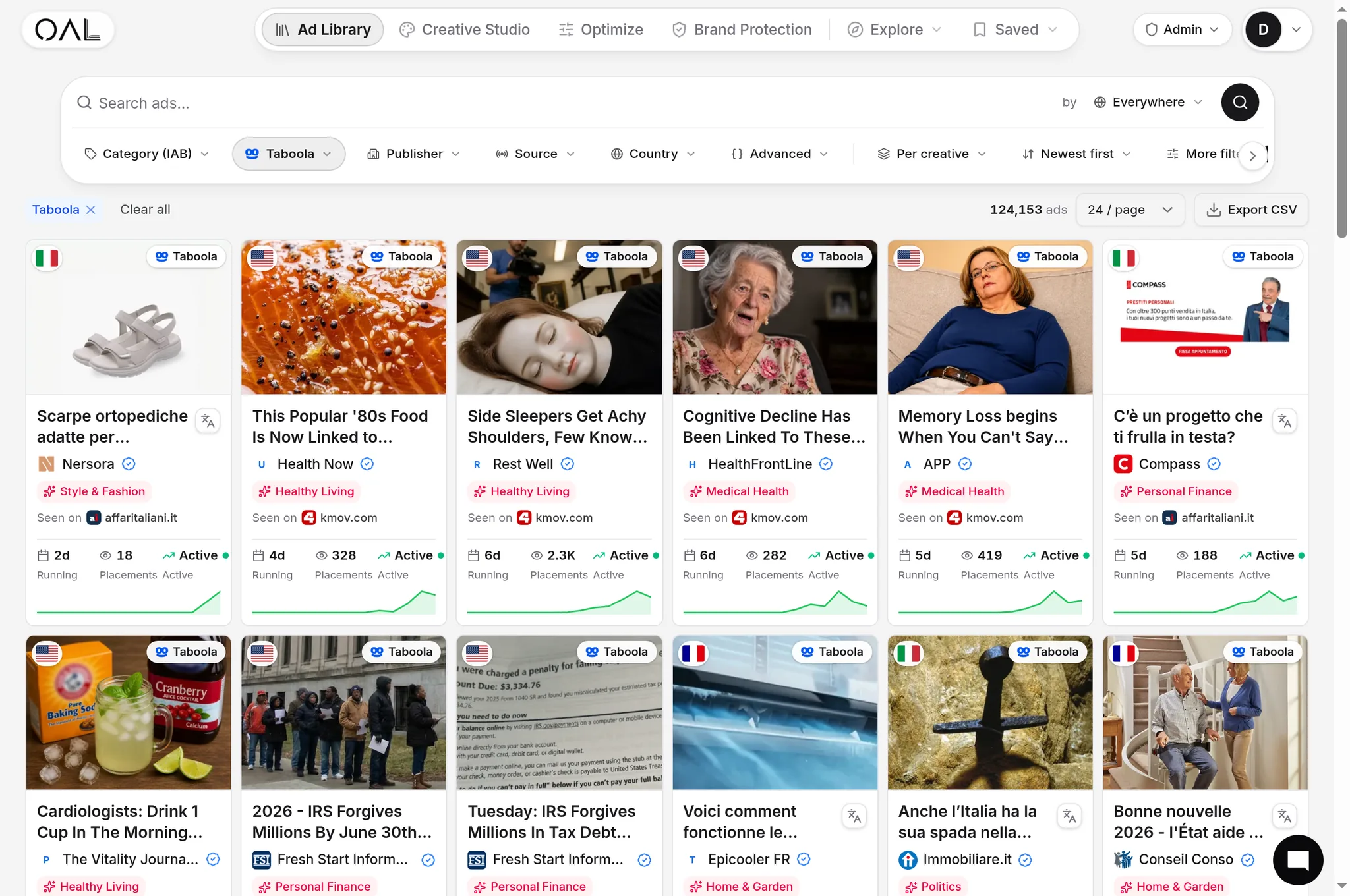
| Taboola | 206,145 |
| MSN (Microsoft Audience Network) | 281,839 |
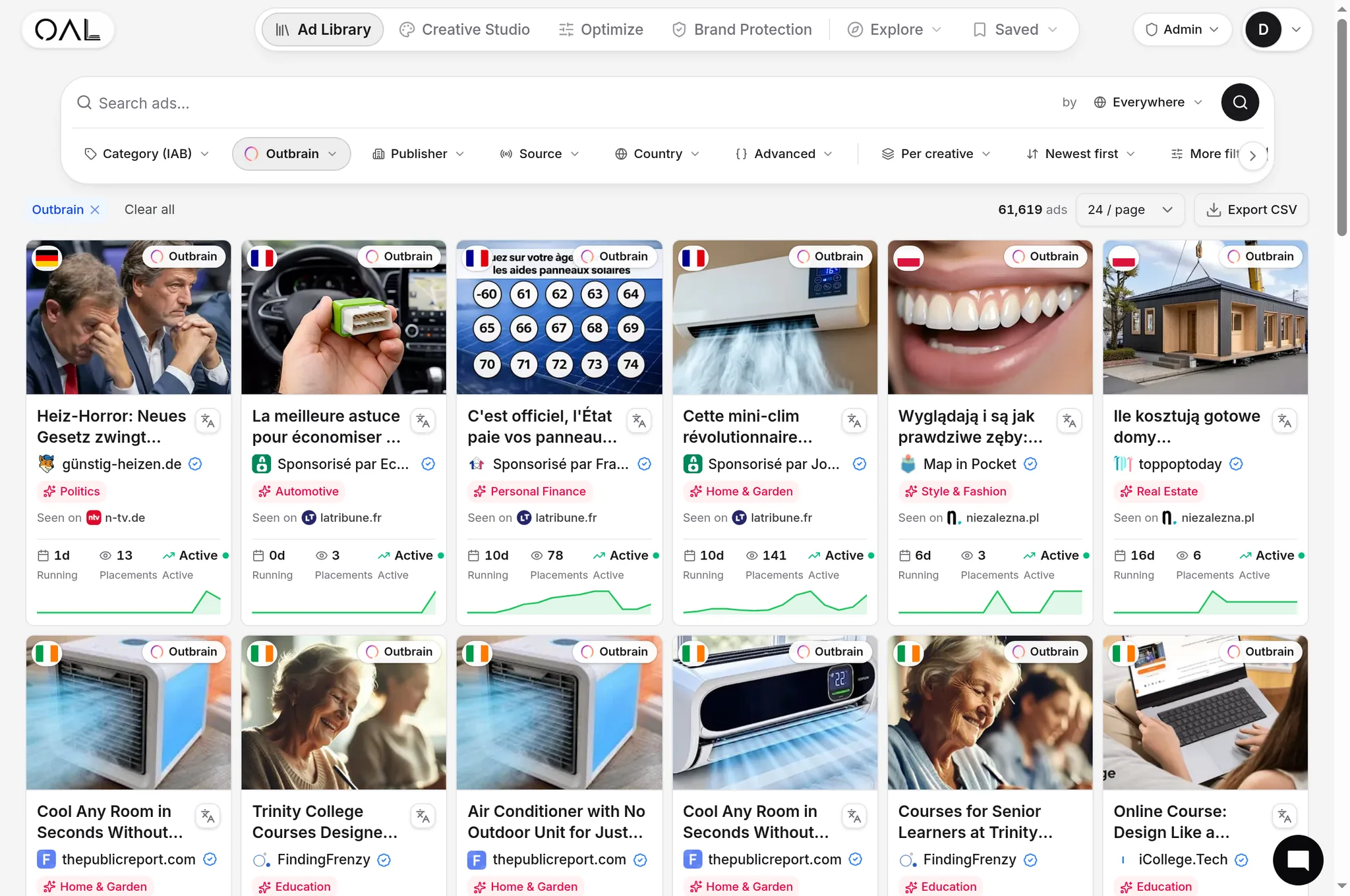
| Outbrain | 108,573 |
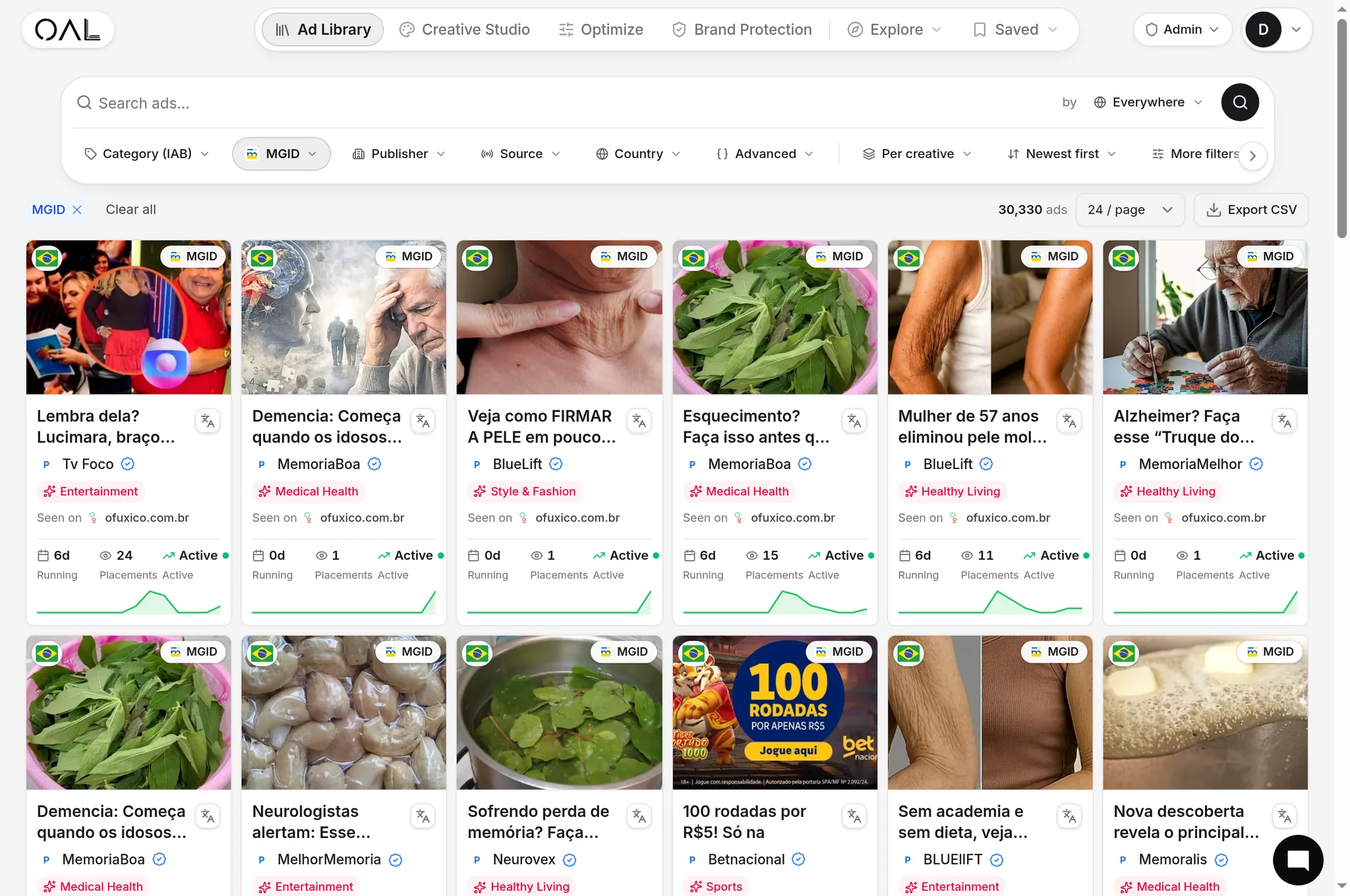
| MGID | 62,765 |
| Revcontent | 15,789 |
| MediaGo | 6,571 |
| Yahoo | 5,926 |
| Teads | 113 |
Taboola, MSN and Outbrain together account for the overwhelming majority of the 725,882 creatives across all 49 networks in the index. Revcontent and MediaGo sit a full order of magnitude smaller. Teads, at this snapshot, carries barely more than a hundred classified live creatives, though its inventory composition (it absorbed much of Outbrain's syndication business through the Outbrain-Teads merger) means its true reach is broader than raw creative count alone suggests; see our explainer on what happened when Outbrain became Teads for that context.
That's the honest starting point: "small" here spans two very different situations, a genuinely niche network with thin advertiser competition (Revcontent, MediaGo) and a network whose classified-creative count understates its actual scale because of how its inventory is structured (Teads).
The case for testing small networks#
Lower competition per placement. With a fraction of the advertisers bidding for the same publisher inventory, a smaller network's auction dynamics are less crowded. Media buyers commonly report this translating into lower CPCs on Tier-2 networks relative to Taboola or Outbrain for comparable placements, though your actual number depends heavily on vertical, geo and creative quality; treat any specific CPC figure you hear as a starting estimate, not a guarantee, and check the network's current rate card and documentation directly.
A working angle from Taboola or Outbrain often transfers. If you've already found a headline-and-image combination that's proven itself on a major network (see our guide on finding winning native ad angles), porting that same creative to a smaller network is a cheap way to test incremental volume without building anything new.
Niche publisher fit. Revcontent and MediaGo both run on different publisher rosters than Taboola and Outbrain. If your vertical over-indexes with a specific publisher base (regional news sites, niche hobby content, a particular country's portals), a smaller network's inventory mix might match your audience better than a major network's broader reach, even at lower total volume.
Vertical fit varies by network, not just by size#
Small doesn't mean generic. Revcontent's live creative mix in OpenAdLibrary's index skews toward health (2,566 creatives), finance (816), home and garden (789), insurance (638) and nutra (440), a pattern fairly close to the majors. MediaGo's mix looks different: insurance (378), home and garden (301), ecommerce (265), auto (257) and gaming (218), with a noticeably stronger auto and gaming presence than you'd typically see on Taboola or Outbrain. If your vertical happens to be gaming or automotive, that's a real signal MediaGo's publisher roster might fit better than a larger network's, independent of any cost advantage.
The case against starting there#
Thinner support and slower iteration. Smaller networks generally have smaller account teams and less mature self-serve tooling, so troubleshooting a broken pixel or a rejected creative can take longer than on Taboola or Outbrain.
Volume ceiling. Even a network performing well for you at a small scale can hit its inventory ceiling fast. If your business model needs meaningful volume to be worth the operational overhead, a network with 6,000 total creatives platform-wide (like MediaGo) simply can't carry the same absolute spend a network with 200,000+ can.
Policy and quality inconsistency. Enforcement of ad policy (health claims, before/after imagery, disclosure requirements) can vary more between smaller networks than between the majors, which have invested more heavily in automated review. That's not a reason to avoid them, but it does mean your compliance review needs to be as careful (or more careful) as on a major network, not less.
What tends to differ once you're actually running#
Beyond raw inventory size, a few operational differences show up consistently once a campaign is live on a smaller network rather than Taboola or Outbrain:
- Approval turnaround. Creative review on a smaller network can take longer, or shorter, depending entirely on the network; there's no universal rule, so build in a buffer for your first submission rather than assuming same-day approval like you might expect from a major network's automated review.
- Bid strategy transparency. Major networks tend to publish more detailed documentation on their auction mechanics and recommended starting bids. Smaller networks sometimes leave more to account-manager conversation, which can be an advantage (a real human helping you tune a campaign) or a disadvantage (inconsistent guidance) depending on who you get.
- Reporting granularity. Breakouts by device, placement or specific publisher site can be thinner on a smaller network's dashboard, which matters if you're used to slicing Taboola or Outbrain data finely to find your best-performing placements.
- Minimum spend and account minimums. Some Tier-2 networks set lower account minimums specifically to attract advertisers testing the waters, which can make the actual cost of trying one out lower than it looks from the CPC alone.
A practical way to test#
- Pick one already-proven angle, not a new concept. Testing new creative and a new network at the same time makes it impossible to tell which variable caused a result.
- Cap the test budget at a level you'd be comfortable losing entirely, separate from your core Taboola/Outbrain budget.
- Compare CPA against your existing network's benchmark, not against an absolute target, for the first week or two while the algorithm learns.
- Check who else is already running there. Before committing spend, look at what's currently live on the network for your vertical; a network with almost no advertiser activity in your category might mean opportunity, or it might mean the audience doesn't respond to that vertical at all. Our MGID and Revcontent ad spy guide walks through tracking advertiser activity on mid-tier networks specifically.
- Scale gradually, treating it as a new, uncorrelated channel rather than an extension of your Taboola account, since bid strategy, audience behavior and creative fatigue rates can all differ.
Where OpenAdLibrary fits in this decision#
Before committing budget to any Tier-2 network, it helps to see what's actually running there rather than relying on the network's own sales pitch about reach and CPCs. OpenAdLibrary's native ad spy tool indexes live creatives across Revcontent, MediaGo, Teads, Yahoo and the rest of the 49 tracked networks, so you can check advertiser density and creative longevity in your specific vertical before deciding whether a smaller network is worth the operational cost of adding it. Longevity in particular is a useful proxy: an ad still running after weeks on even a small network is usually still profitable for whoever's paying for it.
The bottom line#
Small native ad networks are worth it as a second or third channel, layered on top of a working Taboola or Outbrain campaign, not as a starting point. The lower competition can mean real cost advantages, but the volume ceiling means they'll rarely replace a major network's role in your media mix. Test with a proven angle, a capped budget, and a clear-eyed read of how much total volume the network can actually support before scaling in. For a broader view of when diversifying pays off versus when it just adds overhead, see our comparison of horizontal vs. vertical scaling in native media buying.