

 Español
 Português (Brasil)
 Français
 Deutsch
 Italiano
 Nederlands
 Polski
 Svenska
 Türkçe
 Русский
 日本語
日本語 한국어
한국어 简体中文
简体中文 Tiếng Việt
 Bahasa Indonesia
 繁體中文
繁體中文 Čeština
 Dansk
Dansk Norsk (bokmål)
 Suomi
Suomi Ελληνικά
 Română
 Magyar
 Українська
 ไทย
ไทย हिन्दी
 العربية
 עברית
עברית
Ad Creative & Funnels
Ad Copy Formulas That Work: PAS, AIDA & Native Patterns
PAS and AIDA still work on native, but only once you compress them into a headline and hand the rest to the landing page. Here's how, with real headline patterns.
Creative intelligence and funnel content: analyzing winning creatives, headline and angle formulas, advertorials, pre-landers, and landing-page reverse-engineering, all grounded in OpenAdLibrary's captured creative and click-to-landing evidence.
PAS and AIDA still work on native, but only once you compress them into a headline and hand the rest to the landing page. Here's how, with real headline patterns.

One look at a competitor's ad is a photograph. Watching it change over weeks is a video, and the video is what actually shows you their test results.

A UGC-style native ad has to earn its keep differently than a social one. Here's where the format actually wins, where it backfires, and how to test it fairly.

Optimization has a ceiling; fresh creative supply doesn't. Here's what a creative volume strategy actually looks like, and how much volume is enough.

Judging a creative test too early is the most expensive mistake in native media buying. Here's how to size your testing budget around conversions, not guesswork.
There's no magic number, but live captures show winning native headlines cluster in a fairly tight band. Here's the data and the rules worth following.

Native readers aren't in a shopping mindset, so the CTAs that work aren't the ones you'd use in a shopping ad. Here's what actually recurs across live native creative, by funnel stage.

Health, finance and insurance are native advertising's biggest verticals, and its core audience skews 55+. Here's the copy that resonates with that reader, and what reads as inauthentic.

Before/after imagery is permitted on every major native network in principle, but enforcement against exaggerated results is real. Here's what's allowed, what gets rejected, and safer alternatives.

Curiosity-driven headlines lift click-through rate on native placements, but the gain isn't free. Here's where clickbait pays off and where it turns into a policy problem.

Translation alone rarely works on native creative. Here's what actually carries across geos, what predictably flops, and a checklist for localizing hooks, imagery and pricing.

Fear angles can outperform on native, but the same urgency that earns the click is what draws network compliance review. Here's how to use loss and risk framing without losing the account.

A plain, almost boring native ad regularly outlasts a polished one. It isn't an accident of taste, it's a mismatch between what a native feed rewards and what a brand designer optimizes for.

Coming up with a new angle isn't a creativity problem, it's a framework problem. These nine repeatable structures, each with a live example, cover most of what actually runs on native.

A native ad that suddenly stops converting almost never means the offer died. It usually means the creative wore out, the market caught up, or something downstream quietly changed.

Both styles show up among the longest-running native ads in the index. The split that matters isn't curiosity versus clarity, it's which one fits the vertical and the reader's intent.

Faces in ad images help CTR in some verticals and do nothing (or hurt) in others. Here's where the pattern holds across live native creative, and how to test it for your own offer.
The timer itself isn't the legal issue. What draws enforcement is a countdown that resets or doesn't match a real deadline, a pattern regulators treat as deceptive design.

A translated page still reads as foreign if the currency, payment methods, imagery and trust signals don't match the market. Here's what real localization covers, geo by geo.

A missing privacy policy or a buried disclosure is one of the cheapest ways to get an ad account suspended. Here's the minimum legal footprint a landing page needs, and where geo rules diverge.

Pageviews and bounce rate are the wrong numbers to watch on a pre-lander. Here's what actually predicts whether one is converting, and how to set up tracking that separates the pre-lander event from the offer event.

Fabricated comment sections on pre-landers fail the FTC's endorsement test and get rejected by native network compliance independently of the law. Here is why the pattern isn't worth the risk.

Native traffic is a phone-first audience, so a pre-lander adapted down from desktop will underperform one built mobile-first. Here are the design rules that actually move conversion.
Long-form advertorials and short bridge pages both win, just for different offers. Here is how offer complexity and traffic temperature decide which format fits.

Native traffic is cold and budgets are limited, so testing the wrong variables first wastes both. Here is the order experienced buyers actually test pre-landers in.

The domain hosting your pre-lander is a risk container. Here is how a dedicated root domain, a subdomain and a tracker redirect domain differ in blast radius, reputation and compliance risk.

A visitor who clicked a native ad has zero patience for a slow page, and a bounce before your pixel fires means the lost visitor never even shows up in your data.
Most prelander builds fail on tracking wiring and compliance, not copy. Here's a practical hour-by-hour workflow to get a first version tested in a single day.
Quiz funnels trade volume for qualification. Here's when the extra interactive step actually helps on native traffic and when it just adds friction.

Forget the benchmark number you saw in a forum post. Here's how to separate ad CTR, prelander CTR and full-funnel CVR, and build a baseline from your own traffic.

The ad headline sells the click; the advertorial headline sells the read. Six formulas drawn from live traced funnels, plus the compliance boundaries that end runs early.

A five-step hook-analysis method: sample at scale, classify with an eight-type taxonomy, score with longevity data, and extract mechanisms instead of copying copy.

Power words aren't a magic list — they're seven recurring categories. Real captured headlines show which words the five-week survivors lean on, and which age badly.

Most native creatives die within days; a thin band survives five weeks. How to tell fatigue from a losing creative, and the refresh cadence that keeps winners alive.
Eight image rules that hold up across 725,000+ live native creatives: match the feed, one subject, no text overlays, curiosity pairing, and rotation that beats fatigue.

Where working media buyers actually get native ad images — and the visual patterns that separate creatives that run for weeks from the ones that die in days.

A swipe file only works if every saved ad carries proof and context. The entry criteria, nine capture fields, angle-first taxonomy, and weekly routine that keep one alive.
Direct linking is faster; a landing page converts cold native traffic. When each one wins, what traced funnels show by vertical, and the math a pre-lander has to beat.

Five advertorial templates dominate live native ad funnels. Here is each one broken down — structure, live examples, and the seven-step writing process practitioners actually use.
Native networks reject landers off a short, stable list of triggers: claims language, missing trust pages, disruptive behavior, ad mismatch. The full checklist, the fix for each, and why month-old live landers are your best compliance spec.

The numbered pre-lander is native advertising's most durable format because inside a content widget it reads as content. The three listicle types, item-by-item anatomy, and what month-long live runs reveal about what converts.

Native clicks arrive with near-zero intent — quiz funnels convert that curiosity into micro-commitments and segmentation. Question sequencing, the analytics that matter at every step, and how to find live quiz landers worth modeling.

Downloading a competitor's landing page takes two minutes. What separates professionals from cloners is what happens next: an honest look at ripping tools, the legal line, and the rip-to-learn workflow that actually produces winners.

A/B test duration is arithmetic, not folklore: required sample divided by daily volume. Here is the sample-size math made usable, plus the floors, ceilings, and kill rules that keep tests affordable.

Winners get killed by calendars and zombies survive them. The trigger system that tells you when a creative actually needs replacing, cadences by buying context, and what live native run-duration data shows.

Half of what buyers treat as fatigue is something else. How to confirm the diagnosis, the cheapest-first refresh ladder that fixes it, and the pipeline habit that keeps it from becoming an emergency.

The number that matters is not how many ads you launch but how many real angles you test. The working counts by scenario, the budget math behind them, and the kill rules that keep testing honest.
Rejection notices are vague; the reasons behind them are not. The ten things reviewers actually reject landing pages for, the fix for each, and how to resubmit without hurting your account.

Networks review the whole click path, not just the creative. Here are the landing page rules every major native network enforces, how the review actually works, and where each network sets the bar.

Pre-landers usually lift cold-traffic conversions — but not always, and never for free. The arithmetic that decides it, and the split-test discipline that proves it.

One warms cold traffic, one closes it. When your native funnel needs an advertorial, when it should go straight to the landing page, and how to test the choice honestly.

A swipe file is only as good as its evidence. Real native creatives organized by vertical — each with observed run time — plus the tagging and refresh system that keeps a swipe file useful.

Conversion rates are private, but sustained ad spend isn't. How 1.3 million landing captures reveal the best-converting page anatomy in health, finance, lead-gen and ecommerce.

Finance (18,727 creatives) and insurance (17,177) are the two biggest verticals in our 635,443-ad native index. Six real captured examples across Taboola, Outbrain and the Microsoft feed show the angles that run — retirement, IRS/tax, rate shock — and which ones the longevity data says endure.

Ten real Taboola creatives pulled live from a 171,050-ad index — with the advertiser behind each, how long it's been running, and the headline mechanism doing the work: eligibility hooks, casting-call angles, editorial blends, geo-personalization and offer-led cards.

The image and headline patterns that actually move click-through on Taboola, Outbrain and the rest of the native feed, pulled from the 589,000+ live creatives we've captured and sorted by the verticals where each one wins.

Most ecommerce ads fail at the angle, not the artwork, so here's a practical library of the hooks that convert on native traffic and a simple way to tell a proven angle from a hopeful guess.
The FTC's rule on advertorials and native ads is one line, ads must look like ads, and here is what that means in practice, the labels that pass, and real disclosed versus undisclosed patterns from live native traffic.

Studying a competitor's ads one at a time tells you almost nothing; cluster them by the landing page each one points at and the whole offer strategy, the winners they keep alive and the tests they quietly kill, reads straight off the page.

The hard part of competitor research isn't seeing the ad, it's finding where the click lands, so here's how to trace a native ad to the real landing page, capture the evidence, and read the funnel.

Native traffic doesn't convert on the click, it converts on the chain, so here's how the ad, pre-lander, and offer fit together and why message continuity decides your margins.
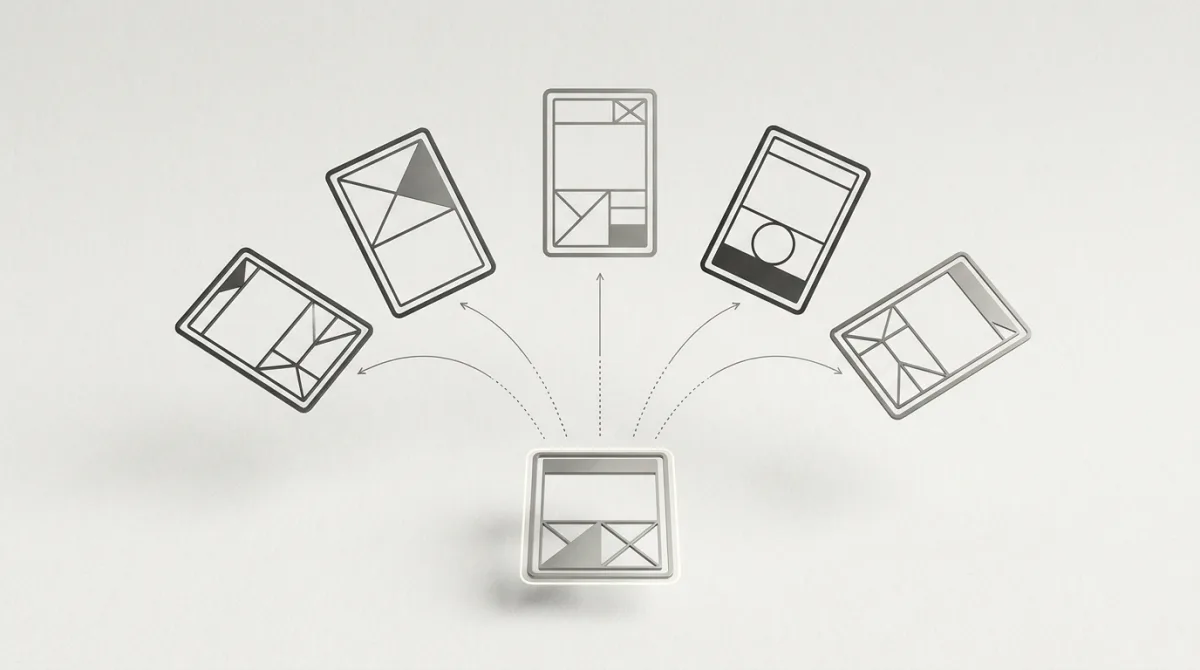
The six pre-lander formats that actually convert cold native clicks, mapped to traffic temperature and offer complexity, with real captured ads showing each one in the wild.

Advertorials convert when the page resolves the exact tension the ad created, so here's the seven-section anatomy with teardowns pulled from live native captures, not stale swipe files.

Native networks are where advertisers test products first, so reading new entrants, creative ramps, and persistent offers there spots winners weeks before they saturate the Meta libraries everyone else watches.

We read the public signals behind 589,000+ live native creatives to show which hooks, images and headline structures actually survive, and how to run the same pattern analysis on real running ads instead of guessing.

Twelve native ad headline formulas, each matched to a real ad running right now across Taboola, Outbrain and the Microsoft Audience Network, so you can see the structure work before you swipe it.
Hook, angle, and claim get used interchangeably and it quietly wrecks your tests; here's the creative ladder that separates them, why the angle is the unit that scales, and how to read one advertiser running a single angle across a stack of hooks in live native-ad data.

A repeatable scoring rubric for hook, angle, proof, format and CTA, applied to real native ads we captured this month, so you copy the method instead of the creative.

A repeatable five-step method for tearing down native ad creatives, from hook and angle to advertorial, using real captured ads and longevity data instead of guesswork.

You can't see another affiliate's ROI, but you can see what they keep paying to run; here is how to turn ad longevity and creative saturation into a repeatable offer-validation checklist.

Winning products leave a trail in native ad data: ads that keep running for weeks, multiple affiliates piling onto one offer, and creatives that get refreshed instead of killed. Here is how to read those signals and trace the click to the offer page.

The angle is the strategic bet your whole campaign rides on, not the headline, and here's how to reverse-engineer the recurring angles that scale in nutra and finance from live native ad captures.

An ad that keeps running is an ad that keeps paying, and our first-seen/last-seen data on the live index shows just how few native creatives survive long enough to count.

The pre-lander is the page between a native ad and the offer, and on cold traffic it does the persuasion the ad can't: here's how advertorial funnels work and how to reverse-engineer the ones that win.

A winning ad isn't the prettiest one in the feed, it's the one an advertiser keeps paying to run, and this is the framework for reading the signals that prove it.