Español
 Português (Brasil)
 Français
 Deutsch
 Italiano
 Nederlands
 Polski
 Svenska
 Türkçe
 Русский
 日本語
日本語 한국어
한국어 简体中文
简体中文 Tiếng Việt
 Bahasa Indonesia
 繁體中文
繁體中文 Čeština
 Dansk
Dansk Norsk (bokmål)
 Suomi
Suomi Ελληνικά
 Română
 Magyar
 Українська
 ไทย
ไทย हिन्दी
 العربية
 עברית
עבריתHow Native Ad Targeting Works (Contextual, Interest & Post-Cookie)
Native ad targeting isn't one mechanism, it's five or six overlapping layers: contextual, interest, retargeting, geo, device and schedule. Here's how each one actually works.


Native ads target users through a mix of contextual signals (the page and category they're currently reading), first-party audience data the network already holds (device, geo, browsing history within its own publisher network), and advertiser-supplied inputs like retargeting pixels and lookalike segments, run through a real-time auction rather than a fixed placement buy. There's no single "native targeting" mechanism; it's a stack of overlapping options, and how much weight each one gets depends on the network and the campaign objective.
Contextual targeting: the oldest layer, now the most resilient#
Every native network lets you target by content category and keyword: finance articles, health content, automotive reviews, and so on. This is the least invasive form of targeting because it doesn't need to know anything about the individual user, only what they're currently reading. It's also become the layer with the most staying power as third-party cookies get restricted, because contextual targeting doesn't rely on cross-site identifiers at all.
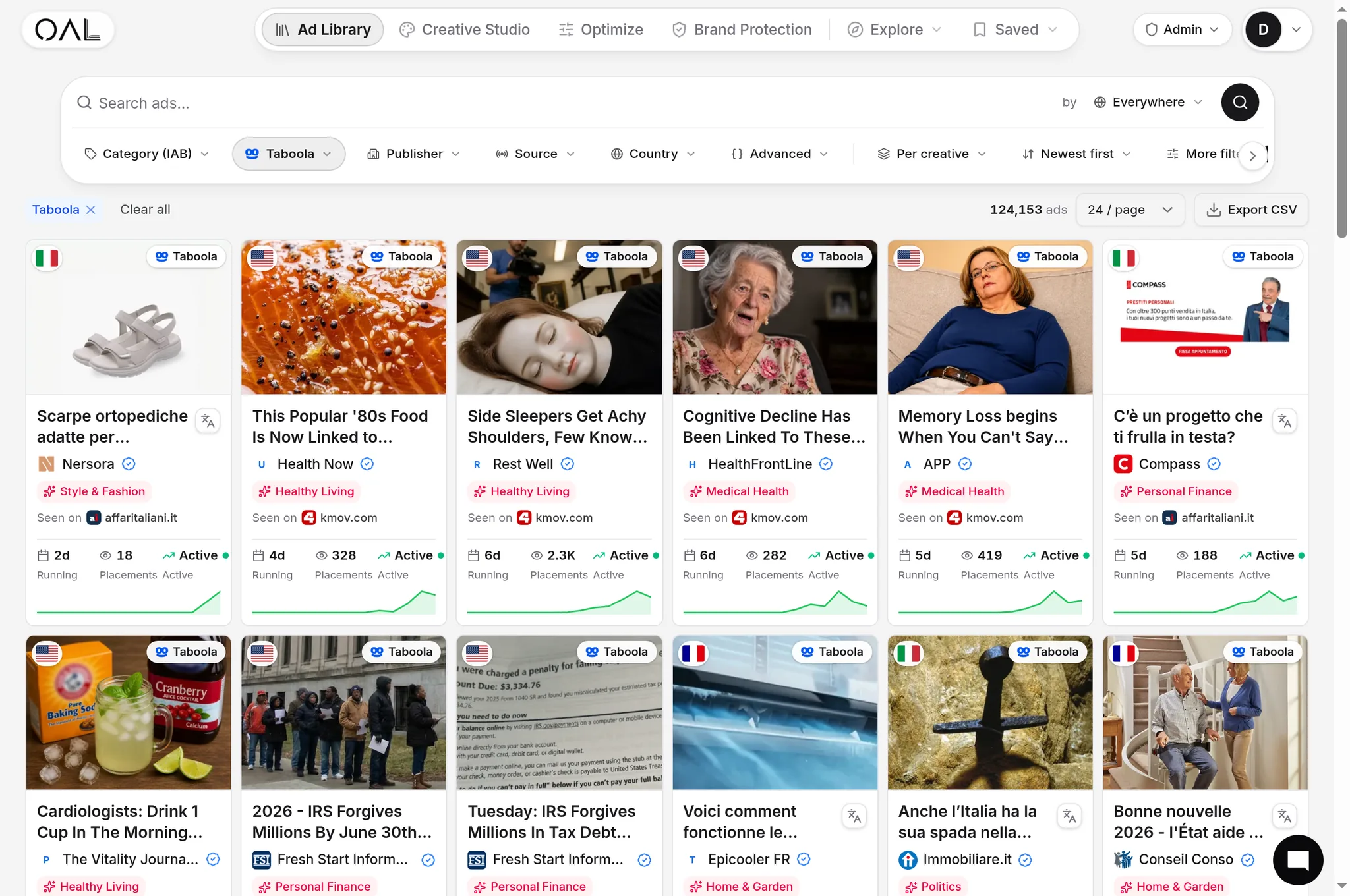
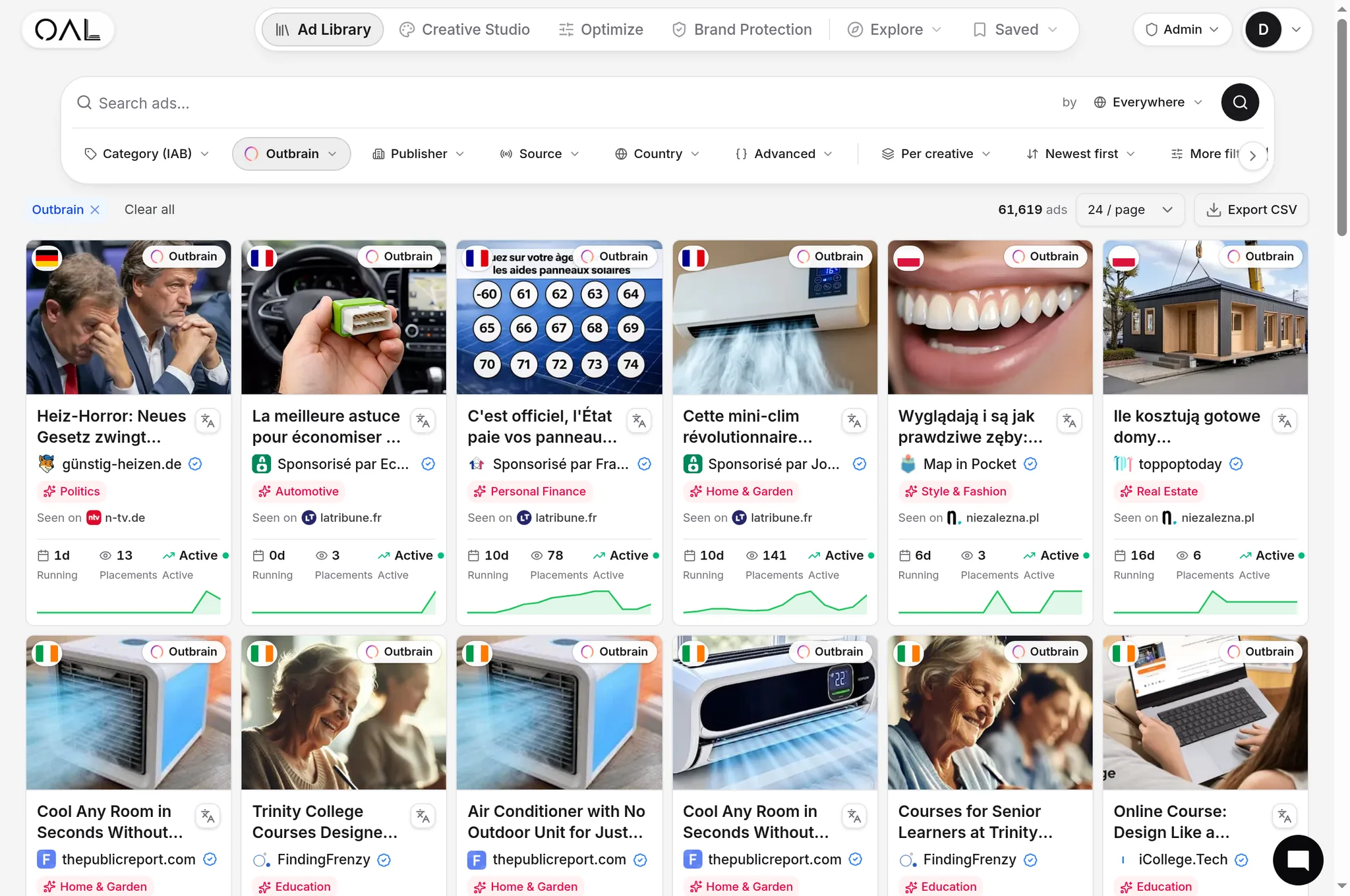
Contextual targeting on native networks usually goes deeper than a broad category. Taboola and Outbrain both offer site- and section-level targeting, so you can bid specifically into a publisher's health vertical or its personal-finance section rather than its whole domain. That granularity is often a better lever than audience targeting for advertisers in regulated categories, since it controls adjacency risk directly.
Interest and behavioral targeting#
Beyond context, networks build interest profiles from browsing behavior across their own publisher footprint (what a user reads, clicks, and lingers on across the sites in the network's supply). This is first-party data from the network's point of view even though it spans many publisher domains, since it's collected under the network's own tracking relationship with those sites. It's used to build broad interest segments (auto intenders, travel researchers, health-content readers) that advertisers can layer on top of contextual and geo targeting.
Retargeting: pixel-based, and still the highest-intent lever#
Drop a network's pixel on your site and you can retarget visitors who didn't convert with native placements as they browse elsewhere in that network's supply. This remains one of the strongest levers in native because it's built on a direct first-party relationship (your own pixel, your own visitor), not a third-party cookie graph. It's also why native retargeting has been comparatively insulated from the cookie deprecation conversations that hit display and social hardest.
Geo, device, and dayparting#
These are table stakes across every network: country and often region/city-level geo targeting, device type (desktop, mobile, tablet) and OS, connection type on mobile, and time-of-day/day-of-week scheduling. None of this depends on identity resolution, which is part of why native campaigns tend to be less exposed to identifier loss than programmatic display buys that lean on bid-stream data.
| Targeting layer | Depends on cookies/IDs? | Typical use |
|---|---|---|
| Contextual (category, keyword, site/section) | No | Brand safety, vertical relevance, cold prospecting |
| Interest/behavioral (network's own data) | Partially, first-party | Broader reach within a relevant audience |
| Retargeting (advertiser pixel) | First-party pixel, not third-party cookie | Highest-intent remarketing |
| Geo, device, dayparting | No | Baseline scoping on every campaign |
| Lookalike/similar audiences | Built from first-party seed data | Scaling a proven converting audience |
What "post-cookie" actually changes here#
The parts of native targeting most exposed to third-party cookie deprecation were always the thinnest layer: cross-site behavioral profiles stitched together outside a single network's own data. Native networks were less dependent on that than open-web display programmatic to begin with, because so much of native's targeting stack (context, network-owned interest data, advertiser pixels, geo/device) never needed a shared third-party identifier. That's part of why native has held up as a channel while some display and social ID-based targeting has gotten noisier. Cohort-style and probabilistic approaches are filling remaining gaps, but the honest answer is that most native buyers didn't have to change their targeting playbook nearly as much as programmatic display buyers did.
Audience marketplace segments and third-party data partnerships#
Some networks layer in third-party audience segments through data-management-platform partnerships, letting advertisers target categories like "in-market for auto insurance" or "recently searched travel deals" built by outside data providers rather than the network's own first-party observation. These segments tend to be pricier and, honestly, more hit-or-miss than the network's native contextual and retargeting tools, since the underlying methodology varies by provider and isn't always disclosed in detail. Treat third-party segments as a testable add-on layer, not a foundation; run a control against contextual-only targeting before committing meaningful budget to them.
Reading a competitor's targeting from the outside#
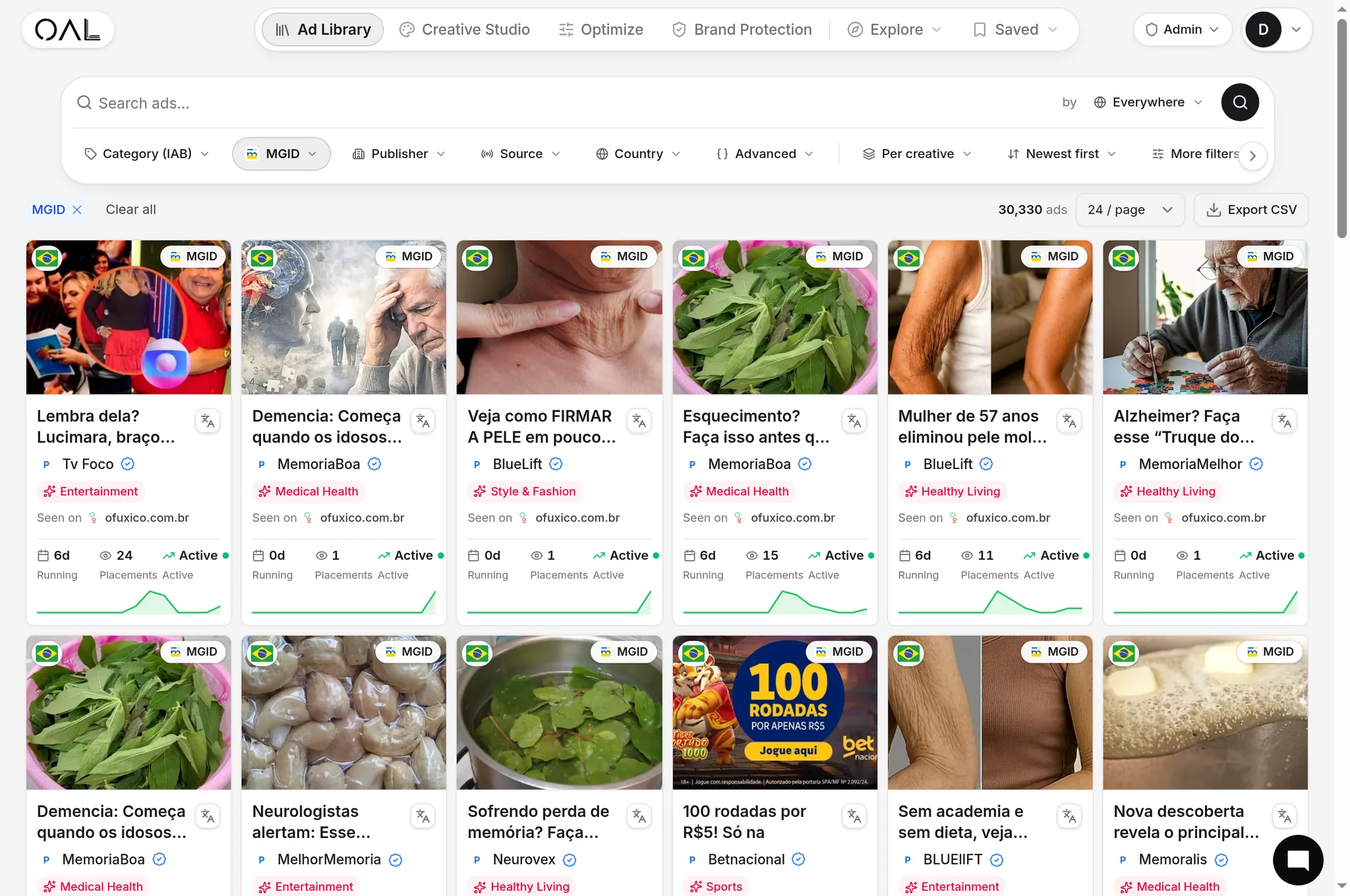
You can't see a competitor's exact segment settings, but you can infer a lot from what actually runs: which geos and devices an ad shows up in, which publisher verticals it concentrates on, and how long it survives, which is usually a proxy for whether the targeting and creative are converging on a working audience, a pattern covered in more depth in our guide to media buying for native ads. Our network-specific guides on how Taboola ads work, how Outbrain works, and how MGID native ads work break down each network's specific targeting menu and auction mechanics, and our piece on scaling to new geos covers how geo targeting choices change as a campaign expands into tier-2 and tier-3 markets.
OpenAdLibrary's ad intelligence index tracks the geo, device, and vertical footprint of every captured creative, so instead of guessing at a competitor's targeting strategy you can see the actual pattern: which countries an ad is live in, whether it's mobile-only or running everywhere, and how that's shifted since it first appeared.
Lookalike and similar-audience targeting#
Once a retargeting pixel or a custom audience list has enough volume, most networks can build a lookalike segment from it: users whose browsing behavior resembles your converters, without needing their identity resolved individually. This is where native targeting starts to resemble what social platforms have offered for years, except the seed data is usually smaller (pixel fires from a single advertiser's traffic) rather than platform-wide behavioral graphs. Lookalikes tend to work best as a scaling lever after you already have a converting core audience defined by context and retargeting; used as a cold-prospecting tool with a thin seed list, they often underperform straightforward contextual targeting.
How targeting interacts with the auction, not just reach#
It's easy to think of targeting purely as an audience filter, but on native networks it also changes your effective cost. Narrower, more relevant targeting (a specific publisher section, a warm retargeting pool) usually means competing against fewer other advertisers for the same impression, which can lower your effective CPC even before creative quality is factored in. Broad targeting reaches more people but throws you into a bigger auction pool, often including advertisers bidding on volume rather than relevance. This is one reason narrow contextual and retargeting-first strategies frequently outperform broad-reach campaigns on a pure ROAS basis, even though the raw impression volume looks smaller on paper.
Where advertisers get targeting wrong#
Two mistakes show up repeatedly in native accounts. The first is stacking too many restrictive layers at once on a new campaign, tight geo, a narrow interest segment, and a small publisher whitelist together, which starves the algorithm of enough volume to learn from and keeps costs high indefinitely. The second is the opposite: running broad on every dimension from day one because "we'll optimize later," which burns budget on clearly irrelevant placements before the account has any signal to work with. The better sequence is usually geo and device first (cheap to get right, expensive to get wrong), context second, then layer in retargeting and interest expansion once you have a baseline of real performance data to react to.
The practical takeaway#
Native targeting isn't one dial, it's five or six independent ones (context, network interest data, your own pixel, geo, device, schedule) that you stack together, and the winning combination is different for every vertical. Health and finance advertisers tend to lean hardest on section-level contextual targeting because adjacency and compliance matter more there. Ecommerce leans harder on retargeting and lookalikes because purchase intent is easier to capture with a pixel. Start with context and geo to establish a safe baseline, layer in retargeting once your pixel has enough volume, and treat interest segments as a reach lever once the core is already converting.