
 Español
 Português (Brasil)
 Français
 Deutsch
 Italiano
 Nederlands
 Polski
 Svenska
 Türkçe
 Русский
 日本語
日本語 한국어
한국어 简体中文
简体中文 Tiếng Việt
 Bahasa Indonesia
 繁體中文
繁體中文 Čeština
 Dansk
Dansk Norsk (bokmål)
 Suomi
Suomi Ελληνικά
 Română
 Magyar
 Українська
 ไทย
ไทย हिन्दी
 العربية
 עברית
עבריתQ5 Advertising: The Cheap-Traffic Window After Christmas
From December 26 to mid-January, ad auctions get cheap while attention peaks — the fifth quarter. What drives the window, which offers convert, and the launch plan that has to be ready before Christmas.

"Q5" is media buyers' name for the fifth quarter — the window from December 26 to roughly mid-January when ad auctions get cheap while attention stays unusually high. Retail and brand budgets that inflated auction prices all through Q4 switch off at Christmas; meanwhile users are off work, setting up new devices, holding gift cards and drafting resolutions. The result is the best cost-to-attention ratio of the year on most paid channels, native networks included. The catch: the window is short, it decays from day one, and it only pays if your campaigns are approved and ready before it opens.
What Q5 is and when it runs#
The term spread from mobile app marketing, where the post-Christmas install surge on freshly unwrapped phones made the period famous, and it now describes the same window across performance channels generally. The boundaries are soft but the shape is consistent:
- Opens: December 26, the moment gift-buying demand exits the auctions.
- Strongest: the first ten days, when the gap between cheap auctions and peak attention is widest.
- Decays: through mid-January as new fiscal-year budgets come back online and auctions normalize.
- Closes: somewhere between mid- and late January depending on network and vertical — watch your costs rather than the calendar.
Q5 is not "January." Treating it as a uniform month is the most common way to arrive late, scale slowly and catch only the expensive half. It also is not a Meta-only phenomenon: any channel priced by shared auctions inherits the same post-Christmas demand vacuum, and native networks — where feed consumption keeps climbing through the holidays — feel it as strongly as social does.
Why the window exists#
Five forces converge, and understanding them tells you which offers fit:
- Q4 demand evaporates overnight. Gift-oriented ads stop making sense after the final shipping cutoffs, and ecommerce advertisers exit en masse. Because native inventory clears through shared auctions, every remaining bidder inherits lower clearing prices — the same mechanics that made November expensive, run in reverse (CPM and CPC both slide).
- Fiscal years end. Many brand budgets are simply spent, and replacement budgets arrive with January planning cycles, not on December 26.
- Attention peaks. School holidays, time off work, new phones and tablets being set up, gift cards waiting to be spent. Feed consumption — exactly the inventory native networks sell — runs hot.
- Intent shifts rather than vanishing. Gift intent dies; self-improvement intent surges. Health, money, learning, organization: the classic resolution categories are natively suited to discovery-feed advertising, which sells transformation stories better than product specs.
- Competition quality drops. Much of the remaining Q4 creative in the feeds is stale holiday material its owners haven't turned off. Fresh, window-appropriate creative wins clicks against it easily.
Media buyers commonly report Q5 traffic costs meaningfully below their annual average — the discount varies by network, geo and vertical, so treat your own December-to-January account history as the real benchmark.
What converts in Q5#
The offers that work share one property: they serve the fresh-start mindset rather than fighting the end of gift season.
- Health, fitness and nutra. The resolution wave is the flagship. Health is the largest native vertical overall — roughly 24,500 live creatives in OpenAdLibrary's index as of June 2026 — and January is its signature month. Offer selection and compliance realities are covered in the nutra native ads guide.
- Finance. New-year money resolutions — budgeting, debt consolidation, savings, investing — plus the on-ramp to US tax season from late January.
- Education and skills. "New year, new career" course and certification offers.
- Apps and subscriptions. Millions of new devices getting set up; trials and installs convert well into that.
- Home organization. Decluttering and storage products ride the same reset psychology.
- Sweepstakes and deal offers. High engagement plus a post-holiday deal mindset suits sweepstakes offers and cashback-style funnels.
- Dating. The new-year cycle is one of the category's strongest windows — the same reset psychology, pointed at a different resolution.
You don't have to guess which products get the Q5 treatment: January's fresh creative flow shows it directly — what products advertisers are scaling explains how to read that signal.
The Q5 launch plan#
Work backwards from December 26:
- Mid-December: build. Finalize creatives and campaigns for the window. Submit for network approval before December 20 — review queues thin out over the holidays, and a campaign stuck in review on December 27 is burning the best days of the window.
- December 24–26: arm. Budgets set, tracking verified end to end, landing pages load-tested. Nothing new should be built on these days; only switches flipped.
- December 26 – January 5: scale fast. The discount is deepest early. Push spend into whatever meets target economics while competition is thinnest, and lean on the publisher whitelists you built during Q4.
- January 6–15: iterate. Everyone fishing the resolution pond fatigues the same angles quickly — refresh creative mid-window rather than riding the launch set down (creative fatigue arrives faster when every advertiser shares one theme).
- Mid-January onward: taper. As auctions normalize, cut what no longer clears your margin and keep the survivors. The window closing is a costs signal, not a date.
One measurement note: judge the window on margin, not on CPC alone. Q5 clicks are cheaper, but some of that discount reflects browsing-heavy holiday behavior — conversion rates can soften for purchase offers even as they strengthen for resolution offers. Compare against your own December baseline daily, and let cost per acquisition, not click price, decide what scales.
Creative angles that fit the window#
The moment supplies the story; the ads that win Q5 name it plainly:
- Fresh-start framing. "This year" language, before/after arcs, day-one narratives.
- Post-holiday problems. Debt from December, weight from the holidays, clutter from the gifts — naming the problem the season just created is the most direct hook of the window.
- New-device onboarding. "Just got a new phone?" style hooks for app and subscription offers.
- Concrete goals over vague resolve. Headlines built on specific outcomes and timeframes outperform generic motivation — the headline formulas piece breaks down the patterns, and the most common native ad angles study shows how they recur across live creatives.
One compliance note: resolution season is also peak season for over-claiming, and health and finance are the two most scrutinized verticals in native. Claims need substantiation in January exactly as they do in June — the fresh-start mindset does not change what regulators consider deceptive.
Common Q5 mistakes#
- Launching on January 2. The deepest discount and thinnest competition sit in the first week; starting after New Year's Day forfeits the best of it.
- Carrying Q4 creative into the window. Gift framing is dead on December 26. If the creative says "perfect gift," it is advertising to an intent that no longer exists.
- Treating Q5 as uniform. It decays. Front-load spend, and re-evaluate weekly instead of setting a flat January budget.
- Ignoring geo. January is midsummer in the southern hemisphere; the reset psychology travels, but the seasonal content around it inverts. Check each market rather than exporting one calendar across geo tiers.
- Over-scaling into February. The auction normalizes and resolution intent fades on a similar schedule. The offers that survive into February on stable spend are the genuinely evergreen ones — keep those, cut the rest.
Research the window before you spend#
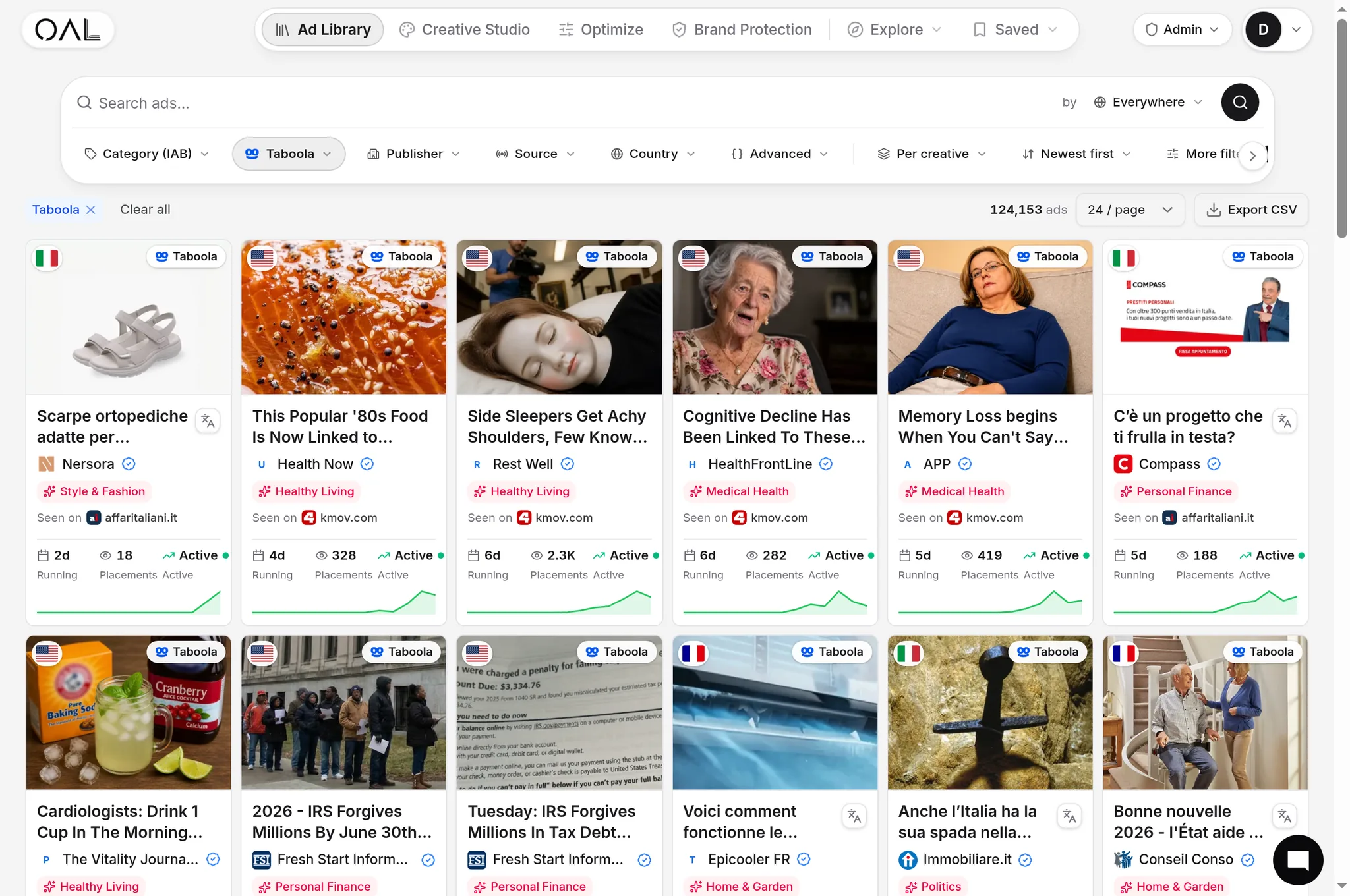
The January feed is the best public record of what Q5 actually rewards. Filter fresh creatives by first-seen date to watch the window's launches in real time, then check back in February: campaigns still running 30+ days after a January launch found economics that work, which makes ad longevity the cheapest offer-validation signal available. OpenAdLibrary's native ad spy tool supports exactly that workflow — filter by network, vertical, geo and recency, with landing pages attached, across roughly 726,000 live creatives (June 2026).