Español
 Português (Brasil)
 Français
 Deutsch
 Italiano
 Nederlands
 Polski
 Svenska
 Türkçe
 Русский
 日本語
日本語 한국어
한국어 简体中文
简体中文 Tiếng Việt
 Bahasa Indonesia
 繁體中文
繁體中文 Čeština
 Dansk
Dansk Norsk (bokmål)
 Suomi
Suomi Ελληνικά
 Română
 Magyar
 Українська
 ไทย
ไทย हिन्दी
 العربية
 עברית
עבריתMGID Optimization: Scale Campaigns Without Burning Budget
MGID optimization is a cutting exercise: launch wide, cut widgets on a spend rule, whitelist what converts, then scale through bids and geo clones. The full loop, with the launch settings that make it possible.


MGID optimization is primarily a cutting exercise. You launch wide at a modest CPC, let the traffic distribution reveal which publisher widgets actually convert, cut non-converters on a spend rule rather than a feeling, and feed every conversion back through a postback so both your tracker and MGID's algorithm learn from real outcomes. Scaling comes after: raise bids on the widgets that survived, clone proven campaigns into adjacent geos, and refresh creatives before fatigue erodes CTR. Buyers who optimize creatives before they've cleaned up placements — the most common mistake on this network — burn budget polishing ads that are being shown in the wrong places.
Know what you're buying on MGID#
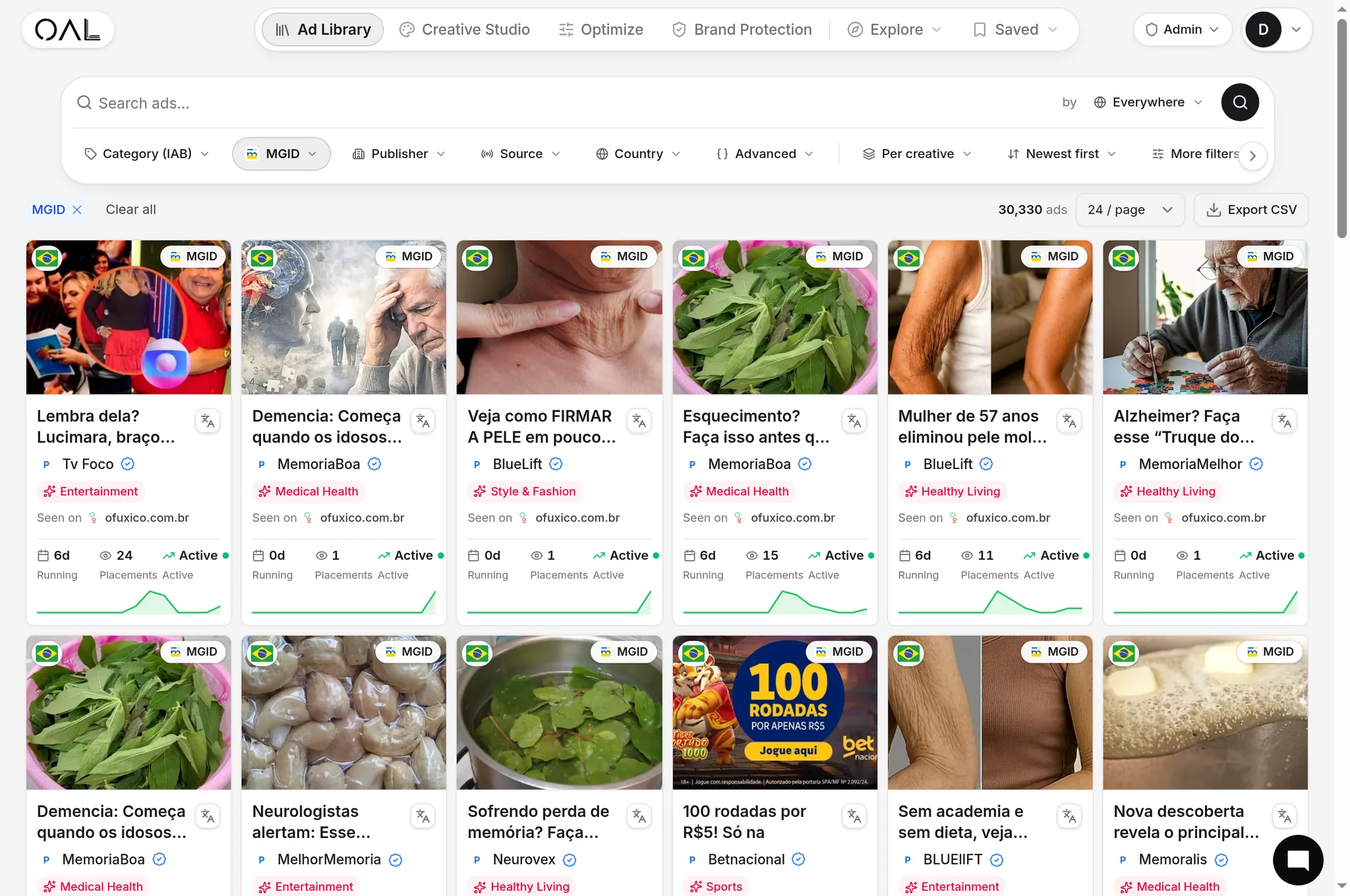
MGID is a mid-tier native network with genuinely global reach and particular depth in Tier-2 and Tier-3 markets — a different animal from the premium-publisher feeds. OpenAdLibrary's index tracks 62,000+ live MGID creatives (July 2026), and the composition is telling: entertainment is by far the largest classified vertical at nearly 14,000 creatives, an order of magnitude ahead of health. That's the feed environment your ad lives in — celebrity stories, curiosity content, aggressive direct-response — so your creative competes for attention against professional clickbait, and your optimization has to assume wide variance in placement quality. The mechanics of how MGID works — formats, targeting, pricing model — are covered separately; this article assumes you're set up and spending.
The corollary of wide placement variance: on MGID, the publisher widget (the specific recommendation unit on a specific site) is the single highest-leverage optimization dimension. Two widgets in the same geo at the same CPC can differ in conversion rate by 10x. Everything below is organized around finding that out as cheaply as possible.
Launch settings that make optimization possible#
Optimization is determined at launch. Set up wrong and you'll have unreadable data in week two.
- One geo per campaign, mobile and desktop separated. MGID pricing and traffic quality differ sharply by geo and device; blended campaigns hide the differences you need to see. If you're choosing geos, the Tier 1/2/3 framework is the right starting map.
- Start CPC modestly above the geo's floor. MGID's minimum CPCs vary by geo, and media buyers commonly report Tier-3 mobile clicks from a few cents while Tier-1 desktop clicks run several times that — treat those as unofficial, niche-dependent ranges, and see our native CPC benchmarks for how the networks compare. Bidding at the exact floor gets you the leftovers; bidding 20–30% above floor gets you readable volume without paying premium prices for discovery traffic.
- Launch 5–10 creatives. MGID rotates and shifts impressions toward CTR; a broad opening set finds your hook faster. Vary the angle, not just the image.
- Wire the postback before the first click. Conversion data flowing back via postback URL is what turns cutting from guesswork into arithmetic — and it's what your MGID rep will use to help you.
- Pass the widget ID into your tracker as a sub-ID on every click, so spend and conversions join at the placement level.
The optimization loop#
Run this loop daily in week one, then every 2–3 days once the campaign stabilizes.
Widgets first#
Cut on spend, not on vibes. The common heuristic: block a widget once it has spent roughly 2–3× your target CPA with zero conversions, and sooner if the click patterns look non-human (hundreds of clicks, zero landing-page engagement). Widgets that convert at or under target CPA graduate to a whitelist. Over a few weeks the campaign migrates from run-of-network discovery to a curated whitelist — that migration is the optimization, and it's where MGID campaigns become durably profitable.
A trap worth naming: high-CTR widgets are not good widgets. Some placements generate inflated CTR from accidental taps or low-quality arbitrage traffic. The only metric that decides a widget's fate is cost per conversion.
Creatives second#
Once placements are stabilizing, creative optimization pays. Judge creatives on two axes: CTR (which determines how cheaply MGID serves you impressions) and downstream conversion rate — earnings per click if you're running affiliate offers (EPC against CPC is the cleanest read). Kill the bottom half of your creative set weekly and replace with variations of the survivors' angle. And plan for decay: on MGID's audience, creative fatigue sets in fast in smaller geos, where a winning image can burn out in a couple of weeks. Have the next batch ready before the current one dies.
Then bids, schedules, and price adjustments#
With a whitelist and proven creatives, spend your attention on the multipliers. MGID supports per-widget price adjustments — coefficients that raise or lower your bid for a specific placement relative to the campaign CPC — and this is the precision tool the whole loop has been building toward: a widget converting at half your target CPA can absorb a meaningful bid increase and still be profitable, while a marginal one can be kept alive at a discounted coefficient instead of blocked outright. Daypart only after you have enough conversions per hour-block to trust the pattern; a week of data across three conversions per hour bucket is noise, not a schedule. And when CPAs drift up, drop bids rather than budgets — cutting budget on an unchanged campaign just samples the same placements more thinly, while a lower bid actually changes which inventory you win.
Scaling MGID campaigns#
Scaling is its own discipline, and the vertical-vs-horizontal distinction maps cleanly onto MGID:
- Vertical scaling — more spend on what works: higher bids on whitelisted widgets, raised daily caps, rep-negotiated access to selective or premium inventory. Ceiling: individual widgets have finite volume, and pushing bids past what the placement's conversion rate supports just donates margin back.
- Horizontal scaling — more surface area: clone the campaign into adjacent geos with translated creatives and localized landers, add the device split you were ignoring, spin up the same offer under a fresh angle. MGID's Tier-2/3 depth makes geo cloning the highest-yield move; our guide to scaling into new geos covers how to shortlist markets before committing budget.
Use your account rep for both. MGID reps can see placement-level data you can't, arrange inventory access, and flag compliance issues before they become rejections. Reps optimize for your spend surviving, which mostly aligns with your interests — verify their suggestions against your own conversion data, but don't leave the resource unused.
Competitive context makes scaling decisions faster. Before entering a new geo or vertical, check what's already running there and for how long: OpenAdLibrary's MGID ad library lets you filter live MGID creatives by advertiser and geo, and the MGID spy tool shows which advertisers sustain campaigns for weeks — on a CPC network, sustained spend is the closest public signal that the economics work. An angle that's been running in your target geo for a month is an angle whose math closes.
Common MGID mistakes#
- Optimizing creatives before widgets. The classic. Placement noise swamps creative signal until the widget list is clean.
- Judging placements on CTR. Conversion cost is the only verdict that counts; CTR is a serving-cost input, not a quality signal.
- One multi-geo mega-campaign. Unreadable data, plus the budget silently drains into whichever cheap geo clears first.
- No postback. Without server-side conversion data you're optimizing on click-throughs, which on mid-tier native is close to optimizing on noise.
- Scaling by raising the budget cap alone. More budget into an unchanged campaign mostly buys deeper impressions on the same widgets at worse marginal quality. Scale through bids, whitelists, geos, and creatives instead.
- Copying competitor ads one-to-one. Study the angle, rebuild it in your own execution — cloned creatives get the compliance flag and the fatigue, without the learning.
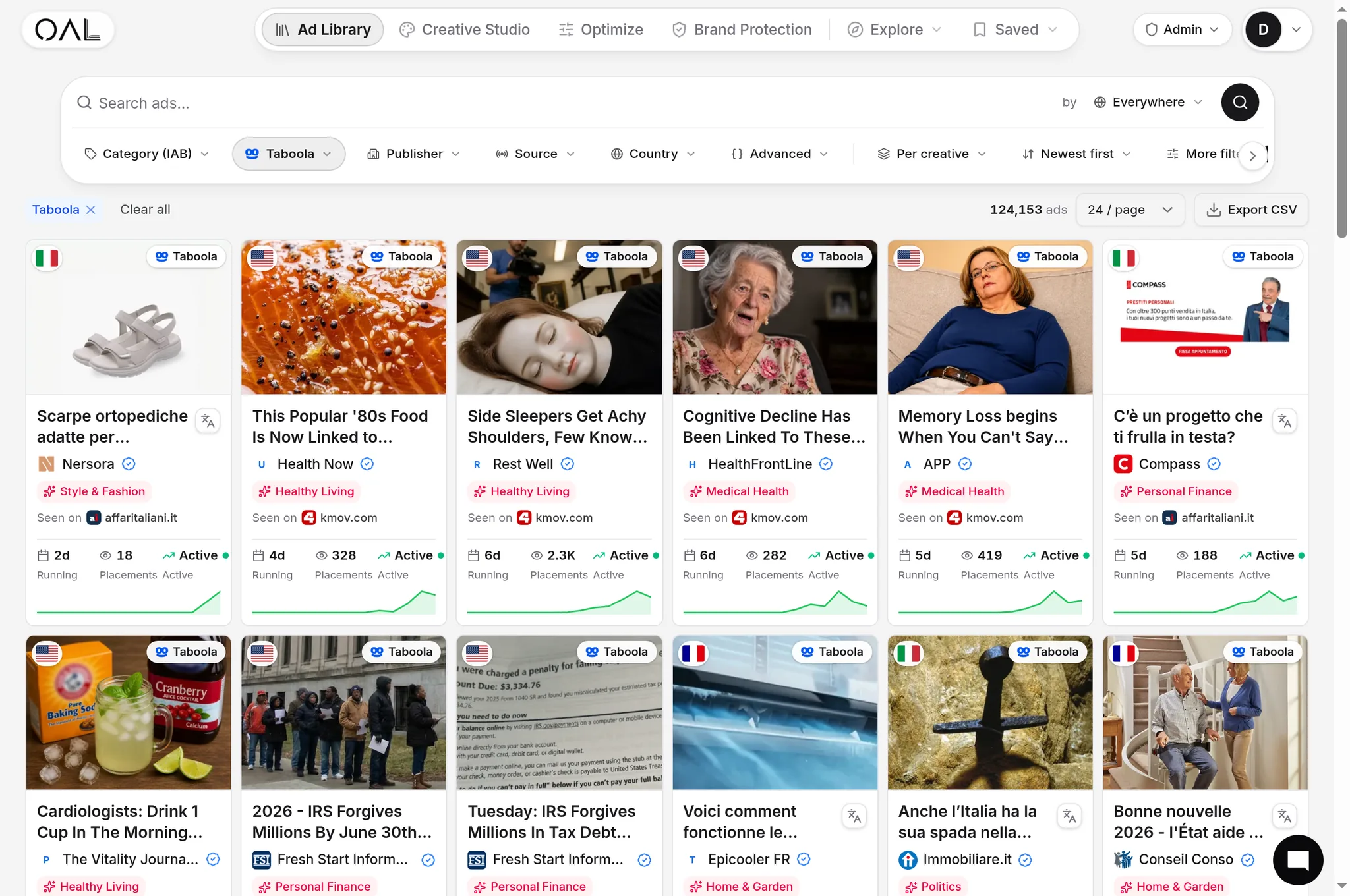
MGID rewards process over inspiration: a boring, disciplined cut-and-whitelist loop with fresh creative every two weeks beats sporadic brilliance on this network every time. If you're still deciding whether the mid-tier trade makes sense for your budget at all, our MGID vs Taboola comparison covers that decision — this playbook is for once you're in.