 Español
 Português (Brasil)
 Français
 Deutsch
 Italiano
 Nederlands
 Polski
 Svenska
 Türkçe
 Русский
 日本語
日本語 한국어
한국어 简体中文
简体中文 Tiếng Việt
 Bahasa Indonesia
 繁體中文
繁體中文 Čeština
 Dansk
Dansk Norsk (bokmål)
 Suomi
Suomi Ελληνικά
 Română
 Magyar
 Українська
 ไทย
ไทย हिन्दी
 العربية
 עברית
עבריתMGID for Affiliate Marketing: Verticals, Costs & Moderation Reality
MGID rewards a specific affiliate operating model: cheap Tier-2/3 clicks, wide creative testing and real moderation. Here is what 62,000+ live MGID ads say about running it profitably.


MGID works for affiliate marketing under three conditions: you run direct-response offers — health, beauty, home products, ecommerce — you are willing to buy Tier-2 and Tier-3 geos where MGID's inventory is deepest and clicks are cheapest, and you treat the network as a volume game with many creatives, many placements and fast cutting. Affiliates who meet those conditions consistently make MGID pay. Affiliates who arrive with one creative, one Tier-1 geo and a thin budget usually leave calling it junk traffic. Both outcomes are common; the difference is the operating model, not the network.
Where MGID sits in the native ecosystem#
MGID is one of the oldest self-serve native networks still standing — founded in 2008, serving in-feed and sidebar widgets across a long tail of publisher sites, with particular depth in Europe, Latin America and Asia alongside its Tier-1 inventory. It sells clicks by auction the same way the premium networks do, but it occupies a different tier of the market: lower entry costs, a longer tail of publishers, and a history of tolerating the advertorial-style funnels affiliates actually run. The mechanics — formats, targeting, campaign structure — are covered in our guide to how MGID works; this article is strictly about the affiliate case.
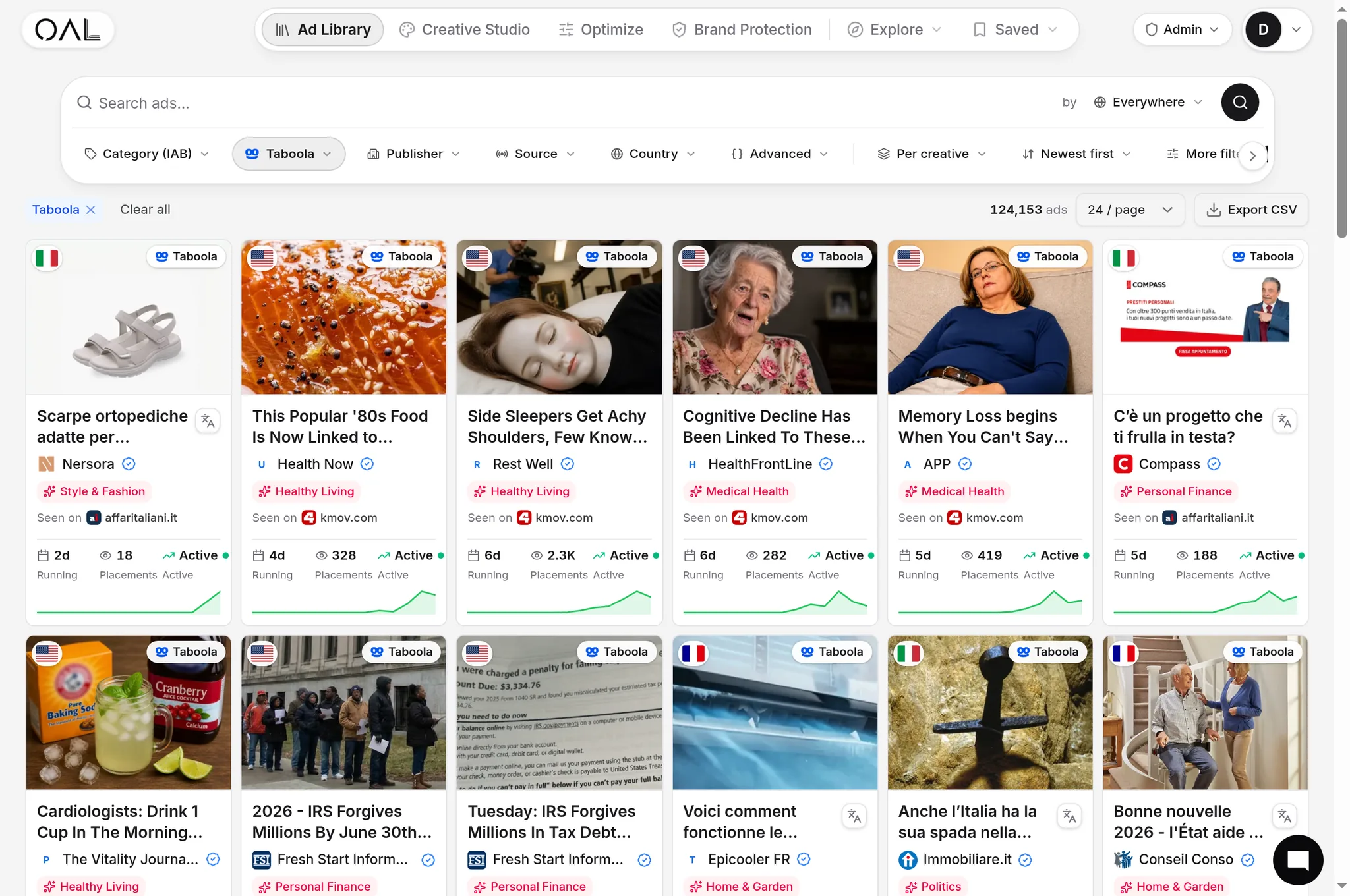
A scale check from live data helps calibrate expectations. OpenAdLibrary's index holds 62,765 live MGID creatives as of June 2026, against 206,145 for Taboola and 108,573 for Outbrain, within an index of 725,000+ native ad creatives across 49 networks. MGID is roughly a third of Taboola's creative footprint: big enough to scale a winning campaign meaningfully, small enough that whole vertical-geo combinations sit underexploited. The MGID vs Taboola comparison goes deeper on where each network's inventory actually lives.
What affiliates actually run on MGID#
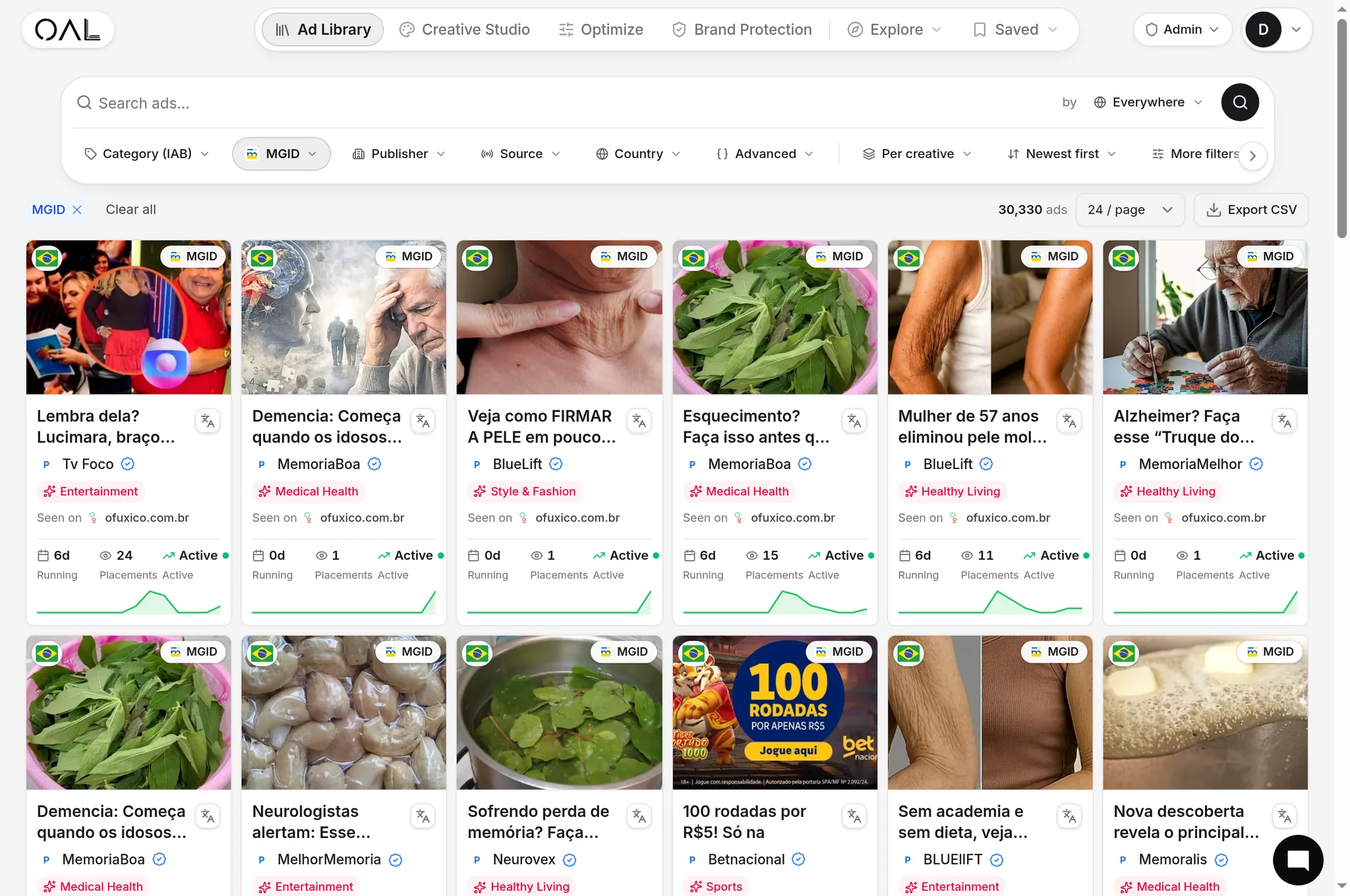
Because the index captures live placements continuously, we can look at what is really being bought rather than what the network's sales deck says. The classified vertical mix of live MGID creatives, June 2026:
| Vertical (classified) | Live MGID creatives (June 2026) |
|---|---|
| Entertainment / content | 13,987 |
| Health | 1,220 |
| Insurance | 663 |
| Real estate | 309 |
| Ecommerce | 265 |
| Food & beverage | 219 |
Two things stand out. First, the entertainment bucket towers over everything else — much of it is content-recommendation and arbitrage demand, buyers monetizing cheap clicks against ad-stacked article pages. That crowd only survives where clicks are cheap, which tells you something useful about MGID's price floor. Second, health is the largest genuinely commercial vertical, and the live creatives read like an affiliate run sheet. Real captures from June 2026:
- "Dentists Said Gums Can't Grow Back. Red Light Proves Them Wrong" — a health-device advertorial angle, 16 days old at capture.
- "Doctors Call It 'Nature's Morphine' — Pain Relief Without A Prescription" — classic nutra framing, also 16 days in.
- "🔥Last Day 50% OFF🔥 Gentle Coconut Oil Hair Removal Cream" — an ecommerce offer with manufactured urgency, the cash-on-delivery style that runs across MGID's international geos.
- "Everyone Lotions Crepe Skin. Koreans Do This Instead (It's Genius!)" — a beauty angle that also runs, nearly word for word, on Taboola under the same brand.
That last example matters. Winning angles migrate across networks, and MGID is frequently where they run longest because the clicks cost less. If you want to see where the money concentrates across the whole channel, our data-backed ranking of affiliate verticals on native covers it network by network.
Why affiliates pick MGID#
- Low entry cost. Minimum deposits and daily budgets sit well below what premium native networks expect. Exact figures change — confirm them with MGID's current documentation — but the practical effect is that you can run a real multi-creative test without committing a Taboola-sized budget.
- Cheap clicks in Tier-2 and Tier-3 geos. Media buyers commonly report CPCs from low single-digit cents in Tier-3 geos, rising toward Tier-1 desktop rates that are still typically below the premium networks. None of that is official pricing; your vertical and creative quality move it a lot.
- Advertorial tolerance. The ad-to-pre-lander-to-offer funnel is a native citizen on MGID, not something you smuggle in. Moderation still applies — see below — but the funnel structure itself is expected.
- Granular placement control. Per-widget and per-site reporting with whitelist and blacklist controls, which is where MGID campaigns are actually won.
- Human support. Account managers engage at spend levels that would leave you fully self-serve elsewhere. They can unlock higher-volume placements, flag compliance issues before they become bans, and share what is working in your geo.
When MGID is the wrong choice#
Be honest about the misfit cases. If your offer only converts on premium US or UK editorial placements, MGID's long-tail inventory will frustrate you — the depth is elsewhere. If your brand cannot appear next to celebrity-gossip widgets and arbitrage listicles, pick a network with tighter publisher curation. If you have one creative and no tracker, the network will spend your test budget across hundreds of placements and teach you nothing. And compliance-heavy US lead-gen verticals (insurance, legal) generally get better unit economics on networks with more Tier-1 supply, as the vertical numbers above suggest.
The moderation reality#
MGID's reputation among affiliates — "anything goes" — is years out of date. Every creative and landing page passes pre-moderation before serving, policies differ by geo and category, and the compliance team rejects the classic tricks: unsubstantiated cure claims, before/after body imagery, celebrity endorsements you cannot prove, fake news formats. Repeated rejections degrade your account standing, and cloaking — showing moderators a different page than users see — is a ban, full stop.
What actually works within moderation: curiosity-driven angles that make the claim on the pre-lander in defensible language, native-looking imagery instead of shock creative, and geo-appropriate compliance (what passes in one market gets rejected in another). Rules change frequently and vary by vertical, so treat MGID's current policy documentation as the source of truth, not forum posts from two years ago. The upside of real moderation is that placements stay monetizable — networks that let everything through burn out their own publishers.
A launch playbook that respects how MGID behaves#
- Research before you deposit. Browse the live MGID ad library for your vertical and target geo, and use the MGID spy workflow to see which advertisers, angles and pre-landers are running right now. Shortlist creatives that have run 30+ days — longevity is the strongest public profitability signal in native.
- Validate the offer first. A network test is expensive offer validation. Check that other buyers are already scaling the offer or something close to it — our offer validation guide covers the signals.
- Match geo to payout. Low-payout offers need Tier-2/Tier-3 click costs to leave margin; high-payout verticals can afford Tier-1 tests. Start where the arithmetic works on paper.
- Launch wide. 10–20 creatives per campaign minimum. MGID's auction rewards CTR, and you cannot predict which hook wins. Expect one to three creatives to carry everything.
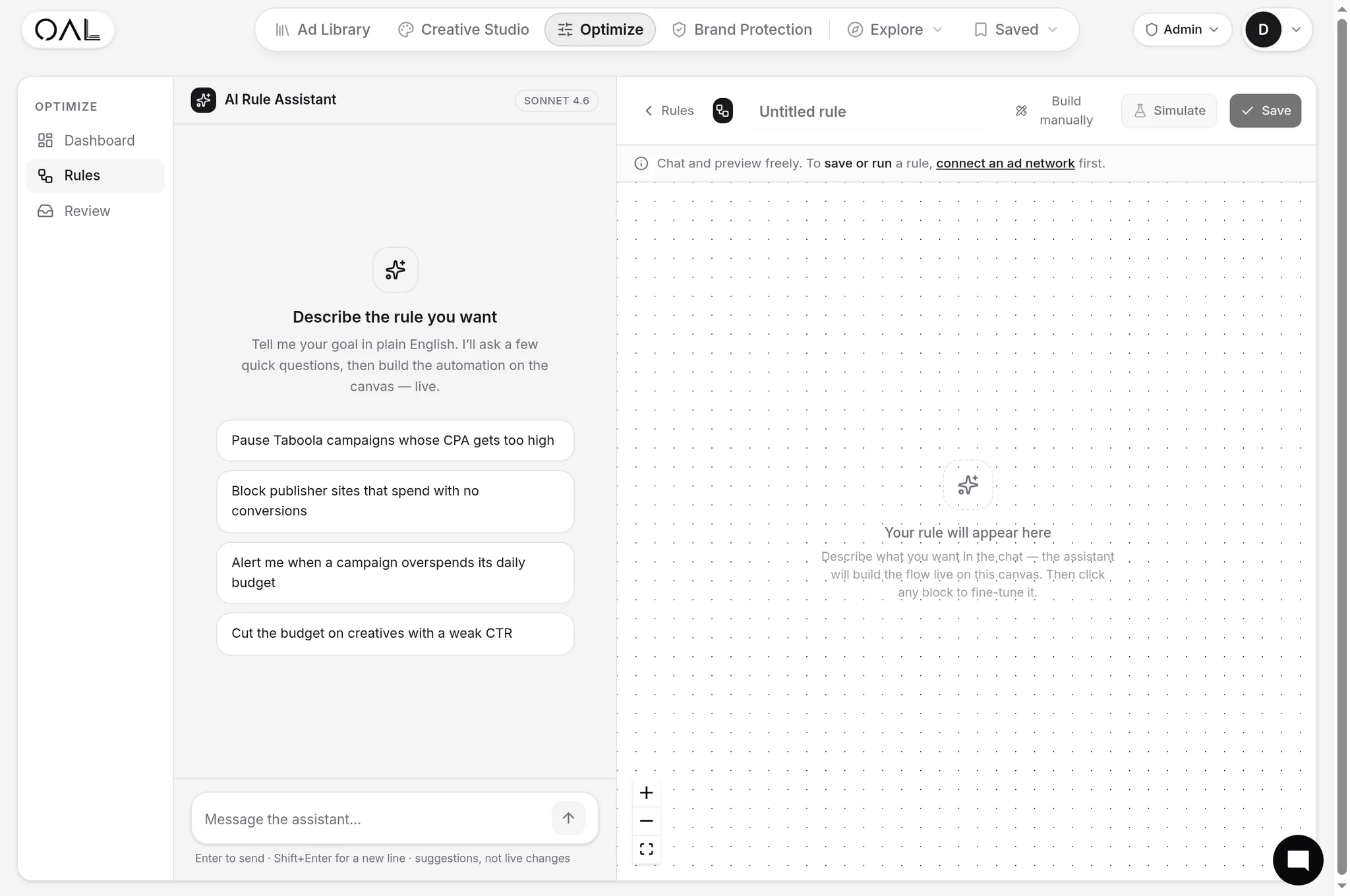
- Track from day one. Postback conversions into your tracker and judge placements on EPC, not CTR. Without per-widget conversion data you are flying blind on the only decision MGID gives you daily: cut or keep.
- Cut fast, then whitelist. Kill placements that spend without converting, run the survivors as a whitelist campaign, then scale horizontally — adjacent geos, cloned angles, new devices — rather than raising bids vertically.
Verdict#
MGID is a legitimate affiliate network with a specific shape: cheap international volume, real moderation, and an auction that pays you for creative effort. It rewards operators who test in volume, track properly and work placements like a portfolio. It punishes tourists. If that describes your operation — or you want it to — the cheapest first step is free: study what the 62,000+ live MGID creatives in the index are doing before your first dollar of traffic, and enter the auction already knowing which angles survive there.