Español
 Português (Brasil)
 Français
 Deutsch
 Italiano
 Nederlands
 Polski
 Svenska
 Türkçe
 Русский
 日本語
日本語 한국어
한국어 简体中文
简体中文 Tiếng Việt
 Bahasa Indonesia
 繁體中文
繁體中文 Čeština
 Dansk
Dansk Norsk (bokmål)
 Suomi
Suomi Ελληνικά
 Română
 Magyar
 Українська
 ไทย
ไทย हिन्दी
 العربية
 עברית
עבריתMicrosoft Audience Ads Cost: CPCs vs Search, Budgets & Bid Tips
Microsoft Audience ads run on a CPC auction where clicks cost a fraction of Bing search. What buyers report paying, how much a fair test needs, and the bid settings that matter.

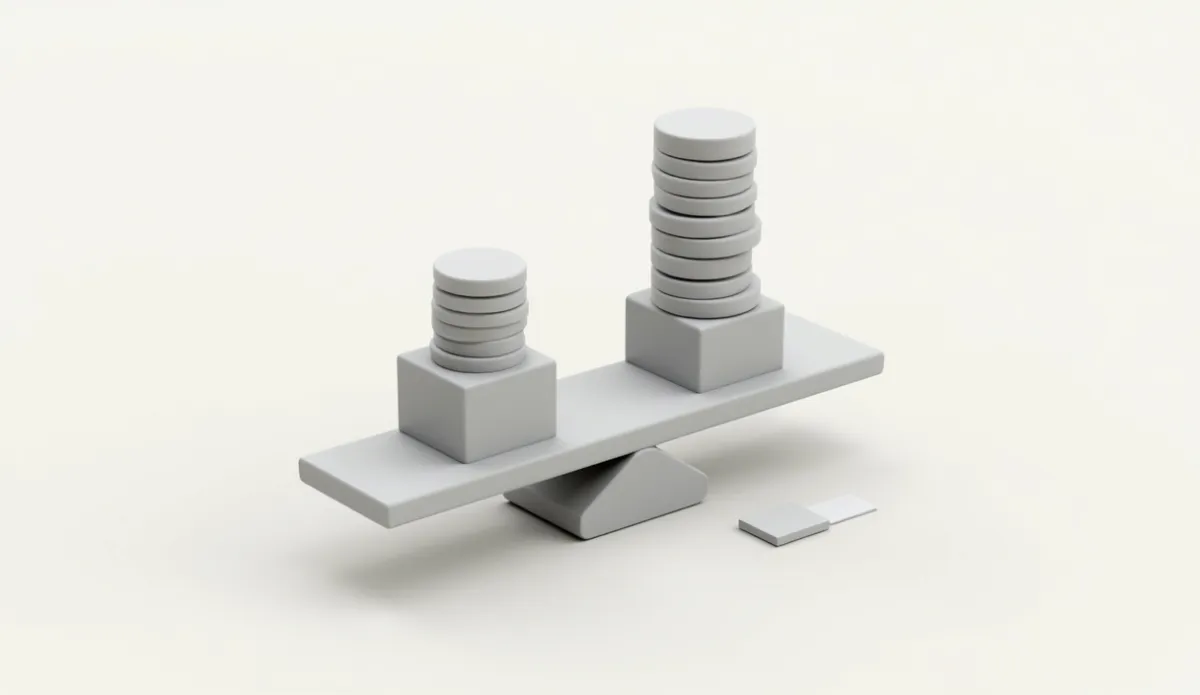
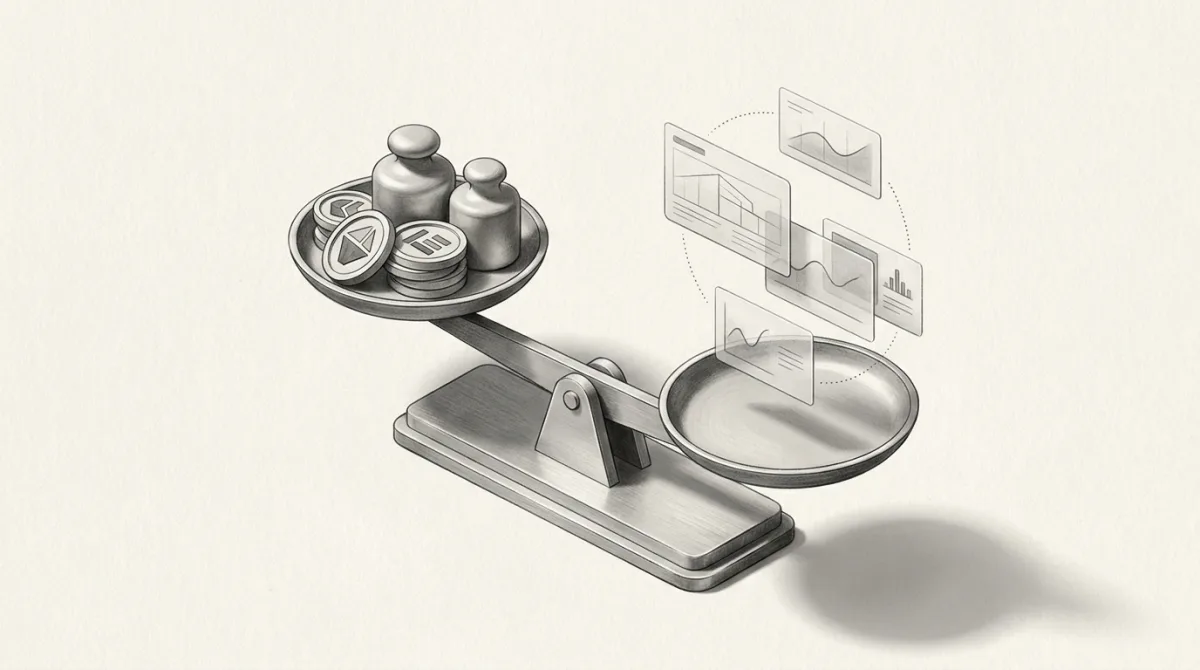
Microsoft Audience ads are priced by a cost-per-click auction, and the clicks are cheap relative to search: where competitive Bing search keywords cost several dollars, media buyers commonly report Microsoft Audience Network CPCs of roughly $0.10 to $0.80 for Tier-1 desktop traffic. Those are unofficial, niche-dependent numbers — but the order of magnitude is the point. You are trading keyword intent for volume at a fraction of the price, and whether that trade pays depends on your funnel, your vertical, and a handful of bid settings this guide walks through.
How Microsoft Audience ads pricing actually works#
There is no rate card. Audience campaigns run inside your Microsoft Advertising account and bid per click into a native auction spanning MSN/Microsoft Start, the Edge new-tab feed, Outlook.com and partner placements. The mechanics that matter:
- You set a max CPC — or a bid strategy sets it for you — and you pay only when someone clicks.
- The auction rewards clickability. Like every native auction, delivery is effectively ranked on bid times expected engagement, so a stronger image-and-headline pair buys the same traffic for less money. Creative is a bid lever, not a design detail.
- Bid strategies range from manual CPC through enhanced CPC to conversion-based automation. The exact menu evolves — check Microsoft Advertising's current documentation — but the progression is universal: start manual or eCPC, feed the system conversions, then consider automated bidding once volume is stable.
One structural rule before anything else: keep audience campaigns fully separate from search campaigns — separate budgets, separate bids, separate creative. Native clicks are cheaper and colder than search clicks; any setup that averages the two will quietly misallocate your money.
Audience CPCs vs search CPCs: why the gap exists#
Search clicks are expensive because the intent arrives pre-declared — someone typed "business insurance quote." Audience clicks are cheap because you are interrupting a news feed and manufacturing the interest yourself. The difference shows up in three places:
| Bing search | Microsoft Audience ads | |
|---|---|---|
| Intent | Declared (keyword) | Inferred (behavior + context) |
| Typical CPC | Often multi-dollar in commercial niches | Commonly reported well under $1 |
| Conversion path | Short — the lander can sell | Longer — usually needs a warm-up step |
| Scale | Capped by query volume | Feed inventory, effectively uncapped for most budgets |
The practical consequence: audience traffic usually needs a longer path — an advertorial or pre-sell step — before the offer page, which is why native buyers obsess over funnels rather than landers. Cheap CPCs pushed through a search-style funnel is the classic way to lose money on this network. Where audience ads sit against the wider ecosystem, network by network, is mapped in our native ads CPC benchmarks; for the full cost picture across the channel, see how much native ads cost.
What buyers commonly report paying#
None of this is official; every figure below is a range practitioners report, and your niche, creative, geo and season will move it a lot:
- Tier-1 geos (US, UK, CA, AU), desktop: roughly $0.10–$0.80 per click for most verticals.
- Contested money verticals (insurance, finance): the top of that range and beyond. This is where the crowd is — our index holds 9,029 live finance and 8,406 live insurance creatives on the Microsoft Audience Network alone (July 2026), and crowded auctions price accordingly.
- Tier-2 and Tier-3 geos: meaningfully cheaper, often a small fraction of Tier-1 pricing, with volume that thins as you move down the tiers.
- Desktop vs mobile: this network is unusual — its MSN, Edge and Outlook core skews desktop, and for the older demographic that dominates the feed, desktop clicks often convert well enough to earn a premium.
Treat these ranges as calibration for your first bids, nothing more. Two weeks of your own data beats any benchmark.
Budget: what a fair test actually costs#
The number that matters is clicks per creative, not dollars per day. A heuristic experienced buyers use: you cannot judge a creative on fewer than a few hundred clicks, and you cannot judge a channel on fewer than three or four creatives.
Illustrative math, using a $0.30 CPC purely as an example: 300 clicks per creative, times four creatives, is 1,200 clicks — about $360. Spread over two weeks, that is roughly $25–$30 per day, a realistic floor for a decision-grade test. Halve the CPC and the same test costs half as much; walk into an insurance auction and budget for the opposite.
Rules that protect that budget:
- One variable at a time. Same audience with different creatives, or the reverse. A test that varies both tells you nothing.
- Judge on downstream events, not CTR. High-CTR creatives with hollow clicks are native's signature failure mode.
- Give the account conversion data before automating. Conversion-based bidding with near-zero conversion history oscillates wildly; stay on manual or eCPC until events flow steadily.
Bid tips that actually move your costs#
- Start bids near the middle of the reported range, then let delivery tell you. Underbidding to "test cheap" often buys only the inventory nobody else wants.
- Split geos into separate campaigns. One blended campaign hides the fact that your US bid and your AU bid need to be different numbers.
- Set device modifiers deliberately. Check where your conversions actually land before assuming mobile-first defaults; on this network desktop frequently earns its price.
- Prune placements early. A small set of syndication placements can drain a budget with clicks that never convert. Read the placement report in week one and exclude ruthlessly.
- Let winners run. Longevity is the tell across the whole native ecosystem — ads that keep running are paying for themselves. The Microsoft Audience Network entries in our index include creatives observed for 38 straight days; that is what a settled CPC-to-value equation looks like from the outside.
Costs beyond the click#
CPC is the visible price; three quieter line items decide whether the channel actually pays:
- The pre-sell step. Audience traffic converts through advertorial or quiz-style warm-up pages far more often than straight offer pages. Building and iterating those pages is a real cost — budget production time for at least two funnel variants, because the funnel usually needs more testing than the ad.
- Creative production at native cadence. Responsive ads need multiple image aspect ratios and several headline lengths per concept. That is cheap per asset but adds up across the three-to-four-concept minimum a fair test requires, and again at every refresh once fatigue sets in.
- Tracking setup. UET tagging plus conversion goals is table stakes; buyers running offers across networks usually add their own click-level tracker on top. An afternoon of setup here is what makes every other dollar measurable.
None of these change the math dramatically — they change whether you can trust the math at all.
The cheap-click trap#
The channel's biggest risk is psychological: CPCs this low make bad funnels feel like progress. A $0.20 click that never converts is more expensive than a $3 search click that does. Before scaling spend, verify the only equation that matters — CPC divided by conversion rate equals acquisition cost — against what your offer supports, and read up on the MSN feed's mechanics so placement quirks do not masquerade as funnel problems.
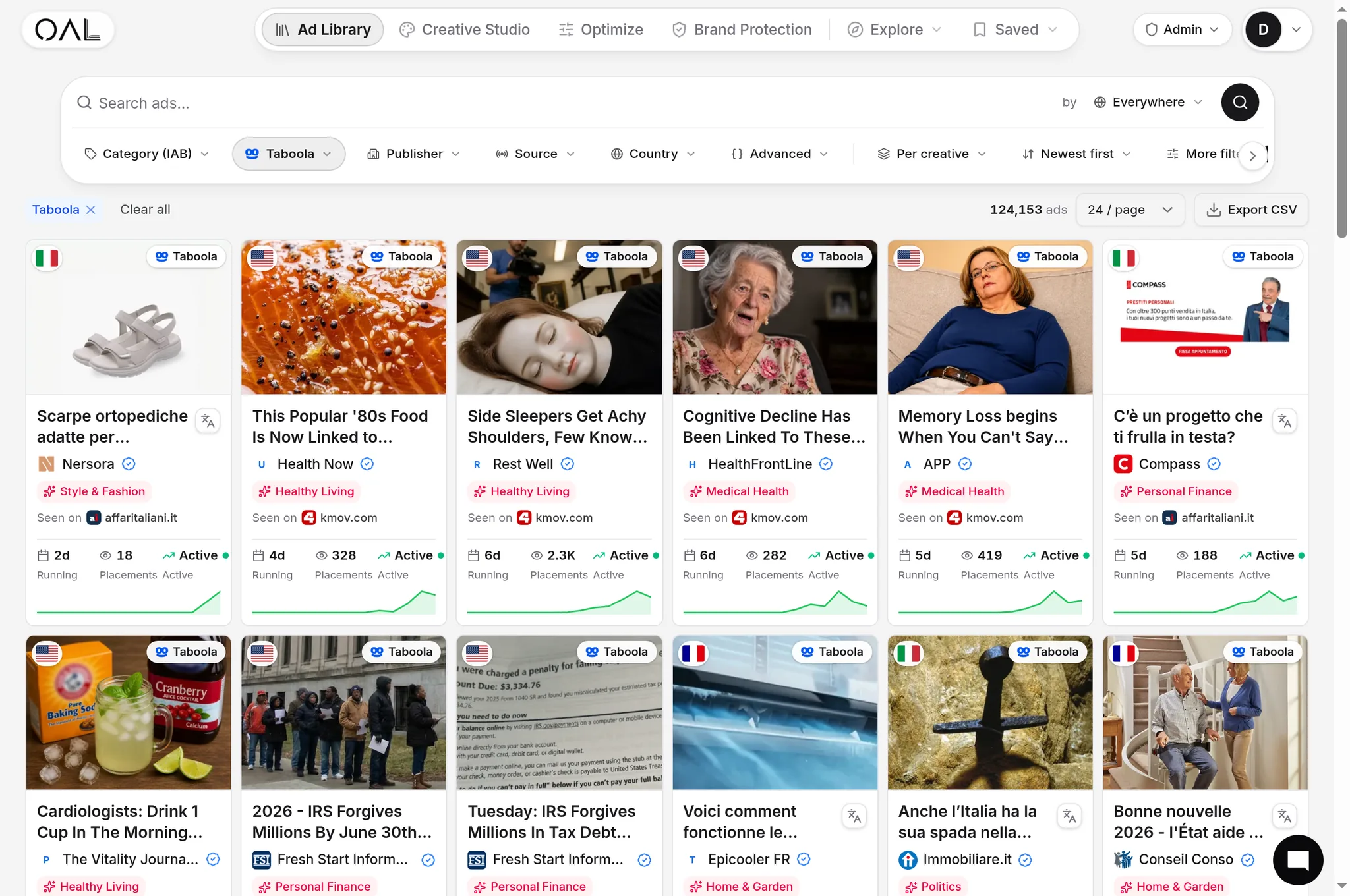
The fastest calibration is seeing what sustained advertisers already do. With OpenAdLibrary's ad intelligence platform you can pull up the live Microsoft Audience Network corpus — 281,839 creatives as of July 2026 — filter to your vertical and geo, and study the angles and landing paths behind ads that have run for weeks. Advertisers do not sustain what does not pay; their persistence is free market research, and the free tier is enough to start.