
 Español
 Português (Brasil)
 Français
 Deutsch
 Italiano
 Nederlands
 Polski
 Svenska
 Türkçe
 Русский
 日本語
日本語 한국어
한국어 简体中文
简体中文 Tiếng Việt
 Bahasa Indonesia
 繁體中文
繁體中文 Čeština
 Dansk
Dansk Suomi
Suomi Ελληνικά
 Română
 Magyar
 Українська
 ไทย
ไทย हिन्दी
 العربية
 עברית
עבריתWhat Is Ad Intelligence? The 2026 Guide to Competitive Ad Data
Ad intelligence turns the public ads running across the web into structured competitive data: the creative, the network behind it, the advertiser, the landing page, and the spend signals, and here's the full pipeline plus why native is the hard part.


Every ad running in the wild is leaking information. The image and headline tell you what a competitor thinks will convert. The redirect chain behind the click reveals which network they bought through and which trackers sit in the middle. The page it lands on shows the offer, the price, and the angle they're testing. And the simple fact that an ad is still live three weeks later says more than any case study. Nobody keeps paying for a creative that loses.
Ad intelligence is the discipline of capturing all of that, on purpose, and turning it into data you can query. It's how media buyers find proven angles before burning budget, how brands catch copycats and trademark abuse, and how analysts reconstruct who is spending where. This guide defines ad intelligence end to end, from creative capture to supply-chain classification to landing-page evidence to spend signals, and shows what separates a real pipeline from a glorified screenshot gallery. Where it helps, we'll pull real numbers and real captured ads straight from the OpenAdLibrary index (589,000+ creatives and 5.4M+ ad observations as of June 2026).
What is ad intelligence?#
Ad intelligence is the practice of systematically collecting and analyzing the ads competitors and other advertisers run in public: the creative, the ad network delivering it, the advertiser behind it, the landing page it points to, and signals about how long and how widely it has run. It converts scattered, short-lived public ads into structured, queryable competitive data you can act on.
The word "systematically" is carrying the weight here. Anyone can spot a competitor's ad once. Ad intelligence is the difference between noticing an ad and capturing it: recording the exact creative, decoding what carried it, tracing where it went, and timestamping it so you can watch it change. That last part matters more than people expect. A single observation is a data point. The same ad observed across weeks and regions is evidence. Our index has logged over 5.4 million such observations across 42 networks, which is what turns a pile of screenshots into a time series.
The terms get muddled, so separate the layers. Ad transparency is the raw disclosure layer: the public ad libraries and the legally mandated repositories that simply show which ads ran. Ad intelligence is the analysis layer built on top. It structures the disclosed data, enriches it with the supply chain and the landing page, and surfaces patterns. If you want the disclosure side first, our pillar guide What Is Ad Transparency? Libraries, Laws & How to Use Them covers the legal and library foundations ad intelligence sits on.
The four pillars of an ad intelligence pipeline#
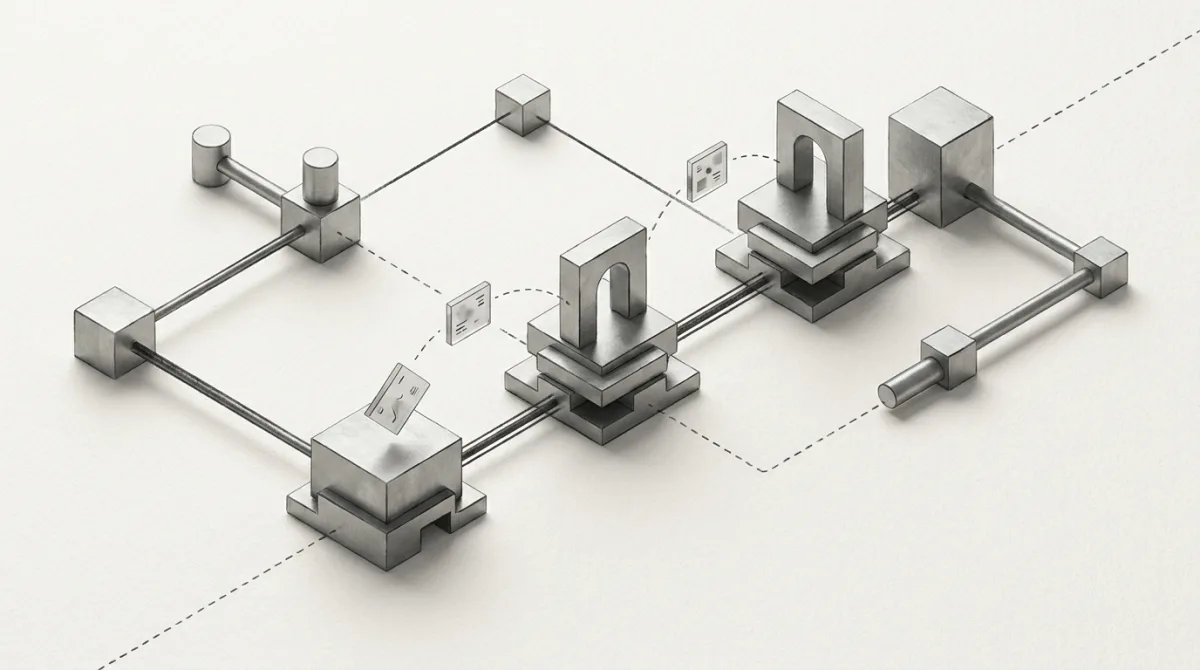
A proper ad intelligence system isn't one capability, it's four, and the weakest one caps the value of the whole thing. A tool that screenshots creatives but can't tell you the network behind them is half a tool. A tool that lists advertisers but can't show you the landing page is guessing at intent.
1. Creative capture#
The creative is the asset: the image, the headline, the thumbnail, the video frame. Capturing it sounds trivial and isn't. Ads render dynamically, rotate per user, and serve from CDNs that expire URLs. Capturing the real creative at full quality, not a downscaled thumbnail or a lossy re-screenshot, means observing the ad as it actually serves and pulling the original asset before it disappears.
Here's why it's worth the effort. The creative is where the testing happens. Look at what real native creatives actually say:

That IRS angle from Fresh Start Information had been running 13 days when we logged it. The deadline urgency, the round "millions" number, the year stamped in the headline: those are the variables a competitor is paying to optimize. When you can line up hundreds of a competitor's creatives side by side, the pattern in their winners jumps out in a way no single ad reveals. Finance is the single largest vertical in our index at 17,232 creatives, so there is a lot of this exact playbook to study.
2. Supply-chain classification#
Behind every served ad is an ad-tech supply chain: the network the advertiser bought through, the SSP and exchange that carried the impression, the trackers and click servers in the redirect. Classifying it answers a deceptively useful question. Who actually delivered this ad?
This is where the difference between a supply-side platform (SSP) and a demand-side platform (DSP) stops being academic. The SSP represents the publisher's inventory. The DSP represents the advertiser's buying. Decoding the chain tells you which side of the market an ad came through, and therefore which network you'd buy on to compete for the same placement. Scale matters here: Taboola alone accounts for 157,727 creatives in our index, Outbrain another 84,252, and MGID 49,689, so "it's a native ad" is never specific enough. We go deep on the mechanics in The Native Ad Supply Chain, Explained (With Real Traces), and on the detective work in How to Identify the Ad Network Behind Any Ad.
3. Landing-page evidence#
A creative without its destination is half a story. The landing page, and often a pre-lander or advertorial in between, is where you learn the actual offer, the price, the claim, and the funnel structure. Two competitors can run near-identical creatives and send traffic to completely different offers. Only the landing page tells you which. We've captured 926,000+ landing pages precisely because the click destination is where intent stops being a guess.

The creative tells you what they think will get the click. The landing page tells you what they're actually selling. Read both, or you're guessing at half the funnel.
Good ad intelligence reaches the landing page without clicking the live ad. Clicking a real served ad costs the advertiser money and pollutes their analytics. It's both unethical and a way to leave your fingerprints in their data. The right approach decodes the click destination from the redirect chain and resolves it independently, so you see the page the user would have landed on without ever charging the advertiser for a fake click.
4. Spend and longevity signals#
You almost never get a competitor's exact ad spend. Anyone selling you a precise dollar figure for a native campaign is modeling, not measuring. What you can observe is far more honest: how long each creative has been live, how many distinct placements and publishers it appears on, which geographies it runs in, and how that footprint shifts week over week.
These are proxy signals, and they're powerful because they're behavioral. In our own data the longest continuously observed creatives have been live for 28 days straight, the current span of the index. That cohort tells you a lot about what survives. SmartAsset has been running a finance advertorial, "Ask a Pro: How Can I Avoid Paying Taxes on IRA Withdrawals?", for the full 28 days on Outbrain. So has a "Best IQ Test 2025" quiz from My IQ on the Microsoft Audience Network, and an oddly enduring pet ad:

A creative still on the feed after four weeks is a winner. Advertisers don't subsidize losers that long. A sudden expansion into a new country is a scaling signal. A creative that vanishes after three days failed a test. Read this way, longevity and spread become a far more reliable competitive intelligence signal than any estimated spend number. One caveat worth stating plainly: our 28-day ceiling is how long we've been continuously watching a given creative, not its lifetime cap. The industry lore about "90-day winners" is real enough as a rule of thumb, but it isn't our measurement, so don't treat it as one.
| Pillar | What it captures | The question it answers | Common failure mode |
|---|---|---|---|
| Creative capture | The real ad image/headline at full quality | What is the competitor testing? | Lossy thumbnails, missing rotations |
| Supply-chain classification | Network, SSP/DSP, trackers in the chain | Who delivered this ad, and where do I buy it? | Stops at "Taboola," ignores the chain |
| Landing-page evidence | Destination page, pre-lander, offer | What are they actually selling? | No trace; clicks the live ad |
| Spend & longevity signals | Run duration, spread, geo, change over time | What's working and what's scaling? | Sells fake "exact spend" numbers |
Why native is the hard part#
Most "ad intelligence" you've heard of is really social and search intelligence, and that's the easy case. Meta, Google, TikTok, LinkedIn and others run official ad libraries you can query directly, partly by choice and increasingly by law. Under the EU's Digital Services Act, very large platforms have had to maintain public ad repositories, with data collection under the harmonised implementing rules beginning 1 July 2025. So for the walled gardens, the disclosure layer largely exists.
Native advertising is the opposite. The native ecosystem (Taboola, Outbrain, MGID, Revcontent, MediaGo, Yahoo's native inventory and others) is where a huge volume of performance and affiliate money flows, and historically it had no central library at all. Native ads are the "Sponsored Content" and "You May Also Like" units stitched into the bottom of articles. They render dynamically per reader, rotate constantly, and live behind layers of redirects. There was nowhere to go and ask "what is this advertiser running this week?"
The verticals tell you why this matters. Across the index, the heaviest native categories are finance, insurance (15,629 creatives), health (14,895), ecommerce, and entertainment, which is exactly the mix of regulated, high-margin, and clickbait-adjacent offers that don't always show up cleanly in the official social libraries. Health in particular runs hard on the curiosity hook:

That's the gap What Is a Native Ad Library and Why One Didn't Exist Until Now tackles head-on. Building native ad intelligence means doing the hard version of all four pillars at once: observing the live feed at scale across many publishers and geographies, pulling the real creative before its URL expires, decoding multi-hop redirect chains to classify the network, and resolving the click to its landing page without clicking the live ad. None of that is exposed by an API you can just call.
This is the canonical example of an end-to-end pipeline. OpenAdLibrary captures live public native ads across the major networks, stores the real creative image at full quality, classifies the ad-tech supply chain behind each impression, and follows every click to the advertiser's landing page, without ever clicking a live ad. The result is the structured native dataset the social platforms got for free from their own libraries, rebuilt for the open native web.
How to read ad intelligence without fooling yourself#
The data is only as good as the questions you ask of it. A few rules from actually doing this:
- Trust longevity over loudness. A creative you've seen "everywhere" for two days may just be a frontloaded launch. A boring creative quietly running for weeks is the proven winner. Sort by run duration before you sort by anything else.
- Always pull the landing page. A clever hook with a weak offer behind it isn't a model to copy, it's a cautionary tale. The funnel, not the ad, is what you're reverse-engineering.
- Distrust precise spend figures. Treat any exact dollar estimate as a model. Spread (publishers and geos) and duration are observed and defensible. "$47,312 last month" is not.
- Watch the deltas, not the snapshot. One capture is a photo. The value is in the time series: new geos, new networks, a creative refresh cycle. Change is the signal.
- Separate the advertiser from the affiliate. The brand on the landing page isn't always the entity buying the ad. Decoding the supply chain and the destination together is how you tell who's actually paying, the same logic behind Who Is Buying Ads on a Website? How to Find Out.
Who uses ad intelligence, and for what#
- Media buyers and affiliates mine proven angles and offers before spending, using competitors' run-duration data to skip the testing tax. From there, tools like Creative Studio and Copy DNA turn observed winners into briefs and variations to test.
- Brands and legal teams monitor for copycats, trademark misuse, and unauthorized affiliates running ads against their name, caught by matching creatives and landing pages back to the real advertiser.
- Analysts and strategists reconstruct category dynamics: who entered a market, who's scaling, which networks a vertical favors, and how messaging shifts over a quarter. With 25,933 advertisers indexed, you can map a whole category instead of squinting at three competitors.
- Product and growth teams use the API and MCP access to pipe live ad data into their own dashboards, models, and AI workflows instead of working through a UI.
Ad intelligence sits alongside, but is distinct from, your own first-party measurement. Your first-party data and audience platforms tell you what's happening inside your funnel. Ad intelligence tells you what's happening in the market around it. The strongest growth operations read both: internal performance to know what you converted, external intelligence to know what the market is proving out. For a broader view of the open-tooling side, What Is an Ad Transparency Tool? Open Ad Libraries Explained maps the landscape.
The bottom line#
Ad intelligence is competitive research with the guesswork removed. Done properly, it captures the real creative, classifies the supply chain that delivered it, follows the click to the actual landing page, and reads longevity and spread as honest signals of what's working, across social, search, and the historically opaque native web. The discipline is old. What's new is that the native half is finally capturable, and that you no longer need an $80 to $400 per month legacy seat to do it.
If you want to see a full native ad intelligence pipeline in action, live creatives, the network behind each one, and the traced landing pages, start free: browse around 200 ads with no card, then go unlimited for $29.99/month.