Español
 Português (Brasil)
 Français
 Deutsch
 Italiano
 Nederlands
 Polski
 Svenska
 Türkçe
 Русский
 日本語
日本語 한국어
한국어 简体中文
简体中文 Tiếng Việt
 Bahasa Indonesia
 繁體中文
繁體中文 Čeština
 Dansk
Dansk Norsk (bokmål)
 Suomi
Suomi Ελληνικά
 Română
 Magyar
 Українська
 ไทย
ไทย हिन्दी
 العربية
 עברית
עבריתZero-Click Search & AI Overviews: The Case for Native Traffic
AI Overviews are ending the search contract: your content feeds the answer, the click never comes. Here is why native advertising is the natural hedge for search-dependent businesses, and a 30-day plan to build it.

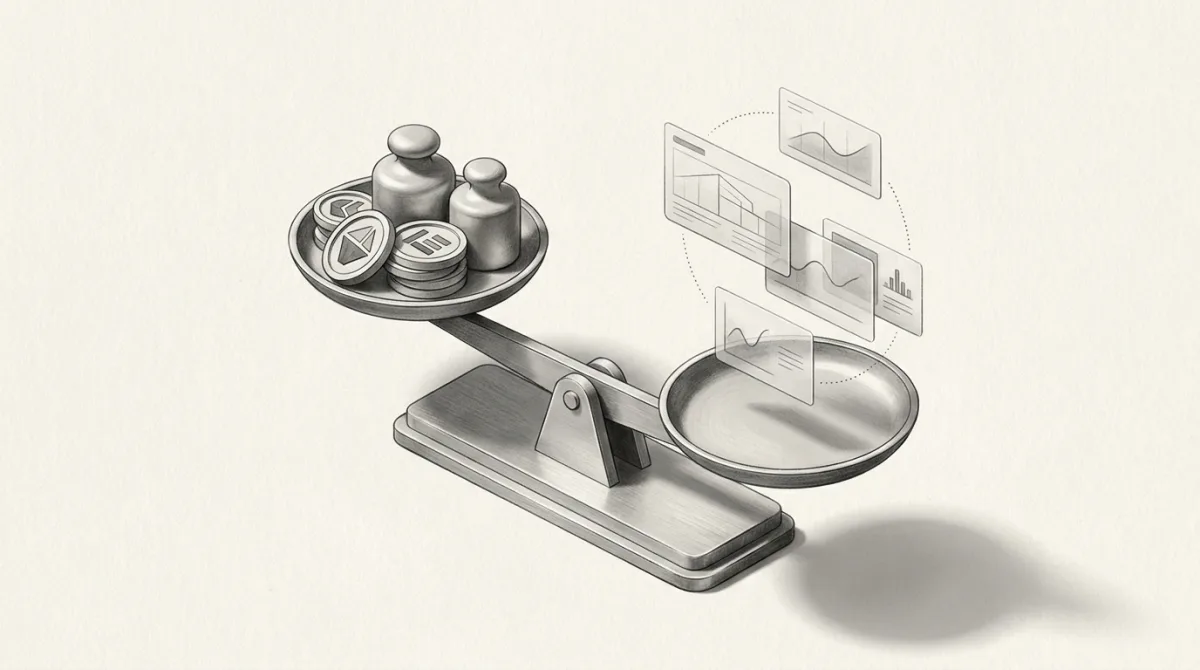
Zero-click search is the growing share of searches that end without a visit to any website: the query gets answered on the results page itself by featured snippets, knowledge panels and — since 2024, at accelerating scale — AI Overviews. Independent clickstream studies consistently put the share of Google searches that end without an external click at well over half, and AI answers push that share higher every quarter. For any business that built customer acquisition on organic clicks, the distribution channel is shrinking underneath it. The practical hedge is to buy distribution where your audience already reads instead of waiting for an algorithm to grant it — and native advertising is the cheapest way to do that at open-web scale.
What changed: from ten blue links to answers#
The old search contract was simple: Google borrowed your content for a snippet, and in exchange it sent you clicks. AI Overviews break that contract. Instead of excerpting one page, the engine synthesizes an answer from many pages and presents it above the organic results. Citations exist, but a synthesized answer terminates most journeys — the searcher got what they came for.
Three things make this round different from every previous SERP-feature panic:
- It targets informational queries — the "what is", "best", "how much does X cost" searches that content sites, affiliate reviews and top-of-funnel blogs were built to capture. Transactional and navigational queries still send clicks; the informational middle is where the traffic disappears.
- It is not only Google. ChatGPT, Perplexity and Copilot answer directly, and even when they cite sources, a chat window is a worse referrer than a results page ever was.
- The symptom is measurable in Search Console. The pattern in our own GSC property is the one every publisher describes: impressions climb (your page is being shown or cited inside AI results), clicks stay flat or fall, and average position becomes decorative. Rising impressions with falling CTR is the signature of the zero-click era — check your own informational queries and you will probably find it.
Who feels it first#
| Business model | Exposure | First symptom |
|---|---|---|
| Affiliate/review publishers | Severe — rankings are the whole acquisition model | "Best X" queries answered in-SERP; commissions fall before rankings do |
| Content arbitrage sites | Severe — organic traffic in, ad revenue out, squeezed both ends | RPM holds but sessions decay month over month |
| DTC brands with blog-led funnels | High — top-of-funnel content stops filling the retargeting pool | Paid social CPAs creep up as organic audiences shrink |
| Lead-gen (insurance, finance, home services) | High — comparison queries are prime AI Overview territory | Form fills fall while rankings look unchanged |
If you recognize your model in that table, the question is not whether to diversify but which channel replaces the lost distribution. We covered the same decision for Meta-dependent buyers in how to diversify beyond Meta ads; the logic for search-dependent operators is nearly identical.
Why native traffic is the natural hedge#
Native advertising — the sponsored placements inside publisher content recommendation widgets and feeds — has a structural property no other channel offers a search-dependent business: it runs on the exact same open-web pages your organic audience reads, but you buy the click instead of ranking for it.
Four reasons it fits the hedge role:
- Supply is growing for the same reason your traffic is shrinking. Publishers losing search clicks lean harder on paid recommendation inventory to monetize what remains. The channel expands as SEO contracts.
- You pay per click in an auction, and the auction is cheap. Media buyers commonly report Tier-1 native CPCs at a fraction of comparable search CPCs — your niche and geo move this a lot, so treat it as a heuristic, not a promise. Our native ads cost guide and CPC benchmarks break down what buyers actually report per network.
- The scale is real. OpenAdLibrary's index has logged 6.8 million+ ad observations across 49 native networks and holds 725,000+ live creatives (June 2026). Distribution at that scale does not vanish with an algorithm update, because you are buying it, not borrowing it.
- The categories being hit hardest are the categories native already serves. Health (24,472 classified creatives), finance (24,068) and insurance (22,427) are the three biggest verticals in our index — the same verticals watching AI Overviews swallow their comparison queries.
One honest caveat: intent is different. Search captures demand; native interrupts attention. A blog post ported into a native campaign fails. You need an angle-led creative and usually a pre-lander to build the intent that search gave you for free. Budget learning time for that, not just media spend.
The other side of the trade: become the source AI cites#
The hedge has a second leg. If AI answers are the new front page, being the source they cite is the new ranking — and the currency of citations is first-party data. Generic explainers get synthesized away; pages built around numbers nobody else has keep earning references. We see this in our own logs: assistant and AI-crawler referrals concentrate on our data-backed pages, not our opinion pieces.
There is also a more direct route than waiting to be cited: making your data queryable by assistants. We exposed our ad index to Claude and ChatGPT over MCP — the full setup is in Native Ad Library MCP — and that turns an AI platform from a traffic interceptor into a distribution channel. Treat AI citations as brand surface, though, not a budgetable channel. The budgetable channel is the paid one.
Common mistakes when replacing organic traffic#
The failure modes of this transition are consistent enough to list:
- Publishing more of the content that stopped working. If AI Overviews answer your queries, doubling article output raises your citation odds slightly and your traffic barely at all. The marginal dollar is better spent buying distribution than feeding the answer box.
- Treating native like search. Bidding keywords is demand capture; native is demand creation. Buyers who launch with product-page landers and search-style copy conclude "native doesn't work" after one bad test. The channel works; the funnel was wrong.
- Judging the test on week-one CPA. Search converts on intent you did not pay to build. Native needs an angle-discovery phase — several creative iterations — before its CPA is comparable. Kill creatives fast, but judge the channel on the post-learning number.
- Spreading a small budget across three networks. One network, one vertical, one geo produces a readable result. Three networks at a third of the budget each produces three ambiguous ones.
- Skipping the research phase. Every network's live ads are public. Launching without studying the incumbents' surviving angles means paying the auction to learn what an ad library shows for free.
A 30-day plan to de-risk search dependence#
- Week 1 — quantify exposure. In GSC, segment informational queries and chart impressions vs clicks over 12 months. The divergence is your risk, in numbers.
- Week 2 — pick one network and study it before spending. Shortlist from our ranking of native ad networks, then spend an afternoon in a native ad research tool looking at what already runs in your category: which angles persist for weeks (longevity is the closest public proxy for profitability), what the landing funnels look like, who you would be bidding against.
- Week 3 — build for the channel. One angle-led creative set and one pre-lander, modeled on the survivors you found, not on your blog.
- Week 4 — run a real test and measure it like paid. Media buyers commonly treat a few thousand dollars per network as the minimum for a readable test; wire up click-level tracking from day one. The mechanics are in our media buying guide for native ads.
Free research goes a long way here — OpenAdLibrary's free tier covers the browsing above, and the paid plan adds the full index depth when a test graduates into a channel. The point is not that native replaces SEO one-for-one. It is that owned-and-paid distribution is the only kind an AI answer box cannot take away.