Ad Cloaking: How It Works and How Auditable Evidence Exposes It
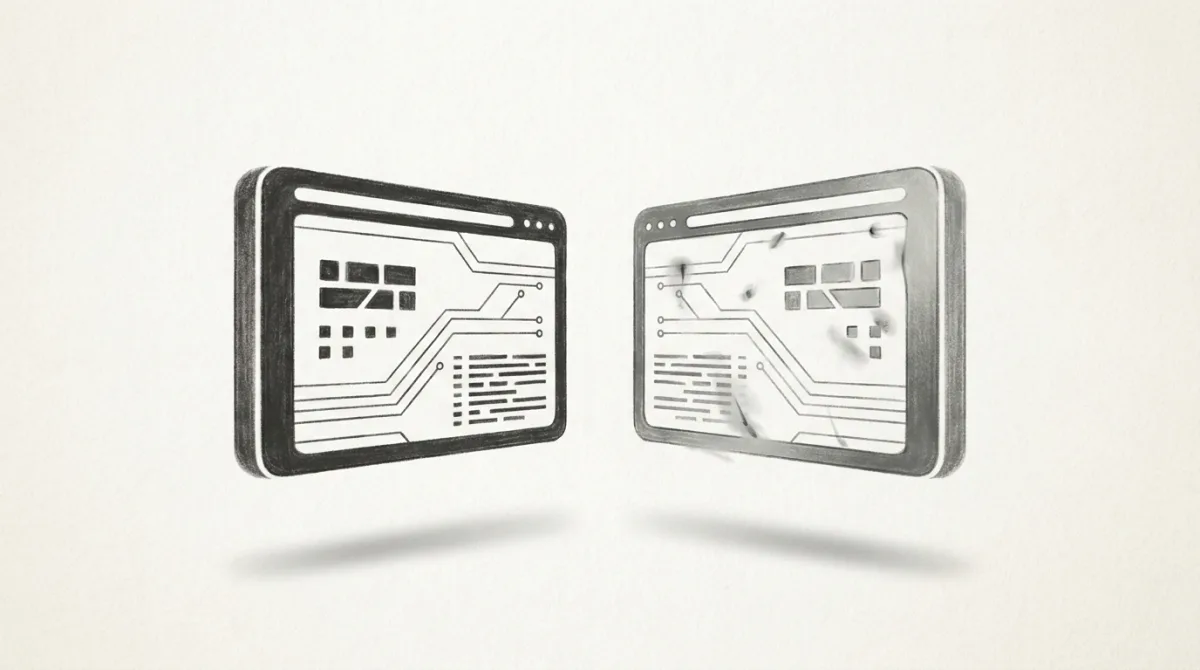
Cloaking shows ad reviewers a clean page while real users land somewhere else, and only residential-grade click-trace evidence proves the two versions exist.
Educational, citation-magnet content on ad transparency, ad libraries, the native supply chain, ad fraud, brand protection, legality, and programmatic data access, OpenAdLibrary's authority and AI-citation engine.

Cloaking shows ad reviewers a clean page while real users land somewhere else, and only residential-grade click-trace evidence proves the two versions exist.

Reporting a scam ad rarely fails on intent, it fails on evidence, so here is the workflow that actually moves networks and regulators: what to capture, where to send it, and how to preserve the ad and its landing page before they disappear.

Trademark abuse rarely hides in the ad copy; it hides in the creative, the real advertiser behind the reseller name, and the landing page after the click, so here is how brand teams capture evidence that survives a takedown or a legal review.

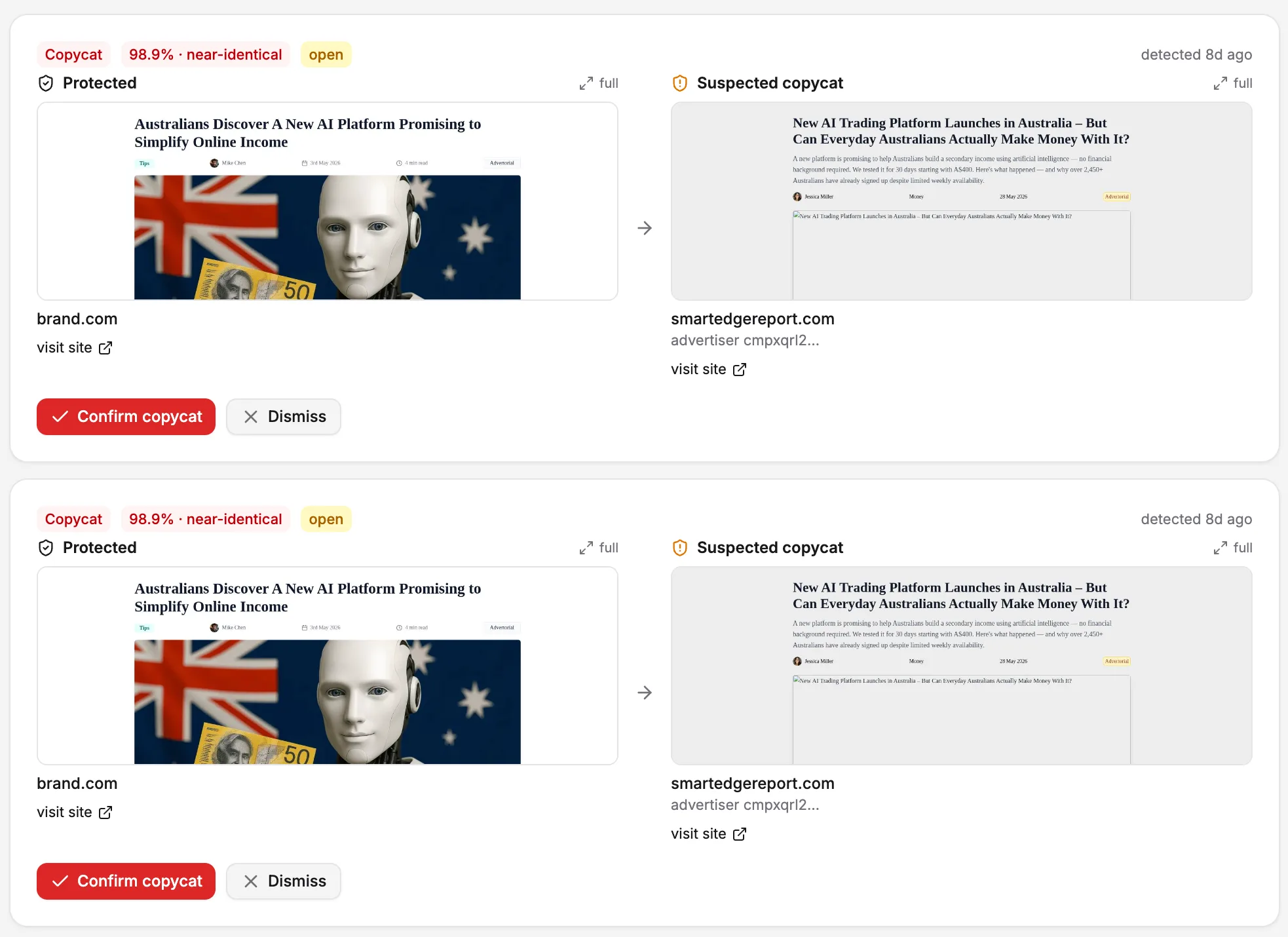
Copycat landing pages borrow a trusted brand's logo and tone to launder a scam through native-ad networks, and here is the practitioner's method for catching them with evidence anyone can verify.

Most native ad intelligence is locked behind a dashboard, so here is how analysts and data teams pull live creatives, the real advertiser, supply-chain hops, and landing pages as structured records over an API.

Native ad fraud hides in the gap between the widget you see and the advertiser you don't, so here are the fraud types that matter and the supply-chain and landing-page signals that surface them.

The "Sponsored" widget hides a real roster of advertisers; here's how to surface who actually buys placements on any site, and what their longevity tells you.

Every native ad leaves fingerprints in its click URL, loader script, and tracker domains that name the network serving it, and here's how to read them by hand or at scale.

Follow one native impression from a publisher's "you may also like" box to the advertiser's checkout, reading the SSP, the auction macros, the click trackers, and the redirect chain straight off the captured data.

Ad intelligence turns the public ads running across the web into structured competitive data: the creative, the network behind it, the advertiser, the landing page, and the spend signals, and here's the full pipeline plus why native is the hard part.

Ad transparency tools let anyone see who is running which ads and where, and here is how the category works, why native ads were the blind spot, and what separates an open ad library from a $300-a-month spy tool.

Meta and Google run public ad libraries; Taboola, Outbrain and MGID never did, so here is what an open native ad library has to capture, and why that gap sat empty for a decade.

Native ad networks are where brand impersonation, copycat landing pages, and cloaked offers thrive, because the creative blends into the article and the real advertiser hides behind redirect chains; here is how to monitor, detect, document, and escalate brand abuse with evidence that holds up.

Ad transparency means anyone can see which ads are running, who paid for them, and where they appear, and here is how the libraries work, the laws that built them, and the native blind spot none of them fill.