 Español
 Português (Brasil)
 Français
 Deutsch
 Italiano
 Nederlands
 Polski
 Svenska
 Türkçe
 Русский
 日本語
日本語 한국어
한국어 简体中文
简体中文 Tiếng Việt
 Bahasa Indonesia
 繁體中文
繁體中文 Čeština
 Dansk
Dansk Norsk (bokmål)
 Suomi
Suomi Ελληνικά
 Română
 Magyar
 Українська
 ไทย
ไทย हिन्दी
 العربية
 עברית
עבריתBest AI Tools for Ad Creative: A Task-Based Buyer's Guide
There's no single best AI ad creative tool, because the job splits into image, video, copy, and research. Here's how media buyers should actually split the stack.

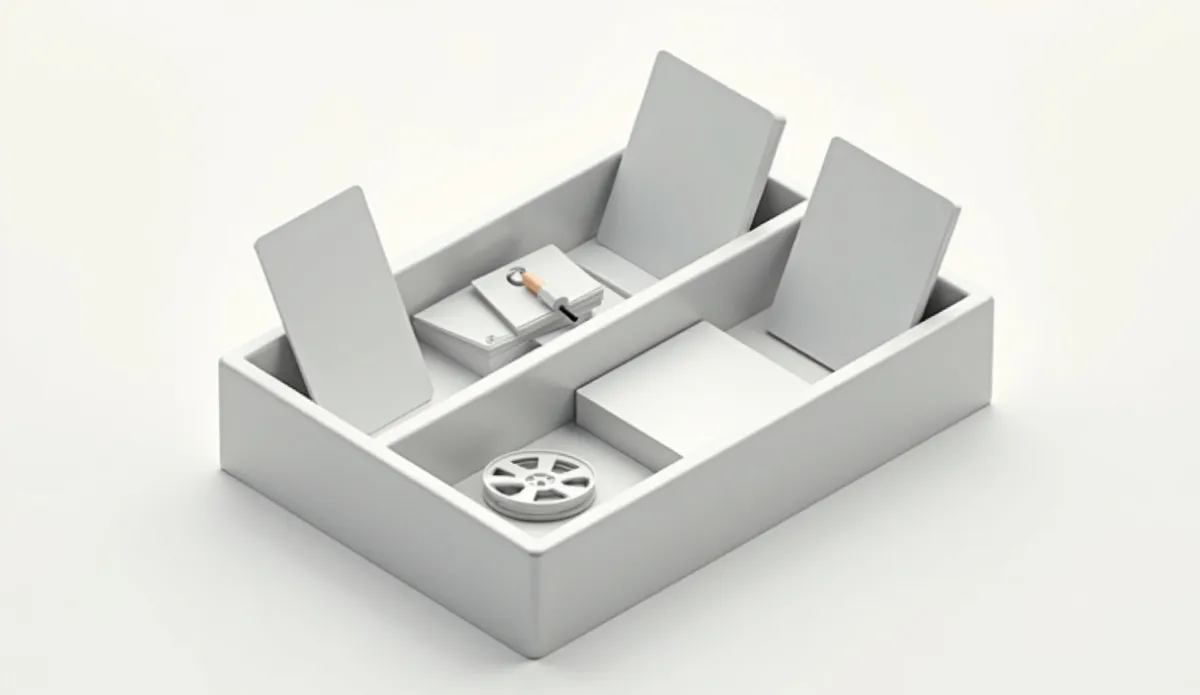
There's no single "best" AI ad creative tool because the job splits into four different tasks: generating images, generating video, generating and iterating copy, and researching what's already working before you generate anything. Most buyers pick one tool and expect it to cover all four, then wonder why the output looks generic. This guide breaks the stack down by task, with the actual tradeoffs media buyers run into on real campaigns.
Image generation: the biggest category#
For static native creative, an image generation model handles product staging, background variation, and localization. The practical differences that matter for ad work, not for art:
| Use case | What to check before committing |
|---|---|
| Product photography augmentation | Can it hold brand color and product shape consistent across variations |
| Lifestyle / background scenes | Does it avoid the "AI sheen" (over-smooth skin, wrong hand count, warped text) |
| Localization (new geo, new face) | Can you batch-generate variants fast enough to keep pace with a geo expansion |
| Compliance-safe health/beauty imagery | Does the output avoid implying a medical claim your copy can't back up |
None of this is a "best tool" answer, because model quality shifts every few months and whichever model wins today may not win next quarter. The more durable skill is knowing what to ask for: specific, product-anchored prompts beat generic "attractive lifestyle photo" prompts, and native audiences are unusually good at spotting the difference.
Video generation: earlier but moving fast#
Native video formats (outstream, in-feed autoplay) are a smaller share of the market than static image creative, but growing. AI video tools are currently strongest at short, simple motion (a subtle zoom, a looping background, a product turn) and weakest at anything requiring a believable talking human for more than a few seconds. If your angle needs a UGC-style testimonial video, a real creator still outperforms synthetic video on trust signals, at least for now. Use AI video for supporting motion assets around a real-shot hook, not as a full replacement for it.
Copy and headline generation: useful once you feed it real examples#
This is the category where AI tools get judged most unfairly, because people expect a blank prompt to produce a winning hook. It won't. What an LLM is genuinely good at:
- Generating headline variants once you supply a real, proven hook as the seed
- Rewriting a headline for a different curiosity mechanism (question vs. direct claim vs. story angle), covered in more depth in hook vs angle vs claim
- Translating and localizing copy for a new geo without losing the claim structure
- Summarizing patterns across a batch of headlines you paste in, so you can spot what your competitors keep repeating
What it's bad at: inventing the underlying claim or offer angle from nothing. That has to come from research, not generation. If you skip the research step, you get technically correct, forgettable copy, which is the single most common complaint about "AI ads" underperforming.
The step most buyers skip: research before generation#
The highest-leverage AI use case in native advertising right now isn't generation at all, it's using AI to compress research time. Feeding a batch of competitor screenshots or headlines into an LLM and asking it to extract the recurring hook, claim, and structure is dramatically faster than manually eyeballing dozens of ads, and it gives your generation tools something real to work from instead of a cold prompt, the same principle behind a solid competitive ad intelligence workflow.
Feeding that research into a generation tool, rather than skipping straight to "make me an ad," is the difference between creative that looks like everything else in the feed and creative built on a hook that's already proven to hold attention. Across the OpenAdLibrary index of 725,000+ native creatives across 49 networks (June 2026), the same three or four claim structures reappear across health, finance and insurance verticals for a reason: they work, and a generation tool that's fed those structures will outperform one that's guessing. Browsing the live corpus by vertical inside OpenAdLibrary's native ad spy tool is the fastest way to build that seed set before you open an image or copy generator.
A practical, tool-agnostic stack#
Rather than naming specific vendors (model quality and pricing shift too fast to be useful advice a year from now), here's the stack structure that holds up regardless of which tools you plug in:
- Research layer: pull live, long-running creatives in your vertical to identify proven hooks and claim structures. Ad longevity is the fastest proxy for "this is probably still profitable."
- Copy layer: use an LLM to generate headline variants from the hooks you identified, not from a blank prompt.
- Image layer: use an image model for backgrounds, product staging and localization; keep faces and testimonial-style imagery closer to real photography until you've validated a specific model against your vertical's conversion signal.
- Video layer (optional): use AI for supporting motion, keep the core hook delivered by a real voice or face if the format calls for a talking-head feel.
- QA layer: check every generated claim against what you can actually substantiate, per the FTC's disclosure rules for advertorial-style ads. Generation speed doesn't reduce your compliance obligation.
Where buyers waste the most budget#
Two patterns show up constantly with teams that adopt AI tools without a research step. First, they over-produce: fifty visual variations of one weak hook, mistaking image count for genuine testing. Second, they under-differentiate: because generation is cheap, teams in crowded verticals like nutra and finance end up with creative that looks and reads almost identically to a dozen competitors, because everyone fed the same kind of generic prompt into the same kind of model. The fix for both is the same: spend more time on research and hook selection, less time generating more images of the same idea. Analyzing what's actually winning before you generate anything is worth more than any single tool choice.
How verticals change the tool choice#
The right emphasis in your stack shifts by vertical, and this matters more than which specific model you pick. In health and insurance, the two largest verticals in the current index, the risk sits in the claim, not the render, so the QA layer should get more of your time than the image layer. A generated background behind an honest, substantiated claim is low-risk; a synthetic "before" photo implying a result you can't back up is a compliance problem no matter how good the model looks. In ecommerce, the opposite is true: claims are usually low-risk product statements, so the leverage is almost entirely in image and localization speed, letting a small team produce geo-specific product creative at a pace that used to require a studio. Software and finance sit in between, where copy clarity (what the product actually does, what the offer actually costs) matters more than visual polish.
Signals worth watching before you commit budget to a tool#
Rather than chasing every new model release, watch two things that tell you whether your AI-assisted creative pipeline is actually working: survival rate and repetition. Survival is simple: does the creative keep running past the first week without getting swapped out, the same signal covered in ad longevity as a winning signal. Repetition is a warning sign: if your last twenty AI-generated ads all use the same curiosity mechanism because that's what the model defaults to when prompted casually, you're not testing angles, you're testing render settings. Pull a sample of your own output next to a set of live competitor creatives and check honestly whether a stranger could tell which batch came from a generator.
Bottom line#
There's no shortcut around research, and no AI tool replaces the work of figuring out which claim and hook actually deserves to be tested. What AI tools are legitimately good for is compressing production time once you know what to make: faster image variation, faster copy iteration, faster localization. Pick tools by task (image, video, copy, research) rather than looking for one platform that does everything, and always route the generation step through real, proven examples instead of a blank prompt.