Español
 Português (Brasil)
 Français
 Deutsch
 Italiano
 Nederlands
 Polski
 Svenska
 Türkçe
 Русский
 日本語
日本語 한국어
한국어 简体中文
简体中文 Tiếng Việt
 Bahasa Indonesia
 繁體中文
繁體中文 Čeština
 Dansk
Dansk Norsk (bokmål)
 Suomi
Suomi Ελληνικά
 Română
 Magyar
 Українська
 ไทย
ไทย हिन्दी
 العربية
 עברית
עבריתTaboola Retargeting: How to Set It Up and When It Pays Off
Taboola retargeting works through a site-wide pixel and audience segments, best used to warm up cart abandoners rather than as a cold prospecting substitute. Here's the setup and the tradeoffs.


Yes, Taboola supports retargeting: you install the Taboola pixel on your site, build audience segments from visitors who took a specific action such as viewing a product, starting checkout, or reading an article, and layer those segments onto a campaign at a bid premium. It works best for warming up cart abandoners and pushing return visitors toward a second conversion, not for the icy cold prospecting people usually associate with native. Below is how the setup actually works and where it earns its keep.
What Taboola retargeting actually is#
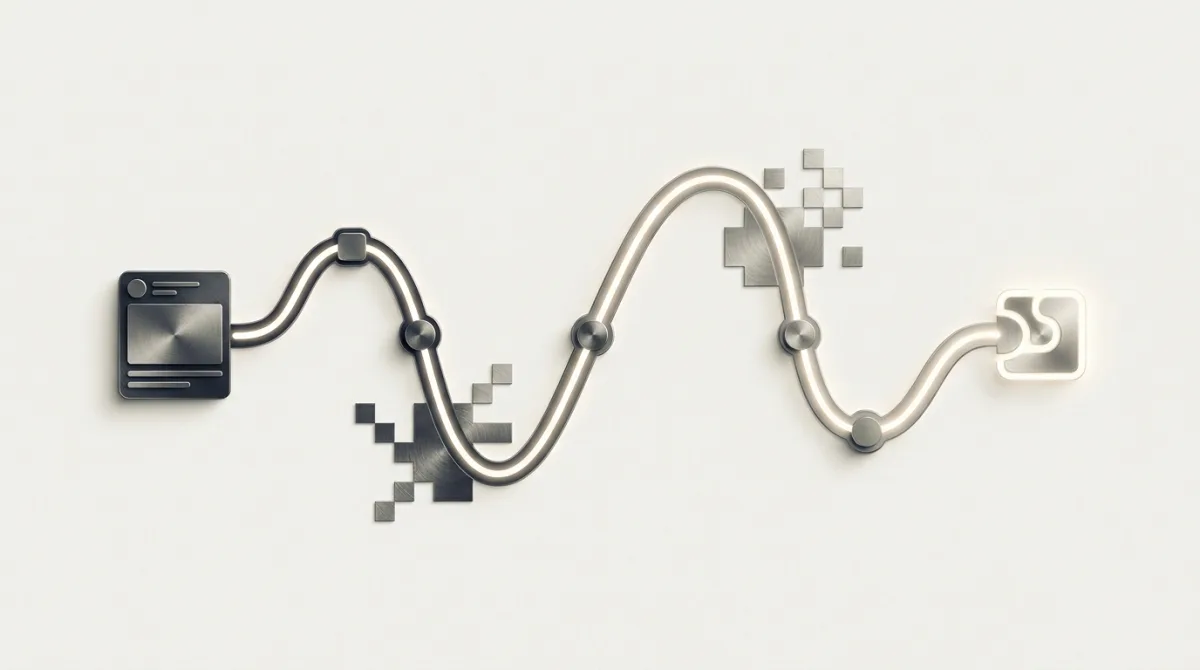
Retargeting on Taboola is audience-based rather than placement-based: instead of targeting a geo or a device, you're targeting people who've already interacted with your site, then serving them native ads across Taboola's publisher network as they browse elsewhere. It relies on the Taboola pixel, a small snippet installed site-wide that fires events you define, product view, add to cart, form start, purchase, and feeds those events back into audience segments you can target directly. This is a different mechanism from a conversion pixel used purely for measurement; the retargeting pixel actually builds the audience you'll advertise to, not just reports on what happened.
Setting it up in Backstage#
- Install the pixel site-wide, not just on a landing page, so it can track visitors across your whole funnel rather than a single page view.
- Define the events that matter: page view, product view, add to cart, checkout start, and purchase are the standard set, but the useful ones depend on your funnel shape.
- Set your lookback window. How far back a visitor's action still counts toward the segment; shorter windows target hotter, smaller audiences, longer windows trade heat for reach.
- Check the minimum audience size. Taboola requires a segment to clear a minimum size before it will serve against it; the exact floor changes, so confirm the current threshold in Backstage or with Taboola support rather than assuming a number.
- Build the retargeting campaign against your chosen segment and set a bid premium, since retargeted traffic typically costs more per click than cold prospecting because you're bidding for a narrower, more valuable audience.
Segment types worth building#
- All site visitors. A broad warm audience, useful as a baseline before you get more specific.
- Product page viewers who didn't purchase. The classic cart-abandonment segment, and usually the highest-converting one for ecommerce.
- Content or blog readers. Useful for publishers and content-driven funnels pushing a return visit or a newsletter signup rather than a direct sale.
- Past purchasers. For upsell, cross-sell, or repeat-purchase offers, where the message is different from the one that won the first sale.
When retargeting pays off on native#
Retargeting earns its bid premium fastest on ecommerce funnels with real cart abandonment, since you're re-engaging someone who already showed purchase intent rather than convincing a cold reader from scratch. It also works well on lead-gen offers with multi-step forms, where a chunk of visitors start but don't finish, and a nudge back can recover a meaningful share of them. Content sites and subscription funnels use it too, retargeting lapsed readers to pull them back rather than only chasing new ones.
When it doesn't#
Low-traffic sites struggle here because the audience segments never clear Taboola's minimum size threshold, so there's nothing to advertise against. One-and-done, low-ticket offers with no real repeat or recovery value rarely justify the bid premium retargeting carries. And if you're expecting retargeting to do the job of cold prospecting, expanding into new customers who've never heard of you, it won't; that's a different campaign type with different creative and a different budget line.
Measuring whether retargeting is actually working#
The easiest mistake here is judging a retargeting segment against the same benchmarks you'd use for cold prospecting. Retargeted traffic should convert at a meaningfully higher rate since you're reaching people who've already shown intent, and if it isn't, the problem is usually the creative treating the audience like strangers rather than the targeting itself. Track the segment's conversion rate and cost per acquisition separately from your prospecting campaigns rather than blending them into one blended number, since averaging the two hides whether either one is actually pulling its weight. It's also worth checking your attribution window settings specifically for the retargeting segment: a visitor who abandoned a cart three weeks ago and converts after seeing a retargeting ad should get credited correctly, and a window that's too short will under-report the segment's real value.
How lookback windows change the tradeoff#
A short lookback window, targeting only visitors from the last day or two, gives you the hottest possible audience but the smallest one, which makes clearing Taboola's minimum segment size harder on lower-traffic sites. A longer window, thirty days or more, gives you more scale but a colder audience on average, since intent fades the further out you go from the original visit. There's no universally correct setting; ecommerce with a short consideration cycle typically wants a shorter window, while a higher-consideration purchase like insurance or a financial product can justify a longer one because the decision cycle itself is longer. Test more than one window against the same segment definition before locking in a default.
A practical way to approach this if you're not sure where to start: launch two versions of the same segment, one with a shorter window and one with a longer one, at the same bid, and let a week or two of data show which one actually delivers a better cost per acquisition rather than guessing based on general advice, since your own funnel's consideration cycle is the only input that really matters here.
Common mistakes that quietly waste retargeting budget#
- Reusing cold-prospecting creative for the retargeting segment. The message a stranger needs and the message a returning visitor needs are different jobs, and using the same ad for both leaves conversion on the table in the warm segment.
- Setting the bid premium too low to actually win the auction against the audience you want. Retargeting segments are smaller and often more contested for that specific audience, so an underfunded bid can mean the segment technically exists but rarely serves.
- Never revisiting the segment definition. A cart-abandonment segment built once and left alone drifts as your product catalog and site changes; revisit event definitions periodically rather than assuming they still match your funnel.
Retargeting vs prospecting: a rough budget split#
| Prospecting (cold) | Retargeting (warm) | |
|---|---|---|
| Audience | New, no prior interaction | Visitors who took a specific action |
| Typical bid | Standard | Premium, bidding for a narrower audience |
| Creative angle | Hook, curiosity, problem/solution | Reminder, incentive, urgency to finish |
| Budget share (rough starting point) | Majority | Smaller, scaled up once cart-abandon volume justifies it |
Most advertisers run retargeting as a smaller slice of total spend that scales with actual abandonment volume rather than as an equal-weight campaign from day one; there's no point overfunding a segment before you know how many people are actually flowing into it.
Creative for retargeting looks different from cold creative#
Cold creative needs to earn attention from someone who's never heard of you, so it leans on curiosity and a strong hook. Retargeting creative can skip that step and go straight to the reminder, since the reader already knows the product or the page. It's the difference between "here's a problem you didn't know you had" and "you left this in your cart." Studying Taboola ad examples and native ad creative best practices is useful groundwork even though most public captures skew toward cold, prospecting-style creative rather than retargeting-specific messaging, since retargeted ads are shown only to a narrow segment and are harder to observe from the outside.
How OpenAdLibrary helps you build better retargeting creative#
Even though retargeting audiences are private by nature, the creative principles that make any native ad convert (a clear hook, a specific claim, a landing page that follows through) still apply. OpenAdLibrary's index of 206,145 live Taboola creatives as of June 2026 shows which cold-prospecting angles have proven durable enough to keep running for weeks, and that same durability signal, covered in our ad longevity guide, is a reasonable proxy for what messaging resonates in your vertical before you adapt it for a warmer, retargeted audience. Search your own category on /spy/taboola to see what's already working before you write your retargeting copy from scratch.