Español
 Português (Brasil)
 Français
 Deutsch
 Italiano
 Nederlands
 Polski
 Svenska
 Türkçe
 Русский
 日本語
日本語 한국어
한국어 简体中文
简体中文 Tiếng Việt
 Bahasa Indonesia
 繁體中文
繁體中文 Čeština
 Dansk
Dansk Norsk (bokmål)
 Suomi
Suomi Ελληνικά
 Română
 Magyar
 Українська
 ไทย
ไทย हिन्दी
 العربية
 עברית
עבריתContent Recommendation RPM: What Publishers Actually Report
Content recommendation RPM swings from under a dollar to well over $15 per thousand pageviews, and the network you pick matters far less than your geo, vertical and device mix.


RPM for content recommendation widgets (the "around the web" and "you may also like" boxes from Taboola, Outbrain, MGID, Revcontent and similar networks) commonly lands somewhere between $0.50 and $20 per thousand pageviews for most publishers, and the spread is driven almost entirely by traffic geo, content vertical and device mix, not by which specific network you sign up with. A finance or insurance site running US desktop traffic can post RPM many multiples higher than a general entertainment site sending the same widget to Tier-3 mobile traffic.
What RPM actually measures here#
RPM stands for revenue per mille: what you earn per 1,000 pageviews, not per 1,000 content recommendation widget impressions (some network dashboards report both, so check which figure you're looking at). It's a blended number. The network runs an auction on every widget load, advertisers bid CPCs for the slots, and your payout is roughly clicks times winning CPC, divided by pageviews, times 1,000.
That means two publishers running the identical widget, at the same traffic volume, can post very different RPM, because RPM compresses three separate variables into one figure: your click-through rate, the average CPC your traffic wins in the auction, and your fill rate (the share of widget loads that actually serve a paid ad instead of a house ad or blank slot). "My RPM is low" is really three different diagnoses, and the fix is different for each one.
The variables that move RPM more than network choice#
- Vertical of your content. Health, finance, insurance and home-improvement content sit in some of the highest-value verticals across the native ad networks OpenAdLibrary tracks, because the downstream advertisers (insurance leads, supplement offers, home services) pay high CPAs and can afford aggressive CPC bids.
- Geo. Tier-1 traffic (US, UK, Canada, Australia) clears materially higher CPCs than Tier-2/Tier-3 geos in almost every vertical, simply because advertiser budgets concentrate there.
- Device. Desktop widgets often carry higher RPM than mobile in the same vertical and geo, though this gap has narrowed as mobile ad spend has grown; MSN's native inventory in particular skews toward strong ecommerce and finance demand across both.
- Page context. A widget sitting under a genuinely engaged article (long dwell time, real intent) outperforms the same widget bolted onto a thin listicle, because CTR quality feeds back into the auction.
- Ad density and layout, covered below.
Typical RPM ranges publishers report#
These are informal figures shared in publisher forums and communities, not official network data, and they move a lot by month and by account. Treat them as a starting sanity check, not a target.
| Traffic profile | RPM commonly reported |
|---|---|
| US desktop, finance/insurance content | $8 to $20+ |
| US desktop, general news or entertainment | $2 to $6 |
| Mobile, Tier-1 geo, mixed content | $1 to $4 |
| Tier-2/Tier-3 geo, any device | $0.20 to $1.50 |
If your numbers sit well outside these bands in either direction, that's a signal to dig into your account dashboard rather than assume the network is broken or performing exceptionally.
The ad density tradeoff#
Adding a second or third widget row, or a wider widget with more tiles, raises impressions and usually raises total revenue, up to a point. Past that point, CTR per tile falls faster than impressions rise, RPM per pageview flattens or drops, and user experience takes a real hit (slower load, cluttered page, higher bounce). Most publishers find the sweet spot is one primary widget below the fold of the article, sized to 4 to 8 tiles, rather than stacking multiple networks' widgets on the same page competing for the same click.
Running two networks side by side on different pages (an A/B split, not stacked) is a more reliable way to find your actual best-paying network for your specific traffic than reading generic "network X pays more" claims, because the honest answer is that it depends entirely on your content and audience.
Choosing a network as a publisher#
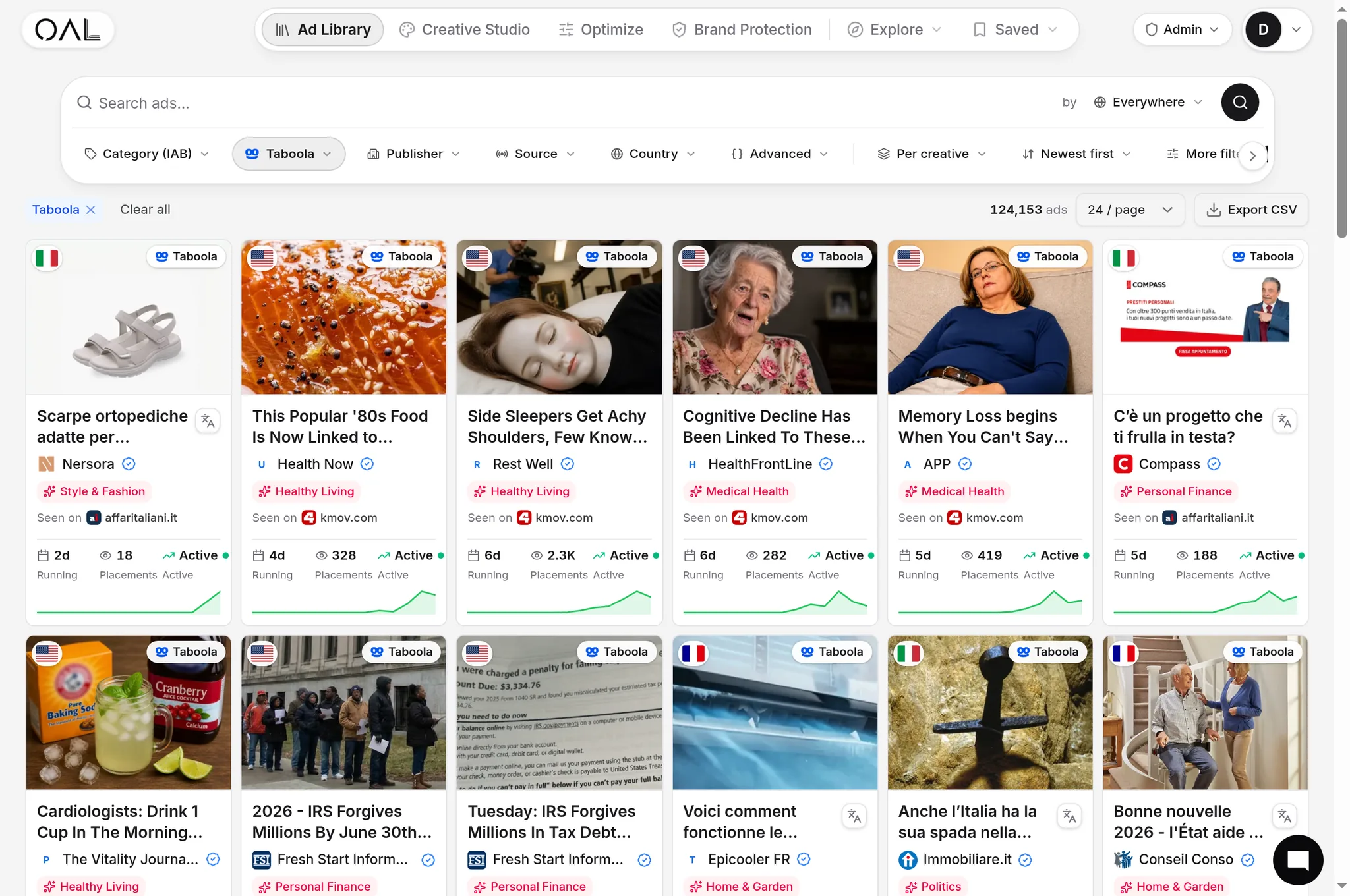
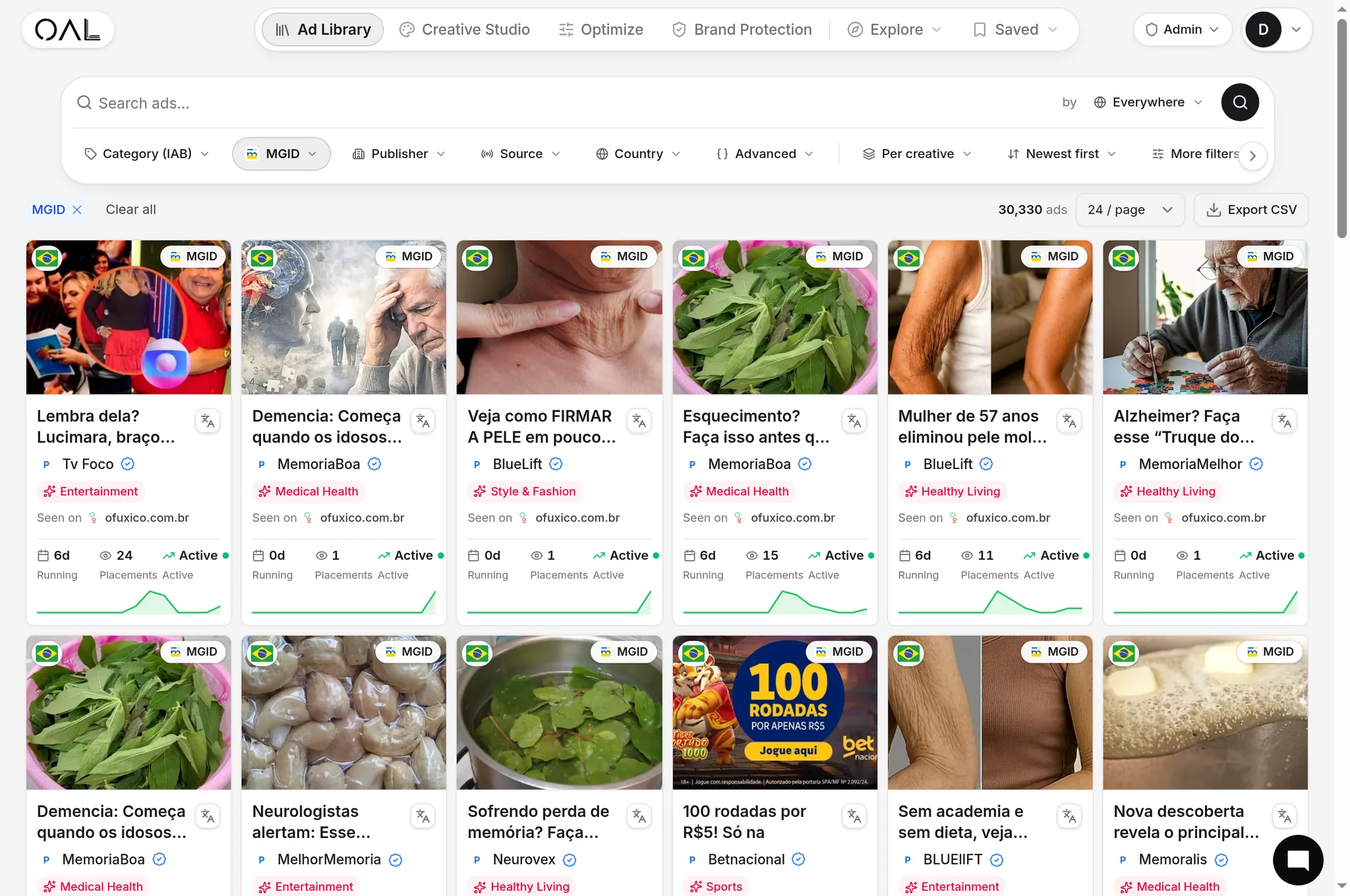
Scale of active advertiser demand is one proxy worth checking before you commit inventory to a publisher-facing network, since more advertisers bidding into an auction generally means better fill and more competitive CPCs on your traffic. As of June 2026, OpenAdLibrary's index shows very different advertiser depth across networks: Taboola carries over 206,000 live indexed creatives, Outbrain over 108,000, MGID around 63,000, and Revcontent close to 16,000, out of a total index of 725,000+ creatives across 49 networks. That doesn't translate directly into RPM (a smaller network can still pay well in a specific niche), but it's a reasonable signal of how much competitive pressure is likely bidding for your slots at any given time. Our rundown of the best native ad networks goes deeper on ranking them by real ad volume.
Before signing an exclusive deal with any one network, it's worth checking who is actually advertising there in your vertical right now rather than relying on the network's own sales pitch. You can browse live creative volume and advertiser mix per network on OpenAdLibrary's ad intelligence tool to see whether the demand backing a network's promises actually shows up in your niche.
Vertical demand behind the numbers#
The verticals that post the highest RPM for publishers are, unsurprisingly, the same ones carrying the deepest advertiser demand across the networks themselves. In OpenAdLibrary's June 2026 index, health leads at over 24,000 classified live creatives, followed closely by finance at just over 24,000 and insurance at over 22,000, with ecommerce and entertainment rounding out the top five. Home and garden, software and travel each carry over 10,000 live creatives. That ordering lines up closely with what publishers in those niches tend to report for RPM: heavy advertiser competition for the same audience segments pushes CPCs up across the board, and RPM is downstream of CPC.
This is also why a publisher covering, say, personal finance or health topics should expect materially higher RPM ceilings than one covering general entertainment or news aggregation, even at identical traffic volume and identical widget setup. The demand simply isn't as deep on the buy side for lower-value verticals, so the auction has less to bid with.
Diagnosing a sudden RPM drop#
Rule out these in order before assuming the network cut your rates:
- Traffic mix shift. A viral post from a lower-value geo or a different content category will drag blended RPM down even if per-segment rates are unchanged.
- Seasonality. Advertiser budgets in verticals like finance and insurance move with the calendar; a dip in a slow month is common and usually recovers.
- Ad blocker penetration. Rising ad-blocker rates on your audience reduce fill without showing up anywhere except a falling RPM.
- Widget placement or size change. Even a CSS update that shifts the widget lower on the page, or shrinks tile size, can quietly cut CTR.
- Policy or quality flags on your account. Networks throttle payouts on accounts flagged for invalid traffic patterns; check your dashboard's account health section first.
Only after ruling those out does it make sense to open a support ticket claiming a rate cut, and even then, expect a generic answer about "market conditions" rather than a specific explanation. Networks rarely disclose auction-level detail to individual publishers, so your own dashboard's historical trend line is more useful than anything support will tell you.
A note on running multiple networks#
Most publishers can run more than one content recommendation network across different pages or sections without exclusivity issues, since Taboola, Outbrain, MGID, Revcontent and MediaGo each have their own approval and terms; check each network's current publisher agreement, since some placements do carry exclusivity clauses for a given widget zone. Running a true side-by-side split test, same content, same traffic segment, different network, for two to four weeks is the only reliable way to know which pays better for your specific site rather than trusting anecdotal RPM numbers from a different publisher's traffic.