Español
 Português (Brasil)
 Français
 Deutsch
 Italiano
 Nederlands
 Polski
 Svenska
 Türkçe
 Русский
 日本語
日本語 한국어
한국어 简体中文
简体中文 Tiếng Việt
 Bahasa Indonesia
 繁體中文
繁體中文 Čeština
 Dansk
Dansk Norsk (bokmål)
 Suomi
Suomi Ελληνικά
 Română
 Magyar
 Українська
 ไทย
ไทย हिन्दी
 العربية
 עברית
עבריתMGID for Publishers: Requirements, RPM Reality & an Honest Assessment
MGID says yes to publishers the premium native networks turn away. What approval takes, what actually moves RPM, and the entertainment-heavy demand mix you'll be running — with live data from 62,765 MGID ads.


MGID is one of the most accessible native ad networks a publisher can join: the entry bar sits far below Taboola's or Outbrain's, approval is commonly reported in days rather than weeks, and the model is a straightforward revenue share on clicks through a content-recommendation widget. The honest trade-offs: RPM is driven almost entirely by your geo mix and reader engagement — publishers commonly report anywhere from well under $1 to low single digits per thousand pageviews, with Tier-2/3 traffic at the bottom of that range — and the demand you will be running skews hard toward entertainment-style teaser creatives. Of the 62,765 live MGID ads in OpenAdLibrary's index (July 2026), entertainment is the largest classified vertical by a factor of more than eleven over the next one. This guide covers how the model works, what approval takes, what actually moves RPM, and how to audit MGID's demand before you give it screen real estate.
How the MGID publisher model works#
MGID's core publisher product is a content-recommendation widget — a grid of sponsored story cards rendered below your articles, inside them, or in a sidebar. Advertisers bid on clicks in a real-time auction; when a reader clicks a sponsored card, the advertiser pays their CPC and you receive a contracted share of that revenue. Earnings are reported and discussed as RPM — revenue per thousand pageviews — which makes the underlying arithmetic worth internalizing:
RPM = widget CTR × average advertiser CPC × your revenue share × 1,000
Each factor is a separate lever:
- Widget CTR is a function of placement, card design and how curiosity-prone your audience is. A widget nobody scrolls to earns nothing regardless of how strong demand is.
- Average CPC is set by the auction — what advertisers will pay for your readers. That depends overwhelmingly on geo, and to a lesser degree on device and the content category your pages signal.
- Revenue share is your contract. Larger publishers negotiate; smaller ones take standard terms.
Because you are paid per click rather than per impression, raw pageviews are a weak predictor of earnings. A million monthly pageviews of drive-by search visitors who bounce before the widget renders will earn a fraction of what half that traffic earns on a site where readers finish articles. The advertiser-side view of the same machine is covered in how MGID works — worth reading as a publisher, because knowing what the buyers funding your RPM optimize for tells you which of your audiences they will pay up for.
MGID's structural position matters too. Operating since the late 2000s, the network built its supply base in the long middle of the web — content sites at meaningful but not comScore scale — with a footprint that is genuinely global rather than concentrated in premium US and UK inventory. That is why it can say yes to sites Taboola and Outbrain will not, and it is also why its average demand looks different from theirs.
Requirements: what approval actually takes#
MGID does not gate publishers behind the pageview thresholds premium networks are known for. The pattern practitioners consistently report:
- Traffic scale. Sites with tens of thousands of monthly visits are commonly reported as viable candidates, and the bar flexes with geography — clean sites in demand-rich markets get more latitude. There is no official public number; treat any specific figure you read as folklore and check MGID's current publisher documentation before planning around it.
- Article-style content. The widget lives against editorial pages. News, entertainment, lifestyle, sports and finance sites fit naturally; single-page tools, forums and thin utility sites do not.
- Original content. Scraped, spun or pirated content is a standard rejection. The network sells advertisers engaged readers, and it protects that.
- Policy floors. Adult content, piracy and the usual prohibited categories are out.
- Traffic provenance. Search, social and direct visitors who actually read are what the auction pays for. Sites running on bought junk traffic get declined or earn next to nothing. The traffic-arbitrage operators who make native widgets work do it with cheap traffic that genuinely engages — the widget does not care how a reader arrived, only whether they scroll and click.
Approval is commonly reported to take days rather than the weeks-long negotiation cycle of a premium direct deal, and standard tiers typically carry no exclusivity demand — which means you can trial MGID alongside your existing monetization without betting the site on it. That optionality is one of the network's genuinely underrated features: the cost of finding out what MGID pays on your traffic is low.
RPM reality: what publishers actually earn#
No honest article can quote you a rate, because the spread is enormous and every input is site-specific. What practitioners commonly report as orientation: engaged Tier-1 audiences earn from well under $1 to low-single-digit RPMs on standard terms, and Tier-2/3 traffic lands materially below that. These are not official figures and your niche, layout and geo mix will move the number more than any network-level average.
What actually moves RPM, in rough order of leverage:
- Geo mix. Advertiser budgets concentrate in Tier-1 markets. The same widget, same placement, same CTR can earn several times more on US traffic than on Tier-3 traffic, because the auction clears at a different price.
- Engagement depth. The share of sessions that ever reach the widget is your ceiling. Long-form content with real read-through beats high-bounce listicle traffic at identical pageview counts.
- Placement and density. End-of-article placements earn the baseline; in-content units lift revenue but tax reading experience. Stacking many units produces a short-term RPM bump and a long-term session decline.
- Content category. Contextual demand is real: finance, health and home-improvement pages attract advertisers with deeper pockets than general viral content.
- Seasonality. Fourth-quarter demand strengthens and early first-quarter demand sags — a pattern across ad markets generally, not an MGID quirk. Judge any trial across at least a full month.
Two measurement disciplines separate publishers who make native pay from publishers who quietly churn out:
- Measure session RPM, not widget RPM. An aggressive layout can raise widget earnings while depressing pages per session and return visits. The number that matters is revenue per thousand sessions, including what display and recirculation earn on the pageviews the widget did or did not cost you.
- Run a holdout. Serve a template variant without the widget to a slice of traffic for two weeks. The delta is the widget's true incremental revenue — often smaller than the dashboard implies, occasionally larger.
And a warning that applies to every network, MGID included: sales material features top-decile case studies. Anchor expectations on your own 30-day trial, not on a deck.
Payment terms, reporting and account management#
Read the operational terms as carefully as the revenue share — they decide how the relationship actually feels a year in:
- Payout thresholds and timing. Minimum-payout thresholds and net payment terms are standard across the industry and MGID is no exception; the specifics change, so confirm the current threshold, payment methods and schedule before you count on the cash flow. Smaller international publishers should check method fees in particular — a payout that loses several percent to transfer costs is a quiet RPM haircut nobody itemizes.
- Reporting granularity. You want earnings broken out by placement and geo at minimum. If you cannot see which widget on which template earns what, you cannot optimize anything — set up separate widget IDs per placement from day one rather than retrofitting them after the first confusing month.
- Account management. Mid-size publishers typically get a named contact. Use them for what self-serve cannot do: demand-category blocks, payout questions, and escalating creatives that slipped past your filters. Response quality scales with account size, which is one more reason to keep expectations calibrated to your tier.
- Keep an independent record. Log your own pageview and click counts against reported figures monthly. Small tracking discrepancies are normal; anything persistent or growing deserves a polite, documented question.
The demand you will be running — audit it before you commit#
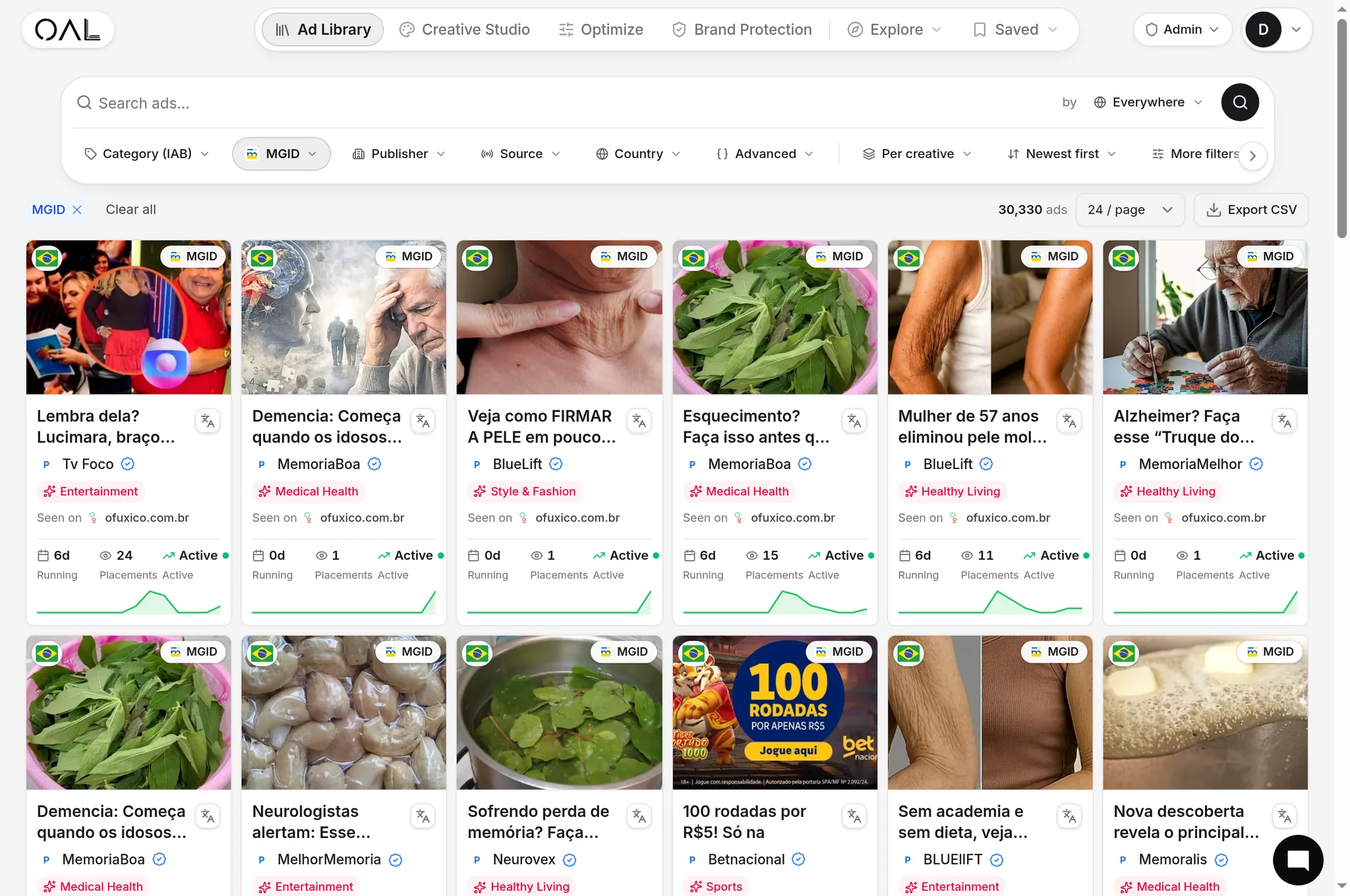
This is the step most publishers skip, and with MGID you should not. OpenAdLibrary's index holds 62,765 live MGID creatives as of July 2026 — inside a total index of 725,000+ native ad creatives across 49 networks — and MGID's vertical mix is unlike any other major network we track. Entertainment is the largest classified vertical at 13,987 live creatives: more than eleven times the second-largest (health, at 1,220) and several times the next five verticals combined.
In practice, the cards under your articles will lean toward curiosity-driven story teasers, health advertorials (a live example from the index: an over-the-counter pain product billed as "Nature's Morphine"), impulse ecommerce offers and lead-gen forms. Whether that sits acceptably next to your content is a judgment only you can make — but make it with your eyes open:
- Browse the MGID ad library filtered to your geo and content categories to see exactly what is running right now. The free MGID spy page requires no credit card, which makes pre-signing diligence a ten-minute job instead of a leap of faith.
- Use MGID's category and advertiser blocking at onboarding, not after a reader complaint. Blocking the categories that obviously clash with your brand costs little revenue and buys a lot of trust.
- Recheck quarterly. Demand mixes shift; the widget you approved in January is not the widget running in June.
Placement and optimization playbook#
A concrete sequence that captures most of the revenue while avoiding most of the burned goodwill:
- Start with one end-of-article unit. It is the placement readers expect, the least disruptive, and the cleanest baseline for measuring everything else against.
- Add depth before density. If the baseline unit performs, test an in-content unit on your longest article templates before adding a second unit anywhere else. One well-placed widget on a page readers finish beats three on a page they abandon.
- Treat mobile as the main event. Most native volume is mobile. Test widget load behavior on mid-range devices and slow connections; a widget that pushes content around during load costs you more in engagement than it earns.
- Watch page weight. Every recommendation unit adds requests. If your pages get visibly slower, the SEO and return-visitor cost will eventually swamp the widget revenue.
- Iterate one change at a time, quarterly. Placement, card count, thumbnail size — each is testable. Publishers who change three things at once learn nothing from the result.
- Keep disclosure clean. Sponsored labeling on the widget is not just policy hygiene. Readers who feel tricked into ad clicks do not come back, and advertisers eventually stop paying for those clicks anyway — clear labels filter for the clicks that actually convert, which is what keeps auction demand for your inventory healthy.
How MGID compares for publishers#
| Network | Publisher entry bar | Demand character | Best fit |
|---|---|---|---|
| MGID | Low — mid-scale sites commonly accepted | Entertainment-teaser-led; advertorial and offer demand | Global or mixed-geo content sites below premium thresholds |
| Taboola | High — several hundred thousand monthly pageviews commonly reported | Health, finance and insurance advertorial plus brand demand | Premium-scale publishers who can negotiate guarantees |
| Outbrain (Teads) | High — premium editorial supply | Brand-heavier demand mix | Established editorial brands wanting cleaner cards |
| Revcontent | Moderate — selective mid-tier | Health-led advertorial demand | Engaged, Tier-1-weighted audiences at mid scale |
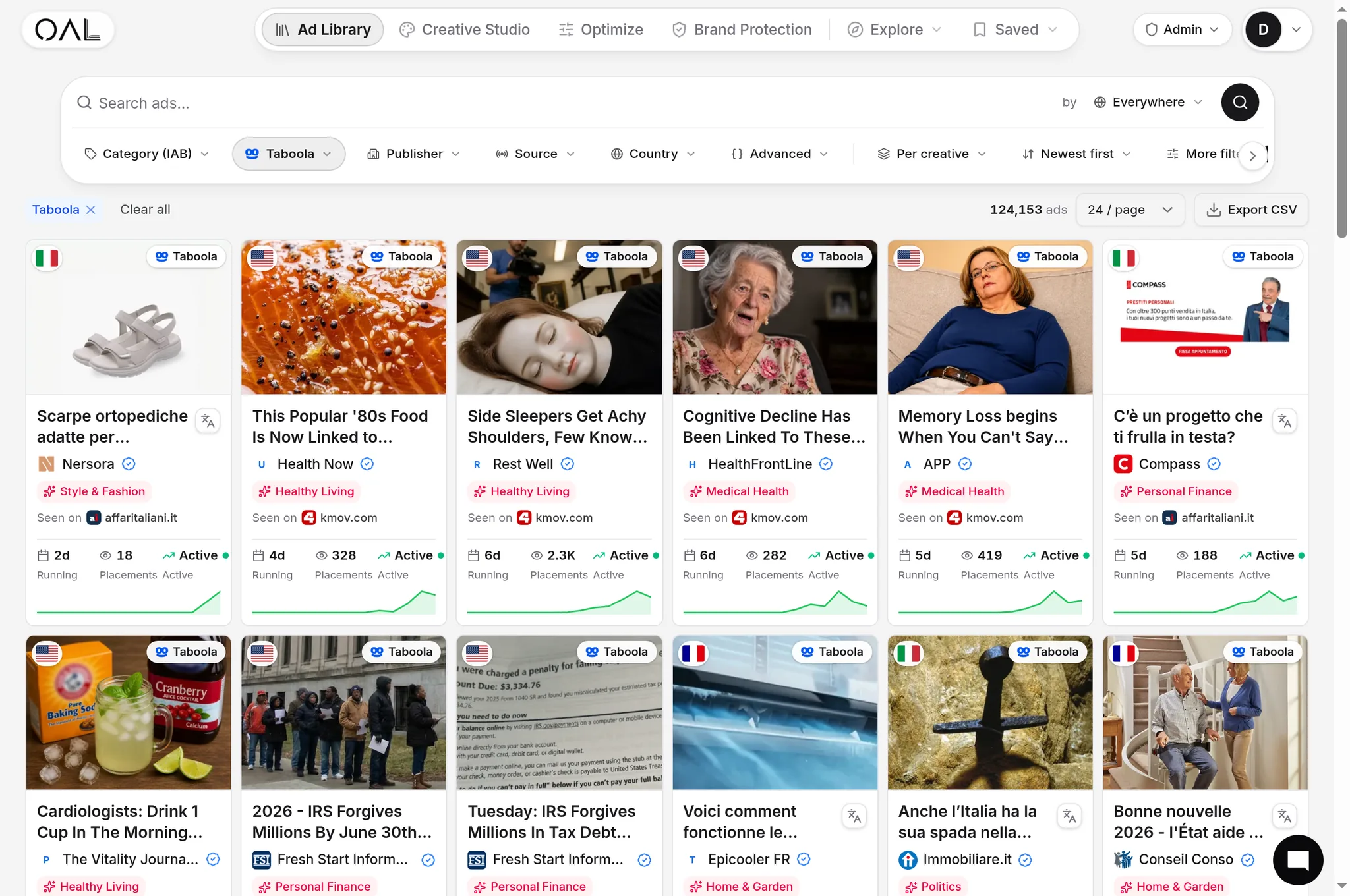
The detailed head-to-heads live in MGID vs Taboola and MGID vs Revcontent, and the wider field is ranked by real ad volume in our best native ad networks breakdown. The short version: MGID is rarely the network you graduate to — it is the network that says yes first, pays honestly on mid-tier and international traffic, and remains useful as a secondary fill even after bigger deals arrive.
One more practical note: a recommendation widget is not a replacement for display. Most publishers run native alongside a standard display stack, and the two compete for reader attention more than they compete for slots. When you evaluate MGID's contribution, evaluate whole-page session economics — a widget that lifts total session revenue by a modest, stable increment is doing its job even if it never produces a highlight-reel RPM screenshot.
An honest assessment#
Where MGID is genuinely strong:
- Accessibility. It monetizes the large class of sites premium networks decline, without demanding exclusivity at standard tiers.
- Global demand. If your traffic skews Tier-2/3, MGID's advertiser base is built for exactly that inventory, where Taboola's and Teads' demand thins out.
- Speed. Fast approval and fast iteration — you learn what your traffic is worth in weeks.
Where it will disappoint:
- RPM ceiling on premium audiences. A US-heavy, brand-safe editorial site that qualifies for Taboola or Teads direct terms will usually out-earn MGID's standard terms.
- Demand aesthetics. Entertainment teasers and advertorial cards are the house style. If your brand cannot carry that, no blocking configuration fully fixes it.
- Volatility. Auction demand for mid-tier inventory swings with advertiser seasons; expect months that undershoot the trial.
The verdict: run MGID if you are a content site below premium thresholds, if meaningful traffic sits outside Tier-1, or if you want a no-exclusivity second network to benchmark against your primary. Skip it — or cap it to low-visibility placements — if you are a premium editorial brand whose audience trust is the product, and audit the live demand either way before signing anything.