Español
 Português (Brasil)
 Français
 Deutsch
 Italiano
 Nederlands
 Polski
 Svenska
 Türkçe
 Русский
 日本語
日本語 한국어
한국어 简体中文
简体中文 Tiếng Việt
 Bahasa Indonesia
 繁體中文
繁體中文 Čeština
 Dansk
Dansk Norsk (bokmål)
 Suomi
Suomi Ελληνικά
 Română
 Magyar
 Українська
 ไทย
ไทย हिन्दी
 العربية
 עברית
עבריתTeads Advertising Cost: CPM Model, Minimums & What Brands Pay
Teads sells premium in-article attention on a CPM model. Here is how its pricing actually works, what minimums to expect on each buying route, and the cost ranges buyers report.


Teads advertising is priced primarily on a CPM basis — you pay per thousand impressions, with rates set by auction dynamics and negotiated deals rather than a public rate card. Since the Outbrain–Teads merger completed in February 2025, the platform also carries CPC-priced recommendation-feed placements inherited from the Outbrain side, but the classic Teads buy — in-article video on premium publisher pages — remains a CPM product. Expect managed, insertion-order campaigns to carry negotiated minimums, self-serve entry to be far lower, and Tier-1 video CPMs that media buyers commonly report anywhere from the low single digits to the mid-teens in US dollars depending on format, targeting and viewability goals. Those are practitioner-reported ranges, not official rates — Teads publishes no price list.
How Teads pricing works#
The core Teads product is outstream video: a player that appears inside article content on premium publisher pages, plays in view, and collapses when finished. That inventory is sold on a CPM basis through three routes — real-time auction, programmatic deals, and direct insertion orders. Teads has also historically offered viewability- and completion-oriented buying options (paying only for viewable impressions or completed views), which raise the unit price while cutting waste; check the current menu in Teads' own documentation at teads.com, because packaging changes.
The merger changed the answer to "what does Teads cost" in one important way. Outbrain acquired Teads and the combined company took the Teads name, so the platform now spans two pricing models: CPM for premium video and display, and CPC for the recommendation-feed placements that Outbrain built its business on. If you are budgeting for "Teads", be precise about which side of the house you are buying.
| Buying route | Pricing model | Entry profile |
|---|---|---|
| Managed service (insertion order) | Negotiated CPM, guarantees available | Highest minimums; account team included |
| Self-serve dashboard | Auction CPM / CPC | Lowest entry; you run it yourself |
| Programmatic (your DSP, via deals) | CPM plus deal terms | Requires an existing DSP seat |
The cost drivers that actually move your CPM#
- Format. In-article video costs more per thousand than static display or feed cards — you are paying for sight, sound and motion in premium editorial context.
- Geo. Tier-1 English-speaking markets clear highest; the same campaign in Tier-2 markets can cost a fraction of its US rate.
- Targeting layers. Every audience or contextual filter narrows eligible supply and raises the clearing price. Broad reach buys are the cheapest CPMs you will see; heavily layered buys are the most expensive.
- Viewability and completion guarantees. Paying only for viewable or completed impressions raises the sticker CPM while lowering effective waste — often a better trade than it looks. Understand viewability before comparing quotes, because a cheap non-guaranteed CPM and an expensive viewable CPM can cost the same per delivered eyeball.
- Publisher tier and exclusions. Premium whitelists and category exclusions concentrate delivery on expensive inventory.
- Seasonality. Brand demand inflates premium video pricing toward the end of the year; the same flight brief costs meaningfully more in Q4 than in Q1. Plan calendars, not just budgets.
Minimums: managed service vs self-serve#
There is no public, universal Teads minimum. Managed insertion-order campaigns are negotiated, and practitioners commonly describe serious managed video flights as five-figure commitments — enough to fund the creative production, measurement and delivery guarantees the service model exists for. Self-serve entry is far lower and closer to what performance buyers expect from feed networks. The honest budgeting rule: a video flight only produces readable results — even directional CTR, completion and attention numbers — at thousands of dollars, not hundreds. If your test budget is smaller than that, start on the CPC feed side or on a cheaper network and graduate.
How Teads costs compare with other native channels#
The comparison that matters is not CPM versus CPC — it is what you are buying.
| Channel | What you buy | Cost logic |
|---|---|---|
| Teads (video / display) | Premium in-article attention | CPM; higher unit cost, brand outcomes |
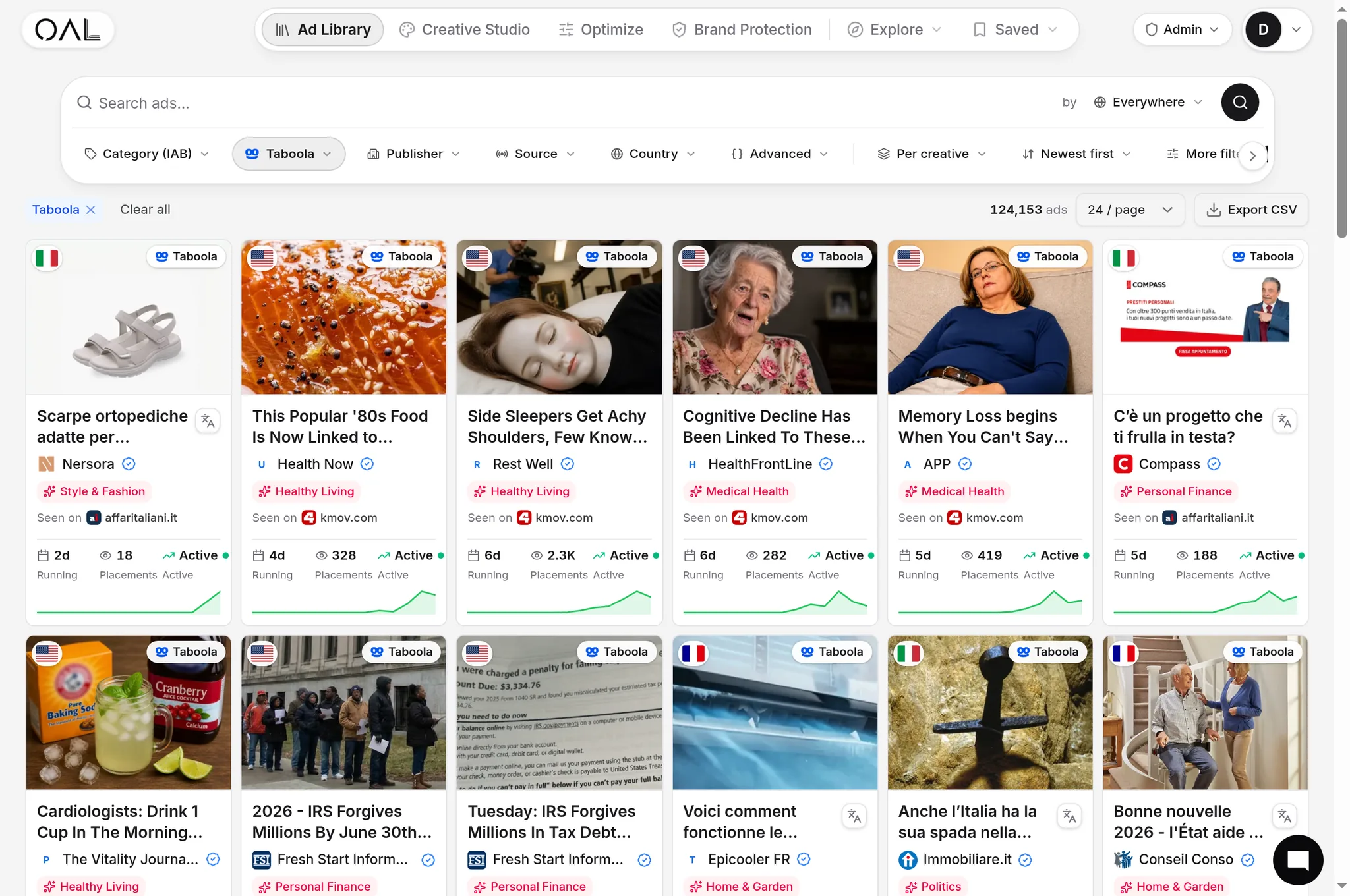
| Taboola / Outbrain feed | Clicks from recommendation feeds | CPC; pay per visitor, performance math |
| MGID / Revcontent | Mid-tier feed clicks | Lower CPCs, more placement curation work |
A Teads CPM buy is an attention product: you are paying for a premium context and a completed view, and measuring lift, recall or qualified traffic. A feed CPC buy is a visitor product: you pay when someone arrives, and measure payout math. Our native advertising cost guide covers budgeting across both models, and the native CPC benchmarks piece puts the click-priced networks side by side. For how the two halves of the merged company compare head-to-head, see Taboola vs Outbrain.
See who is paying those CPMs before you do#
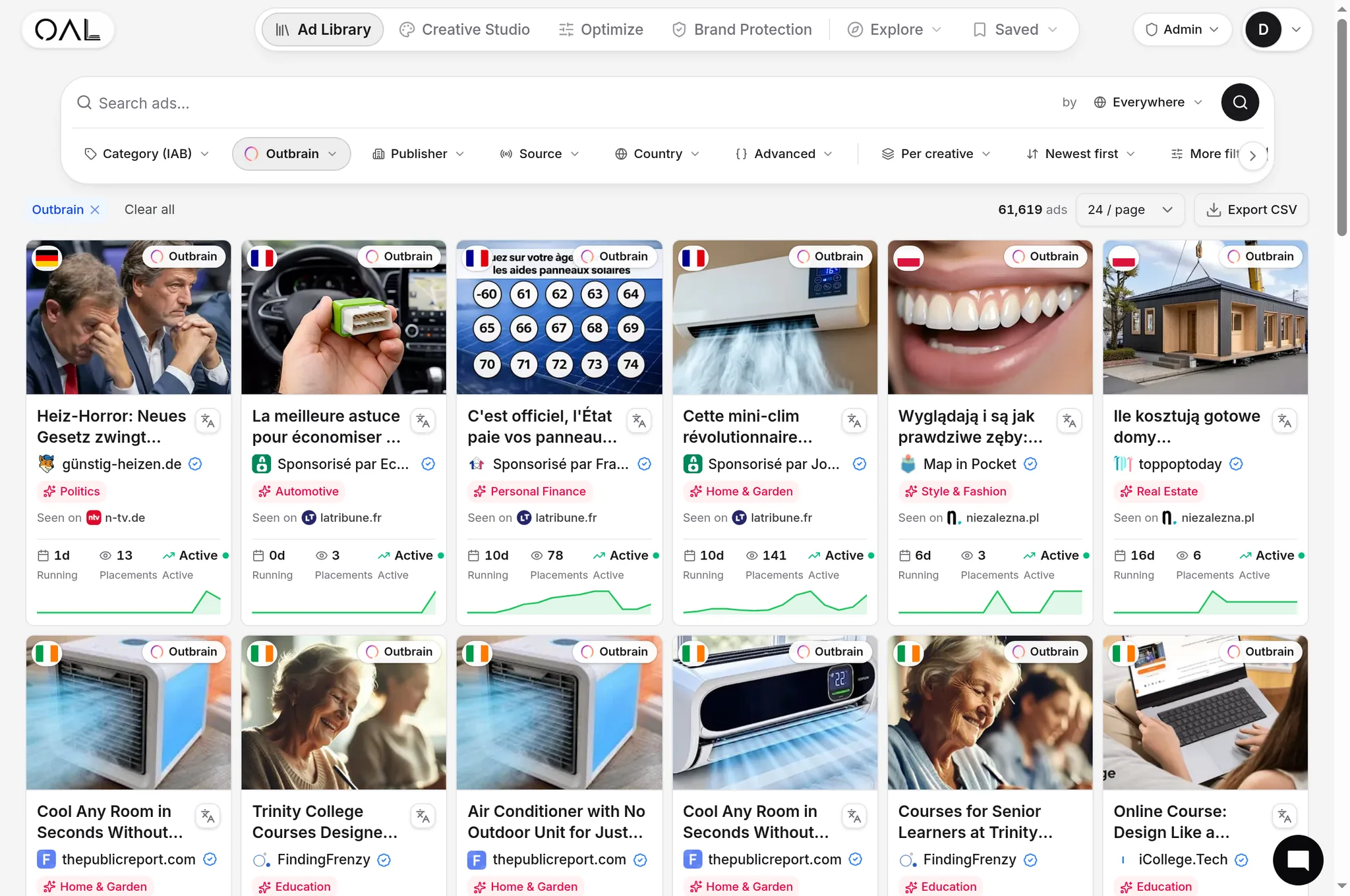
One useful reality check before committing budget: look at who actually runs on the platform. OpenAdLibrary's index holds a deliberately honest sample here — 113 live Teads feed-format creatives (July 2026). Teads' core outstream video runs in-article rather than in recommendation feeds, so a feed-first index under-represents it; treat our sample as a window, not a census. Even that window is telling. Travel leads the vertical mix, with Flight Centre running motorhome and holiday-package creatives; Georgetown University promotes graduate programs; Moon Valley Nursery sells landscaping. These are brand and consideration advertisers with real budgets — not click arbitrage. The merged company's performance side is a different picture: our Outbrain corpus holds 108,000+ live creatives dominated by insurance, finance and health.
You can browse the live Teads sample in the Teads spy tool — advertisers, observed longevity, geo and traced landing pages — on the free tier; full traces and watchlists come with the $29.99/month plan. For the platform overview beyond pricing, see what Teads is.
Is Teads worth the cost?#
If your goal is brand or consideration outcomes and you have video creative worth showing, the premium is the product: you are buying viewable, in-context attention on publishers your audience trusts, and the CPM reflects that. Measure it with attention and lift metrics, not last-click ROAS, or you will conclude it "doesn't work" for the wrong reasons.
If your math is strict cost-per-acquisition, start on the CPC feed side of the merged platform — or on cheaper feed networks — prove your funnel, and revisit premium video when you have margin to invest in demand creation. Either way, treat every number in this article as a starting hypothesis: pricing is negotiated, markets move, and the only CPM that matters is the one clearing on your own campaigns.