Español
 Português (Brasil)
 Français
 Deutsch
 Italiano
 Nederlands
 Polski
 Svenska
 Türkçe
 Русский
 日本語
日本語 한국어
한국어 简体中文
简体中文 Tiếng Việt
 Bahasa Indonesia
 繁體中文
繁體中文 Čeština
 Dansk
Dansk Norsk (bokmål)
 Suomi
Suomi Ελληνικά
 Română
 Magyar
 Українська
 ไทย
ไทย हिन्दी
 العربية
 עברית
עבריתIs Taboola Good for Small Business? An Honest Budget Reality Check
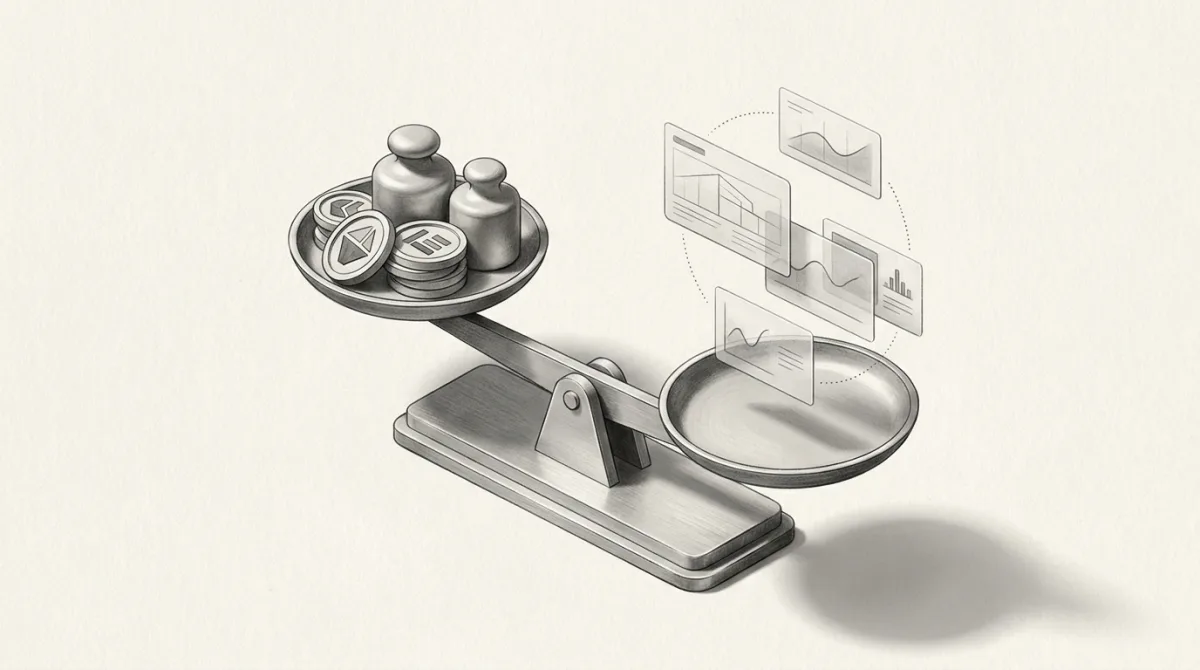
Taboola has no platform minimum, which makes it look cheap. The real cost for a small business is the testing budget needed before creative and targeting find a profitable combination.


Taboola can work well for a small business, but it rewards a specific kind of small business: one with a clear offer, a landing page built to convert cold traffic, and enough testing budget to survive the first few weeks of finding a profitable angle. It's a poor fit for a business expecting cheap, instant awareness on a shoestring budget with no room to test. Self-serve has no fixed platform minimum, so the barrier to entry looks low. The real cost is the testing spend you'll need before your creative and the auction find a combination that pays back, and that number is rarely small.
What "small business" actually means here#
Size of the business matters less than the shape of the offer. A local plumber with a strong regional angle, a single-SKU ecommerce brand with a proven landing page, and a lead-gen affiliate running an established vertical are all "small" in headcount but behave very differently on Taboola. The plumber needs tight geo targeting and a small radius; the ecommerce brand needs a page that converts skeptical native traffic on the first visit; the affiliate needs an offer that's already proven to convert somewhere. None of them succeed by treating Taboola like a billboard. Native works on direct response mechanics, closer to search than to display, and our guide to how much native ads cost and native ad CPC benchmarks are worth reading before you set a budget expectation.
The real cost is testing, not the platform fee#
There's no Taboola account minimum on self-serve, so nothing stops you from opening an account with a few hundred dollars. What that budget buys you is a handful of days of data, not a verdict. Media buyers commonly report Tier-1 desktop CPCs in a fairly wide range on Taboola depending on vertical and competition, and your niche and geo will move that a lot in either direction; treat any single number you read as a starting assumption, not a guarantee. You'll typically need several creative variants running in parallel before one clears profitability, because a single headline and image rarely wins on the first try, and creative that looks fine in isolation goes stale fast once an audience has seen it repeatedly, a pattern covered in our note on ad longevity as a winning signal.
Where small businesses actually win on Taboola#
- Local and niche service businesses with a specific regional angle and a landing page built for a phone call or a quote form, not a generic homepage.
- Ecommerce brands with one hero product and a landing page already tested to convert cold visitors, since native traffic rarely lands on a site with existing purchase intent the way search traffic does. Our native advertising for ecommerce guide covers the funnel shape that tends to work.
- Lead-gen or affiliate offers in proven verticals, where the angle and funnel structure are already established and the small business is really testing execution, not inventing a new category. Best affiliate verticals for native ads is a useful starting map.
Where small businesses struggle#
- Broad brand-awareness goals with no direct-response measurement in place. Taboola can drive awareness, but you'll have no way to tell if it worked, and the budget required to move awareness metrics at scale is not small-business money.
- No landing page built for cold, skeptical native traffic. A page that assumes the visitor already trusts the brand or already wants the product will underperform badly, no matter how good the ad creative is. Landing page funnels for native traffic covers the structure that actually converts this kind of visitor.
- Competing head-on in saturated verticals like insurance or finance against advertisers running thousands of creative variants, without a real differentiator. Who advertises on Taboola shows just how much creative volume the largest players in these verticals push.
A realistic way to think about budget#
Rather than chasing a specific dollar figure, frame the decision around three questions: can you afford to lose your first testing budget entirely and still learn something useful from it, do you have a landing page that's already been tested to convert cold traffic in some channel, and is your offer proven enough elsewhere that the risk is mostly in execution rather than in the idea itself. If you can answer yes to all three, a modest test budget on Taboola is a reasonable bet. If you're answering no to more than one, spend a little time and no money first: research what's already working in your vertical before you commit media spend to finding out the hard way.
A worked scenario: two small businesses, two outcomes#
Picture a local HVAC company and a new supplement brand both testing Taboola with similar budgets. The HVAC company already runs a landing page built around a phone-call conversion, has years of data on which service angles close deals locally, and narrows its Taboola test to a single metro area with tight geo targeting. It knows within a couple of weeks whether the campaign pays for itself, because the funnel and the offer were never the variable being tested, only the channel was.
The supplement brand, by contrast, launches with a brand-new landing page it has never run traffic to anywhere, an offer it hasn't validated against any audience, and a national geo target because "why limit it." Three variables are being tested at once: creative, landing page, and offer viability, on a channel that's also new to them. When the campaign underperforms, there's no way to tell which of the three broke it, and the testing budget is gone before any of them can be fixed individually. The difference isn't company size. It's how many unknowns were stacked into a single test.
Common mistakes that waste a small budget fast#
- Testing the offer and the channel at the same time. If you've never sold this product to anyone, Taboola is the wrong place to find out; validate the offer somewhere cheaper first, then bring a proven offer to native.
- Sending native traffic to a generic homepage. Cold, skeptical readers need a page built for the specific claim in the ad, not a page built for someone who already searched for your brand by name.
- Judging results after two or three days. Native campaigns often need a week or more of data, and several creative variants, before a fair verdict is possible; pulling the plug too early throws away the learning the budget already paid for.
How to stack the odds before you spend#
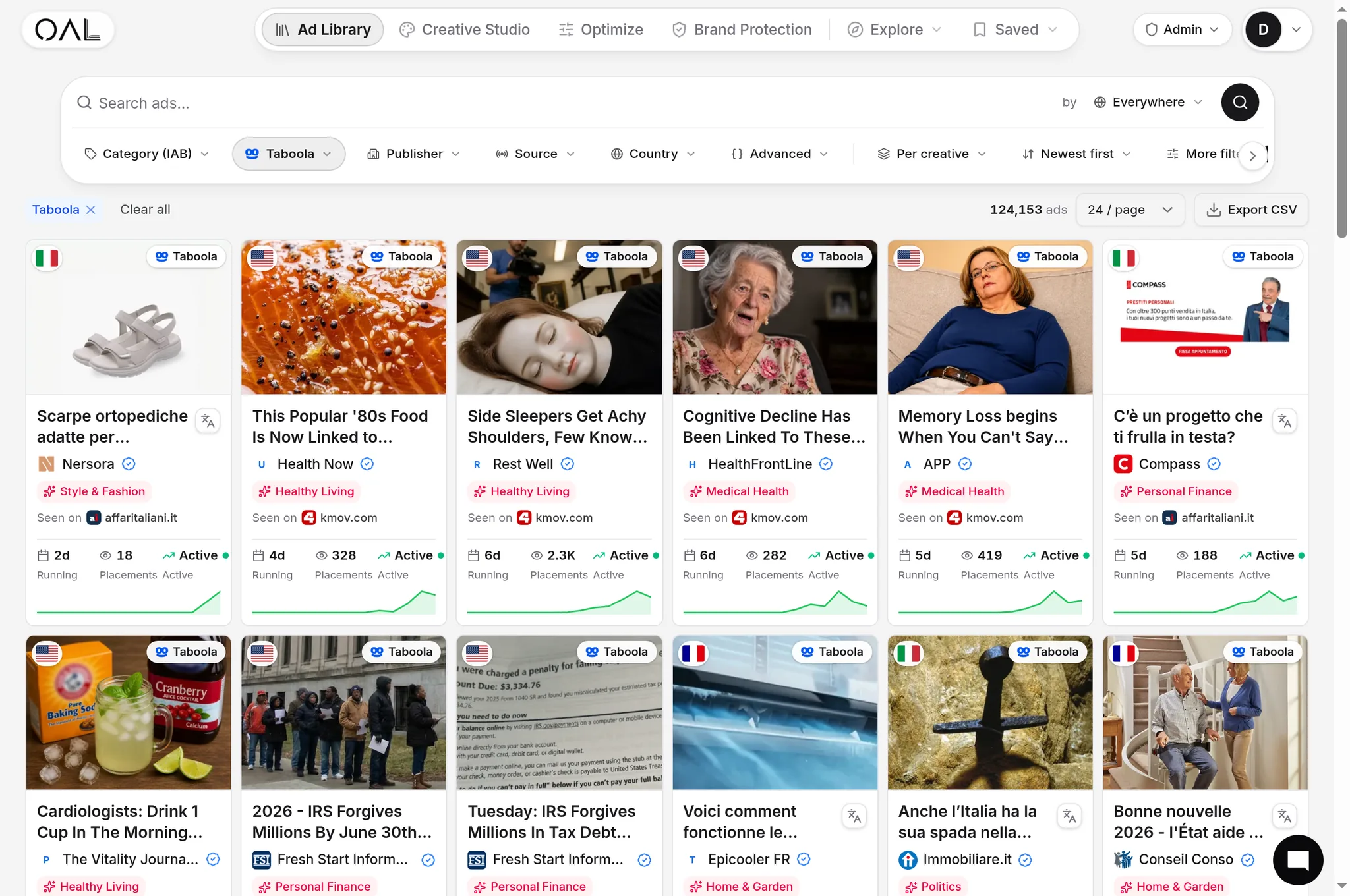
- Research what's already proven. An ad library shows you which angles have survived long enough on the network to be worth testing, rather than making you guess cold. Our Taboola ad library and /spy/taboola let you search any advertiser or vertical before you spend a dollar.
- Start narrow. One geo, one offer, one landing page. Resist the urge to test five variables simultaneously on a small budget; you won't have enough data to isolate what worked.
- Track cost per lead or cost per acquisition, not clicks. Clicks are cheap to buy and easy to misread as success. CPA and proper conversion tracking are what tell you whether the campaign actually pays for itself.
How OpenAdLibrary helps a small budget go further#
The most expensive mistake a small business makes on Taboola is spending its entire test budget discovering something an ad library would have shown for free. OpenAdLibrary's index covers 206,145 live Taboola creatives as of June 2026, each with the resolved advertiser, how long it's been running, and the traced landing page, so you can see what's already working in your vertical and geo before you write a single dollar of media spend. A free tier is available with no credit card required, and full access including landing-page traces sits at $29.99 a month, which is a fraction of what a single day of blind testing can cost once you factor in wasted impressions.