

Native Ad Networks
Negotiating Taboola & Outbrain Deals: Guarantees & Rev Share
Rev share, CPM guarantees and account support are all negotiable with Taboola and Outbrain, but only if you have real volume. Here's how the leverage works.
Rev share, CPM guarantees and account support are all negotiable with Taboola and Outbrain, but only if you have real volume. Here's how the leverage works.

Content recommendation widgets pay real revenue, but the reputation cost lands on you, not the network. Here's how to weigh the trade-off and the controls that fix it.
A flat bid across every device and geo can hide differences in segment performance. How to build device and geo modifiers, test them against your own segment results and keep the change reversible; no ROAS gain is guaranteed.

There's no single native ad CPM. Here's the rough ordering buyers describe across major networks, the four factors that actually move your rate, and how to build your own baseline from your own campaigns.

Performance can vary widely between publishers in one native campaign; your placement report shows how widely. Publisher-level bidding sets different bids per site, section or widget, with a review workflow and worked example.

News sites sell ad inventory through at least two channels with completely different price floors: negotiated direct or programmatic display, and self-serve native feed placements.

Both styles show up among the longest-running native ads in the index. The split that matters isn't curiosity versus clarity, it's which one fits the vertical and the reader's intent.

Raising the daily budget alone is not a scaling plan. Here is a sequence for growing Outbrain spend while watching CPA: Outbrain's own budget guidance by bid strategy, section and geo expansion, and creative rotation.
Outbrain can work for B2B, but as a top-of-funnel awareness channel, not a direct lead engine. Here are the content angles to test, commonly reported cost expectations, and where it fits alongside other B2B channels.
Outbrain is a legitimate ad platform run by publicly traded Teads Holding Co. (formerly Outbrain Inc.) on major publisher sites. Confusion usually comes from a specific advertiser's ad, not the platform itself.
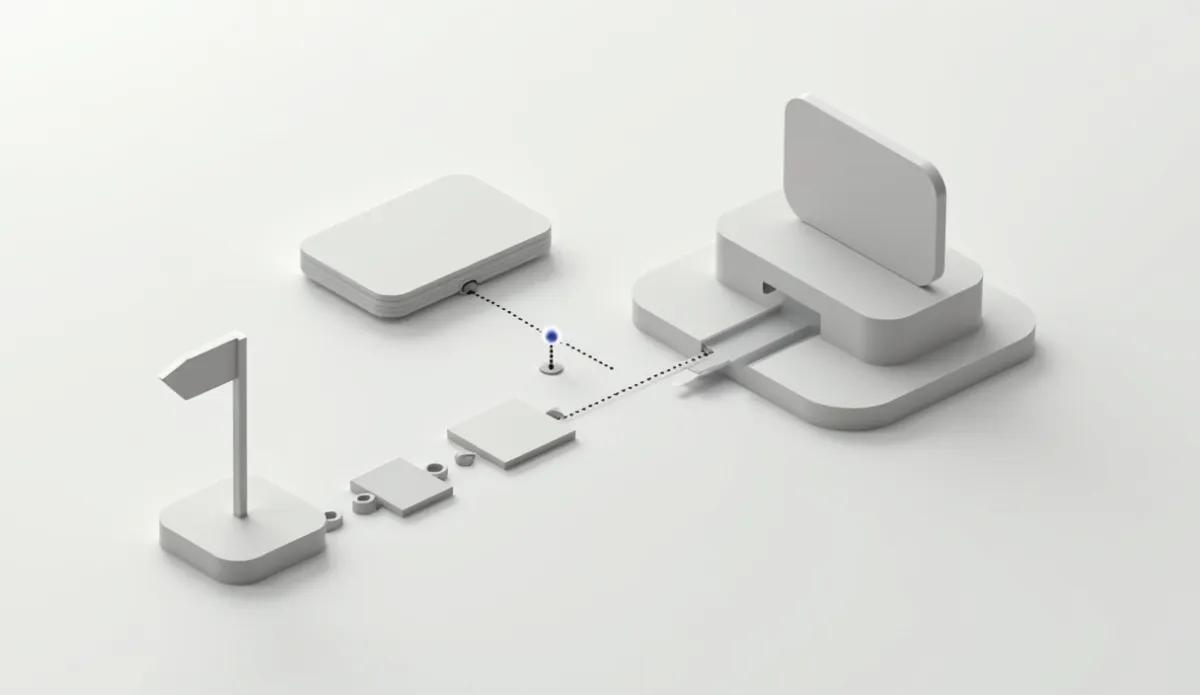
Outbrain conversion tracking is simple to set up and easy to quietly break. Here's pixel vs postback tracking, a step-by-step setup, and the redirect and attribution mistakes that hide real performance.

Outbrain can work for ecommerce, but it's a discovery channel built for curiosity-driven creative, not purchase-intent traffic. Here are the formats, angles and tracking setups worth testing.
Section blocking stops future spend on Outbrain publishers and sections that do not convert for you. Here's how to find the data, build a block list without guessing, and know when whitelisting is worth the reach you'll lose.

Outbrain ranks ads on predicted value, not bid alone, so creative and section-level cuts move your CPC more than the bid field does. Here is the order of operations that works.
A working reference for Outbrain's image ratio, headline length, ad formats, and the moderation rules that decide whether a creative gets approved or rejected.
Outbrain's bidding runs on manual CPC, Conversion Bid Strategy and Engagement Bid Strategy. Here is how each works and which one fits your account's data volume.
Outbrain manufactures curiosity on publisher pages; Google Ads captures intent that already exists. Here is where each channel wins, and how performance buyers sequence the two together.

Outbrain Amplify is the self-serve side of Outbrain's ad platform, where any advertiser can fund a budget and bid on native placements without a sales rep. Here is how it works end to end.
Merger headlines and a shuttered Yahoo brand read like decline. What the Outbrain-Teads merger and the Yahoo Gemini shutdown actually changed, and why our creative counts cannot show whether the channel is growing or shrinking.

Neither Taboola nor Outbrain (now Teads) publishes a minimum traffic requirement. What their publisher pages say, what is unverified, and how to prepare for a conversation that covers traffic, geography and content quality.

Widget position can affect RPM, but there is no universal best slot. How to compare placements by visibility, revenue per pageview and reader experience, with sizing notes and your network's implementation rules.

Reported content recommendation RPM varies widely, and geo, vertical and device mix are said to matter more than the network you pick. What drives the spread, and how to diagnose a drop in yours.

Ten native ad examples from a dated July 2026 snapshot of captured ads, with the headline patterns behind each one and how to run a similar analysis yourself. Not a performance ranking.
Taboola pays publishers a negotiated share of widget click revenue — there is no flat rate. Here is the RPM math, the levers that actually move it, and how to inspect the demand that will fill your slots before you sign.

Revenue-share percentages are the headline; demand depth is the paycheck. A comparison of native ad networks for publishers that uses the advertiser activity we capture as context, not as a measure of publisher revenue.
The join key between your ad spend and your conversions is a macro. Here are the Taboola macros most buyers use, the Outbrain, MGID and Revcontent equivalents, and the template mistakes that quietly break tracking.
Server-to-server tracking is the highest-leverage plumbing in an Outbrain account. Capture the click ID, fire the postback, verify the chain — the full setup with the macros table and the failure modes that actually bite.

Native ad rejections often happen at the landing page, not just the creative. Here is what reviewers on Taboola, Outbrain, MGID and Revcontent actually check, and a pre-submission checklist to reduce first-review rejections.
Commonly recommended image sizes, aspect ratios and headline limits for eight native ad networks in one table, plus the crop, thumbnail and composition realities the official spec pages leave out.

No vendor PR and no invented ROAS: 12 native campaigns observed in captures up to July 2026, including Domain.com.au, Flight Centre and Fisher Investments, read through run length, creatives, networks and funnels, with limits.
The Outbrain–Teads merger produced one omnichannel platform under the Teads name. What advertisers actually get, how it compares with the feed networks, and who should buy it.

Build a native CTR benchmark with defined impressions, clicks, placement context and business outcomes instead of unsourced industry ranges.

Evaluate Outbrain and MGID by offer eligibility, inventory, tracking, funding and accepted-conversion economics.

Insurance advertisers can compare native networks by the offers and markets they permit, available placement and audience controls, and measured cost per accepted lead. Creative counts describe captured examples, not lead quality.

Choose a B2B native campaign task, verify targeting options and measure qualified pipeline with an appropriate evaluation window.

Captured native ads, from enterprise content programs to a $950-audit lead-gen offer, illustrate two SaaS approaches. Targeting questions, destinations, illustrative acquisition math and pipeline measurement.

Teads offers advertiser tools and sales-supported buying routes across outstream video, display and native formats. This planning guide covers access, formats, targeting, pricing and a first campaign, and what to confirm.
Taboola, Outbrain (Teads), Revcontent, MediaGo, Microsoft Audience Network, Yahoo, Dianomi and TripleLift: eight MGID alternatives compared by captured-ad counts (July), entry bars and fit guidance.
Review the cited Outbrain policy, creative and complete destination, then submit a documented correction without unsupported approval guarantees.

Outbrain (now Teads) monetizes publisher sites with recommendation feeds. How onboarding works when no traffic minimum is published, what drives RPM, the documented $50 monthly payment threshold, and contract points to check.

Map documented Amplify targeting and bidding controls, check account availability and diagnose limited delivery without inferring competitors' settings.

A planning sequence for an Outbrain/Teads native campaign: account, tracking, structure, bids, creatives, review and placement-level measurement. It is a planning guide, not a verified walkthrough of every interface.

Your first native bid should buy data, not margin. How to plan an initial bid on Taboola, Outbrain, MGID or Revcontent from your allowable acquisition cost, current account guidance and explicit assumptions, then adjust.

A guide to the main native advertising platforms (Taboola, Outbrain (Teads), MGID, Revcontent, Microsoft Audience Network, MediaGo, Yahoo), the buying questions to ask each, and what public creative counts cannot establish.

Outbrain has no rate card and no country price list. What Outbrain documents about bids, geo targeting and country surcharges, what can move CPC between countries, and a structured test to measure your own CPC per geo.

Captured Outbrain ads can be grouped into categories such as insurance, finance, health, ecommerce, software and home services. What the category examples show, their limits, and how to choose a vertical to test.

Outbrain can suit affiliates whose funnels meet its published guidelines. What the guidelines require for advertorials and health claims, and break-even EPC math with stated assumptions to run before you spend.

From premium news anchors to the long tail: where Outbrain placements actually live, how the Teads merger widened the map, and how to check any site in under a minute.

Feed CTRs often look small next to social. What practitioners report (we found no official Outbrain benchmark), why CTR is a pricing lever rather than a goal, and how to read a healthy campaign.

Outbrain permits affiliate marketing but rejects bare affiliate links. Here is what the policy actually blocks, a compliant funnel setup that fits it, and the shortcuts that end accounts.

Outbrain built its name on premium news placements, but its exchange spans a long tail where quality varies wildly. What actually determines the traffic you get — and how to audit it.

The platform will accept the minimum; it just won't teach you anything at that spend. How to size an Outbrain test from your CPA instead of from the floor.

Brands, performance advertisers and arbitrage players: the three layers of Outbrain's advertiser base, mapped with live index data and real running creatives.

An independent Outbrain optimization playbook checked against Outbrain's help center: device and geo splits, title testing, section bids and exclusions, and conversion bidding, illustrated with dated captured creatives.

Twelve health native ads captured in July 2026, grouped by the authority, contrarian, curiosity and avoid-list hooks they use, with observed spans and the US claim-substantiation rules. Dated examples, not evidence of what wins.

A qualified review of Outbrain (now Teads) based on its own documentation and historical captured ads, not campaign results: how buying works, budgets and ad review, who it may suit, its limits, and what the merger changed.

Outbrain prices clicks by auction, not rate card, and publishes no typical CPC. How CPC billing, the $20-a-day minimum budget and bid strategies work, plus test-budget math with stated assumptions and the Teads merger.
Check each network's current image specifications for the exact format you buy, then export the crops from one sharp master. Verified Outbrain and Realize examples, plus the crop-survival rules that matter more than pixels.
50 historical headlines from the earlier OpenAdLibrary collection, grouped into ten writing patterns, with a claim review for each. Examples illustrate patterns, not performance or permission.

In our June captures, insurance was the #3 native vertical with 22,427 creatives. This playbook maps where the volume runs, the funnel structure, the angles seen in long-observed ads, and the compliance lines that end accounts.

Taboola, MGID, Revcontent, MediaGo, Microsoft, Yahoo, Google Demand Gen, Nativo, TripleLift: nine Outbrain alternatives compared from public documentation, with a use case to test for each.

Outbrain (now Teads), MGID, Revcontent, MediaGo, the Microsoft Audience Network and five more Taboola alternatives: what each offers, what each network documents about access and cost, and what to check before testing.
We found no public Outbrain ad library. Our independent archive held 92,290 Outbrain (Teads) creative records in an early July snapshot, with advertiser labels, observation dates, traced landing pages and the archive's limits.

Spend charts only update after the race is over, so to see what advertisers are scaling right now you read live native ad capture for longevity, spread, and variant signals. Here is the method, with real numbers from 589,000+ captured creatives.
DTC brands quietly buy native ads next to the arbitrage and nutra crowd. Here is a repeatable method for surfacing which ones appear in public captures on Taboola, Outbrain, MGID and Revcontent, by category.

Learn how to compare first- and last-seen ad observations without mistaking persistence for continuous delivery or profit.

Folklore says nutra and crypto own native, but in a June 2026 snapshot of 589,000+ captured creatives, finance, insurance and health had the most labelled; here's the method, and what counts can't show about market size or profit.
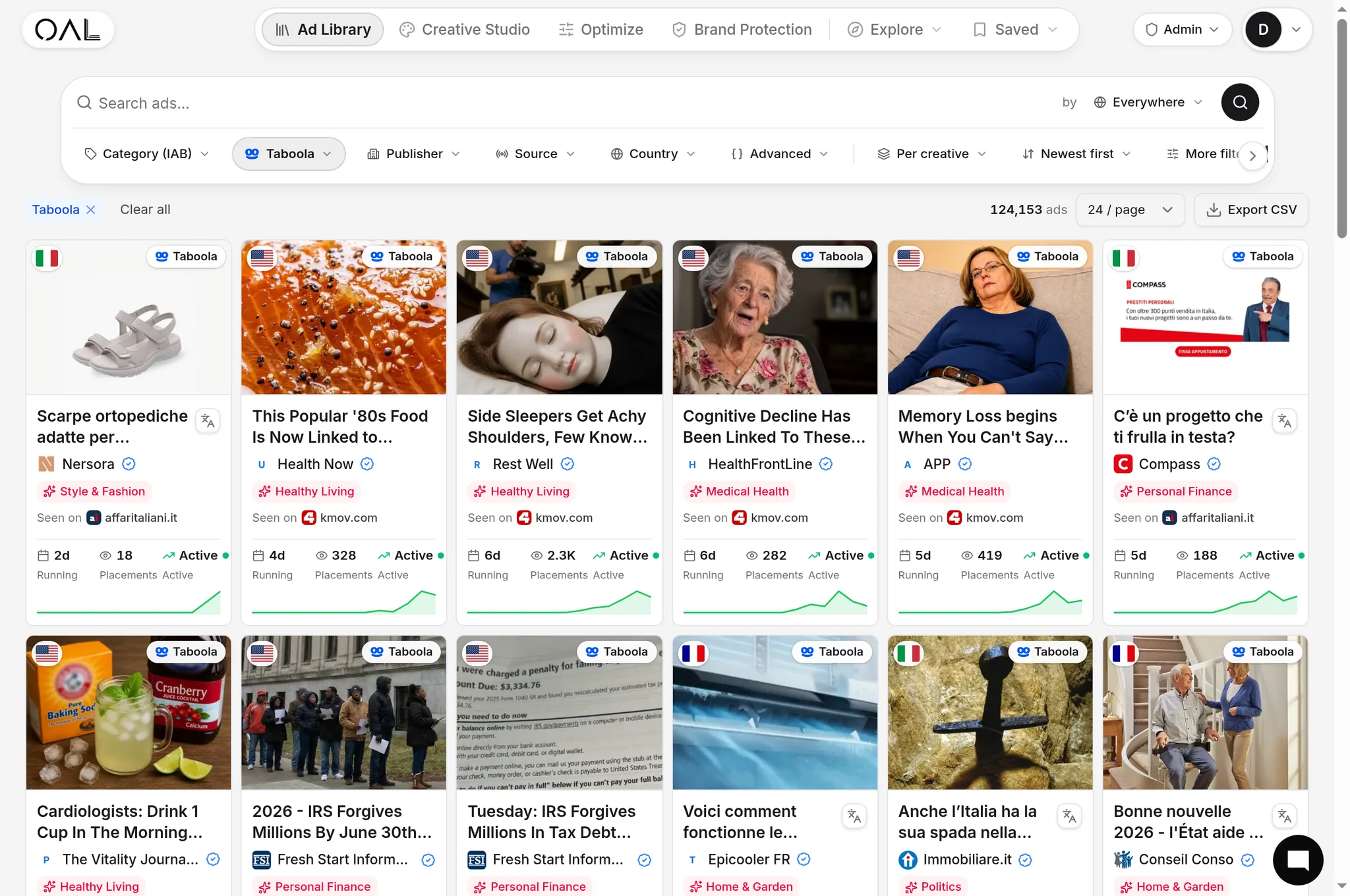
A method for finding the most widely observed advertisers on Taboola, Outbrain and MGID from captured ads: classify by advertiser, network and vertical, rank by spread and observed span, and know what counts and dates can't show.

Meta and Google publish public ad libraries; as far as we found, Taboola, Outbrain and MGID do not. What a native ad library has to capture, how it differs from Meta's and Google's, and what it can show.
If Meta is 90% of your spend, you don't have a marketing channel, you have a single point of failure; here's how to add native as a second engine and use competitive recon to decide what to test first.
Native media buying as an evidence-based loop: offer, creative, bid, destination and scale. This 2026 playbook walks each step with captured cross-network examples, what to verify before you spend, and how to read results.
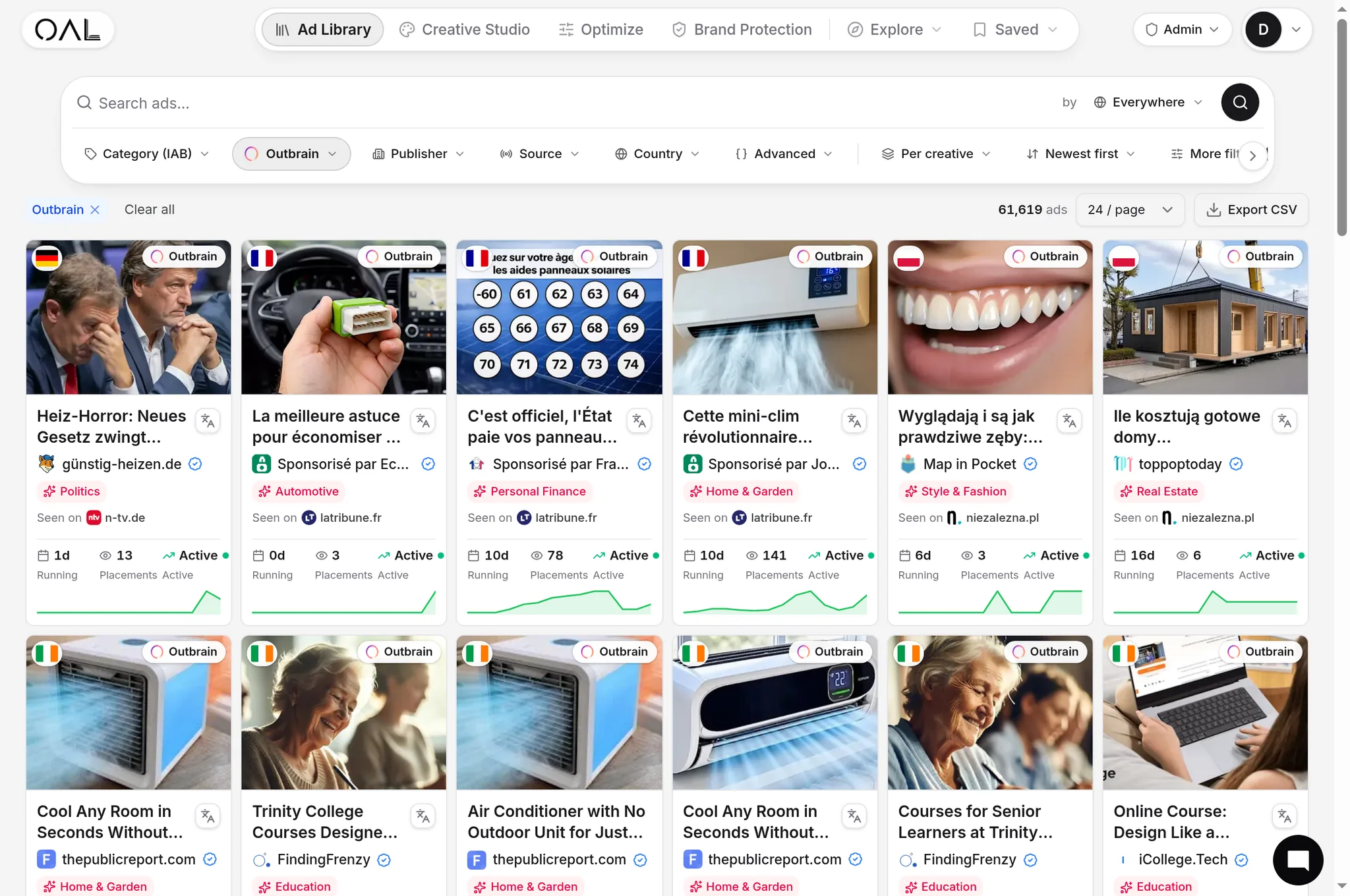
Outbrain's ads are public, though no public ad library exists. How to find captured Outbrain (Teads) creatives, trace each click to its landing page, and read observation dates without mistaking them for results.

How to evaluate Taboola, Teads (Outbrain), MGID and Revcontent for ecommerce by eligibility, inventory, measurement and your own product economics. Captured ads show examples, not where your product type has proven demand.
Outbrain bought Teads and the parent company now trades as Teads, so here is how to compare the two networks using what each documents plus captured ads, rather than vendor claims alone.
A media buyer's comparison of native ads and Facebook ads for DTC in 2026, covering CPC, iOS signal loss, creative and intent, using sourced figures with their limits and native examples captured in June 2026.
Outbrain bought Teads, then the combined company took the Teads name and Nasdaq ticker. The deal and rename timeline, and what the announcements do and do not say about advertisers.
Native advertising examples captured in June 2026 from Taboola and Outbrain, each labeled with the advertiser shown, the network and its observation dates, plus descriptions of common formats on MGID and other networks.
Outbrain bought Teads in 2025 and rebranded the combined company as Teads; here is what the merged native, video, and CTV platform actually looks like, and how to study live inventory before you spend.
Outbrain is now Teads on paper, but the native feed still works on the same basic model. Here is how its bidding, formats, pricing and captured creatives work for advertisers in 2026.
Native ads sit in plain sight below many articles. Here is how to look for who is buying them, read the creative and supply chain behind each placement, and follow the recorded destination without clicking live ads.
Adbeat and Anstrex both get called "ad spy tools," but one maps enterprise display spend and the other rips native landers for affiliates; here's a head-to-head from a competitor, plus where an open native-first index fits.

A comparison of AdPlexity, Anstrex, SpyOver and OpenAdLibrary on price, network coverage, geos, landing-page capture, history and supply-chain data, published by OpenAdLibrary, one of the four, without a documented hands-on test.

How to evaluate free research access for Taboola, Outbrain, MGID and Revcontent ads: coverage, observation dates, destination evidence and limits, and how a free tier differs from a time-limited trial.

A native ad spy tool turns the scattered, public-but-invisible world of Taboola and Outbrain into a searchable record: the creative, the advertiser it resolves to, and the landing page the click led to when captured.

Review verified platform changes and learn what public ad observations can establish, with historical examples and reproducible reporting standards.
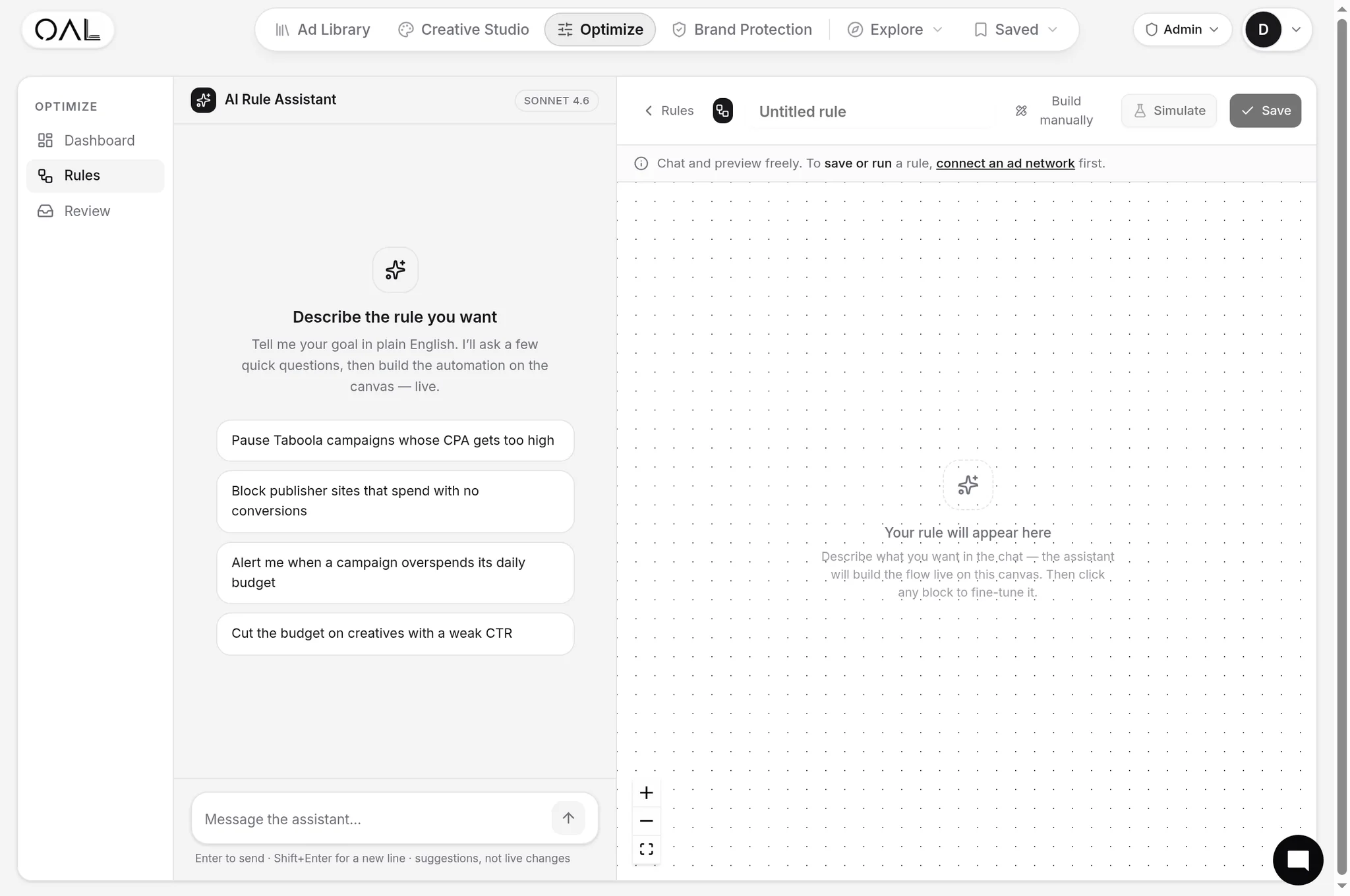
A practitioner's playbook for running native profitably as an affiliate in 2026: offer selection, creative angles, pre-landers, the test loop, and using captured competitor ads as research leads, not proof of winners.

How to compare native ad networks on eligibility, available inventory, measurement and your own campaign economics. Captured creative counts describe our coverage and do not predict campaign results.

Outbrain is a native advertising network that serves content-recommendation ads on publisher sites. It completed its acquisition of Teads on 3 February 2025, and the combined company operates as Teads.