Español
 Português (Brasil)
 Français
 Deutsch
 Italiano
 Nederlands
 Polski
 Türkçe
 Русский
 日本語
日本語 한국어
한국어 简体中文
简体中文 Tiếng Việt
 Bahasa Indonesia
 繁體中文
繁體中文 Čeština
 Dansk
Dansk Norsk (bokmål)
 Suomi
Suomi Ελληνικά
 Română
 Magyar
 Українська
 ไทย
ไทย हिन्दी
 العربية
 עברית
עבריתIs Native Advertising Dying? The 2026 Reality Check
Merger headlines and a shuttered Yahoo brand read like decline, but the live advertiser and creative data across 49 native networks tells a very different, and much healthier, story.


Native advertising is not dying. As of June 2026, OpenAdLibrary's index tracks over 725,000 live native creatives from more than 29,000 advertisers across 49 networks, activity that only exists because advertisers keep funding it and publishers keep monetizing it. What's actually happening is consolidation among a few big platforms, not a shrinking market: Outbrain absorbed Teads, Yahoo folded its native stack in after Gemini shut down, and the surviving networks are larger and more entrenched than the fragmented set of players that existed a few years ago.
That distinction, consolidation versus decline, matters for anyone deciding whether to keep budget in the channel.
Where the "native is dying" idea comes from#
A few real developments feed the narrative, and they deserve a straight answer rather than dismissal.
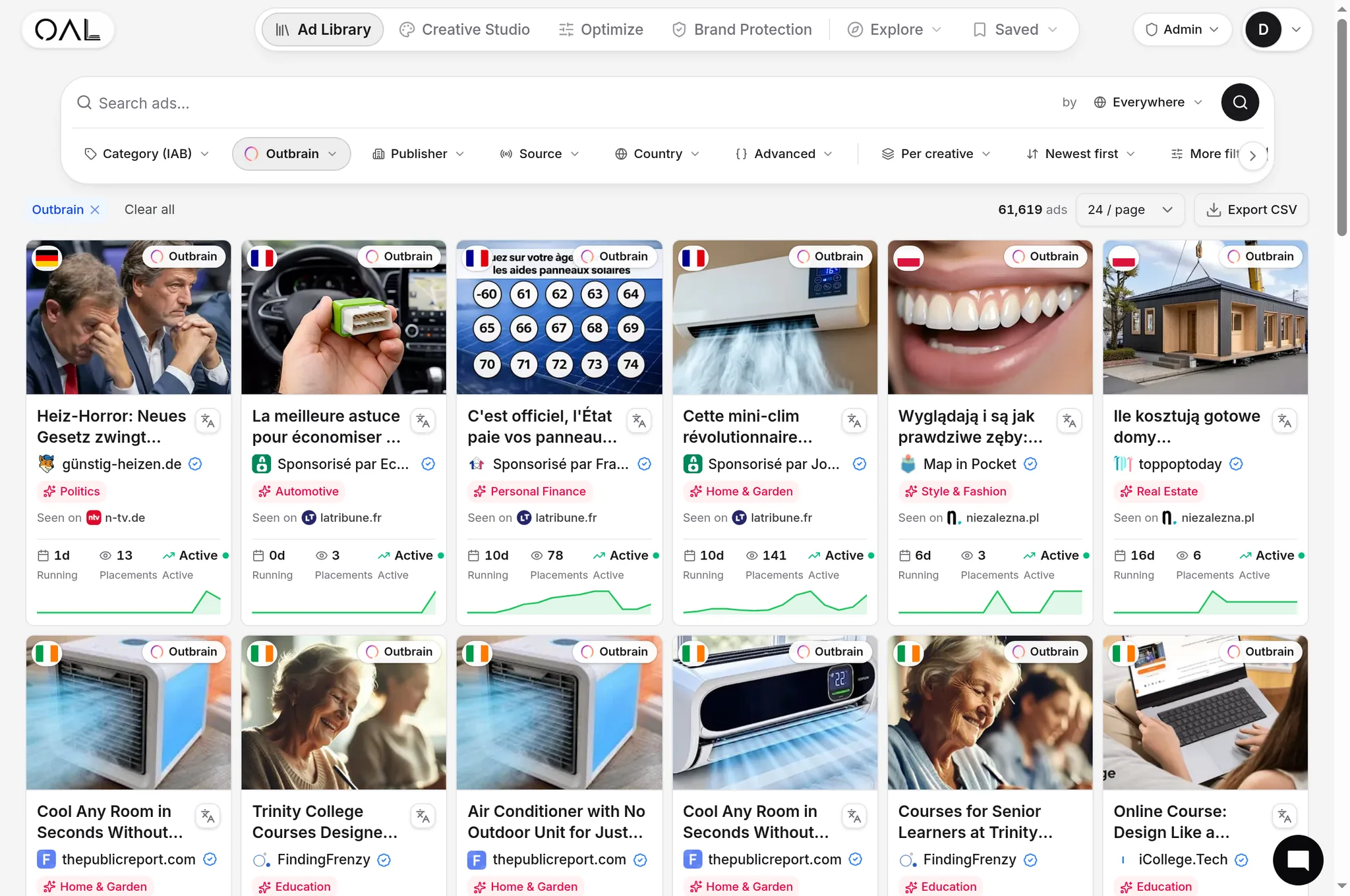
High-profile M&A reads as retreat if you don't look closely. Outbrain and Teads merged, and the combined entity now operates under the Teads name. Our explainer on whether Outbrain became Teads covers exactly what changed for advertisers. A merger between two large native players looks, from a distance, like the category shrinking. In practice it's two balance sheets combining because scale increasingly matters against Meta and Google's ad-buying tools, not because the underlying inventory or advertiser demand disappeared.
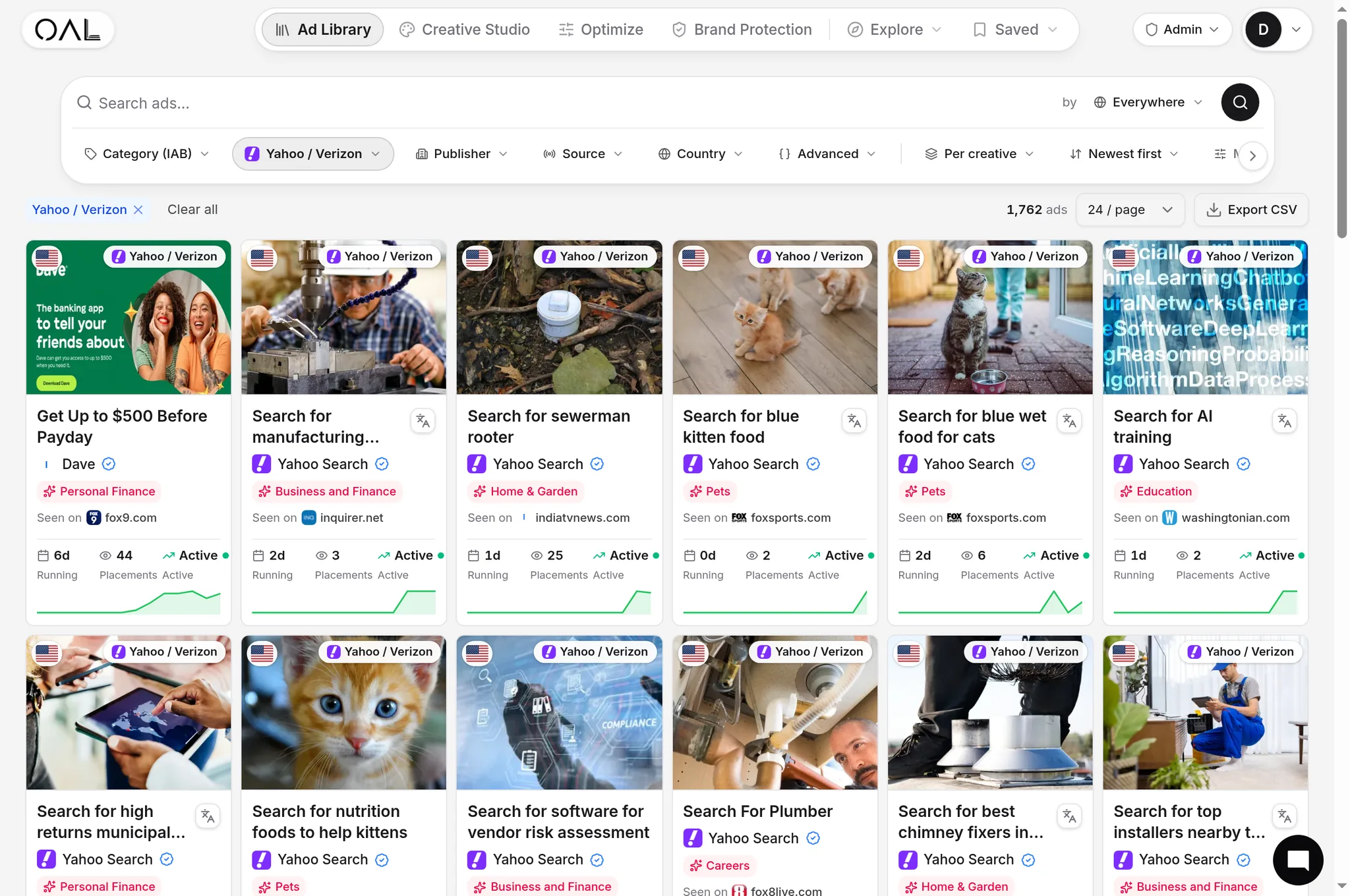
Yahoo Gemini's shutdown removed a familiar brand name. Yahoo's native and search stack went through a real transition, detailed in what happened to Yahoo Gemini, but native placements continue running through Yahoo's DSP infrastructure under new branding. The product name changed. The ad units, and the publisher inventory carrying them, did not disappear.
Cookie deprecation gets mistakenly lumped in as bad news for native. It's the opposite. Native's core targeting model relies more heavily on contextual targeting, matching ads to page content, than on third-party cookie tracking. As cookie-based targeting gets harder across the open web, native's contextual approach becomes relatively more attractive, not less, compared to channels that leaned entirely on cross-site tracking.
Ad blocking and banner blindness get cited as evidence, but they're arguments for native, not against it. Native units are designed to sit inside the content flow rather than interrupt it, which is precisely the format response to reader fatigue with traditional display. If anything, growing resistance to obvious display ads pushes more publisher revenue toward native formats over time.
What's actually happening: fewer, bigger players#
The real trend across 2025 and 2026 is consolidation, not contraction. Taboola remains the largest network by creative volume in our index, with Outbrain/Teads and MSN's native placements also carrying substantial live inventory. Mid-tier networks like MGID, Revcontent, and MediaGo continue operating with meaningfully smaller but still active advertiser bases. That's a market with a handful of dominant platforms and a competitive mid-tier, the same shape most mature ad channels eventually take, not a market in retreat.
| Signal | What it looks like from outside | What's actually happening |
|---|---|---|
| Outbrain-Teads merger | Two brands become one | Consolidation for scale, inventory persists |
| Yahoo Gemini shutdown | A familiar brand disappears | Rebranded infrastructure, placements continue |
| Cookie deprecation | Targeting gets harder everywhere | Favors native's contextual model relatively more |
| Rising ad blocking | Fewer ads get seen | Favors in-feed formats over interruptive display |
What the network-level numbers actually show#
Looking at live creative counts network by network makes the consolidation-not-contraction case concrete. As of June 2026, our index shows Microsoft's native placements carrying over 281,000 live creatives and Taboola over 206,000, with Outbrain (now under the Teads umbrella) contributing over 108,000 more. MGID, Revcontent, MediaGo, and Yahoo each carry smaller but genuinely active advertiser bases. That's a market with several large platforms doing the bulk of the volume and a healthy mid-tier beneath them, the same shape most mature channels settle into, not a sign of collapse.
The advertiser demand side tells the same story#
Live advertiser count is the more honest signal than headlines about any single platform. Our index currently shows over 29,000 distinct advertisers running native creative, spanning verticals from health and nutra to finance, insurance, home services, and ecommerce. Health, finance, and insurance remain the largest verticals by creative volume across the index, which lines up with where lead-gen and affiliate economics have historically supported native's cost structure best. A dying channel doesn't sustain that breadth of active spend across dozens of verticals simultaneously.
| Vertical | Live creatives in the index (approx., June 2026) |
|---|---|
| Health | 24,000+ |
| Finance | 24,000+ |
| Insurance | 22,000+ |
| Ecommerce | 19,000+ |
| Entertainment | 18,000+ |
| Software | 14,000+ |
| Travel | 13,000+ |
| Home & Garden | 11,000+ |
Ten distinct verticals each carrying five figures of active creative volume simultaneously is not what a contracting market looks like. Our top native ad verticals breakdown goes deeper on why these particular categories dominate and what that implies about where profitable angles concentrate.
A genuinely dying advertising channel shows a specific pattern: shrinking advertiser counts quarter over quarter, publishers pulling widget inventory because it no longer monetizes, and shorter and shorter average ad run times as fewer campaigns turn a profit. None of that shows up here. Publishers, from large portals like MSN down to niche content sites, keep running native widgets because the format still converts reader attention into revenue reliably enough to be worth the real estate. Our data on ad longevity as a winning signal shows plenty of creatives still running well past a month, which is the opposite of what you'd expect from a channel advertisers were abandoning.
Where the real risk sits#
None of this means every native strategy from five years ago still works unchanged. A few genuine pressures are worth tracking:
- Compliance scrutiny is increasing, particularly around health and finance claims, pushing more advertisers toward better-built pre-landers and away from aggressive, borderline copy.
- Platform consolidation reduces the number of independent buying relationships, which can concentrate negotiating leverage with fewer, larger networks over time.
- Rising sophistication among advertisers raises the bar for new entrants. The angles and creative approaches that worked with minimal competition years ago now face far more testing and iteration from established players.
These are maturation pressures, the kind every advertising channel eventually faces, not evidence of a shrinking market. If you're weighing whether to enter native now versus a few years ago, the honest answer is that it's a harder channel to win in cheaply than it once was, simply because more advertisers have found the working angles and are defending them with iteration and budget. That's a different problem than the channel disappearing, and it's the same problem search and social advertising went through as they matured. The response isn't to avoid the channel, it's to research more carefully before committing spend, which is exactly the gap tools built around live creative data are meant to close.
How OpenAdLibrary helps you judge this for yourself#
Rather than relying on headlines about any single network, you can look directly at what's live right now. OpenAdLibrary's index spans 49 networks and lets you check advertiser counts, creative volume, and how long ads have been running by vertical, which is a more direct read on channel health than any single company's press release. Our state of native advertising 2026 report and native advertising statistics piece both pull from the same live index if you want the fuller data picture, and the ad intelligence tools let you check any vertical yourself.
Bottom line#
Native advertising isn't dying. It's consolidating around fewer, larger platforms while advertiser demand and publisher inventory both remain substantial. The channel that's actually shrinking is the fragmented, dozens-of-small-networks version of native from several years ago, and that consolidation is a maturity signal, not a mortality one.