
Native Ads for Small Blogs: What They Actually Pay
Most premium display networks won't take a blog under 100k monthly views. Here's what native widget networks pay instead, and what actually moves the RPM needle before your traffic does.


Most premium display networks won't take a blog under 100k monthly views. Here's what native widget networks pay instead, and what actually moves the RPM needle before your traffic does.

Ten dollars a day on native ads buys a small trickle of clicks, enough to check your tracking and rough CPC, but not enough to declare an offer dead or profitable on day one.

A plain, almost boring native ad regularly outlasts a polished one. It isn't an accident of taste, it's a mismatch between what a native feed rewards and what a brand designer optimizes for.

MGID ads show up on entertainment sites, content-discovery publishers and international news sites far more than on the recognizable premium mastheads people expect from native advertising.

Taboola and Microsoft gate what MGID and Revcontent tolerate. A practitioner's comparison of eight native networks' content policies across nutra, crypto, dating, CBD and gambling, with captured-ad examples.

An illustrative $500 test plan for native ads: one network, one geo, one device, measured as data rather than profit. What $500 can and cannot measure, what to check per network, and kill-or-fund rules.

How to compare native ad costs on a $500 budget: deposits, daily minimums, actual CPC and conversion economics by network. No network is cheapest for every account, so here is how to spend a small budget without burning it.

Revenue-share percentages are the headline; demand depth is the paycheck. A comparison of native ad networks for publishers that uses the advertiser activity we capture as context, not as a measure of publisher revenue.

The join key between your ad spend and your conversions is a macro. Here are the Taboola macros most buyers use, the Outbrain, MGID and Revcontent equivalents, and the template mistakes that quietly break tracking.

MGID optimization is a cutting exercise: launch wide, cut widgets on a spend rule, whitelist what converts, then scale through bids and geo clones. The full loop, with the launch settings that make it possible.

Native ad rejections often happen at the landing page, not just the creative. Here is what reviewers on Taboola, Outbrain, MGID and Revcontent actually check, and a pre-submission checklist to reduce first-review rejections.

Four patterns recur in the DTC native ads we captured: plain-benefit sentences, discovery stories, retail urgency, and identity offers. Examples of each, with observed run times and the funnel each one needs.

Ten real MGID ads captured in 2026, shown as historical examples: exact headlines, the advertisers behind them, how long each was observed, and the angle patterns and compliance risks behind each.

Taboola and Outbrain are graduation targets, not starting points. Here are the native ad networks that realistically accept small publishers, what demand you'll actually serve, and the checks to run before you embed a widget.

Evaluate Outbrain and MGID by offer eligibility, inventory, tracking, funding and accepted-conversion economics.

Native networks restrict deceptive health claims on paper, and how they treat nutra offers differs by network. A guide to comparing nutra rules; captured health ads are examples, not proof an ad was approved or compliant.

Crypto ad eligibility depends on the specific offer, market and network policy, and observed ads are not proof of permission. A guide to checking Taboola, Outbrain, MGID, MediaGo and MSN policies, with a compliance checklist.

Taboola, Outbrain (Teads), Revcontent, MediaGo, Microsoft Audience Network, Yahoo, Dianomi and TripleLift: eight MGID alternatives compared by captured-ad counts (July), entry bars and fit guidance.

In the captured MGID sample, 13,987 creatives are labeled entertainment, with smaller counts in the other five listed categories. What that partly classified sample shows, and its limits, not a ranking of profitable niches.

A practitioner's walkthrough of launching on MGID: account funding, campaign targeting, the moderation rules that trip up new buyers, and a day-by-day first-week playbook.

Distinguish deposits, billing thresholds and campaign floors, then verify account terms and budget a test separately.

Your first native bid should buy data, not margin. How to plan an initial bid on Taboola, Outbrain, MGID or Revcontent from your allowable acquisition cost, current account guidance and explicit assumptions, then adjust.

A guide to the main native advertising platforms (Taboola, Outbrain (Teads), MGID, Revcontent, Microsoft Audience Network, MediaGo, Yahoo), the buying questions to ask each, and what public creative counts cannot establish.

MGID has no rate card: you set the CPC bid, regions have their own minimums and maximums, and competition and your CTR decide how far it goes. What to check by geo tier, plus the levers that move your click cost.

MGID is most likely to suit affiliates who test many creatives, include Tier-2/3 geos and can work within strict moderation. MGID's own rules, historical example ads and how to test before you scale.

We have no independent measure of how much MGID traffic is human, and quality varies by placement. The signals that expose junk widgets and a 7-step framework to test and whitelist placements yourself.

The $100 MGID minimum deposit buys you an account, not an answer. Here is illustrative budget math for a test that can produce one, and the cost stack around the platform spend.

Evaluate MGID through its published terms, measurement and payment process, while separating company policies from independently verified outcomes.
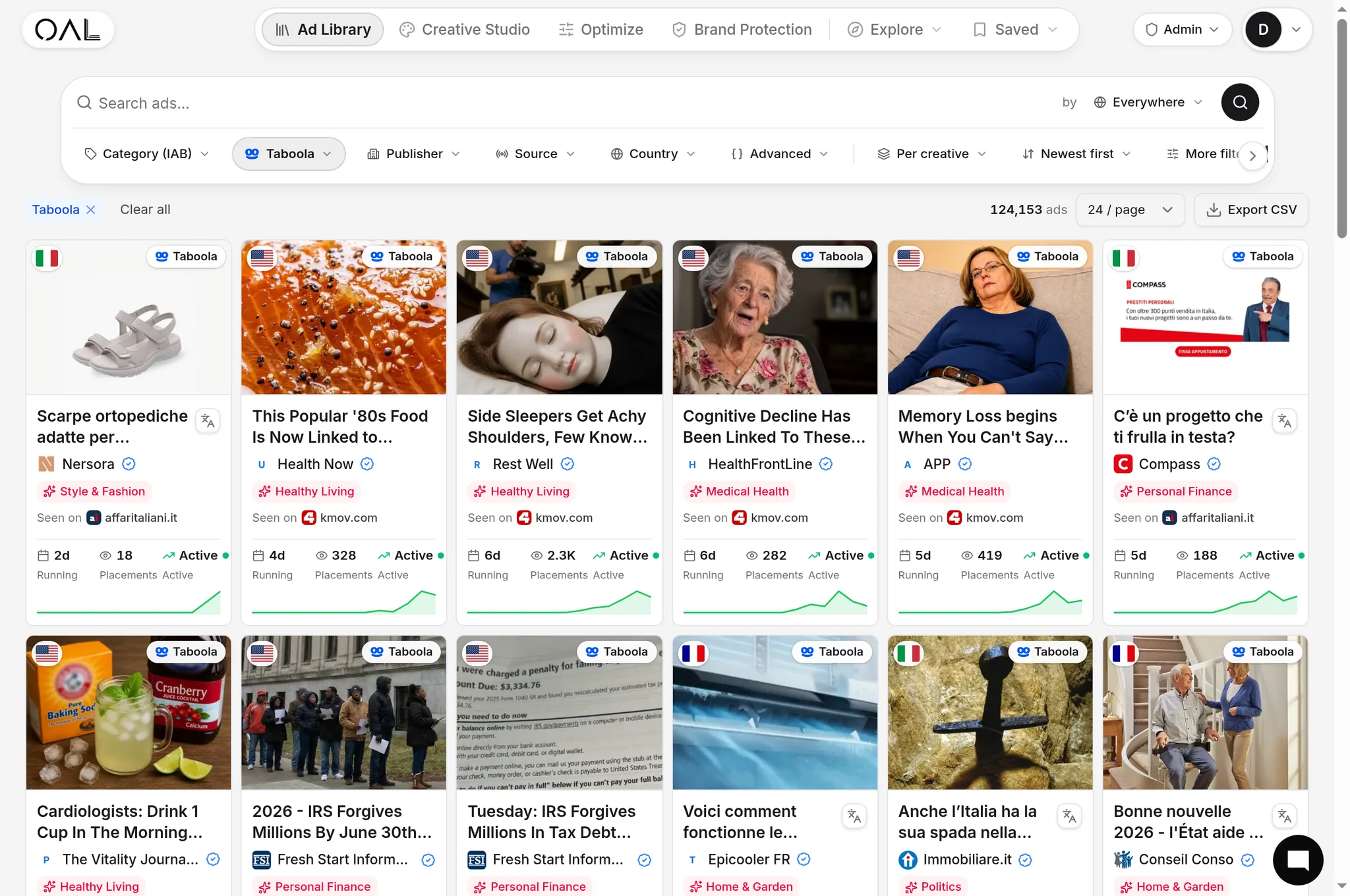
Live capture data on the advertiser mix across MGID, Revcontent and MediaGo: the verticals, the named advertisers, and the five archetypes that dominate mid-tier native networks.

The same skincare advertiser's 'Koreans Do This Instead' headline was captured on two networks in mid-2026. A breakdown of that headline family and four other skincare creatives from historical captures, with observed run times.
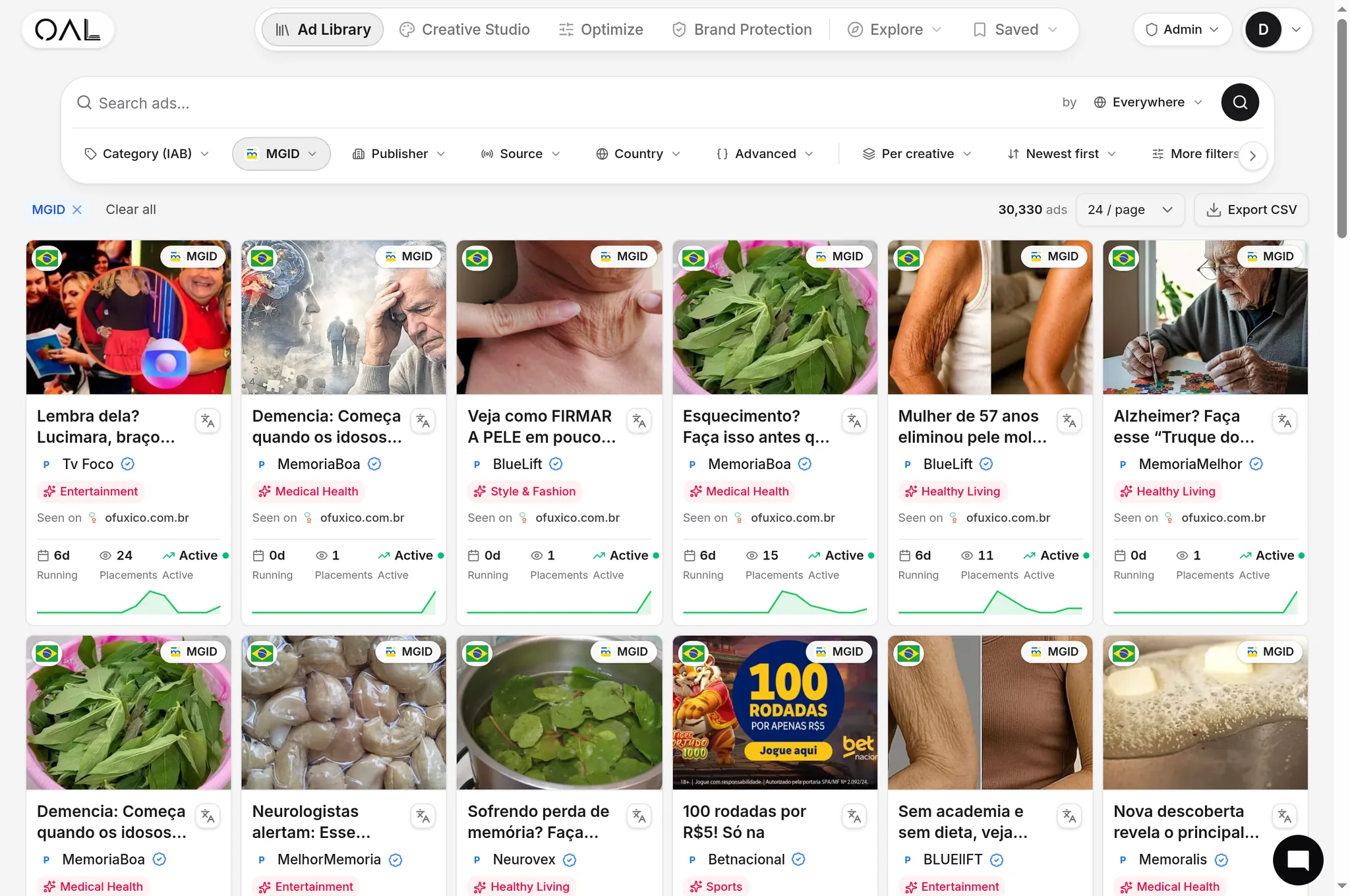
An observational review of a July 2026 sample of 62,765 captured MGID creatives: what the category labels show, and the cost, traffic-quality and performance questions to verify before you test.

MGID has no published rate card; what you pay per click depends on your bid, geo, vertical and CTR. How its prepaid CPC pricing and $100 minimum deposit work, plus hypothetical budget math for a test that gives a verdict.

MGID is one of the more accessible native networks for publishers, but it publishes entry requirements. What approval takes, what moves RPM, payout terms, and how to audit the ads you would run before adding its widgets.

Taboola, MGID, Revcontent, MediaGo, Microsoft, Yahoo, Google Demand Gen, Nativo, TripleLift: nine Outbrain alternatives compared from public documentation, with a use case to test for each.

Outbrain (now Teads), MGID, Revcontent, MediaGo, the Microsoft Audience Network and five more Taboola alternatives: what each offers, what each network documents about access and cost, and what to check before testing.

Research captured MGID creatives by advertiser and language: 54,585 records as of July, with observation dates, available destinations and the collection and classification limits behind the counts.

Folklore says nutra and crypto own native, but in a June 2026 snapshot of 589,000+ captured creatives, finance, insurance and health had the most labelled; here's the method, and what counts can't show about market size or profit.

A method for finding the most widely observed advertisers on Taboola, Outbrain and MGID from captured ads: classify by advertiser, network and vertical, rank by spread and observed span, and know what counts and dates can't show.

Meta and Google publish public ad libraries; as far as we found, Taboola, Outbrain and MGID do not. What a native ad library has to capture, how it differs from Meta's and Google's, and what it can show.

Research that stops at Taboola and Outbrain can miss campaigns on MGID and Revcontent. How to record captured ads, check any tool's coverage, and read run time, geo and landing pages without overclaiming.

How to evaluate Taboola, Teads (Outbrain), MGID and Revcontent for ecommerce by eligibility, inventory, measurement and your own product economics. Captured ads show examples, not where your product type has proven demand.

This guide supplies no network CPC averages. It shows how to judge a reported native CPC benchmark by its source, period and sample, and how to build your own baseline from cost per outcome.

Published minimum budgets for Taboola, Outbrain, MGID and Revcontent, plus break-even CPC and CPA math and test sizing without invented averages.

MGID states a $100 minimum deposit; Taboola's Realize help center ties its recommended daily budget to your CPA goal instead. Entry cost, stated reach and captured advertiser mix compared, with the limits of ad counts.

A comparison of MGID and Revcontent for affiliates, built on each network's own published terms and the largest classified categories in our June captures, with steps to check both networks yourself.

Native advertising examples captured in June 2026 from Taboola and Outbrain, each labeled with the advertiser shown, the network and its observation dates, plus descriptions of common formats on MGID and other networks.

Understand MGID advertiser and publisher roles, documented creative and targeting options, and the limits of public capture and destination evidence.

Native ads sit in plain sight below many articles. Here is how to look for who is buying them, read the creative and supply chain behind each placement, and follow the recorded destination without clicking live ads.

Adbeat and Anstrex both get called "ad spy tools," but one maps enterprise display spend and the other rips native landers for affiliates; here's a head-to-head from a competitor, plus where an open native-first index fits.

How to evaluate free research access for Taboola, Outbrain, MGID and Revcontent ads: coverage, observation dates, destination evidence and limits, and how a free tier differs from a time-limited trial.

Review verified platform changes and learn what public ad observations can establish, with historical examples and reproducible reporting standards.

How to compare native ad networks on eligibility, available inventory, measurement and your own campaign economics. Captured creative counts describe our coverage and do not predict campaign results.