
Can You Promote Crypto on Native Ads? Network Rules
Crypto advertising is allowed on every major native network, but all of them gate it behind pre-approval and stricter creative rules. Here's what to expect and how to stay compliant.


Crypto advertising is allowed on every major native network, but all of them gate it behind pre-approval and stricter creative rules. Here's what to expect and how to stay compliant.

Insurance and finance dominate native ad inventory because the format is built for lead gen. Here's the volume data by network, how the funnel works, and where compliance gets strict.

Tier-2 native networks carry a fraction of Taboola or Outbrain's inventory, which cuts both ways. Here's the real size gap, when smaller networks pay off, and how to test one without wasting budget.

Ecommerce, finance and travel dominate MSN's native feed. Here's the advertiser and vertical breakdown from an index of 281,839 live MSN creatives, plus who's actually buying there.

Microsoft Advertising blends native placements into Search campaigns by default. Here's exactly where the exclusion setting lives, why advertisers use it, and when Audience Network is worth keeping as its own channel.

No published minimum, but direct and agency access carry very different practical floors. Here's how to budget a real test on MediaGo.

Two ways in: direct self-serve signup or an agency relationship. Here's what each requires and which one actually suits your budget and vertical.

MediaGo runs like Taboola or Outbrain but with its own publisher footprint and vertical mix. Here's what advertisers need to know before testing it.

There's no published Revcontent rate card. Here's how the bid auction, floors and geo tiers actually shape what you pay, with realistic ranges to plan around.

Revcontent isn't a smaller Taboola. It's a different audience with its own winning verticals, its own review quirks, and its own budget math for affiliates.

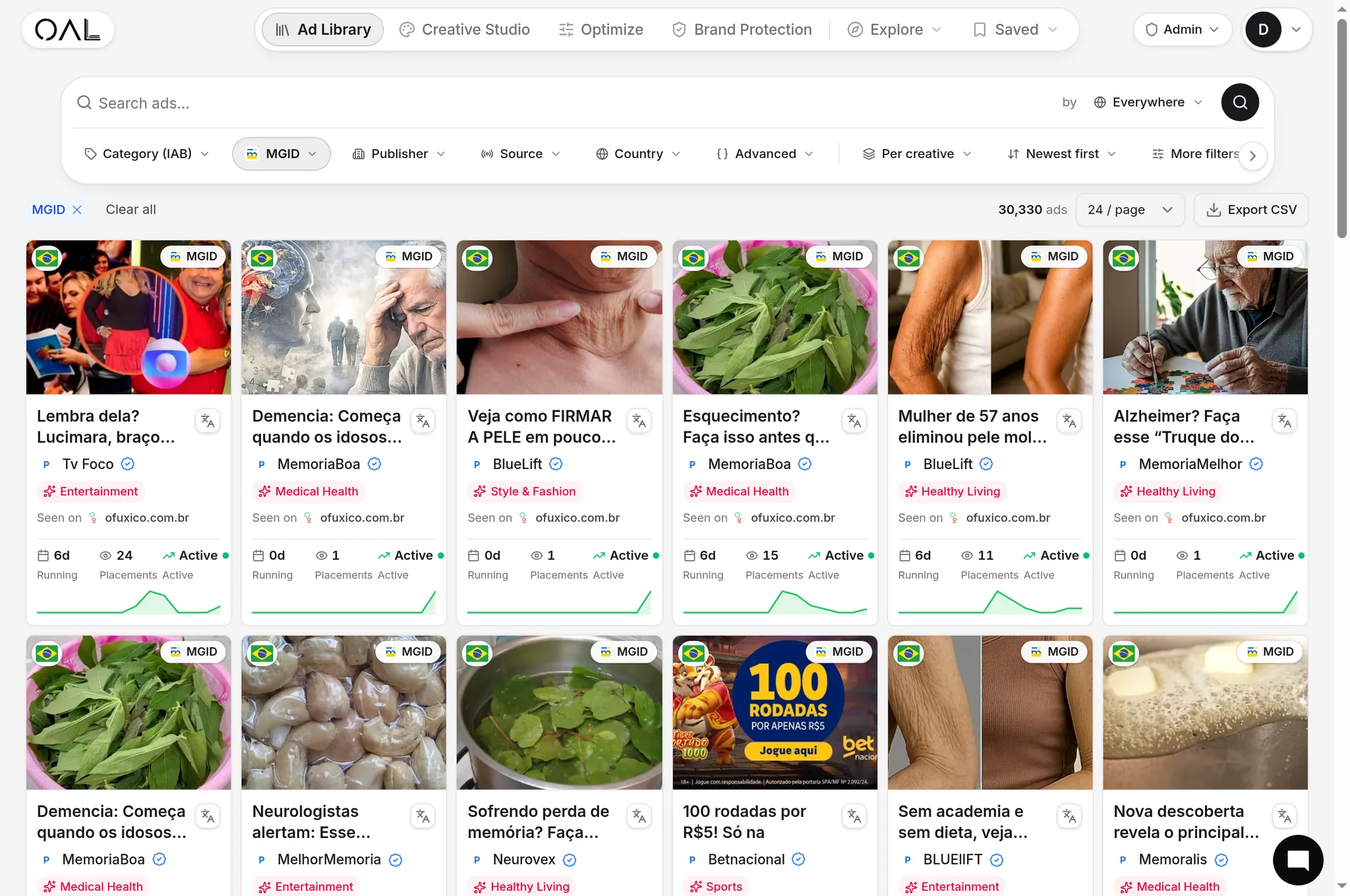
MGID ads show up on entertainment sites, content-discovery publishers and international news sites far more than on the recognizable premium mastheads people expect from native advertising.

Outbrain can work for B2B, but as a top-of-funnel awareness channel, not a direct lead engine. Here's what content angles convert, realistic cost expectations, and where it fits alongside other B2B channels.

Outbrain is a legitimate, publicly traded ad platform running on major publisher sites. The confusion almost always comes from a specific advertiser's ad, not the platform itself. Here's how to tell the two apart.
Outbrain conversion tracking is simple to set up and easy to quietly break. Here's pixel vs postback tracking, a step-by-step setup, and the redirect and attribution mistakes that hide real performance.

Outbrain can work for ecommerce, but it's a discovery channel built for curiosity-driven creative, not purchase-intent traffic. Here's what formats, angles, and tracking setups actually hold up.

Section blocking stops future spend on Outbrain publishers that never convert. Here's how to find the data, build a block list without guessing, and know when whitelisting is worth the reach you'll lose.

Neither Taboola nor Outbrain publishes a hard pageview minimum, but real-world approval patterns cluster around a rough threshold, and content quality matters as much as volume.

Taboola sells native recommendation widget space; AdSense sells programmatic display. Which earns more depends on your content vertical and traffic, not on which network is better.

Publishers earn native ad revenue through a network revenue share, not a fixed rate card. Here's how the auction, the RPM math, and multi-network fill actually work.

Taboola and Microsoft gate what MGID and Revcontent tolerate. A practitioner's comparison of eight native networks' content policies across nutra, crypto, dating, CBD and gambling — with the captured-ad evidence.

MGID and Revcontent will take your $500 seriously; Taboola mostly won't notice it. Where starter budgets actually go furthest in native — and how to spend one without burning it.

Revenue-share percentages are the headline; demand depth is the paycheck. A sell-side ranking of native ad networks built from the live advertiser activity we observe on each one.

SmartNews sells native ads inside one of the most-downloaded news apps in the US and Japan. Here is what the platform offers, what it costs in practice, and who should actually test it.

Seedtag reads the page, not the reader: AI contextual placements inside images and articles, no cookies required. How neuro-contextual works, what it costs, and who should use it.

Sharethrough pioneered in-feed native programmatic and now operates inside Equativ. How enhanced ads work, how buyers and publishers plug in, and where it fits in 2026.

TripleLift sells in-feed native programmatically: you buy through a DSP, not a dashboard. How component-based creative works, what inventory costs, and who it actually suits.

Nativo distributes full sponsored articles into premium publisher feeds — content distribution, not click buying. What it does well, what it costs, and who should walk away.

Dianomi has spent two decades selling one thing: native ads in front of finance readers. Here is how the network works, what clicks really cost, and when the premium beats Taboola-scale volume.

Yahoo folded native advertising into its omnichannel DSP after Gemini's sunset. What that means for buyers, what the platform actually offers, and what 5,926 live Yahoo native ads show.

The Outbrain–Teads merger produced one omnichannel platform under the Teads name. What advertisers actually get, how it compares with the feed networks, and who should buy it.

Teads sells premium in-article attention on a CPM model. Here is how its pricing actually works, what minimums to expect on each buying route, and the cost ranges buyers report.

Baidu's MediaGo hands your budget to a deep-learning bidder on premium portal feeds. We reviewed it against 6,571 live MediaGo creatives: who runs there, what it costs, and who should skip it.

Revcontent promises cheaper native clicks and lighter competition. We judged it against 15,789 live Revcontent ads in our index — the advertiser mix, reported costs, and where the network breaks.

Insurance is the third-largest vertical in our live native index. Where its 22,000+ creatives concentrate is a working map of which networks insurance advertisers should buy first.

Taboola, Outbrain (Teads), Revcontent, MediaGo, Microsoft Audience Network, Yahoo, Dianomi and TripleLift — eight MGID alternatives compared with live ad counts, entry bars and honest fit guidance.

Taboola, MGID, Revcontent, MediaGo, Microsoft, Yahoo, Google Demand Gen, Nativo, TripleLift: nine real Outbrain alternatives sized with live index data instead of vendor marketing.

Outbrain, MGID, Revcontent, MediaGo, the Microsoft Audience Network and five more Taboola alternatives, compared by what advertisers actually run on each network — not by sales-page claims.

A media buyer's walkthrough of MGID's native formats, contextual targeting and low entry CPCs, backed by the real creatives and tracker stacks we capture on live MGID placements.

A practitioner's guide to native advertising in 2026: the formats, the networks, how the auction really works, and how to read winning ads straight off the live market.

MediaGo is Baidu's native advertising platform that connects advertisers to MSN and other premium open-web supply outside China.

Revcontent is a native advertising network that serves content-recommendation widgets on publisher sites, known for its selective, higher-quality supply.

MGID is a global native advertising network that distributes content-recommendation ads across thousands of mid-tier publisher sites worldwide.