Español
 Português (Brasil)
 Français
 Deutsch
 Italiano
 Nederlands
 Polski
 Svenska
 Türkçe
 Русский
 日本語
日本語 한국어
한국어 简体中文
简体中文 Tiếng Việt
 Bahasa Indonesia
 繁體中文
繁體中文 Čeština
 Dansk
Dansk Norsk (bokmål)
 Suomi
Suomi Ελληνικά
 Română
 Magyar
 Українська
 ไทย
ไทย हिन्दी
 العربية
 עברית
עבריתConversion Tracking
Conversion tracking records when an ad click leads to a sale, lead, or signup, and ties that result back to the ad that drove it.

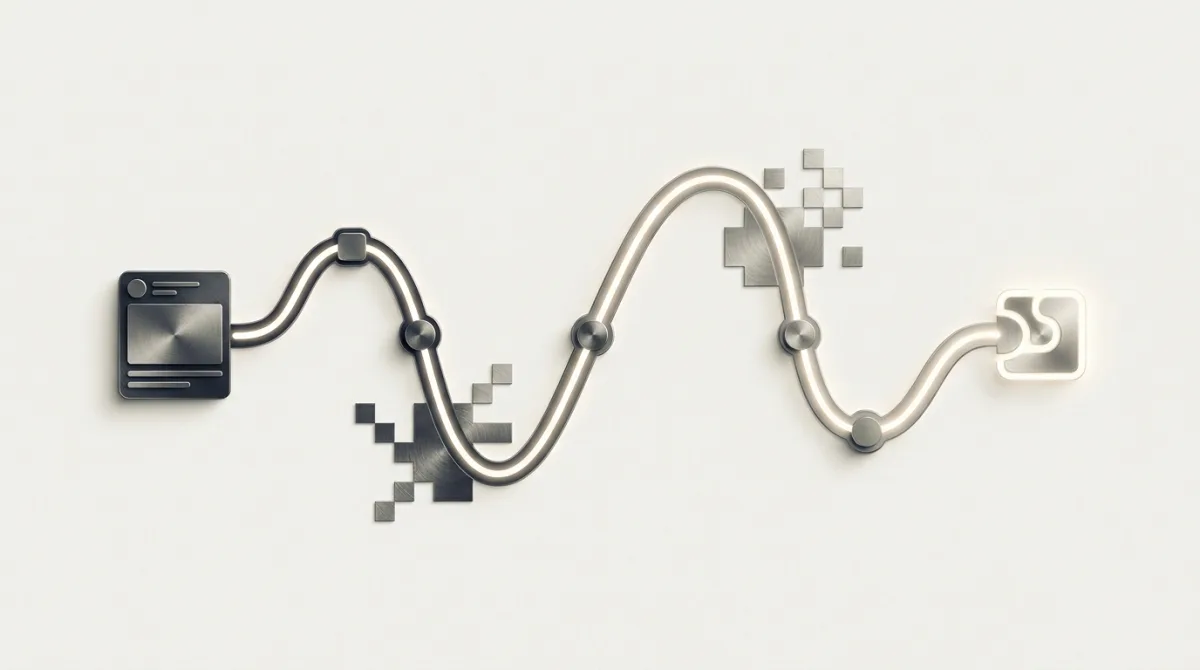
Conversion tracking is the process of recording when a user who clicked an ad completes a valued action, a purchase, lead form, signup, or install, and attributing that action back to the specific ad, creative, placement, and campaign that produced it. It is how advertisers know which ads actually make money rather than just generate clicks.
How it works#
Most setups fire a Conversion Pixel on the thank-you or order-confirmation page, or send a server-side Postback URL from the advertiser's backend. Either method passes back the Click ID captured when the click first happened, so the network can match the conversion to its source. A conversion only counts if it falls inside the campaign's Attribution Window, the time limit between click and action.
Why it matters#
Without conversion tracking, optimization is guesswork. Native networks like Taboola and Outbrain use conversion data to feed Smart Bidding, automatically shifting budget toward the publishers and creatives that convert. Conversion data also powers downstream metrics such as CPA, Conversion Rate, and ROAS. For affiliates and media buyers, accurate tracking is the difference between scaling a profitable campaign and burning spend on traffic that never pays back.
Related terms: Conversion Pixel, Postback URL, Click ID, and Attribution Window.