

Native Ad Networks
Teads vs Taboola: Two Very Different Native Buys
Teads and Taboola both get called native advertising, but they sell very different products to very different buyers. Here's how they actually compare.
Teads and Taboola both get called native advertising, but they sell very different products to very different buyers. Here's how they actually compare.

MediaGo's supply leans heavily on MSN-affiliated placements. Here's what that means for traffic quality, by vertical, and how to check it yourself.
MediaGo and Taboola draw from very different supply. Here's how their inventory, cost and targeting compare, and which advertisers fit each one.

Native buys you cheap, context-driven reach at the cost of targeting precision and creative consistency. Here's a practical checklist for when that trade is worth making, and when it isn't.

MSN's native feed runs on the Microsoft Audience Network — but resold partner demand fills a slice of it too. Here is the click-chain evidence, plus the five-step method for profiling any publisher's ad networks.

Realize is Taboola's 2025 rebrand of its advertiser platform — a strategic repositioning from 'content discovery' to performance advertising. Here is what genuinely changed, what didn't, and how to evaluate it.

Taboola and Outbrain are graduation targets, not starting points. Here are the native ad networks that realistically accept small publishers, what demand you'll actually serve, and the checks to run before you embed a widget.

Taboola is the scale play; MediaGo is Baidu's algorithm-first native platform riding premium Microsoft-weighted supply. Live index data on both networks, and a sequencing playbook for using each where it wins.

NewsBreak's self-serve Ad Manager puts native ads inside the biggest US local-news feed. Here is the full setup — account review, structure, local targeting, bids, creatives and tracking — from a native buyer's perspective.

A native ad networks list with receipts: the seven major networks of 2026 — Taboola, Outbrain (Teads), MGID, RevContent, the Microsoft Audience Network, MediaGo and Yahoo — each with live creative counts from OpenAdLibrary's million-creative capture corpus, who each network suits, and the churn data that governs them all.

Every paid channel leaves fingerprints. Work through four evidence layers — landing URLs, official libraries, redirect chains, observed placements — and a competitor's channel mix falls out in under an hour.

What a live index of 725,000+ native creatives shows about the channel right now: network volume, vertical concentration, platform consolidation, and a repeatable routine for tracking trends yourself.

NewsBreak sells in-feed native ads inside a US local-news app read mostly by the over-45 crowd. An honest look at formats, targeting, strengths and hard limits.

The Microsoft Audience Network is the largest native channel in OpenAdLibrary's index — 281,839 live creatives. Here is what that corpus says about whether it deserves your budget.

An evidence-backed verdict on where Taboola genuinely delivers, where it will frustrate you, and which advertisers should skip it entirely.

First-party native advertising statistics for 2026, from live capture rather than surveys: 1,041,637 creatives tracked, 36,009 advertisers and 10.75M observations across 50 networks — per-network volumes, the health-led vertical mix, and a churn curve where 59% of creatives are never seen again after their first day.

The Microsoft Audience Network is the largest fresh source of native creatives we track — 257,553 new ads in 30 days — yet it has no ad library and almost no coverage. Here's how the MSN feed works, how its demand is resold through msft-ssp and adnxs wrappers, and how to research it.

Every native ad leaves fingerprints in its click URL, loader script, and tracker domains that name the network serving it, and here's how to read them by hand or at scale.
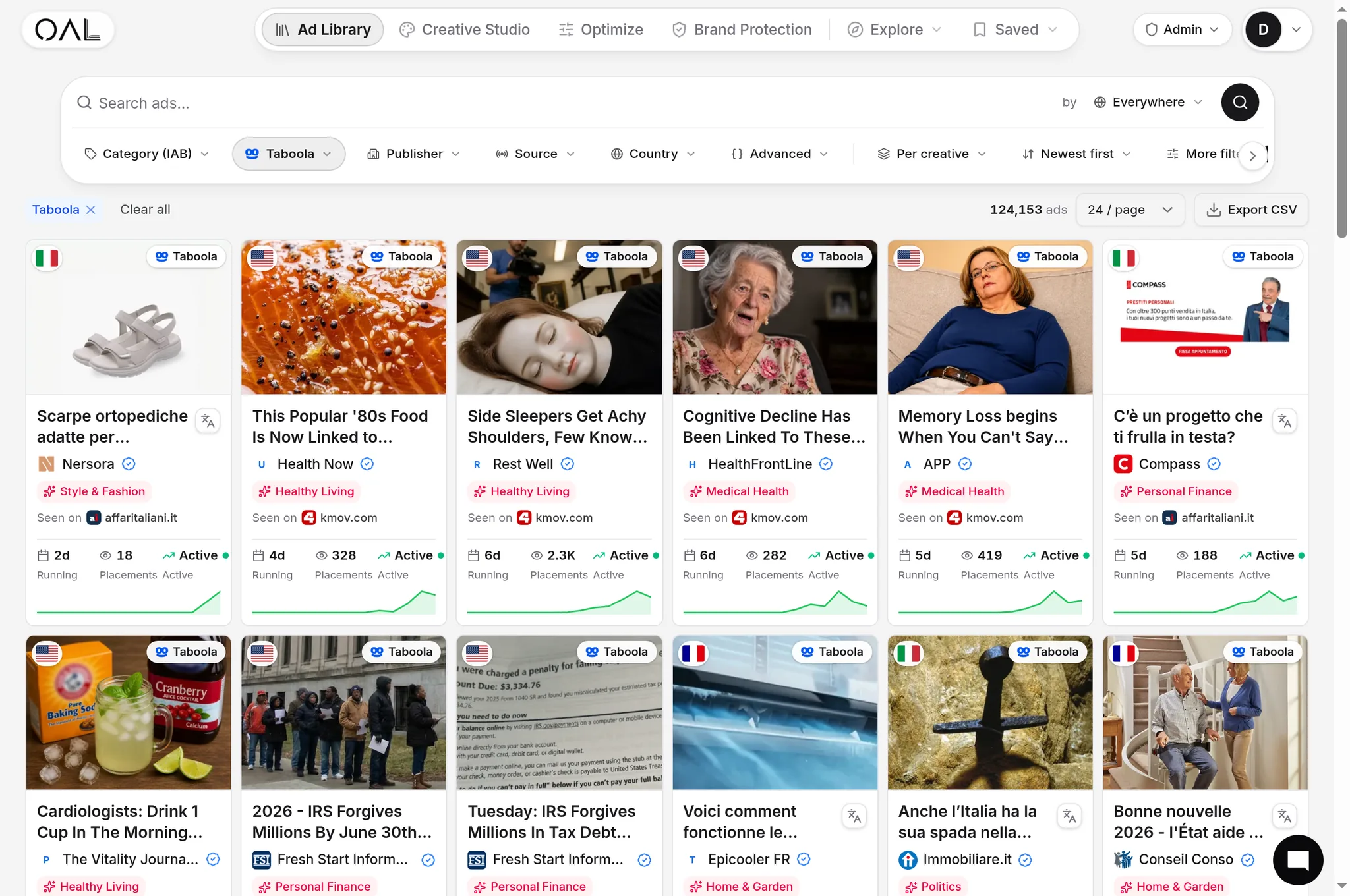
MGID lets you test from $100; Taboola realistically needs ~$300/day to clear its learning phase, and our capture index shows Taboola running three times the creatives MGID does.
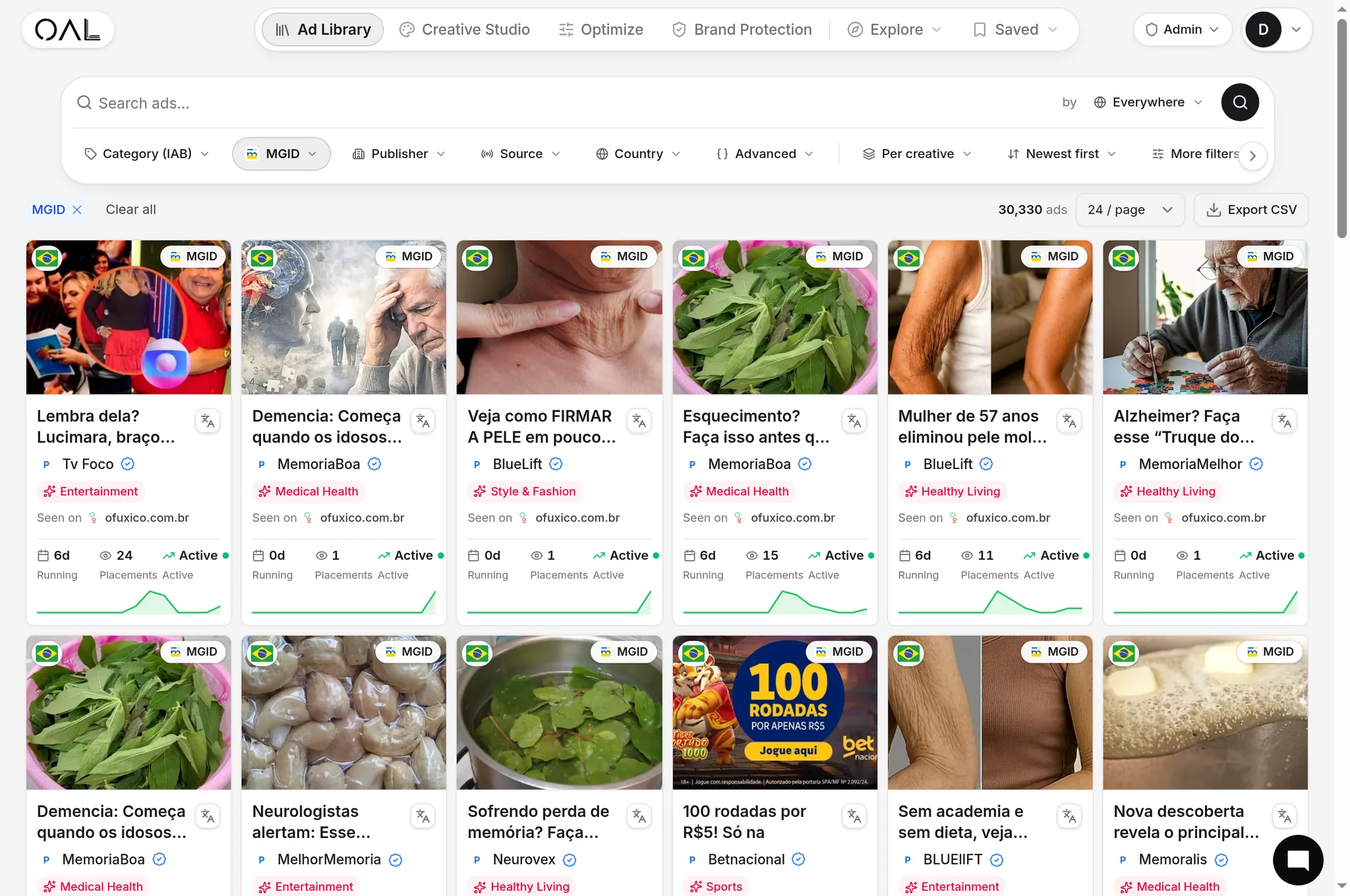
A data-led comparison of MGID and Revcontent using the real advertiser mix, vertical breakdown, and ad longevity we've captured from each network's live creatives.
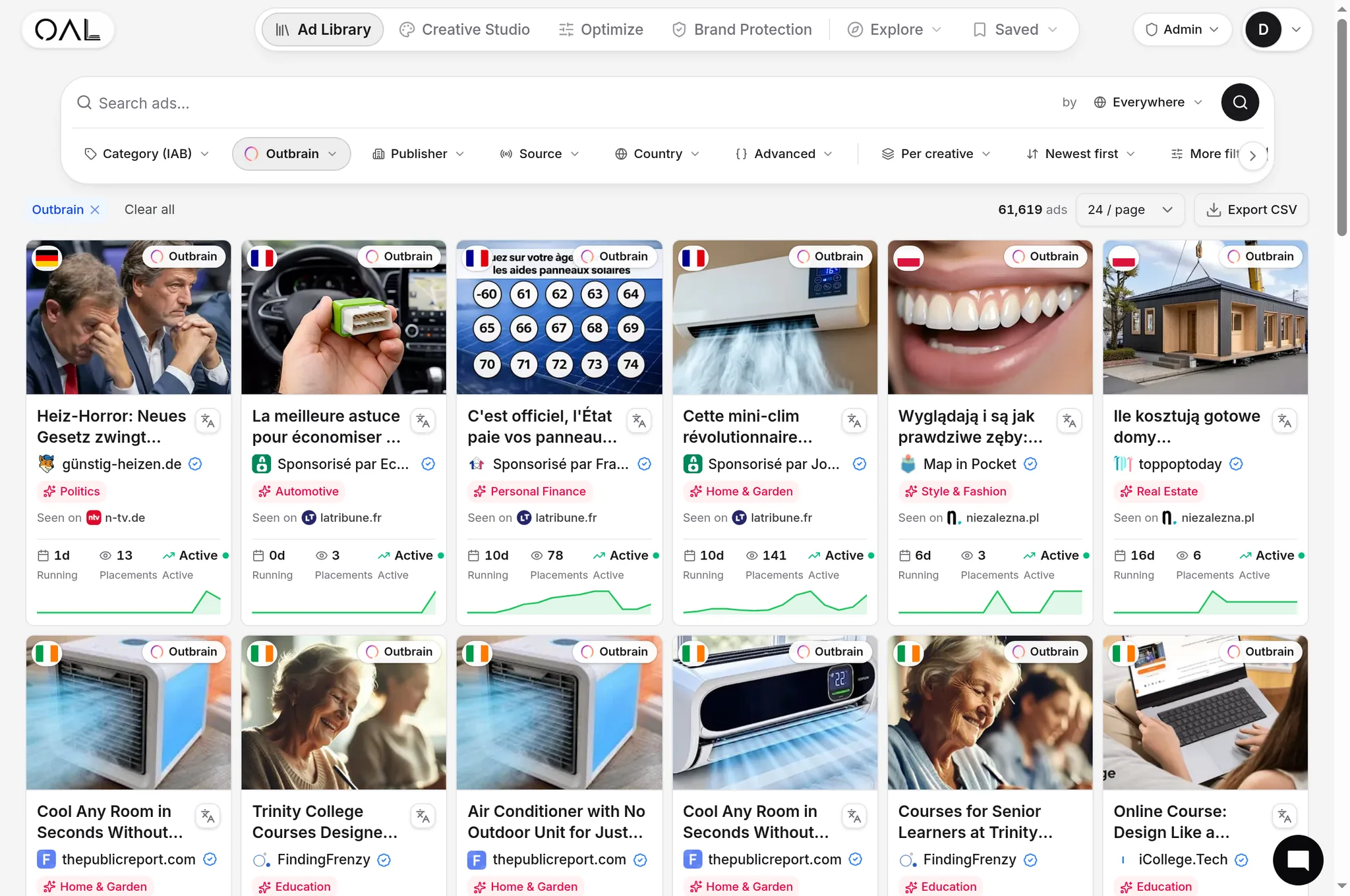
Outbrain bought Teads in 2025 and rebranded the combined company as Teads; here is what the merged native, video, and CTV platform actually looks like, and how to study live inventory before you spend.
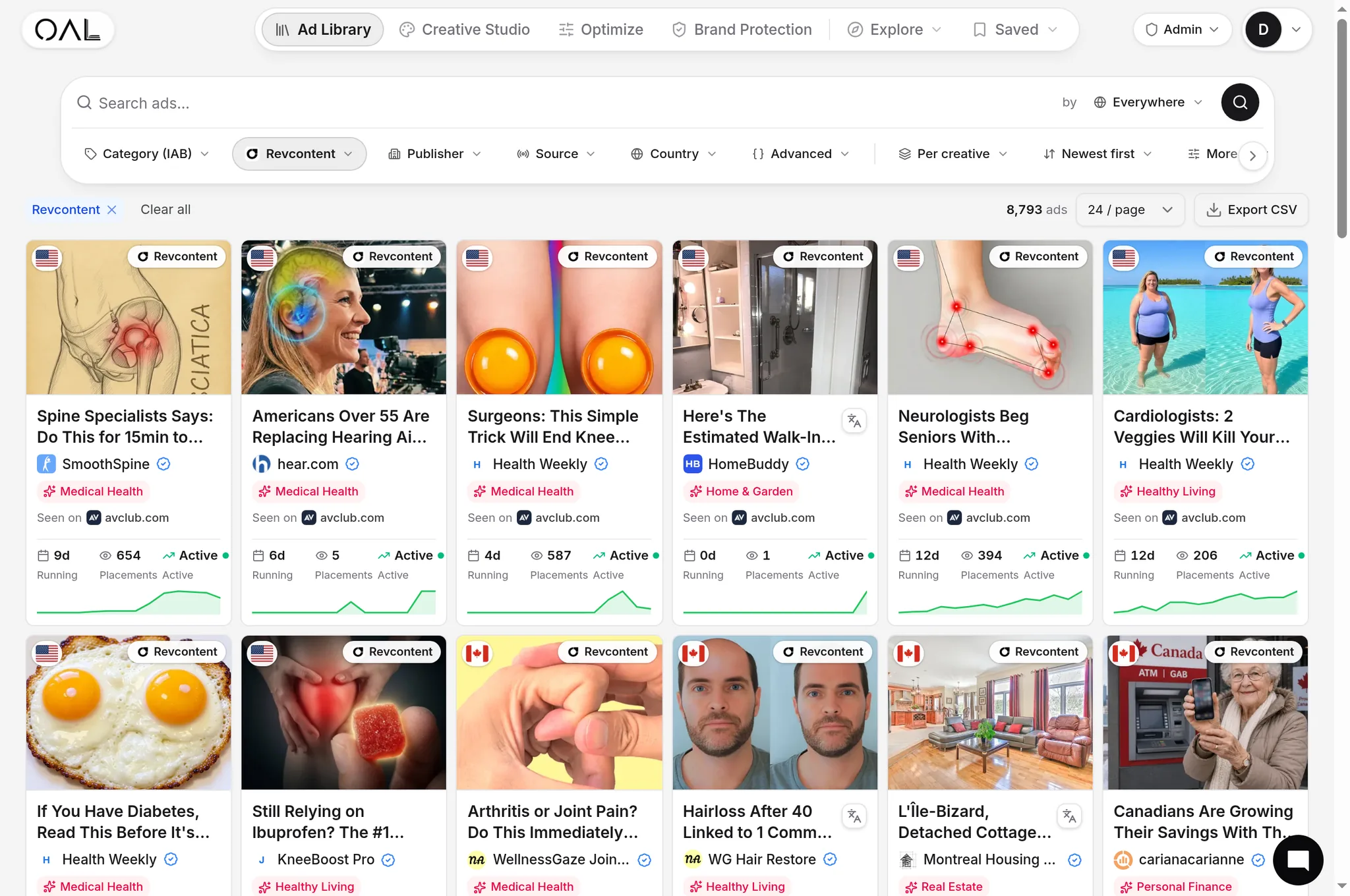
Revcontent serves native ads through publisher widgets you bid on one by one, and here is how its delivery, site-level targeting, CPC bidding and optimization levers actually work, with real captured ads.

We ranked the major native ad networks by the only metric that predicts where your money goes: how many live ads each one is actually running right now, pulled straight from OpenAdLibrary's index of 589,000+ captured creatives.

Resold inventory is ad space one company buys from a publisher and sells to advertisers, often sourced from a separate demand partner.

Yahoo Gemini was Yahoo's native and search ad marketplace, now folded into Yahoo Native and the Yahoo DSP for buying native inventory at scale.
MediaGo is Baidu's native advertising platform that connects advertisers to MSN and other premium open-web supply outside China.
Teads is a global media platform best known for pioneering outstream video ads that play inside the editorial content of premium publishers.
Revcontent is a native advertising network that serves content-recommendation widgets on publisher sites, known for its selective, higher-quality supply.
MGID is a global native advertising network that distributes content-recommendation ads across thousands of mid-tier publisher sites worldwide.
Outbrain is a major native advertising network that serves content-recommendation ads across premium publisher sites, often as "recommended" link widgets.
Taboola is a leading native advertising network that serves content-recommendation widgets across thousands of publisher sites worldwide.
A native ad network connects advertisers to native, content-style ad placements across a large pool of publisher sites, usually as recommendation widgets.