 English
 Español
 Français
 Deutsch
 Italiano
 Nederlands
 Polski
 Svenska
 Türkçe
 Русский
 日本語
日本語 한국어
한국어 简体中文
简体中文 Tiếng Việt
 Bahasa Indonesia
 繁體中文
繁體中文 Čeština
 Dansk
Dansk Norsk (bokmål)
 Suomi
Suomi Ελληνικά
 Română
 Magyar
 Українська
 ไทย
ไทย हिन्दी
 العربية
 עברית
עבריתNative Ads vs Facebook Ads para DTC: Qual Vence em 2026?
Uma comparação honesta de um comprador de mídia entre anúncios nativos e anúncios do Facebook para DTC em 2026, abordando CPC, perda de sinal do iOS, criativos e intenção, respaldada pelo volume nativo ao vivo que o OpenAdLibrary rastreia no Taboola, Outbrain, MGID e Revcontent.

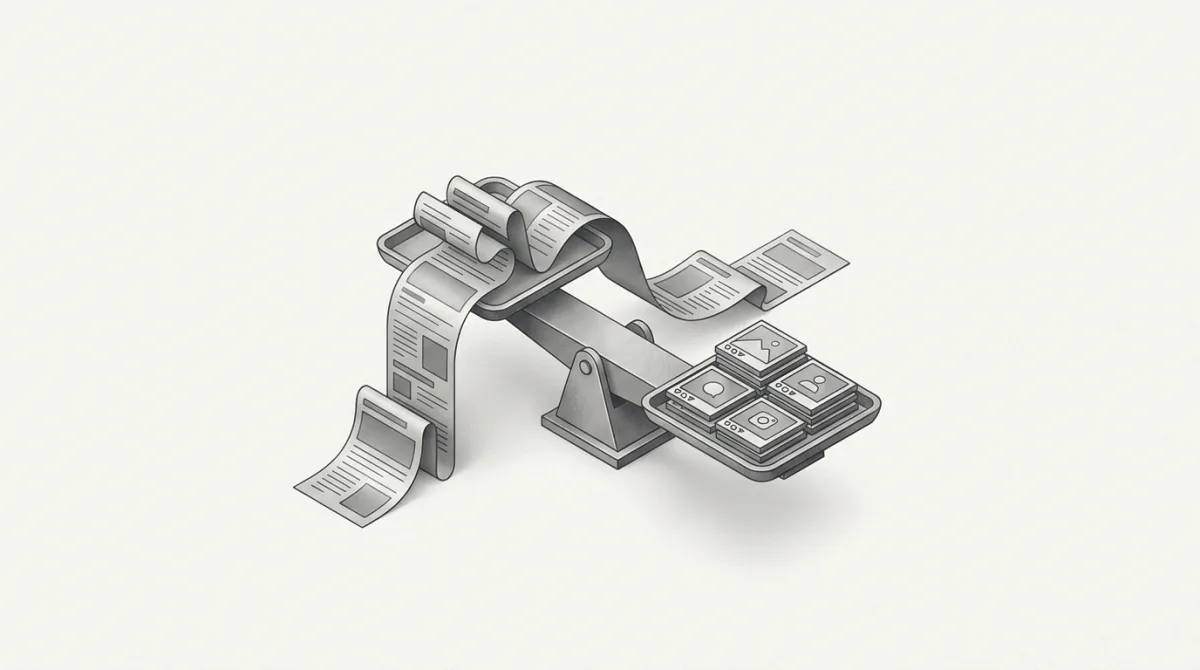
Se você compra mídia paga para uma marca DTC, você viu o mesmo gráfico por anos: os CPMs do Meta subindo e indo para a direita enquanto sua atribuição fica mais embaçada. Então a pergunta é justa. Em 2026, ainda faz sentido alocar a maior parte do seu orçamento no Facebook, ou a publicidade nativa cresceu para se tornar um canal que realmente compete pelos dólares DTC?
Este não é um artigo do tipo "o nativo é o hack que o Facebook não quer que você descubra". Ambos os canais funcionam. Eles funcionam de forma diferente, falham de forma diferente, e as marcas que vencem os tratam como um sistema único em vez de escolher um lado. Aqui está a análise prática sobre as quatro coisas que realmente movem o CAC: economia de cliques, resiliência à perda de sinal do iOS, formato criativo e intenção do comprador. Os números nativos vêm do que vemos ao vivo no OpenAdLibrary, onde o índice atualmente contém 589.036 criativos nativos capturados de 25.933 anunciantes em 42 redes (índice OpenAdLibrary, junho de 2026).
A resposta curta#
Os anúncios nativos vencem no CPC bruto e na resiliência à perda de sinal do iOS. O Facebook ainda vence na velocidade de teste de criativos e no retargeting de audiências quentes e de alta intenção. Nenhum substitui o outro para uma marca DTC séria. A jogada certa é executar o nativo para descoberta barata de tráfego frio sem cookies, e então alimentar esses vencedores na máquina de retargeting e lookalike do Facebook.
Esses dois canais não estão brigando pelo mesmo momento#
Acerta o modelo mental antes de olhar para um único benchmark, porque o erro DTC mais caro é tratar o nativo como "Facebook mais barato".
O Facebook é um canal de interrupção. O usuário veio para rolar seu feed. Seu anúncio tem que desviar essa rolagem com algo barulhento o suficiente para parar um polegar. A segmentação é baseada em identidade: o Meta sabe quem é a pessoa e prevê quem converte.
O nativo é um canal de descoberta. O usuário está lendo um artigo, e seu anúncio fica no widget de recomendação abaixo ou ao lado, vestido para combinar com o conteúdo editorial ao redor. A segmentação é principalmente contextual: o tópico da página, o publisher, a seção, o dispositivo, a localização. O usuário não está pesquisando e não está sendo perfilado em um segmento de compradores. Eles estão recebendo algo adjacente ao que já estão lendo. Se você quer a mecânica completa de como esses widgets, leilões e cadeias de suprimentos se encaixam, nosso guia completo de publicidade nativa percorre todo o ecossistema, e a entrada do glossário de Publicidade Nativa dá a versão de um parágrafo.
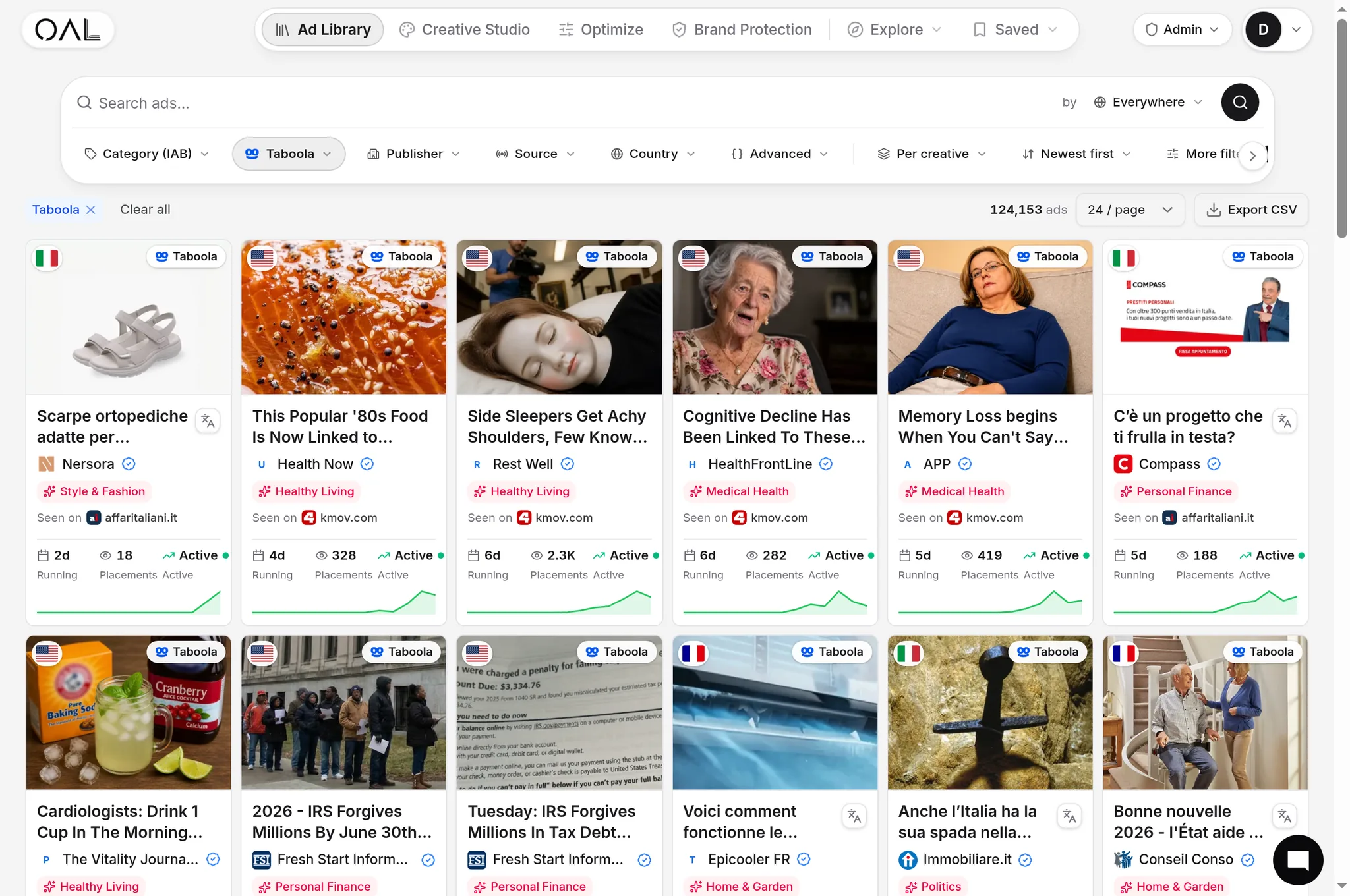
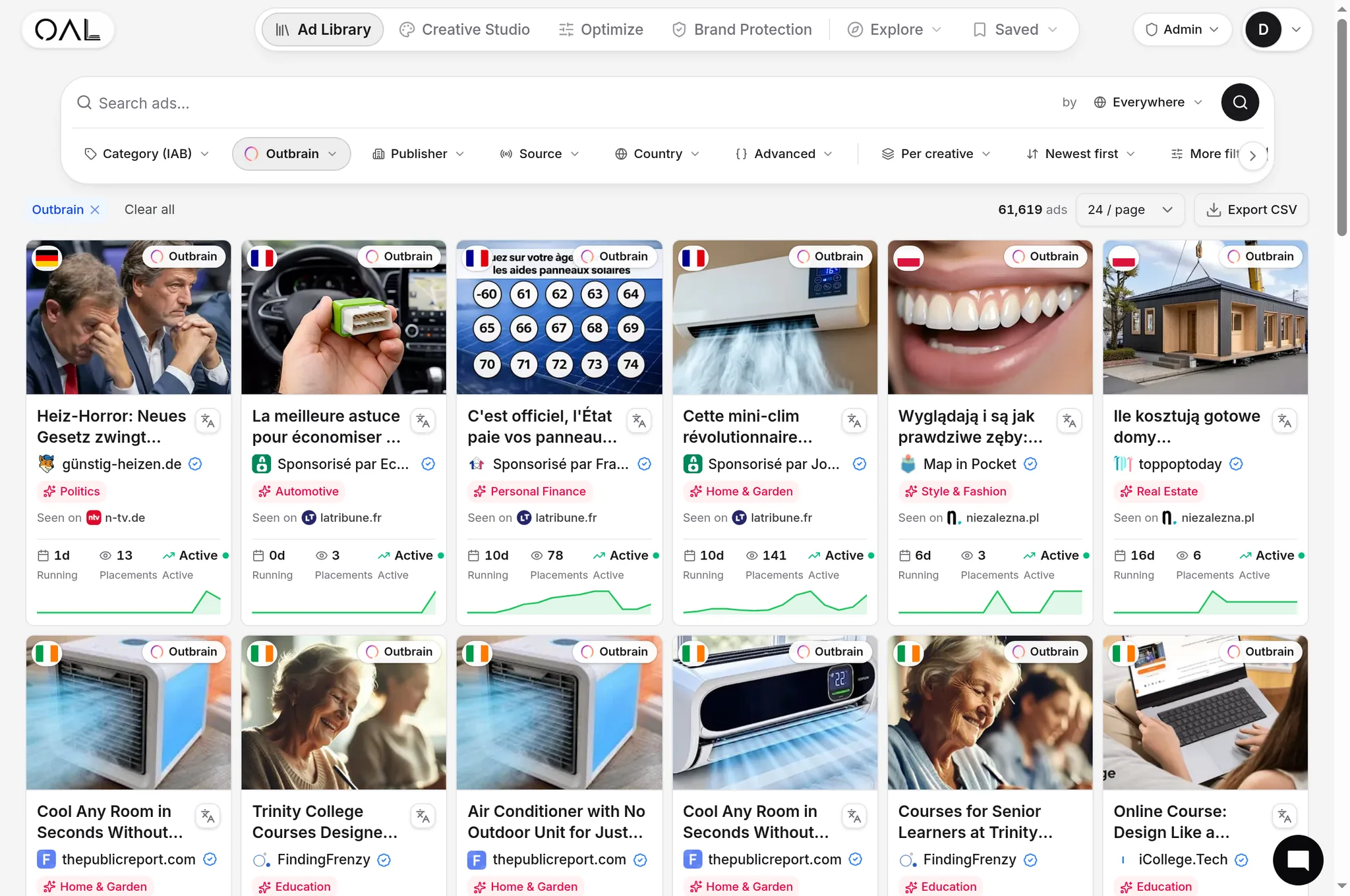
Você pode ver a diferença nos próprios criativos. Aqui está um ao vivo do nosso índice: uma oferta de finanças vestida como um flash de notícias, não um anúncio de marca.

Trate o nativo como um mecanismo de descoberta, não como um feed com desconto. As marcas que perdem dinheiro com nativo são aquelas que pegaram um criativo do Facebook, direcionaram para uma audiência fria de widget e esperaram taxas de conversão de nível de feed. O descompasso é toda a história.
Rodada 1: CPC e economia de cliques#
É aqui que o nativo ganhou sua reputação, e a matemática se sustenta.
| Métrica (2026, EUA) | Redes nativas | Facebook / Meta |
|---|---|---|
| CPC típico | ~$0,10 a $0,90 | ~$0,70 (tráfego), ~$1,92 (geração de leads) |
| CPM típico | baixos dígitos únicos até baixos adolescentes | ~$16,80, alta de ~20% ano a ano |
| Base de segmentação | contextual (página, seção, localização, dispositivo) | identidade / comportamental |
| Padrão de CTR | mais baixo, combinado com conteúdo | mais alto, nativo do feed |
No Taboola, Outbrain, MGID e Revcontent, os CPCs nativos geralmente ficam entre aproximadamente $0,10 e $0,90, dependendo do dispositivo, localização e vertical. Posicionamentos premium em desktop em publishers tier-1 são mais altos; inventário mobile e de alcance amplo fica no piso. O Facebook tem uma média de cerca de $0,70 CPC para objetivos de tráfego e próximo de $1,92 para geração de leads em 2026, com CPMs perto de $16,80 e subindo cerca de 20% ano a ano conforme o leilão fica mais lotado.
O volume conta a mesma história do lado da oferta. Só o Taboola responde por 157.727 dos criativos em nosso índice e o Outbrain por mais 84.252 (índice OpenAdLibrary, junho de 2026). Esse é um mercado profundo e líquido, não um nicho onde você tem que garimpar inventário.
Agora a ressalva honesta: cliques mais baratos não são automaticamente conversões mais baratas. O tráfego nativo é mais frio e fica no meio do funil, então um clique nativo de $0,20 e um clique do Facebook de $0,70 podem resultar no mesmo CPA se sua experiência pós-clique (pré-lander, advertorial ou página do produto) não fizer a persuasão que o feed teria feito. A vantagem do CPC é real. Você só a capitaliza quando o fluxo pós-clique (pré-lander, advertorial ou página do produto) carrega o peso. A economia por plataforma também difere, então leia como funcionam os anúncios do Taboola e como funcionam os anúncios nativos do MGID para os pisos de lances e realidades de gasto mínimo em cada um.
Rodada 2: Resiliência à perda de sinal do iOS#
Esta é a dimensão que silenciosamente reconectou o mix de mídia DTC, e é onde o nativo tem uma vantagem estrutural.
A App Tracking Transparency da Apple removeu o sinal determinístico em nível de usuário no qual a otimização e os relatórios do Meta foram construídos. A indústria estima que 20% a 30% das conversões passam despercebidas no inventário com sinal degradado, o que infla o CPA aparente e esconde as conversões baratas que o Meta não consegue mais ver. Chame de um imposto invisível em toda conta com forte presença no iOS. Você sente isso como relatórios nos quais não confia mais totalmente e um algoritmo otimizando com dados parciais.
O nativo mal sentiu, porque nunca dependeu do IDFA em primeiro lugar. Sua segmentação e lances funcionam com sinais contextuais e de publisher first-party: sobre o que é a página, quem é o publisher, o dispositivo e a localização. Nada disso foi o que as mudanças de privacidade da Apple tocaram. Em 2026, mais de três quartos do tráfego global vive em ambientes onde cookies de terceiros são limitados ou inexistentes, e o nativo contextual é um dos poucos canais de performance que mal percebe. Para uma marca DTC cuja audiência tende ao iPhone, essa resiliência aparece como desempenho mais estável e matemática de atribuição mais limpa.
- Facebook: a otimização e os relatórios se degradam com as exclusões do iOS; conversões modeladas tapam as lacunas, mas adicionam incerteza.
- Nativo: os lances contextuais são sem cookies por design; o desempenho e os relatórios permanecem comparativamente estáveis.
- Resultado prático: o nativo é uma proteção contra choques de plataforma e regulatórios, não apenas um clique mais barato.
É também por isso que a publicidade nativa programática continua absorvendo orçamento. O leilão de anúncios nativos é liquidado com sinais que sobrevivem às mudanças de privacidade.
Rodada 3: Formato criativo e o que realmente é clicado#
O criativo que vence no Facebook geralmente morre no nativo, e vice-versa. Isso atrapalha mais times DTC do que a segmentação.
O Facebook recompensa movimento que prende a atenção: vídeo UGC com cortes rápidos, imagens estáticas ousadas, um gancho no primeiro segundo, branding que se anuncia. O anúncio deve parecer um anúncio bom o suficiente para parar uma rolagem.
O nativo recompensa o instinto oposto. O criativo, uma imagem mais uma manchete dentro de um widget de anúncio nativo, ganha o clique ao se misturar com os artigos ao redor. Imagens editoriais, uma manchete movida pela curiosidade, a gramática visual do jornalismo em vez da publicidade. Parece mais uma miniatura de artigo recomendado do que um anúncio de feed. Solte um vídeo polido do Facebook diretamente em um posicionamento nativo e ele grita "anúncio" dentro de um contexto de conteúdo, e o CTR despenca.
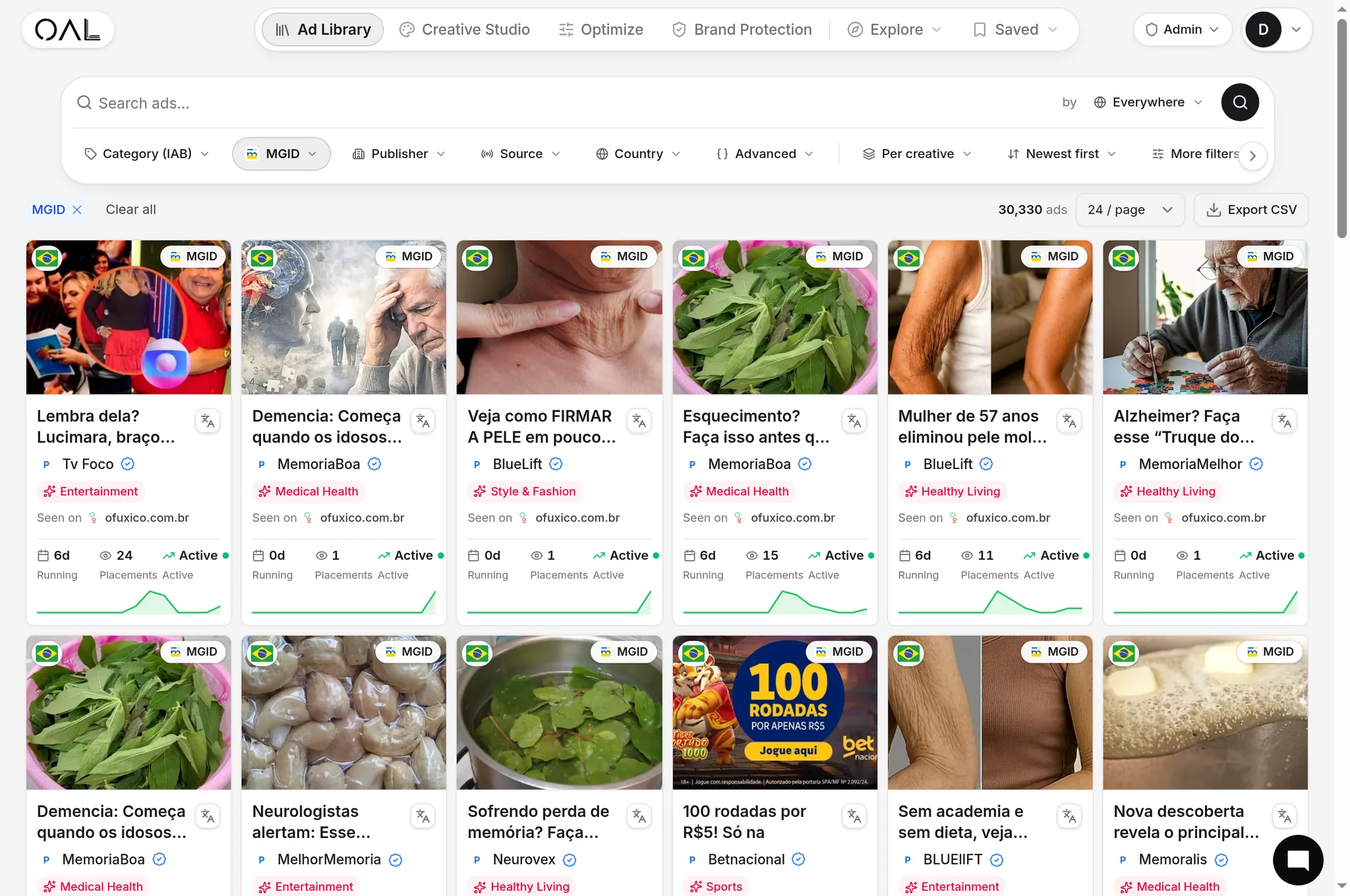
Os dois anúncios abaixo são nativos clássicos. Ambos parecem jornalismo de serviço. Nenhum sobreviveria como está em um feed do Facebook.


A lição para a produção é concreta: você precisa de uma trilha criativa separada para o nativo, construída em torno de testes de manchete e imagens editoriais, não de uma reedição dos seus assets sociais. É exatamente aqui que a inteligência competitiva se paga. Em vez de adivinhar quais ângulos funcionam no nativo, você estuda os criativos que os concorrentes estão executando agora e, mais importante, quais permaneceram.
Rodada 4: Intenção, posição no funil e onde cada canal pertence#
Mapeie os canais para as funções no funil e a pergunta "qual vence" se dissolve:
- Descoberta fria no topo do funil. O nativo vence. Alcance barato e sem cookies contra pessoas consumindo conteúdo relevante. É aqui que você encontra novas audiências que o algoritmo do Facebook já saturou para você.
- Educação no meio do funil. Forte para o nativo através de fluxos de advertorial e pré-lander; forte para o Facebook através de sequenciamento de vídeo. Mais ou menos um empate, decidido pelo seu criativo.
- Retargeting quente e lookalikes. O Facebook vence decisivamente. Nada se iguala à capacidade do Meta de reengajar visitantes do site e clonar conversores.
A arquitetura DTC vencedora em 2026 é um loop, não uma bifurcação. Dirija volume frio barato através do nativo, capture e pixele esses visitantes, e então deixe o Facebook convertê-los com retargeting e expandi-los com lookalikes. O nativo preenche o topo do funil do qual os CPMs crescentes o tiraram. O Facebook converte a audiência quente que o nativo criou.
Como executar o nativo com inteligência (onde o OpenAdLibrary se encaixa)#
A desvantagem do nativo sempre foi a opacidade. A Biblioteca de Anúncios do Facebook entrega os anúncios sociais dos concorrentes em uma bandeja; o nativo era uma caixa preta, que é exatamente o motivo pelo qual tantas equipes DTC permaneceram no Meta por pura visibilidade. Essa lacuna agora pode ser fechada.
Uma ferramenta de espionagem de anúncios nativos permite que você veja o mercado nativo da mesma forma que já vê o social. O OpenAdLibrary captura posicionamentos nativos públicos ao vivo no Taboola, Outbrain, MGID, Revcontent, Teads, Yahoo e MSN, preserva a imagem real do criativo em qualidade total, classifica a cadeia de suprimentos de ad-tech por trás de cada posicionamento e rastreia o clique até a página de destino ou pré-lander do anunciante, tudo sem clicar em anúncios ao vivo. O índice agora contém 5,4 milhões de observações de anúncios e 926.259 capturas de páginas de destino (índice OpenAdLibrary, junho de 2026), que é a matéria-prima que transforma um palpite sobre um concorrente em evidência.
O sinal que mais importa é a longevidade e a disseminação. Um anúncio rodando por semanas em vários publishers é quase certamente lucrativo, porque ninguém queima orçamento em um perdedor por tanto tempo. Em nosso índice atual, os criativos de maior duração que estamos observando continuamente permaneceram por cerca de 28 dias cada. Um exemplo: uma isca financeira da SmartAsset no Outbrain, "Ask a Pro: How Can I Avoid Paying Taxes on IRA Withdrawals?", que permaneceu ativa em publishers por 28 dias consecutivos de observação.

Uma nota rápida de honestidade sobre benchmarks: essa figura de 28 dias é o período real de observação contínua em nosso índice, não o "vencedor de 90 dias" que você ouve citado nos círculos nativos. A regra geral de 90 dias é um conhecimento geral da indústria. Os 28 dias são o que podemos realmente apontar nos dados.
Os verticais contam sua própria história sobre onde o dinheiro nativo se concentra. Finanças lideram nosso índice geral com 17.232 criativos, seguidos por seguros (15.629) e saúde (14.895), todas categorias clássicas de alto LTV e alta margem onde um clique frio barato ainda pode valer a pena (índice OpenAdLibrary, junho de 2026). Se você vende nesses espaços, o nativo não é opcional, é onde seus concorrentes já estão.
A partir daí, o Creative Studio ajuda você a construir criativos nativos-nativos em vez de reciclar assets sociais, o Copy DNA decompõe os padrões de manchete e oferta que continuam se repetindo entre os vencedores, e o Optimize mais a API e o MCP permitem que você incorpore tudo isso em seu próprio fluxo de trabalho. É aberto e barato: $29,99/mês, com um plano gratuito para navegar por 200 anúncios e sem necessidade de cartão, contra os $80 a $400/mês das ferramentas de espionagem nativa legadas.
Para o contexto de nível de plataforma por trás das redes acima, veja nossos guias sobre como o Outbrain funciona agora que faz parte do Teads, o que é o Teads após a fusão, além das entradas do glossário rede de anúncios nativos e Yahoo Native.
O veredito para 2026#
Não há um único vencedor, e qualquer artigo que coroe um está te vendendo algo. O nativo vence no CPC e na resiliência da era do iOS. O Facebook vence na velocidade de teste de criativos e na conversão de audiência quente. As marcas DTC que estão multiplicando sua vantagem de CAC em 2026 executam o nativo para descoberta fria sem cookies, o Facebook para retargeting e lookalikes, e uma trilha criativa separada para cada um, usando inteligência competitiva para pular o trabalho de adivinhação caro no lado nativo.
Se seu mix de mídia ainda é 90% Meta porque o nativo parecia uma caixa preta, a caixa está aberta. Comece grátis, navegue por 200 anúncios nativos ao vivo sem cartão e veja por si mesmo quais criativos, ofertas e anunciantes estão silenciosamente vencendo no canal que seus concorrentes não estão observando.