English
 Español
 Português (Brasil)
 Deutsch
 Italiano
 Nederlands
 Polski
 Svenska
 Türkçe
 Русский
 日本語
日本語 한국어
한국어 简体中文
简体中文 Tiếng Việt
 Bahasa Indonesia
 繁體中文
繁體中文 Čeština
 Dansk
Dansk Norsk (bokmål)
 Suomi
Suomi Ελληνικά
 Română
 Magyar
 Українська
 ไทย
ไทย हिन्दी
 العربية
 עברית
עבריתNative Ads vs Facebook Ads pour le DTC : Qui l'emporte en 2026 ?
Une comparaison honnête d'un acheteur média entre les native ads et les Facebook ads pour le DTC en 2026, couvrant le CPC, la perte de signal iOS, la créativité et l'intention, étayée par le volume natif en direct que OpenAdLibrary suit sur Taboola, Outbrain, MGID et Revcontent.

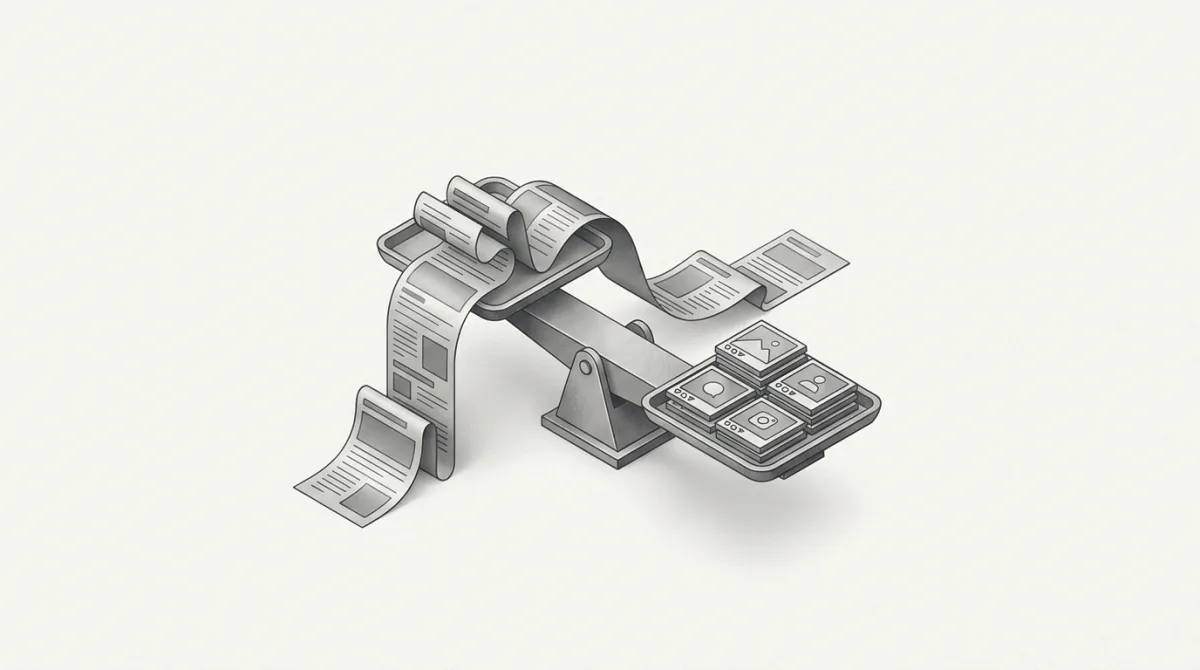
Si vous achetez des médias payants pour une marque DTC, vous avez observé le même graphique pendant des années : les CPM de Meta qui montent et vont vers la droite tandis que votre attribution devient floue. La question est donc légitime. En 2026, est-ce encore sensé de consacrer la majeure partie de votre budget à Facebook, ou la publicité native est-elle devenue un canal qui rivalise sérieusement pour les budgets DTC ?
Ceci n'est pas un article du type "le natif est l'astuce que Facebook ne veut pas que vous découvriez". Les deux canaux fonctionnent. Ils fonctionnent différemment, ils échouent différemment, et les marques qui gagnent les traitent comme un seul système au lieu de choisir un camp. Voici l'analyse du praticien sur les quatre éléments qui font réellement bouger le CAC : l'économie du clic, la résilience à la perte de signal iOS, le format créatif et l'intention d'achat. Les chiffres natifs proviennent de ce que nous observons en direct sur OpenAdLibrary, où l'index contient actuellement 589 036 créatifs natifs capturés provenant de 25 933 annonceurs sur 42 réseaux (index OpenAdLibrary, juin 2026).
La réponse courte#
Les native ads l'emportent sur le CPC brut et la résilience à la perte de signal iOS. Facebook conserve l'avantage sur la vitesse de test des créatifs et le retargeting d'audiences chaudes à forte intention. Aucun ne remplace l'autre pour une marque DTC sérieuse. La bonne stratégie est d'utiliser le natif pour une découverte de trafic froid, peu coûteuse et sans cookies, puis de réinjecter ces gagnants dans la machine de retargeting et de lookalikes de Facebook.
Ces deux canaux ne se disputent pas le même moment#
Adoptez le bon modèle mental avant de regarder un seul benchmark, car l'erreur DTC la plus coûteuse est de traiter le natif comme un "Facebook moins cher".
Facebook est un canal d'interruption. L'utilisateur est venu faire défiler son fil. Votre annonce doit interrompre ce scroll avec quelque chose d'assez fort pour arrêter le pouce. Le ciblage est basé sur l'identité : Meta sait qui est la personne et prédit qui va convertir.
Le natif est un canal de découverte. L'utilisateur lit un article, et votre annonce se trouve dans le widget de recommandations en dessous ou à côté, habillée pour correspondre au contenu éditorial qui l'entoure. Le ciblage est principalement contextuel : le sujet de la page, l'éditeur, la section, l'appareil, la zone géographique. L'utilisateur ne recherche pas et n'est pas profilé dans un segment d'acheteurs. On lui propose quelque chose d'adjacent à ce qu'il est déjà en train de lire. Si vous voulez comprendre en détail le fonctionnement de ces widgets, enchères et chaînes d'approvisionnement, notre guide complet sur la publicité native parcourt tout l'écosystème, et l'entrée du glossaire sur la publicité native vous donne la version en un paragraphe.
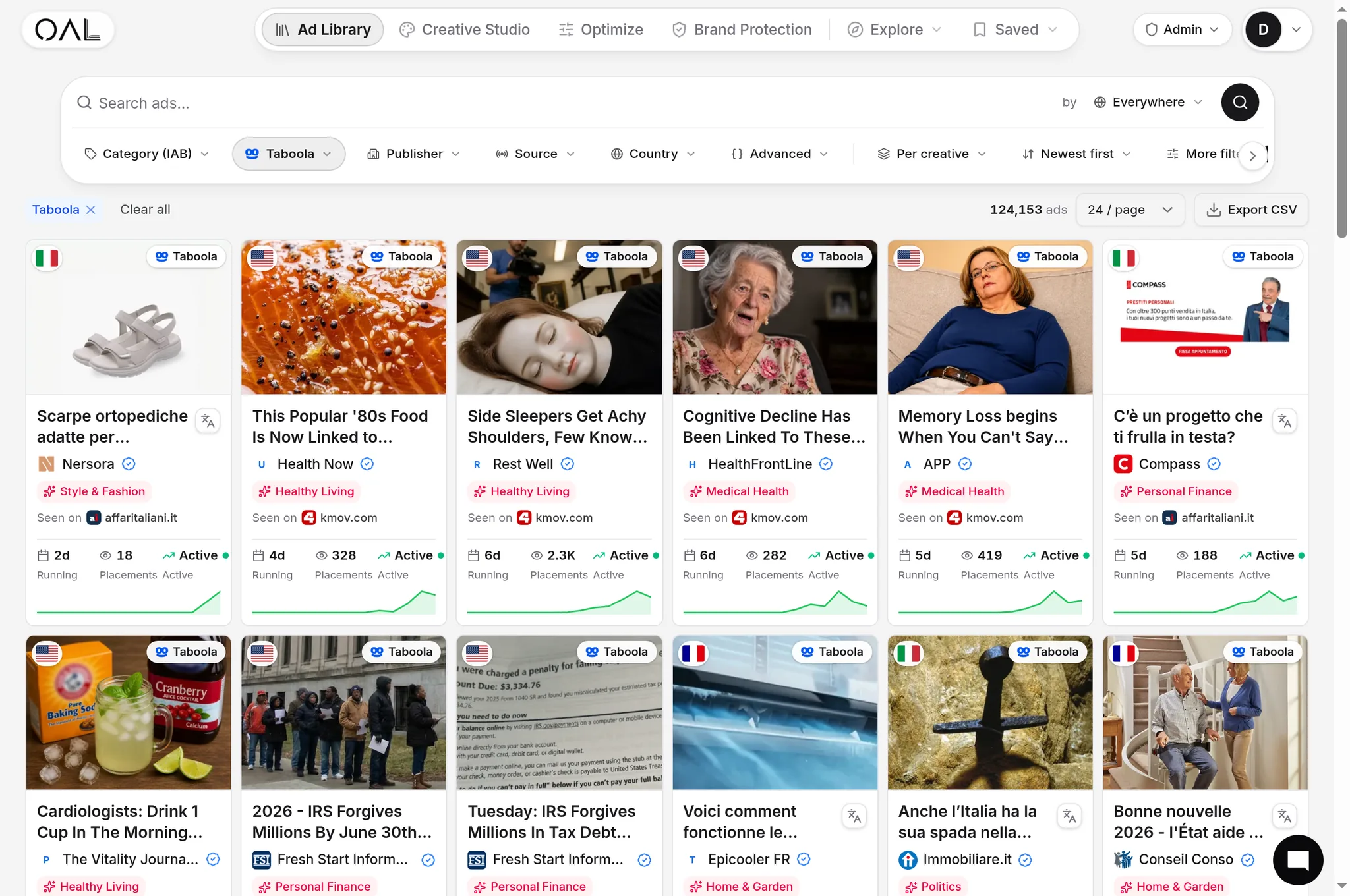
Vous pouvez voir la différence dans les créatifs eux-mêmes. En voici un en direct de notre index : une offre financière présentée comme un flash info, pas comme une annonce de marque.

Traitez le natif comme un moteur de découverte, pas comme un fil à rabais. Les marques qui perdent de l'argent sur le natif sont celles qui ont pris un créatif Facebook, l'ont pointé vers une audience widget froide et ont attendu des taux de conversion équivalents à ceux du fil. Le décalage est toute l'histoire.
Round 1 : CPC et économie du clic#
C'est là que le natif a forgé sa réputation, et le calcul tient toujours.
| Métrique (2026, États-Unis) | Réseaux natifs | Facebook / Meta |
|---|---|---|
| CPC typique | ~0,10 $ à ~0,90 $ | ~0,70 $ (trafic), ~1,92 $ (génération de leads) |
| CPM typique | chiffres bas à basse dizaine | ~16,80 $, en hausse d'environ 20 % sur un an |
| Base de ciblage | contextuelle (page, section, zone géo, appareil) | identité / comportementale |
| Modèle de CTR | plus faible, adapté au contenu | plus élevé, natif au fil |
Sur Taboola, Outbrain, MGID et Revcontent, les CPC natifs se situent généralement entre environ 0,10 $ et 0,90 $ selon l'appareil, la zone géographique et le secteur. Les emplacements premium desktop sur les éditeurs de premier rang sont plus chers ; l'inventaire mobile et à large audience se situe au plancher. Facebook affiche en moyenne environ 0,70 $ CPC pour les objectifs de trafic et plus proche de 1,92 $ pour la génération de leads en 2026, avec des CPM autour de 16,80 $ et en hausse d'environ 20 % d'une année sur l'autre à mesure que l'enchère se densifie.
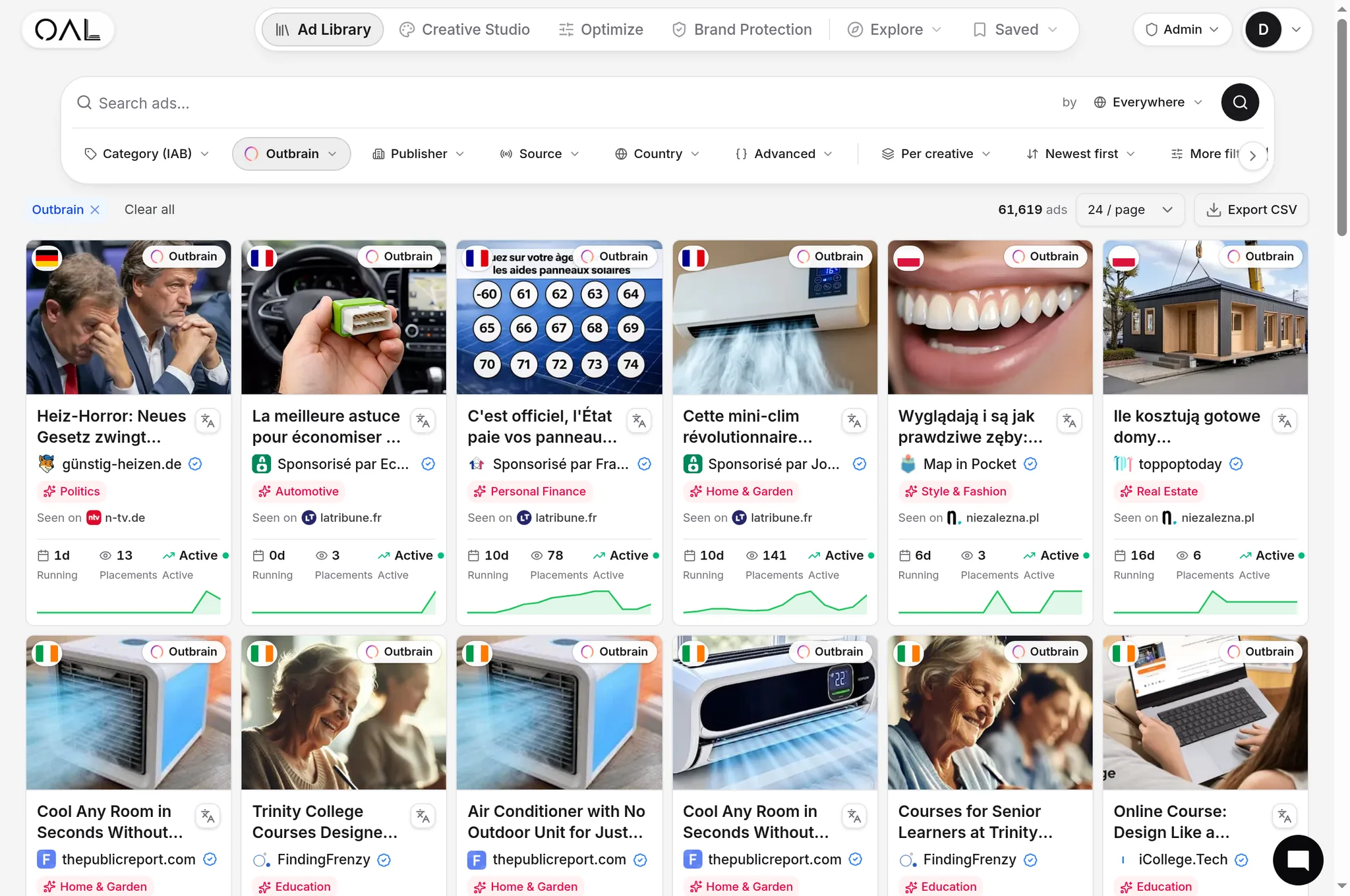
Le volume raconte la même histoire du côté de l'offre. Taboola représente à lui seul 157 727 des créatifs dans notre index et Outbrain 84 252 autres (index OpenAdLibrary, juin 2026). C'est un marché profond et liquide, pas une niche où il faut gratter pour trouver de l'inventaire.
Maintenant, la mise en garde honnête : des clics moins chers ne signifient pas automatiquement des conversions moins chères. Le trafic natif est plus froid et se situe en milieu de tunnel de conversion, donc un clic natif à 0,20 $ et un clic Facebook à 0,70 $ peuvent aboutir au même CPA si votre expérience post-clic (pre-lander, advertorial ou page produit) ne fait pas le travail de persuasion que le fil aurait fait. L'avantage CPC est réel. Vous n'en bénéficiez que lorsque le parcours post-clic (pre-lander, advertorial ou page produit) porte le poids. L'économie par plateforme diffère également, alors lisez comment fonctionnent les annonces Taboola et comment fonctionnent les native ads MGID pour connaître les planchers d'enchère et les réalités de dépense minimum sur chaque réseau.
Round 2 : Résilience à la perte de signal iOS#
C'est la dimension qui a discrètement restructuré le mix média DTC, et c'est là que le natif a un avantage structurel.
La fonctionnalité App Tracking Transparency d'Apple a supprimé le signal déterministe au niveau utilisateur sur lequel l'optimisation et le reporting de Meta étaient construits. L'industrie estime que 20 % à 30 % des conversions ne sont pas observées sur l'inventaire dont le signal est dégradé, ce qui gonfle le CPA apparent et cache les conversions bon marché que Meta ne peut plus voir. Appelez cela une taxe invisible sur chaque compte fortement exposé à iOS. Vous la ressentez comme un reporting auquel vous ne faites plus entièrement confiance et un algorithme optimisant sur des données partielles.
Le natif l'a à peine ressenti, car il ne dépendait pas de l'IDFA en premier lieu. Son ciblage et ses enchères fonctionnent sur des signaux contextuels et de first-party de l'éditeur : le sujet de la page, l'identité de l'éditeur, l'appareil et la zone géographique. Rien de tout cela n'a été touché par les changements de confidentialité d'Apple. En 2026, plus des trois quarts du trafic mondial se trouve dans des environnements où les cookies tiers sont limités ou absents, et le natif contextuel est l'un des rares canaux de performance qui s'en aperçoit à peine. Pour une marque DTC dont l'audience penche vers iPhone, cette résilience se traduit par des performances plus stables et des calculs d'attribution plus propres.
- Facebook : l'optimisation et le reporting se dégradent avec les refus iOS ; les conversions modélisées comblent les lacunes mais ajoutent de l'incertitude.
- Natifs : l'enchère contextuelle est sans cookies par conception ; les performances et le reporting restent relativement stables.
- Conséquence pratique : le natif est une couverture contre les chocs réglementaires et des plateformes, pas seulement un clic moins cher.
C'est aussi pourquoi la publicité native programmatique continue d'absorber des budgets. L'enchère de native ads se conclut sur des signaux qui survivent aux changements de confidentialité.
Round 3 : Format créatif et ce sur quoi on clique réellement#
Le créatif qui gagne sur Facebook meurt généralement sur le natif, et vice-versa. Cela piège plus d'équipes DTC que le ciblage ne le fera jamais.
Facebook récompense le mouvement qui arrête le scroll : vidéo UGC aux plans rapides, visuel statique audacieux, un accroche dans la première seconde, un branding qui s'annonce. L'annonce est censée ressembler à une publicité assez bonne pour arrêter un défilement.
Le natif récompense l'instinct inverse. Le créatif, une image plus un titre à l'intérieur d'un widget de native ad, mérite le clic en se fondant avec les articles autour. Une imagerie éditoriale, un titre suscitant la curiosité, la grammaire visuelle du journalisme plutôt que de la publicité. Cela ressemble plus à une vignette d'article recommandé qu'à une annonce dans un fil. Déposez une vidéo Facebook polie directement sur un emplacement natif et elle crie "pub" dans un contexte éditorial, et le CTR chute vertigineusement.
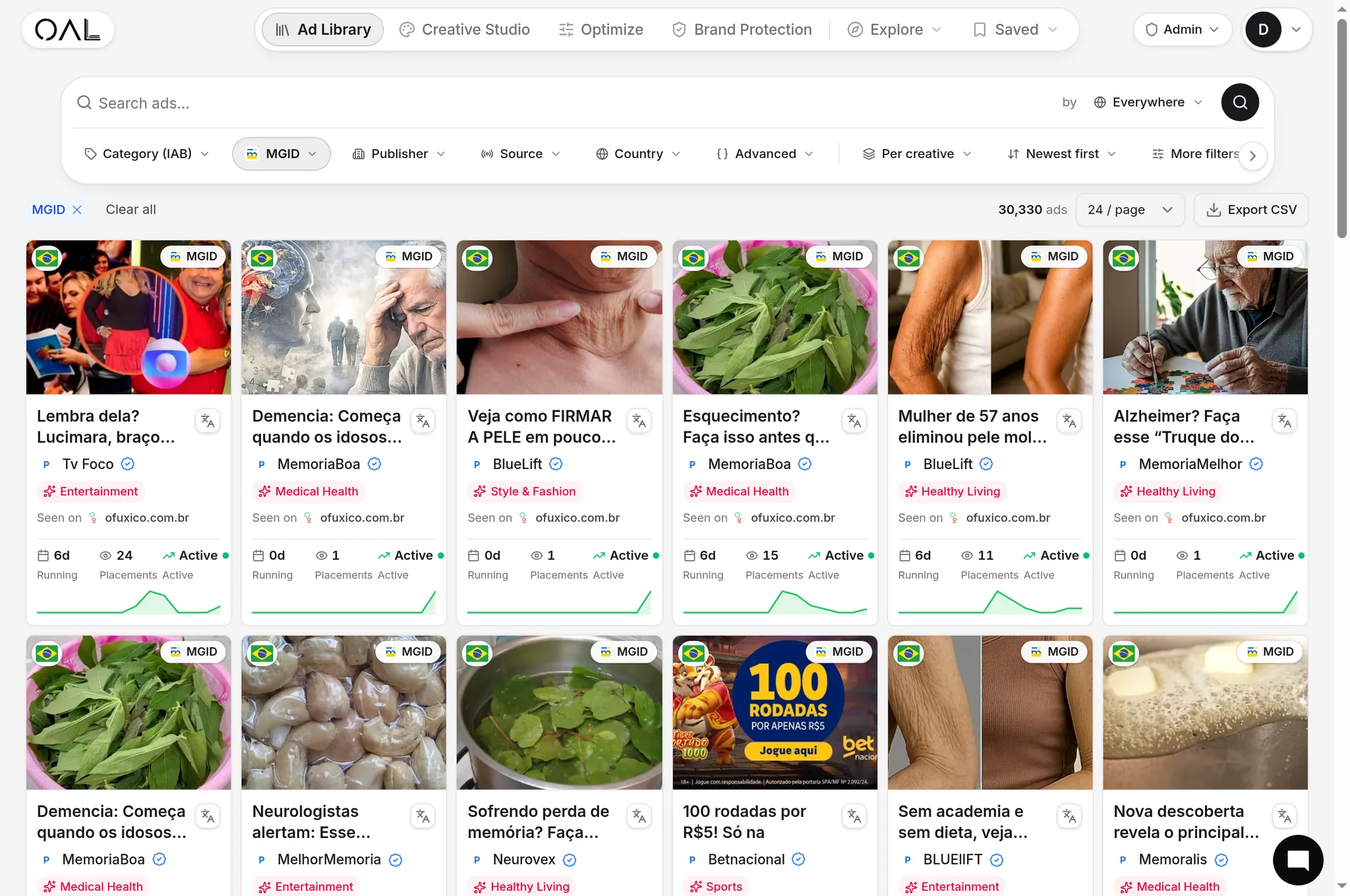
Les deux annonces ci-dessous sont des natifs classiques. Les deux ressemblent à du journalisme de service. Aucune ne survivrait telle quelle dans un fil Facebook.


La conclusion pour la production est concrète : vous avez besoin d'une piste créative séparée pour le natif, construite autour du test de titres et d'imagerie éditoriale, pas d'un remontage de vos assets sociaux. C'est exactement là que l'intelligence concurrentielle prouve sa valeur. Au lieu de deviner quels angles fonctionnent sur le natif, vous étudiez les créatifs que les concurrents diffusent actuellement et, plus important encore, ceux qui perdurent.
Round 4 : Intention, position dans le tunnel et où chaque canal a sa place#
Cartographiez les canaux aux rôles dans le tunnel et la question "qui gagne" disparaît :
- Découverte froide en haut de tunnel. Le natif gagne. Une portée peu coûteuse et sans cookies auprès de personnes consommant du contenu pertinent. C'est là que vous trouvez de nouvelles audiences que l'algorithme de Facebook a déjà saturées pour vous.
- Éducation en milieu de tunnel. Fort pour le natif via les advertorials et les parcours de pre-lander ; fort pour Facebook via le séquençage vidéo. Match nul approximatif, décidé par votre créatif.
- Retargeting chaud et lookalikes. Facebook gagne nettement. Rien ne rivalise avec la capacité de Meta à réengager les visiteurs du site et à cloner les convertisseurs.
L'architecture DTC gagnante en 2026 est une boucle, pas une bifurcation. Générez du volume froid peu coûteux via le natif, capturez et pixellisez ces visiteurs, puis laissez Facebook les convertir via le retargeting et les étendre via les lookalikes. Le natif remplit le haut du tunnel dont les CPM croissants vous ont exclu. Facebook convertit l'audience chaude créée par le natif.
Comment exécuter le natif intelligemment (où OpenAdLibrary intervient)#
Le piège du natif a toujours été l'opacité. La Bibliothèque des annonces de Facebook vous sert les annonces sociales concurrentes sur un plateau ; le natif était une boîte noire, ce qui explique exactement pourquoi tant d'équipes DTC sont restées sur Meta par simple manque de visibilité. Cet écart est désormais comblable.
Un outil d'espionnage de native ads vous permet de voir le marché natif comme vous voyez déjà le marché social. OpenAdLibrary capture les placements natifs publics en direct sur Taboola, Outbrain, MGID, Revcontent, Teads, Yahoo et MSN, conserve l'image créative réelle en pleine qualité, classe la chaîne d'approvisionnement ad-tech derrière chaque placement et retrace le clic jusqu'à la page de destination ou au pre-lander de l'annonceur, le tout sans cliquer sur des annonces en direct. L'index contient désormais 5,4 millions d'observations d'annonces et 926 259 captures de pages de destination (index OpenAdLibrary, juin 2026), ce qui est la matière première qui transforme une intuition sur un concurrent en preuve.
Le signal qui compte le plus est la longévité et la diffusion. Une annonce diffusée pendant des semaines sur de nombreux éditeurs est presque certainement rentable, car personne ne brûle du budget sur un perdant aussi longtemps. Dans notre index actuel, les créatifs observés en continu ayant tourné le plus longtemps ont tenu environ 28 jours chacun. Un exemple : un teaser finance de SmartAsset sur Outbrain, "Ask a Pro: How Can I Avoid Paying Taxes on IRA Withdrawals?", qui est resté en direct sur plusieurs éditeurs pendant 28 jours consécutifs d'observation.

Une note rapide d'honnêteté sur les benchmarks : ce chiffre de 28 jours est la durée réelle d'observation continue dans notre index, pas le "gagnant de 90 jours" que vous entendrez citer dans les cercles natifs. La règle empirique des 90 jours est un savoir général de l'industrie. Les 28 jours sont ce que nous pouvons réellement pointer dans les données.
Les secteurs racontent leur propre histoire sur l'endroit où l'argent natif se concentre. La finance mène notre index global avec 17 232 créatifs, suivie par l'assurance (15 629) et la santé (14 895), toutes des catégories classiques à LTV élevé et marge élevée où un clic froid peu coûteux peut encore être rentable (index OpenAdLibrary, juin 2026). Si vous vendez dans ces espaces, le natif n'est pas une option, c'est là que vos concurrents sont déjà présents.
À partir de là, Creative Studio vous aide à créer des créatifs natifs natifs au lieu de recycler des assets sociaux, Copy DNA décompose les modèles de titres et d'offres qui reviennent constamment parmi les gagnants, et Optimize plus l'API et le MCP vous permettent d'intégrer tout cela dans votre propre workflow. C'est ouvert et peu coûteux : 29,99 $/mois, avec un niveau gratuit pour parcourir 200 annonces et sans carte bancaire requise, contre les 80 $ à 400 $/mois des outils d'espionnage natifs hérités.
Pour le contexte au niveau plateforme derrière les réseaux ci-dessus, consultez nos guides sur comment fonctionne Outbrain maintenant qu'il fait partie de Teads, qu'est-ce que Teads après la fusion, ainsi que les entrées du glossaire sur les réseaux de native ads et Yahoo Native.
Le verdict pour 2026#
Il n'y a pas de vainqueur unique, et tout article qui en couronne un vous vend quelque chose. Le natif gagne sur le CPC et la résilience à l'ère iOS. Facebook gagne sur la vitesse de test des créatifs et la conversion d'audiences chaudes. Les marques DTC qui amplifient leur avantage sur le CAC en 2026 utilisent le natif pour la découverte froide sans cookies, Facebook pour le retargeting et les lookalikes, et une piste créative séparée pour chacun, en utilisant l'intelligence concurrentielle pour éviter les conjectures coûteuses côté natif.
Si votre mix média est encore à 90 % Meta parce que le natif semblait être une boîte noire, la boîte est ouverte. Commencez gratuitement, parcourez 200 native ads en direct sans carte, et voyez par vous-mêmes quels créatifs, offres et annonceurs gagnent discrètement sur le canal que vos concurrents ne surveillent pas.