

Ad Creative & Funnels
Track Competitor Creative Iterations to Reverse-Engineer Their Tests
One look at a competitor's ad is a photograph. Watching it change over weeks is a video, and the video is what actually shows you their test results.
One look at a competitor's ad is a photograph. Watching it change over weeks is a video, and the video is what actually shows you their test results.
A UGC-style native ad has to earn its keep differently than a social one. Here's where the format actually wins, where it backfires, and how to test it fairly.
Optimization has a ceiling; fresh creative supply doesn't. Here's what a creative volume strategy actually looks like, and how much volume is enough.

Judging a creative test too early is the most expensive mistake in native media buying. Here's how to size your testing budget around conversions, not guesswork.
There's no magic number, but live captures show winning native headlines cluster in a fairly tight band. Here's the data and the rules worth following.

AI-generated ad creative refers to ad images, video, or copy produced using generative AI models instead of a traditional designer, photographer, or copywriter.

Ten standout native ads from this month's live index — picked by longevity, not taste — with the headline patterns behind each one and how to run the same analysis yourself.
AdPlexity is the premium incumbent of ad spy tools — six products, carrier-level data, deep history, and a $249/month native tier with no free trial. A competing ad library reviews it honestly, with every price verified in July 2026.
Every Anstrex review in the SERP is affiliate-monetized. This one is written by a competitor instead — bias disclosed up front, pricing verified July 2026, and full credit given to what Anstrex genuinely does better than us.
AdPlexity Native costs $249/month with no free trial. A competitor compares the six real alternatives — Anstrex, SpyOver, BigSpy, Adbeat, AdClarity, and OpenAdLibrary — with verified July 2026 pricing and an honest account of what AdPlexity still does best.
The 'anstrex alternatives' SERP is coupon sites and G2 clones. Here's an honest comparison from a competitor: seven alternatives judged on price, native coverage, database size, free tiers and API access, with every price verified in July 2026.
The image and headline patterns that actually move click-through on Taboola, Outbrain and the rest of the native feed, pulled from the 589,000+ live creatives we've captured and sorted by the verticals where each one wins.

Most ecommerce ads fail at the angle, not the artwork, so here's a practical library of the hooks that convert on native traffic and a simple way to tell a proven angle from a hopeful guess.
Nutra is the loudest, most heavily policed vertical on native, and this is how its winning offers, angles, networks, and click destinations actually work in 2026, shown through real captured creatives.
Most "best vertical" lists are opinion, so we ranked native-ad verticals using three things you can actually see in live ad data: advertiser density, creative volume, and how long ads keep running.

Native networks are where advertisers test products first, so reading new entrants, creative ramps, and persistent offers there spots winners weeks before they saturate the Meta libraries everyone else watches.

We read the public signals behind 589,000+ live native creatives to show which hooks, images and headline structures actually survive, and how to run the same pattern analysis on real running ads instead of guessing.

Twelve native ad headline formulas, each matched to a real ad running right now across Taboola, Outbrain and the Microsoft Audience Network, so you can see the structure work before you swipe it.
Hook, angle, and claim get used interchangeably and it quietly wrecks your tests; here's the creative ladder that separates them, why the angle is the unit that scales, and how to read one advertiser running a single angle across a stack of hooks in live native-ad data.

A repeatable scoring rubric for hook, angle, proof, format and CTA, applied to real native ads we captured this month, so you copy the method instead of the creative.
A repeatable five-step method for tearing down native ad creatives, from hook and angle to advertorial, using real captured ads and longevity data instead of guesswork.
You can't see another affiliate's ROI, but you can see what they keep paying to run; here is how to turn ad longevity and creative saturation into a repeatable offer-validation checklist.

Winning products leave a trail in native ad data: ads that keep running for weeks, multiple affiliates piling onto one offer, and creatives that get refreshed instead of killed. Here is how to read those signals and trace the click to the offer page.
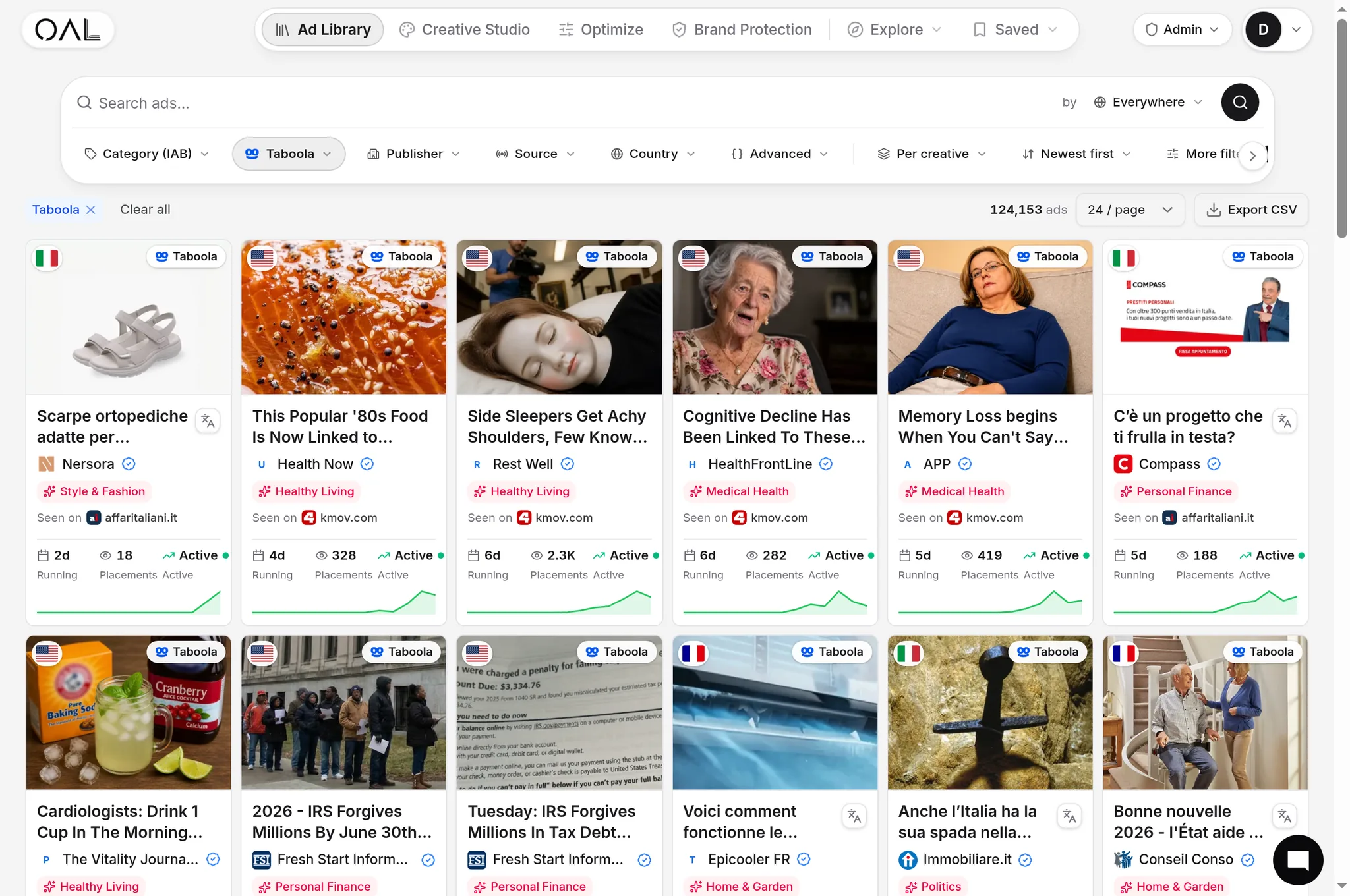
Taboola has no public ad library, so here's how to reconstruct one: filter live captures by network, vertical and geo, rank advertisers by volume and days live, then pull the full creative and the click-to-landing trace.
Published CPC ranges for Taboola, Teads, MGID, and Revcontent only tell half the story; here is how to read live advertiser density and longevity to know what a click is really worth before you fund a test.
A practitioner's breakdown of what native advertising really costs in 2026: minimum deposits, CPC ranges and the test budgets that actually decide whether you win, grounded in live ad data from Taboola, Teads, MGID and Revcontent.
Taboola is the scale incumbent and Revcontent the lower-floor challenger; we compare reach, entry cost, and the real advertiser mix on each using ads captured live (157,727 Taboola creatives vs 11,478 on Revcontent in our June 2026 index).
A media buyer's honest comparison of native ads and Facebook ads for DTC in 2026, covering CPC, iOS signal loss, creative, and intent, backed by the live native volume OpenAdLibrary tracks across Taboola, Outbrain, MGID, and Revcontent.

Watching the ads your competitors run in public is legal, and regulators are forcing platforms to make those ads even easier to see; the legal line is copying the creative, not researching it.

A watchlist is only useful if it tiers competitors by threat and feeds continuous monitoring, so here is how to build one and wire every advertiser into native-ad tracking and alerts.

Most teams check competitor ads once a quarter and call it research; a real intelligence workflow runs every week with a scoped watchlist, a fixed cadence, a creative scoring rubric, and a clean handoff into media buying.
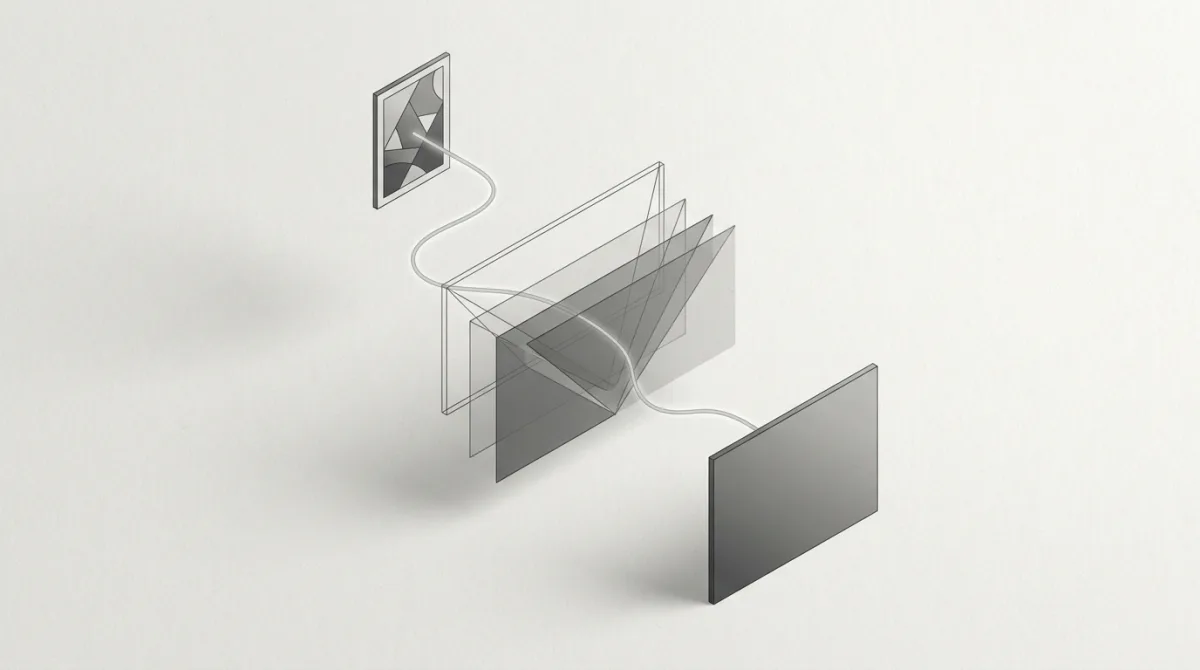
A native ad is just the doorway; here is how to walk the full chain behind it, from creative to SSP to click tracker to pre-lander to offer page, and read what each link reveals about a competitor's strategy.
A practitioner's walkthrough for finding the ads a competitor is actively running: search by brand or domain to surface live native creatives, the networks behind them, and the landing page each ad points to, plus exactly where Meta and TikTok go dark.
Most ad intelligence platforms look identical on a feature grid, so score them on what actually matters: freshness, coverage, auditable evidence, click-to-landing capture, and pricing.

A practitioner's head-to-head on AdPlexity, Anstrex, SpyOver and OpenAdLibrary, judged on price, network coverage, geos, landing-page capture, history and the supply-chain data each one actually exposes.
Most "free ad spy tools" are seven-day trials with a card form attached; here are seven that are genuinely free, including the only one that covers Taboola and Outbrain with click-traced landing-page evidence.
The best native ad spy tools don't screenshot pages; they read the same JSON feed the widget calls, store the full-quality creative, and trace the click to the landing page without ever spending an advertiser's budget. Here's exactly how.

"Free native ad spy tool" gets searched far more than it gets answered honestly, so here is what is genuinely free for researching Taboola, Outbrain, MGID and Revcontent ads, and exactly where the limits bite.
The pre-lander is the page between a native ad and the offer, and on cold traffic it does the persuasion the ad can't: here's how advertorial funnels work and how to reverse-engineer the ones that win.
An ad spy tool captures and archives competitors' live ads across networks so you can study their creatives, offers, and landing pages in one searchable database.