 English
 Español
 Português (Brasil)
 Français
 Deutsch
 Italiano
 Polski
 Svenska
 Türkçe
 Русский
 日本語
日本語 한국어
한국어 简体中文
简体中文 Tiếng Việt
 Bahasa Indonesia
 繁體中文
繁體中文 Čeština
 Dansk
Dansk Norsk (bokmål)
 Suomi
Suomi Ελληνικά
 Română
 Magyar
 Українська
 ไทย
ไทย हिन्दी
 العربية
 עברית
עבריתNative Ads vs Facebook Ads voor DTC: Welke Wint in 2026?
Een eerlijke vergelijking van een mediabureau tussen native ads en Facebook ads voor DTC in 2026, met aandacht voor CPC, iOS-signaalverlies, creatieven en intentie, ondersteund door het live native volume dat OpenAdLibrary volgt op Taboola, Outbrain, MGID en Revcontent.

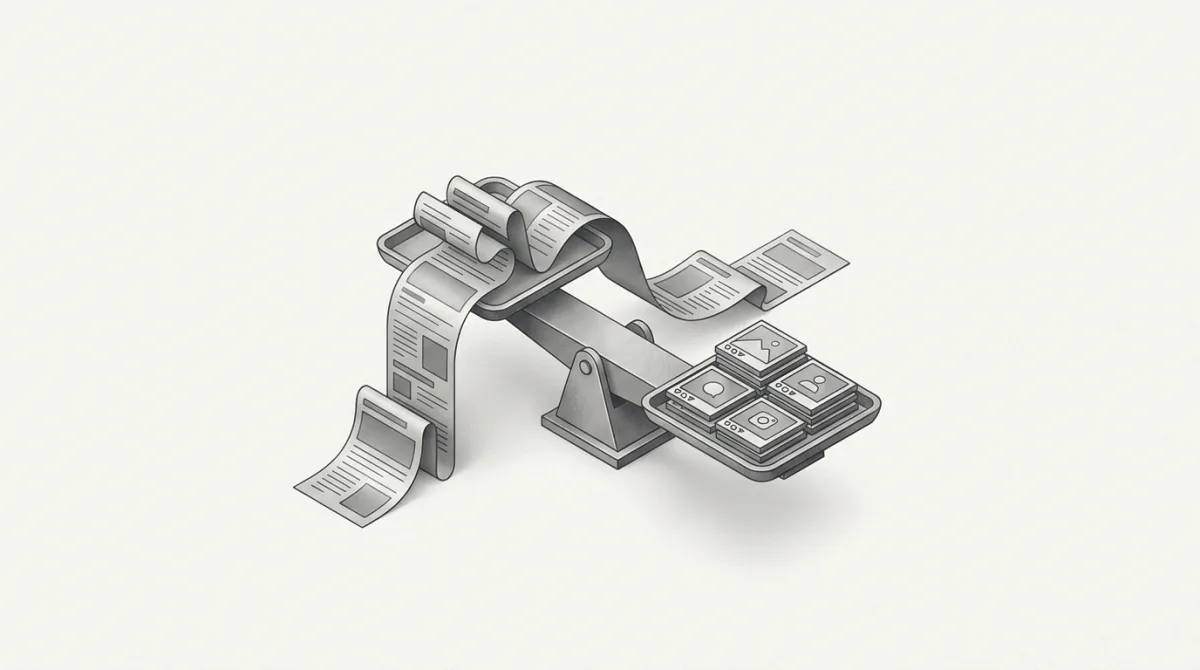
Als je betaalde media inkoopt voor een DTC-merk, heb je jarenlang dezelfde grafiek zien stijgen: Meta CPM's die omhoog en naar rechts gaan terwijl je attributie waziger wordt. De vraag is dus terecht. Maakt het in 2026 nog steeds zin om het grootste deel van je budget op Facebook te parkeren, of is native advertising uitgegroeid tot een kanaal dat echt concurreert om DTC-dollars?
Dit is geen stuk over 'native is de hack die Facebook niet wil dat je vindt'. Beide kanalen werken. Ze werken anders, ze falen anders, en de merken die winnen behandelen ze als één systeem in plaats van een kant te kiezen. Hier is de praktijkgerichte uitsplitsing over de vier zaken die CAC echt beïnvloeden: klik-economie, veerkracht bij iOS-signaalverlies, creatief formaat en koperintentie. De native cijfers komen van wat we live zien bij OpenAdLibrary, waar de index momenteel 589.036 vastgelegde native creatieven bevat van 25.933 adverteerders op 42 netwerken (OpenAdLibrary-index, juni 2026).
Het korte antwoord#
Native ads winnen op pure CPC en op veerkracht tegen iOS-signaalverlies. Facebook wint nog steeds op snelheid van creatieve tests en op retargeting van warme, hoog-intentie doelgroepen. Geen van beide vervangt de ander voor een serieus DTC-merk. De juiste zet is om native in te zetten voor goedkope, cookieless ontdekking van koud verkeer, en die winnaars vervolgens in te voeren in Facebook's retargeting- en lookalike-machinerie.
Deze twee kanalen vechten niet om hetzelfde moment#
Zorg dat je het mentale model goed hebt voordat je naar een enkele benchmark kijkt, want de duurste DTC-fout is native behandelen als 'goedkopere Facebook'.
Facebook is een interruptiekanaal. De gebruiker kwam om door zijn feed te scrollen. Je advertentie moet die scroll onderbreken met iets dat luid genoeg is om een duim te stoppen. De targeting is identiteitsgebaseerd: Meta weet wie de persoon is en voorspelt wie converteert.
Native is een ontdekkingskanaal. De gebruiker leest een artikel en je advertentie staat in de aanbevelingswidget eronder of ernaast, gekleed om aan te sluiten bij de redactionele inhoud eromheen. De targeting is vooral contextueel: het paginathema, de uitgever, de sectie, het apparaat, de regio. De gebruiker zoekt niet en wordt niet in een koperssegment geprofileerd. Ze krijgen iets aangereikt dat aansluit bij wat ze al lezen. Als je de volledige werking wilt begrijpen van hoe die widgets, veilingen en supply chains in elkaar passen, loopt onze complete gids voor native advertising door het hele ecosysteem, en het Native Advertising-glossariumitem geeft je de versie van één alinea.
Je ziet het verschil in de creatieven zelf. Hier is een live voorbeeld uit onze index: een financieel aanbod verpakt als een nieuwsflits, geen merkadvertentie.

Behandel native als een ontdekkingsmachine, niet als een kortingsfeed. De merken die geld verliezen op native zijn degenen die een Facebook-creatief pakten, het op een koude widget-doelgroep richtten en feed-niveau conversiepercentages verwachtten. Die mismatch is het hele verhaal.
Ronde 1: CPC en klik-economie#
Hier heeft native zijn reputatie opgebouwd, en de rekensom klopt nog steeds.
| Metriek (2026, VS) | Native netwerken | Facebook / Meta |
|---|---|---|
| Typische CPC | ~$0,10 tot $0,90 | ~$0,70 (verkeer), ~$1,92 (lead gen) |
| Typische CPM | lage eencijferige tot lage tientallen | ~$16,80, ~20% stijging YoY |
| Targetingbasis | contextueel (pagina, sectie, regio, apparaat) | identiteit / gedrag |
| CTR-patroon | lager, content-afgestemd | hoger, feed-natief |
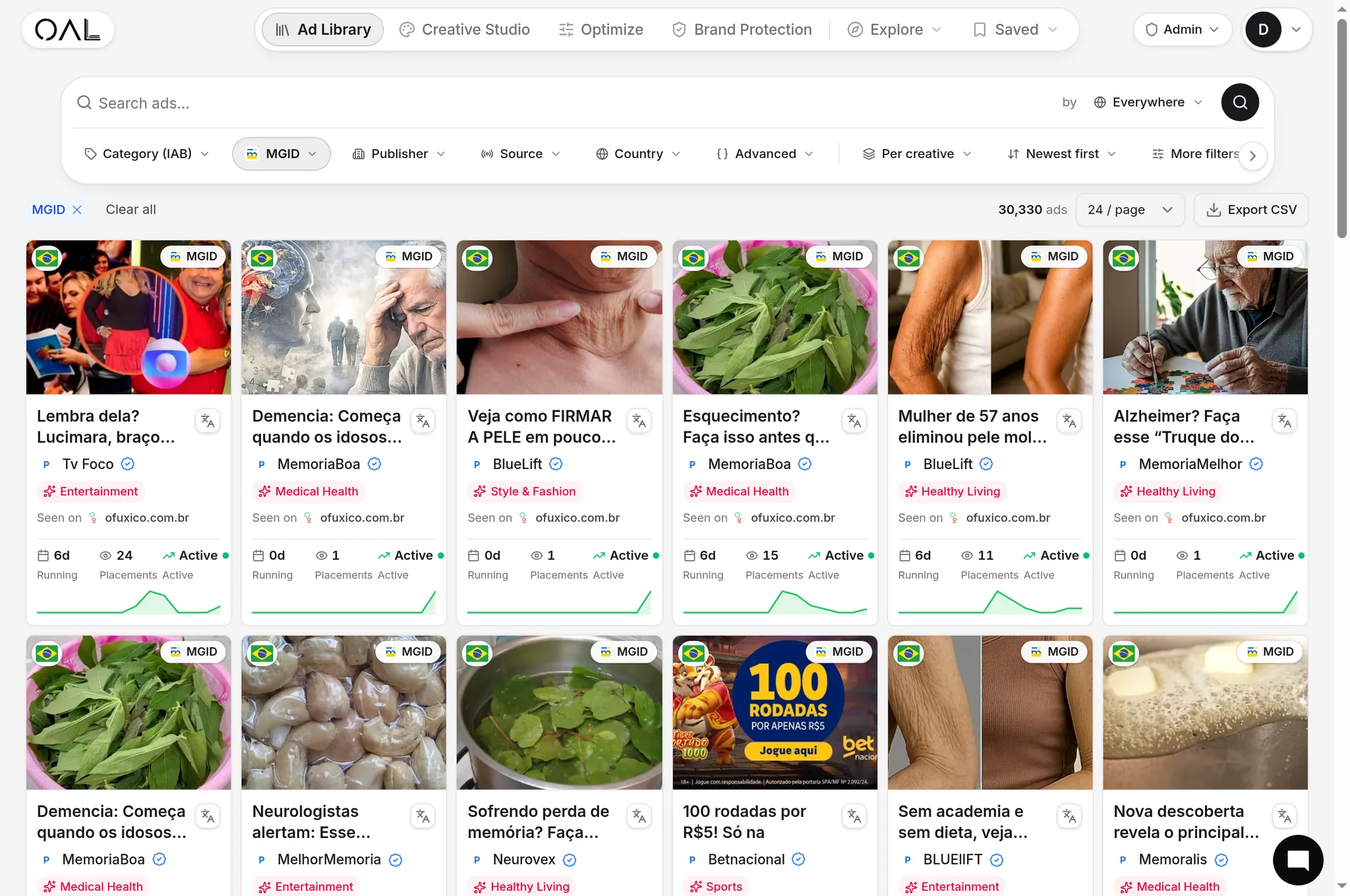
Op Taboola, Outbrain, MGID en Revcontent liggen native CPC's doorgaans tussen ongeveer $0,10 en $0,90, afhankelijk van apparaat, regio en branche. Premium plaatsingen op desktop bij tier-1 uitgevers zijn hoger; mobiel en breed bereik-inventory zitten op de bodem. Facebook heeft gemiddeld ongeveer $0,70 CPC voor verkeersdoelen en dichter bij $1,92 voor leadgeneratie in 2026, met CPM's rond $16,80 en stijgend met ongeveer 20% jaar op jaar naarmate de veiling voller wordt.
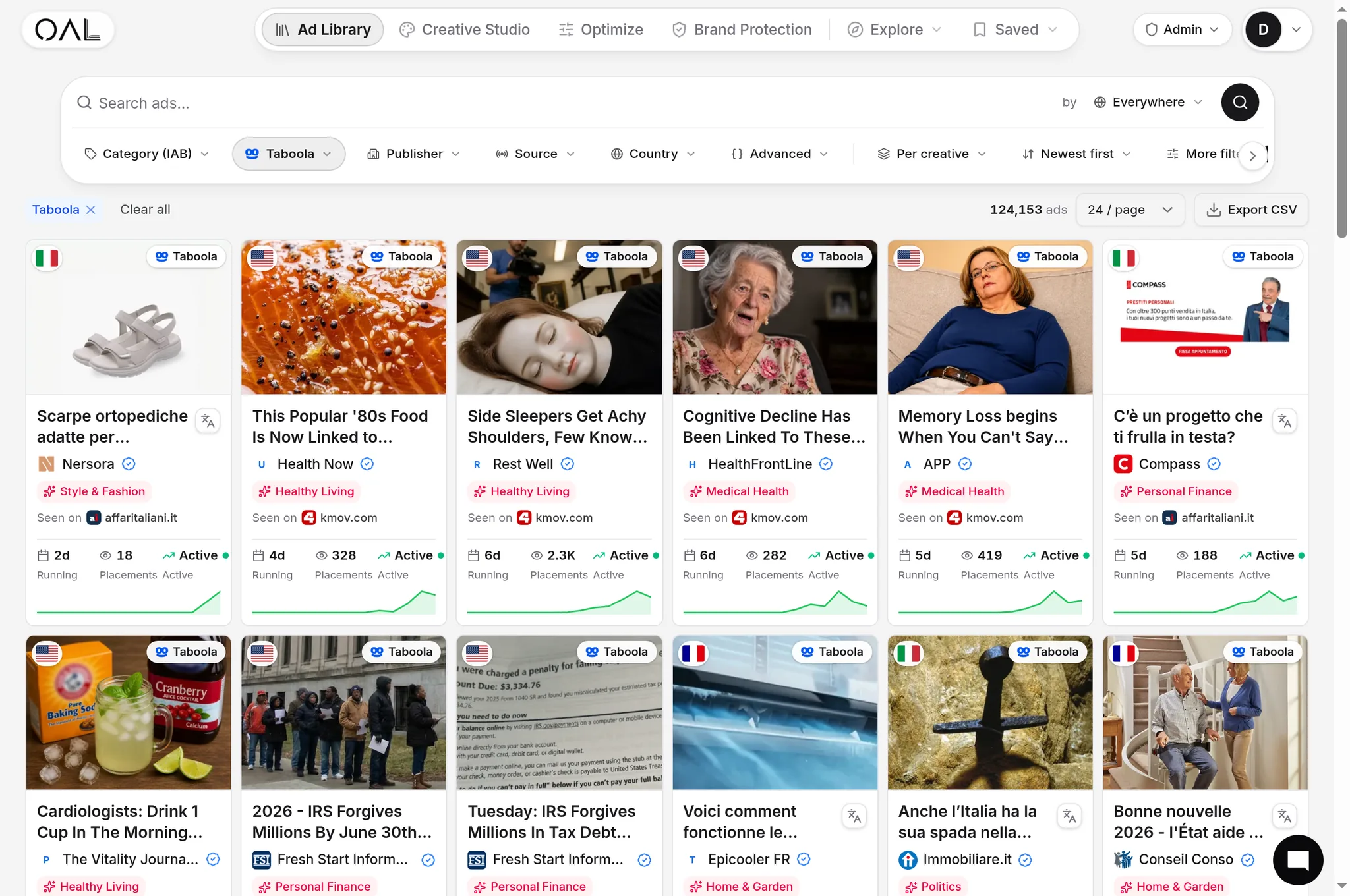
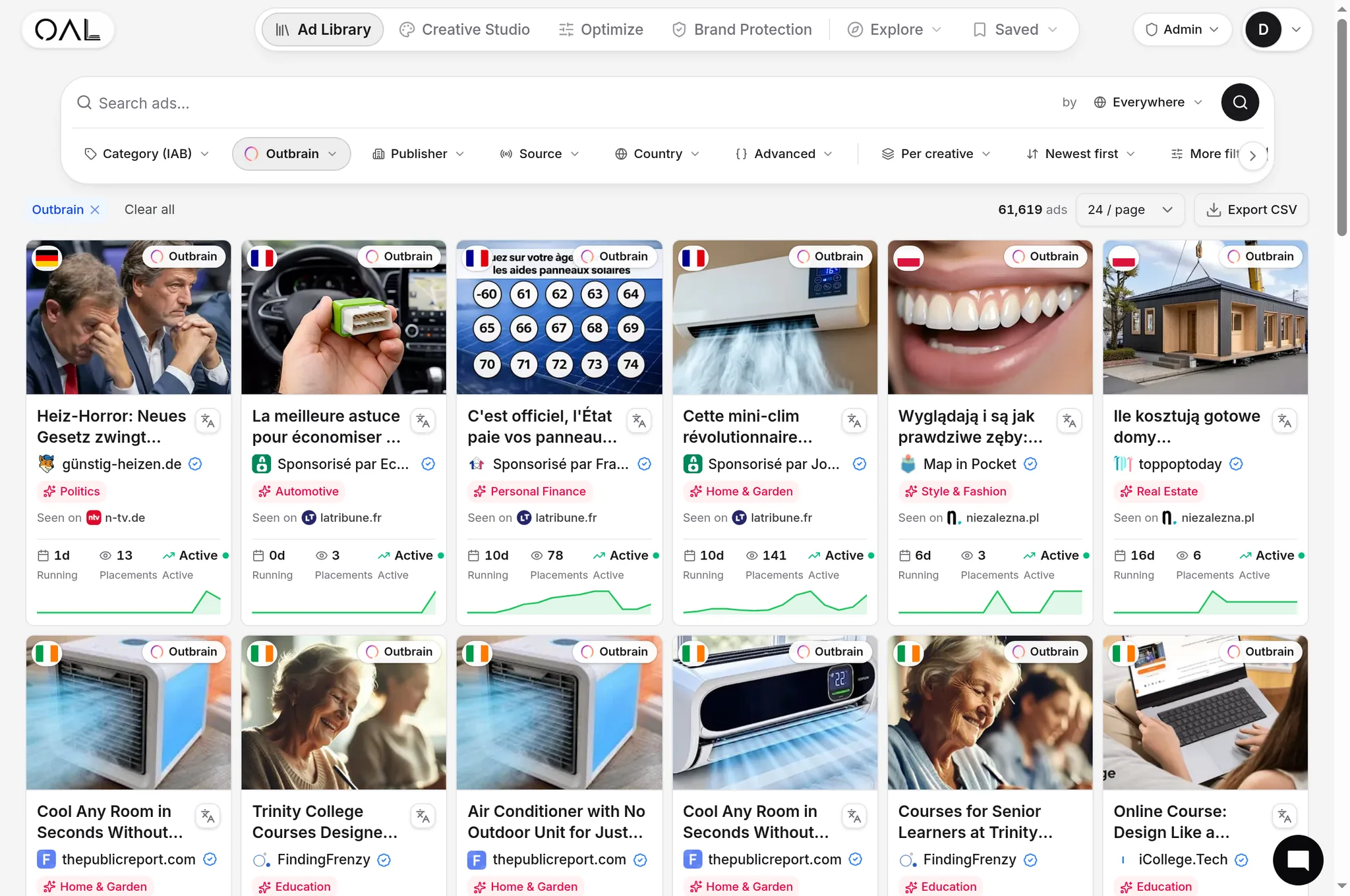
Volume vertelt hetzelfde verhaal vanuit de aanbodkant. Taboola alleen al vertegenwoordigt 157.727 van de creatieven in onze index en Outbrain nog eens 84.252 (OpenAdLibrary-index, juni 2026). Dat is een diepe, liquide markt, geen niche waar je naar inventory moet schrapen.
Nu de eerlijke waarschuwing: goedkopere klikken zijn niet automatisch goedkopere conversies. Native-verkeer is kouder en zit midden in de funnel, dus een $0,20 native klik en een $0,70 Facebook klik kunnen op dezelfde CPA uitkomen als je native landingservaring niet het overtuigingswerk doet dat de feed anders zou hebben gedaan. Het CPC-voordeel is reëel. Je profiteert er alleen van wanneer de post-click flow (pre-lander, advertorial of productpagina) het zware werk doet. De per-platform economie verschilt ook, dus lees hoe Taboola ads werken en hoe MGID native ads werken voor de biedvloeren en minimum-uitgaven realiteiten op elk platform.
Ronde 2: Veerkracht bij iOS-signaalverlies#
Dit is de dimensie die de DTC-mediamix stilletjes heeft herschreven, en het is waar native een structureel voordeel heeft.
Apple's App Tracking Transparency ontnam het deterministische gebruikersspecifieke signaal waarop Meta's optimalisatie en rapportage waren gebouwd. De industrie schat dat 20% tot 30% van de conversies onopgemerkt blijft op signaal-gedegradeerde inventory, wat de ogenschijnlijke CPA opdrijft en de goedkope conversies verbergt die Meta niet meer kan zien. Noem het een onzichtbare belasting op elk iOS-zwaar account. Je voelt het als rapportage waar je niet meer volledig op vertrouwt en een algoritme dat optimaliseert op gedeeltelijke data.
Native merkte er nauwelijks iets van, omdat het nooit op de IDFA heeft geleund. De targeting en biedingen draaien op contextuele en first-party uitgeverssignalen: waar de pagina over gaat, wie de uitgever is, het apparaat en de regio. Geen van die zaken werd geraakt door Apple's privacywijzigingen. Tegen 2026 leeft meer dan driekwart van het wereldwijde verkeer in omgevingen waar third-party cookies beperkt of verdwenen zijn, en contextueel native is een van de weinige performancekanalen die het nauwelijks merkt. Voor een DTC-merk waarvan het publiek naar iPhone neigt, vertaalt die veerkracht zich in stabielere prestaties en schonere attributieberekeningen.
- Facebook: optimalisatie en rapportage degraderen met iOS-opt-outs; gemodelleerde conversies vullen de gaten op maar voegen onzekerheid toe.
- Native: contextueel bieden is cookieless by design; prestaties en rapportage blijven relatief stabiel.
- Praktisch gevolg: native is een verzekering tegen platform- en regelgevingsschokken, niet alleen een goedkopere klik.
Dit is ook de reden waarom programmatic native advertising budget blijft aantrekken. De native ad-veiling werkt op signalen die privacywijzigingen overleven.
Ronde 3: Creatief formaat en wat er daadwerkelijk wordt aangeklikt#
Het creatief dat wint op Facebook sterft meestal op native, en vice versa. Dit brengt meer DTC-teams in de problemen dan de targeting ooit doet.
Facebook beloont aandacht trekkende beweging: snel gemonteerde UGC-video, gedurfde statische beelden, een hook in de eerste seconde, branding die zichzelf aankondigt. De advertentie moet eruitzien als een advertentie die goed genoeg is om een scroll te stoppen.
Native beloont het tegenovergestelde instinct. Het creatief, een afbeelding plus een kop in een native ad-widget, verdient de klik door te mengen met de artikelen eromheen. Redactioneel beeldmateriaal, een op nieuwsgierigheid gebaseerde kop, de visuele grammatica van journalistiek in plaats van reclame. Het lijkt meer op een miniatuur van een aanbevolen artikel dan op een feed-advertentie. Plaats een gepolijste Facebook-video rechtstreeks op een native plaatsing en het schreeuwt 'advertentie' in een contentcontext, en de CTR stort in.
De twee advertenties hieronder zijn schoolvoorbeelden van native. Beide zien eruit als servicejournalistiek. Geen van beide zou onveranderd overleven in een Facebook-feed.


De conclusie voor productie is concreet: je hebt een apart creatief spoor nodig voor native, gebouwd rond kop-testen en redactioneel beeldmateriaal, niet een hermonte van je sociale assets. Dit is precies waar concurrentie-informatie zijn waarde bewijst. In plaats van te gokken welke invalshoeken aanslaan op native, bestudeer je de creatieven die concurrenten nu draaien en, nog belangrijker, welke blijven hangen.
Ronde 4: Intentie, funnelpositie en waar elk kanaal thuishoort#
Wanneer je de kanalen aan funnel-taken koppelt, lost de vraag 'welke wint' zich op:
- Koude top-of-funnel ontdekking. Native wint. Goedkoop, cookieless bereik bij mensen die relevante content consumeren. Hier vind je nieuwe doelgroepen die Facebook's algoritme voor jou al heeft verzadigd.
- Midden-funnel educatie. Sterk voor native via advertorial en pre-lander flows; sterk voor Facebook via videosequenties. Ongeveer gelijk, bepaald door je creatief.
- Warme retargeting en lookalikes. Facebook wint overtuigend. Niets evenaart Meta's vermogen om sitebezoekers opnieuw te engageren en converters te klonen.
De winnende DTC-architectuur in 2026 is een lus, geen splitsing. Stuur goedkoop koud volume via native, vang die bezoekers op en pixel ze, en laat Facebook ze vervolgens afsluiten met retargeting en uitbreiden met lookalikes. Native vult de top van de funnel die stijgende CPM's voor jou onbetaalbaar hebben gemaakt. Facebook converteert het warme publiek dat native heeft gecreëerd.
Hoe je native slim uitvoert (waar OpenAdLibrary in past)#
De valkuil van native is altijd ondoorzichtigheid geweest. Facebook's Ad Library geeft je concurrenten sociale advertenties op een presenteerblaadje; native was een black box, wat precies de reden is waarom zoveel DTC-teams puur uit zichtbaarheid bij Meta bleven. Die kloos is nu te overbruggen.
Een native ad spy-tool laat je de native markt zien zoals je de sociale al ziet. OpenAdLibrary legt live openbare native plaatsingen vast op Taboola, Outbrain, MGID, Revcontent, Teads, Yahoo en MSN, bewaart het echte creatieve beeld in volledige kwaliteit, classificeert de ad-tech supply chain achter elke plaatsing en traceert de klik door naar de landingspagina of pre-lander van de adverteerder, allemaal zonder op live advertenties te klikken. De index bevat nu 5,4 miljoen advertentie-observaties en 926.259 landingspagina-captures (OpenAdLibrary-index, juni 2026), wat de grondstof is die een vermoeden over een concurrent in bewijs verandert.
Het signaal dat het meest telt is langdurigheid en spreiding. Een advertentie die wekenlang op veel uitgevers draait, is vrijwel zeker winstgevend, omdat niemand zo lang budget verbrandt aan een verliezer. In onze huidige index hebben de langstlopende creatieven die we continu observeren elk ongeveer 28 dagen volgehouden. Een voorbeeld: een SmartAsset-financierings teaser op Outbrain, "Ask a Pro: How Can I Avoid Paying Taxes on IRA Withdrawals?", die 28 aaneengesloten dagen observatie live is gebleven op uitgevers.

Een snelle eerlijkheidsopmerking over benchmarks: dat cijfer van 28 dagen is de werkelijke duur van continue observatie in onze index, niet de '90-dagen winnaar' die je in native kringen hoort citeren. De 90-dagen vuistregel is algemene industrielore. De 28 dagen is wat we daadwerkelijk in de data kunnen aanwijzen.
De branches vertellen hun eigen verhaal over waar native-geld zich concentreert. Financiën leidt onze totale index met 17.232 creatieven, gevolgd door verzekeringen (15.629) en gezondheid (14.895), allemaal klassieke hoge-LTV, hoge-marge categorieën waar een goedkope koude klik nog steeds kan uitkomen (OpenAdLibrary-index, juni 2026). Als je in die ruimtes verkoopt, is native niet optioneel, het is waar je concurrenten al actief zijn.
Vanaf daar helpt Creative Studio je native-native creatieven te bouwen in plaats van sociale assets te recyclen, Copy DNA breekt de kop- en aanbodpatronen af die steeds terugkeren bij winnaars, en Optimize plus de API en MCP laten je dit allemaal in je eigen workflow integreren. Het is open en goedkoop: $29,99/maand, met een gratis tier om 200 advertenties te bekijken en geen kaart vereist, tegenover de $80 tot $400/maand van legacy native spy-tools.
Voor de platformcontext achter de bovenstaande netwerken, zie onze gidsen over hoe Outbrain werkt nu het deel uitmaakt van Teads, wat Teads is na de fusie, plus de native ad network en Yahoo Native glossariumitems.
Het oordeel voor 2026#
Er is geen enkele winnaar, en elk artikel dat er een kroont, verkoopt je iets. Native wint op CPC en op veerkracht in het iOS-tijdperk. Facebook wint op snelheid van creatieve tests en conversie van warme doelgroepen. De DTC-merken die hun CAC-voordeel in 2026 laten groeien, gebruiken native voor cookieless koude ontdekking, Facebook voor retargeting en lookalikes, en een apart creatief spoor voor elk, waarbij ze concurrentie-informatie gebruiken om de dure gokwerkzaamheden aan de native kant over te slaan.
Als je mediamix nog steeds 90% Meta is omdat native als een black box voelde, dan is de box nu open. Start gratis, bekijk 200 live native ads zonder kaart, en zie zelf welke creatieven, aanbiedingen en adverteerders stilletjes het kanaal winnen dat je concurrenten niet in de gaten houden.