English
 Español
 Português (Brasil)
 Français
 Deutsch
 Nederlands
 Polski
 Svenska
 Türkçe
 Русский
 日本語
日本語 한국어
한국어 简体中文
简体中文 Tiếng Việt
 Bahasa Indonesia
 繁體中文
繁體中文 Čeština
 Dansk
Dansk Norsk (bokmål)
 Suomi
Suomi Ελληνικά
 Română
 Magyar
 Українська
 ไทย
ไทย हिन्दी
 العربية
 עברית
עבריתNative Ads vs Facebook Ads per DTC: Quale Vince nel 2026?
Un confronto onesto di un media buyer tra native ads e Facebook ads per DTC nel 2026, che copre CPC, perdita di segnale iOS, creatività e intento, supportato dal volume native live che OpenAdLibrary traccia su Taboola, Outbrain, MGID e Revcontent.

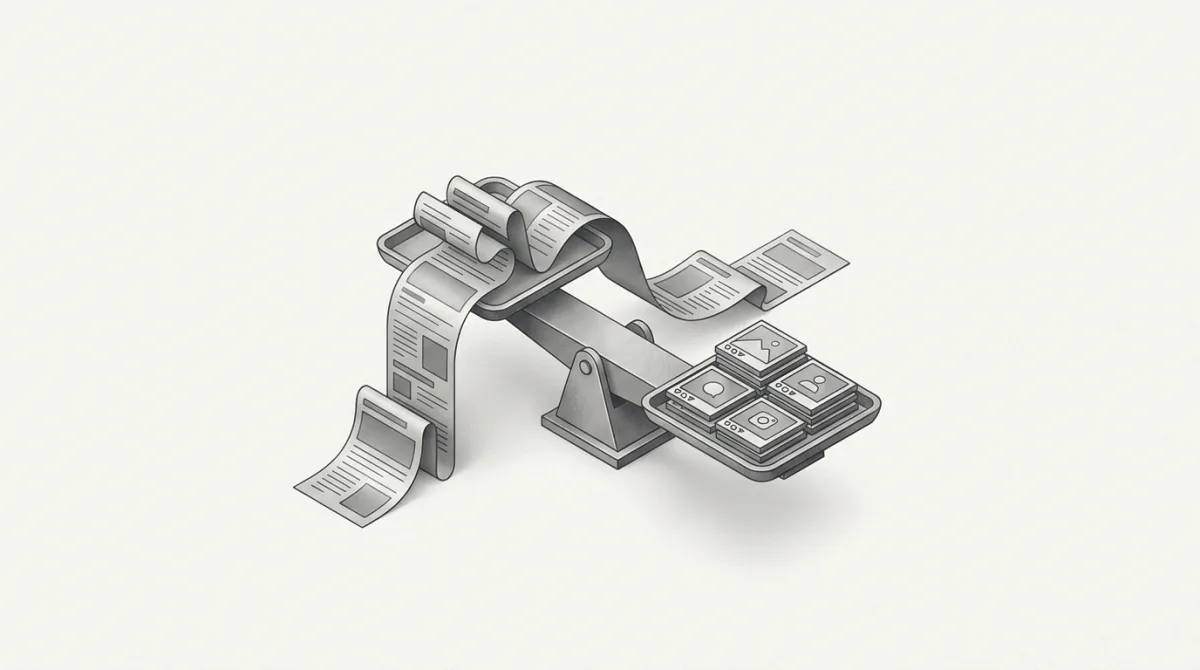
Se acquisti media a pagamento per un brand DTC, hai visto lo stesso grafico per anni: i CPM di Meta che salgono verso l'alto mentre la tua attribuzione diventa più sfocata. Quindi la domanda è legittima. Nel 2026, ha ancora senso parcheggiare la maggior parte del tuo budget su Facebook, o la pubblicità native è cresciuta fino a diventare un canale che compete seriamente per i dollari DTC?
Questo non è un pezzo del tipo "le native sono l'hack che Facebook non vuole che tu scopra". Entrambi i canali funzionano. Funzionano in modo diverso, falliscono in modo diverso, e i brand che vincono li trattano come un unico sistema invece di scegliere una parte. Ecco l'analisi pratica sulle quattro cose che realmente influenzano il CAC: economia del clic, resilienza alla perdita di segnale iOS, formato creativo e intento dell'acquirente. I numeri native provengono da ciò che vediamo live su OpenAdLibrary, dove l'indice contiene attualmente 589.036 creative native catturate da 25.933 advertiser su 42 reti (indice OpenAdLibrary, giugno 2026).
La risposta breve#
Le native ads vincono sul CPC puro e sulla resilienza alla perdita di segnale iOS. Facebook vince ancora sulla velocità di test creativi e sul retargeting di audience calde e ad alto intento. Nessuno dei due sostituisce l'altro per un brand DTC serio. La mossa giusta è eseguire le native per una scoperta di traffico freddo, economica e senza cookie, poi alimentare quei vincitori nella macchina di retargeting e lookalike di Facebook.
Questi due canali non combattono per lo stesso momento#
Prendi il modello mentale giusto prima di guardare un singolo benchmark, perché l'errore DTC più costoso è trattare le native come "Facebook più economico".
Facebook è un canale di interruzione. L'utente è venuto per scorrere il suo feed. Il tuo annuncio deve deviare quello scorrimento con qualcosa di abbastanza forte da fermare un pollice. Il targeting è basato sull'identità: Meta sa chi è la persona e prevede chi converte.
Le native sono un canale di scoperta. L'utente sta leggendo un articolo, e il tuo annuncio si trova nel widget di raccomandazione sotto o accanto, vestito per abbinarsi all'editoriale intorno. Il targeting è principalmente contestuale: l'argomento della pagina, il publisher, la sezione, il dispositivo, la geo. L'utente non sta cercando e non viene profilato in un segmento di acquirenti. Gli viene passato qualcosa di affine a ciò che sta già leggendo. Se vuoi la meccanica completa di come quei widget, aste e supply chain si incastrano, la nostra guida completa alla pubblicità native percorre l'intero ecosistema, e la voce del glossario sulla pubblicità native ti dà la versione in un paragrafo.
Puoi vedere la differenza nelle creative stesse. Eccone una live dal nostro indice: un'offerta finanziaria vestita da notizia flash, non un annuncio di brand.

Tratta le native come un motore di scoperta, non come un feed scontato. I brand che perdono soldi con le native sono quelli che hanno preso una creativa Facebook, l'hanno puntata a un'audience fredda da widget e si aspettavano tassi di conversione da feed. La mancata corrispondenza è tutta la storia.
Round 1: CPC ed economia del clic#
Qui è dove le native si sono fatte la reputazione, e la matematica regge.
| Metrica (2026, US) | Reti native | Facebook / Meta |
|---|---|---|
| CPC tipico | ~$0,10 a $0,90 | ~$0,70 (traffico), ~$1,92 (lead gen) |
| CPM tipico | cifre basse a basse decine | ~$16,80, su ~20% YoY |
| Base targeting | contestuale (pagina, sezione, geo, dispositivo) | identità / comportamentale |
| Pattern CTR | più basso, abbinato al contenuto | più alto, nativo del feed |
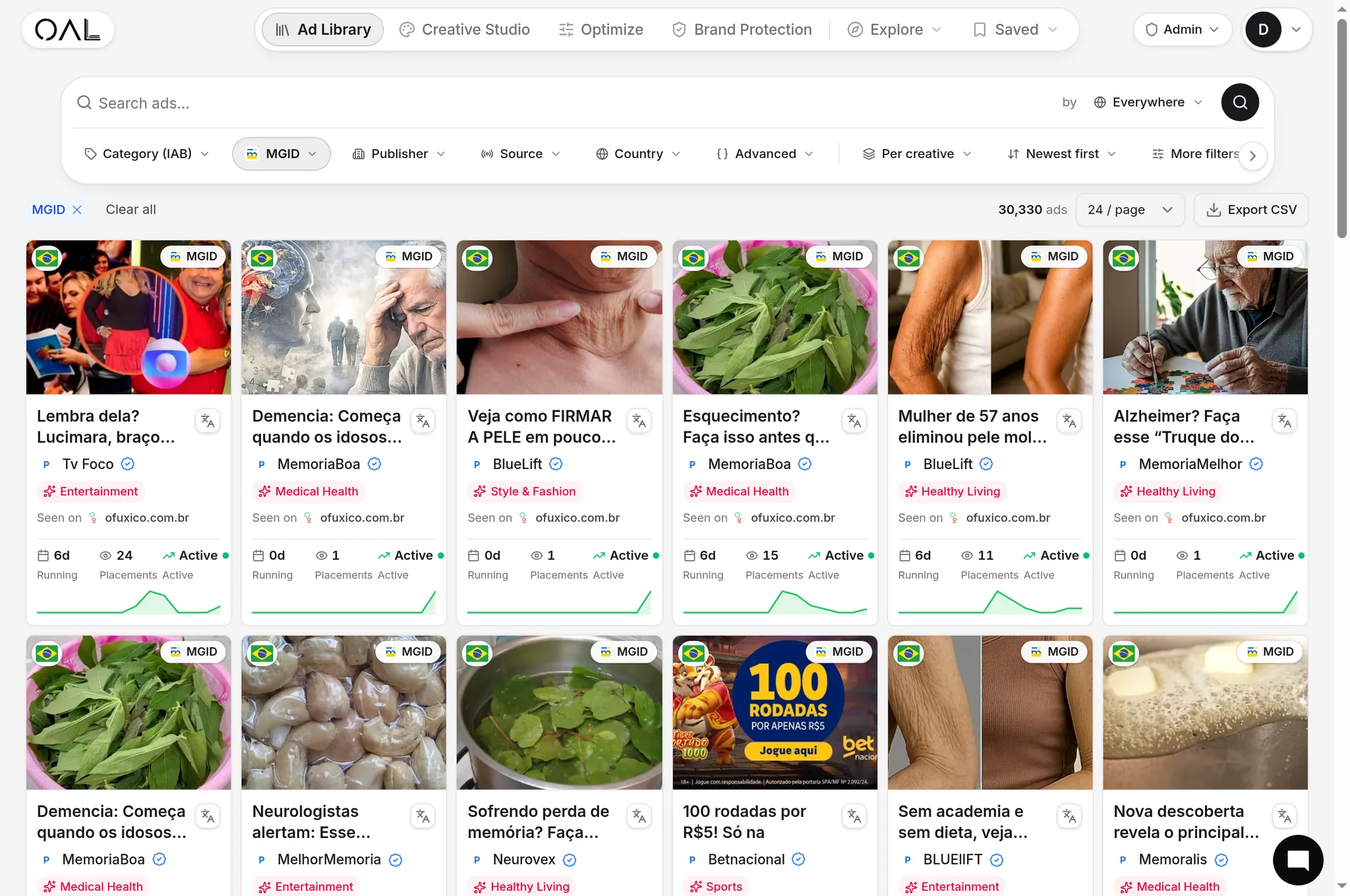
Su Taboola, Outbrain, MGID e Revcontent, i CPC native di solito si collocano tra circa $0,10 e $0,90 a seconda di dispositivo, geo e verticale. I placement premium desktop su publisher di primo livello costano di più; l'inventory mobile e a larga diffusione sta al minimo. Facebook ha una media di circa $0,70 CPC per obiettivi traffico e più vicino a $1,92 per la lead generation nel 2026, con CPM intorno a $16,80 e in aumento di circa il 20% anno su anno man mano che l'asta si affolla.
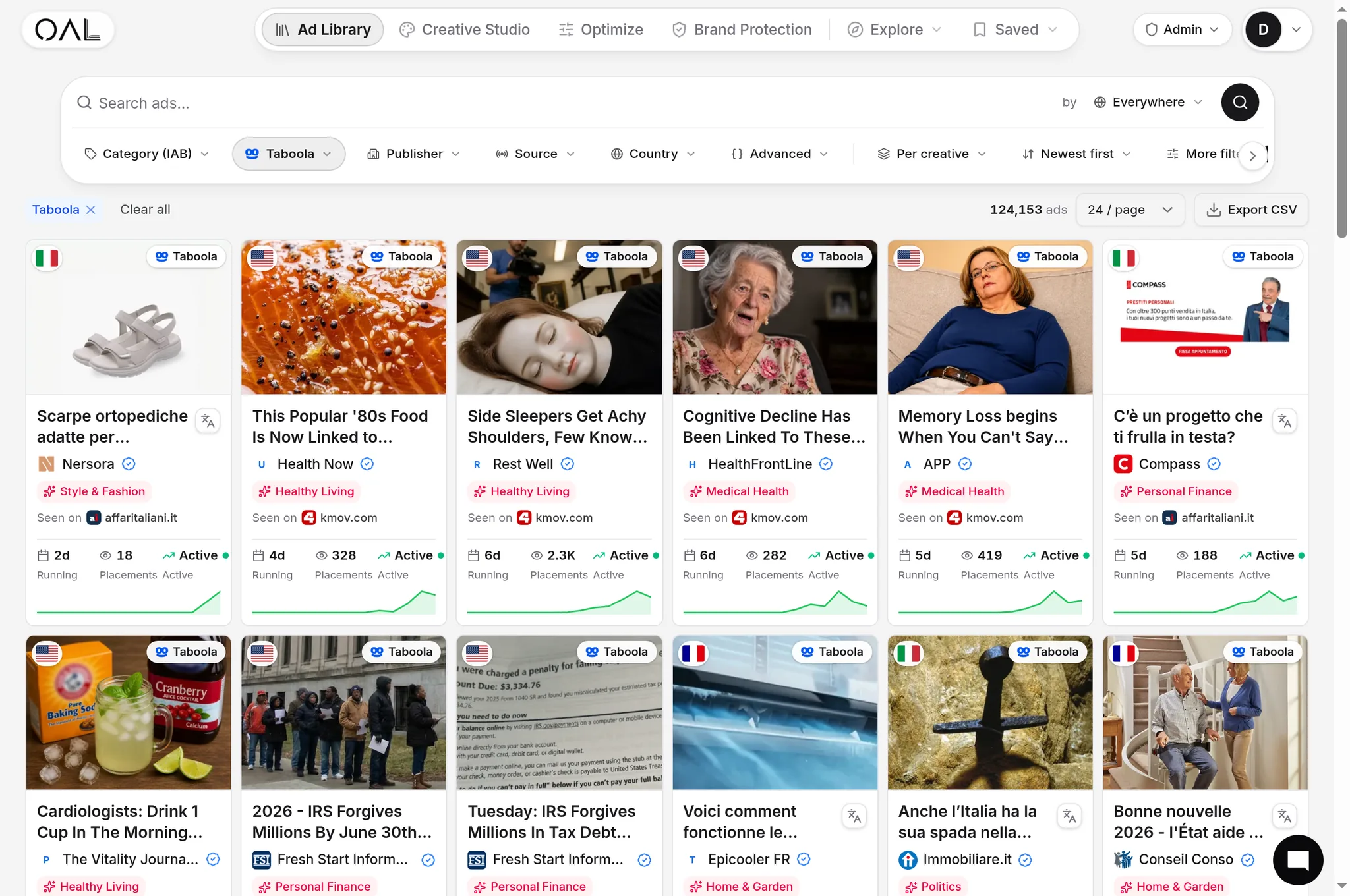
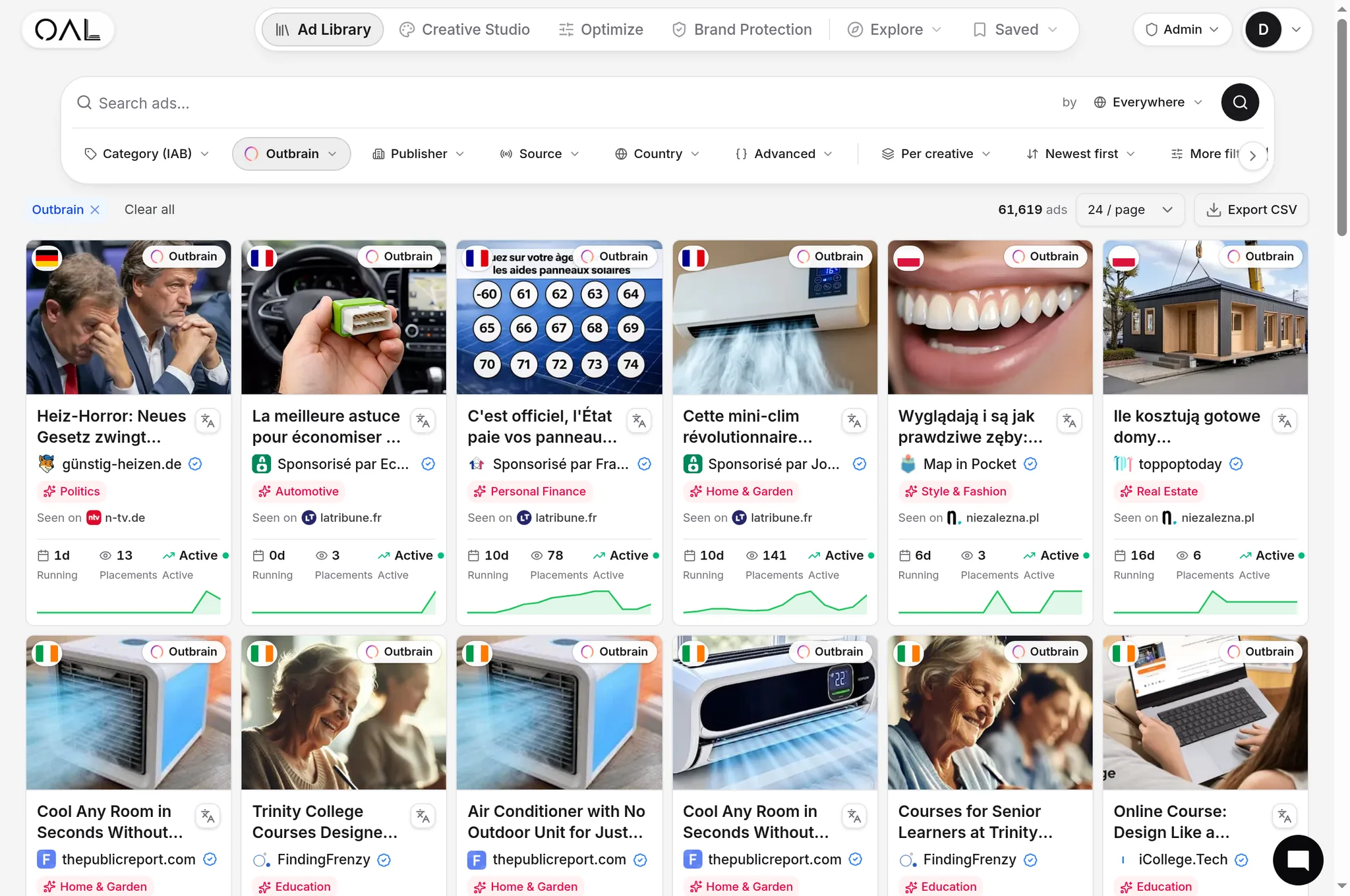
Il volume ti racconta la stessa storia dal lato dell'offerta. Solo Taboola rappresenta 157.727 delle creative nel nostro indice e Outbrain altre 84.252 (indice OpenAdLibrary, giugno 2026). Questo è un mercato profondo e liquido, non una nicchia in cui devi raschiare per trovare inventory.
Ora il caveat onesto: clic più economici non sono automaticamente conversioni più economiche. Il traffico native è più freddo e si trova a metà funnel, quindi un clic native da $0,20 e un clic Facebook da $0,70 possono arrivare allo stesso CPA se la tua esperienza post-clic (pre-lander, advertorial o pagina prodotto) non fa la persuasione che avrebbe fatto il feed. Il vantaggio CPC è reale. Lo incassi solo quando il flusso post-clic (pre-lander, advertorial o pagina prodotto) si fa carico del peso. Anche l'economia per piattaforma differisce, quindi leggi come funzionano gli annunci Taboola e come funzionano le native ads MGID per i floor di offerta e le realtà di spesa minima su ciascuna.
Round 2: Resilienza alla perdita di segnale iOS#
Questa è la dimensione che ha silenziosamente riconfigurato il mix media DTC, ed è qui che le native hanno un vantaggio strutturale.
L'App Tracking Transparency di Apple ha rimosso il segnale deterministico a livello utente su cui erano costruiti l'ottimizzazione e il reporting di Meta. Le stime del settore indicano che il 20-30% delle conversioni non viene osservato sull'inventory con segnale degradato, il che gonfia il CPA apparente e nasconde le conversioni economiche che Meta non può più vedere. Chiamala una tassa invisibile su ogni account con forte presenza iOS. La senti come un reporting di cui non ti fidi più completamente e un algoritmo che ottimizza su dati parziali.
Le native l'hanno sentito a malapena, perché non hanno mai fatto affidamento sull'IDFA in primo luogo. Il loro targeting e le offerte si basano su segnali contestuali e di publisher first-party: di cosa parla la pagina, chi è il publisher, il dispositivo e la geo. Niente di tutto ciò è stato toccato dai cambiamenti sulla privacy di Apple. Entro il 2026, più di tre quarti del traffico globale vive in ambienti in cui i cookie di terze parti sono limitati o spariti, e le native contestuali sono uno dei pochi canali performance che quasi non se ne accorgono. Per un brand DTC il cui pubblico è orientato verso iPhone, quella resilienza si traduce in performance più stabili e matematica di attribuzione più pulita.
- Facebook: l'ottimizzazione e il reporting si degradano con le opt-out iOS; le conversioni modellate tamponano le lacune ma aggiungono incertezza.
- Native: le offerte contestuali sono senza cookie per design; performance e reporting rimangono relativamente stabili.
- Risultato pratico: le native sono una copertura contro shock di piattaforma e normativi, non solo un clic più economico.
Questo è anche il motivo per cui la pubblicità native programmatica continua ad assorbire budget. L'asta delle native ads si conclude su segnali che sopravvivono ai cambiamenti sulla privacy.
Round 3: Formato creativo e cosa viene effettivamente cliccato#
La creativa che vince su Facebook di solito muore sulle native, e viceversa. Questo fa inciampare più team DTC di quanto non faccia mai il targeting.
Facebook premia il movimento che ferma il pollice: video UGC a taglio rapido, statiche audaci, un gancio nel primo secondo, branding che si annuncia. L'annuncio dovrebbe sembrare un annuncio abbastanza buono da fermare uno scorrimento.
Le native premiano l'istinto opposto. La creativa, un'immagine più un titolo all'interno di un widget di native ad, guadagna il clic fondendosi con gli articoli intorno. Immagini editoriali, un titolo guidato dalla curiosità, la grammatica visiva del giornalismo invece che della pubblicità. Sembra più una miniatura di articolo consigliato che un annuncio da feed. Lancia un video Facebook rifinito direttamente su un placement native e urla "annuncio" in un contesto di contenuti, e il CTR crolla.
I due annunci qui sotto sono native da manuale. Entrambi sembrano giornalismo di servizio. Nessuno dei due sopravviverebbe così com'è in un feed Facebook.


Il takeaway per la produzione è concreto: hai bisogno di una traccia creativa separata per le native, costruita attorno al test dei titoli e alle immagini editoriali, non un rimontaggio dei tuoi asset social. Questo è esattamente dove l'intelligence competitiva si ripaga. Invece di indovinare quali angolazioni atterrano sulle native, studi le creative che i competitor stanno eseguendo ora e, soprattutto, quali sono rimaste in campo.
Round 4: Intento, posizione nel funnel e dove appartiene ogni canale#
Mappa i canali ai lavori nel funnel e la domanda "quale vince" si dissolve:
- Scoperta top-of-funnel fredda. Vincono le native. Raggiungimento economico, senza cookie, contro persone che consumano contenuti rilevanti. Qui trovi audience nuove che l'algoritmo di Facebook ha già saturato per te.
- Educazione mid-funnel. Forte per le native tramite flussi advertorial e pre-lander; forte per Facebook tramite sequenze video. Più o meno un pareggio, deciso dalla tua creativa.
- Retargeting caldo e lookalike. Facebook vince decisamente. Niente eguaglia la capacità di Meta di ri-coinvolgere i visitatori del sito e clonare i convertitori.
L'architettura DTC vincente nel 2026 è un ciclo, non una biforcazione. Guida volume freddo economico tramite le native, cattura e pixelizza quei visitatori, poi lascia che Facebook li chiuda con il retargeting e li espanda con i lookalike. Le native riempiono la parte alta del funnel da cui i CPM in aumento ti hanno fatto uscire. Facebook converte l'audience calda che le native hanno creato.
Come eseguire le native in modo intelligente (dove si inserisce OpenAdLibrary)#
Il punto critico delle native è sempre stata l'opacità. L'Ad Library di Facebook ti consegna gli annunci social dei competitor su un piatto; le native erano una scatola nera, ed è proprio per questo che così tanti team DTC sono rimasti su Meta per pura visibilità. Quel gap ora è colmabile.
Uno strumento di spionaggio native ad ti permette di vedere il mercato native come già vedi quello social. OpenAdLibrary cattura i placement native pubblici live su Taboola, Outbrain, MGID, Revcontent, Teads, Yahoo e MSN, preserva l'immagine creativa reale a piena qualità, classifica la supply chain ad-tech dietro ogni placement e traccia il clic fino alla landing page o pre-lander dell'advertiser, tutto senza cliccare su annunci live. L'indice contiene ora 5,4 milioni di osservazioni di annunci e 926.259 catture di landing page (indice OpenAdLibrary, giugno 2026), che è la materia prima che trasforma un'intuizione su un competitor in evidenza.
Il segnale che conta di più è longevità e diffusione. Un annuncio che gira per settimane su molti publisher è quasi certamente redditizio, perché nessuno brucia budget su un perdente così a lungo. Nel nostro indice attuale le creative più longeve che stiamo osservando in continuo sono rimaste per circa 28 giorni ciascuna. Un esempio: un teaser finanziario di SmartAsset su Outbrain, "Ask a Pro: How Can I Avoid Paying Taxes on IRA Withdrawals?", che è rimasto live sui publisher per 28 giorni consecutivi di osservazione.

Una rapida nota onesta sui benchmark: quella cifra di 28 giorni è la reale durata di osservazione continua nel nostro indice, non il "vincitore di 90 giorni" che sentirai citare negli ambienti native. La regola empirica dei 90 giorni è una conoscenza generale del settore. I 28 giorni sono ciò a cui possiamo effettivamente puntare nei dati.
I verticali raccontano la loro storia su dove si concentra il denaro native. La finanza guida il nostro indice complessivo con 17.232 creative, seguita da assicurazioni (15.629) e salute (14.895), tutte categorie classiche ad alto LTV e alto margine dove un clic freddo economico può ancora avere senso (indice OpenAdLibrary, giugno 2026). Se vendi in quegli spazi, le native non sono opzionali, è dove i tuoi competitor già vivono.
Da lì, Creative Studio ti aiuta a costruire creative native-native invece di riciclare asset social, Copy DNA scompone i pattern di titolo e offerta che ricorrono tra i vincitori, e Optimize più l'API e MCP ti permettono di incorporare tutto nel tuo flusso di lavoro. È aperto ed economico: $29,99/mese, con un piano gratuito per navigare 200 annunci e nessuna carta richiesta, contro gli $80-$400/mese degli strumenti di spionaggio native legacy.
Per il contesto a livello di piattaforma dietro le reti sopra, vedi le nostre guide su come funziona Outbrain ora che fa parte di Teads, cos'è Teads dopo la fusione, più le voci del glossario su rete di native advertising e Yahoo Native.
Il verdetto per il 2026#
Non c'è un singolo vincitore, e qualsiasi articolo che ne incoroni uno ti sta vendendo qualcosa. Le native vincono su CPC e resilienza nell'era iOS. Facebook vince sulla velocità di test creativi e conversione di audience calde. I brand DTC che moltiplicano il loro vantaggio sul CAC nel 2026 eseguono le native per la scoperta fredda senza cookie, Facebook per retargeting e lookalike, e una traccia creativa separata per ciascuno, usando l'intelligence competitiva per saltare le costose supposizioni sul lato native.
Se il tuo mix media è ancora al 90% Meta perché le native sembravano una scatola nera, la scatola è aperta. Inizia gratuitamente, naviga 200 native ads live senza carta, e vedi di persona quali creative, offerte e advertiser stanno silenziosamente vincendo il canale che i tuoi competitor non stanno guardando.