Español
 Português (Brasil)
 Français
 Deutsch
 Italiano
 Nederlands
 Polski
 Svenska
 Türkçe
 Русский
 日本語
日本語 한국어
한국어 简体中文
简体中文 Tiếng Việt
 Bahasa Indonesia
 繁體中文
繁體中文 Čeština
 Dansk
Dansk Suomi
Suomi Ελληνικά
 Română
 Magyar
 Українська
 ไทย
ไทย हिन्दी
 العربية
 עברית
עבריתMediaGo vs Taboola: MSN Inventory vs the Open Web
MediaGo and Taboola draw from very different supply. Here's how their inventory, cost and targeting compare, and which advertisers fit each one.

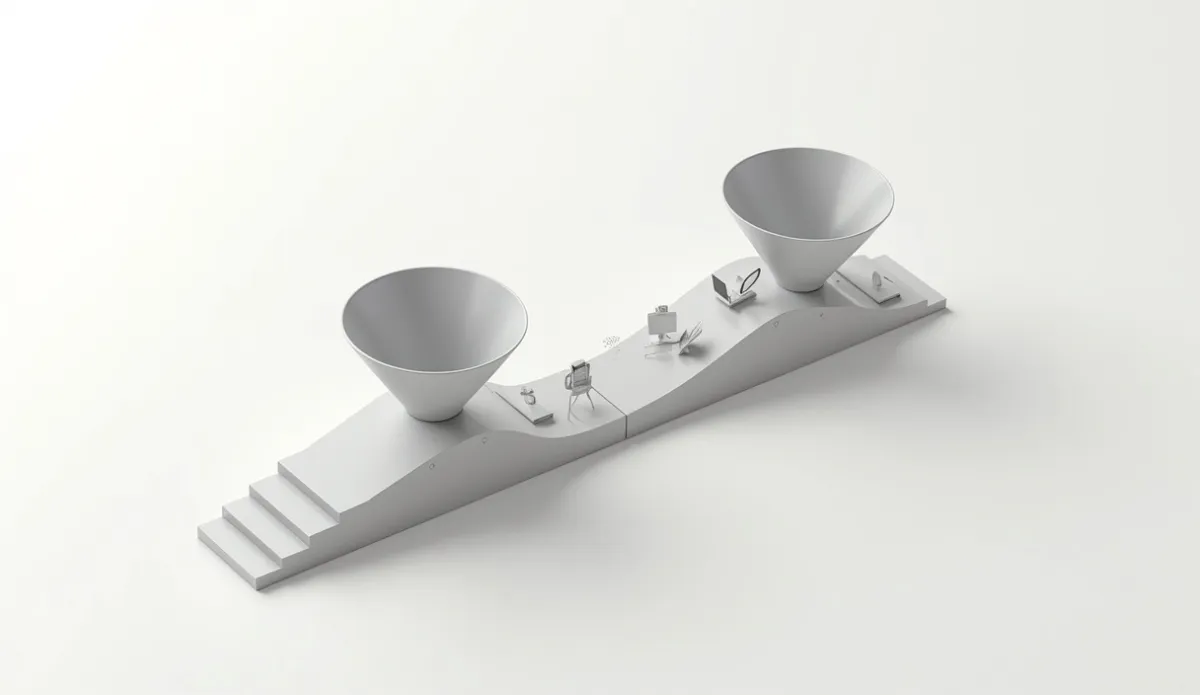
MediaGo and Taboola are both native ad networks, but they draw from different supply pools entirely. Taboola runs its own widget network across thousands of publisher sites it has direct placement deals with. MediaGo leans more heavily on Microsoft-affiliated inventory, most notably the MSN content feed, plus a smaller set of partner publishers. If you can only test one right now, Taboola gives you more scale and a more mature self-serve platform. MediaGo gives you a narrower, MSN-flavored feed where competition is thinner and CPMs commonly land lower, at the cost of daily volume.
What MediaGo Actually Is#
MediaGo positions itself as a native content recommendation network, mechanically similar to Taboola and Outbrain: widgets of "recommended" or "sponsored" content sit at the bottom of articles, inside content feeds, or alongside search-style results. What sets MediaGo apart is where most of that inventory actually lives. A large share of the traffic running through MediaGo resolves back to MSN placements, which puts your ad next to the kind of feed content people browse on msn.com and in the MSN app, rather than a random long-tail publisher site.
That matters for two reasons. First, MSN's audience skews older and more desktop-heavy than the mobile-first publisher network Taboola built its business on. Second, because MediaGo hasn't attracted the same volume of advertiser demand as Taboola, auction pressure on comparable placements tends to run lower. In the OpenAdLibrary index, MediaGo carries 6,571 live creatives as of June 2026, against 206,145 for Taboola. That gap tells you plainly which network has the deeper, more contested marketplace. For a closer look at MediaGo mechanics, see our MediaGo glossary entry and browse the MediaGo ad library directly.
What Taboola Actually Is#
Taboola is one of the largest native ad networks by volume, with direct supply deals across a wide range of digital publishers. Its self-serve platform is the entry point most advertisers use, and it supports the standard native toolkit: image and headline testing, bid strategies aimed at clicks or downstream conversions, granular publisher and site-level exclusions, and audience retargeting through its own pixel.
Scale is Taboola's defining trait. In the OpenAdLibrary index it carries 206,145 live creatives as of June 2026, the largest single-network total we track. Health leads its vertical mix at 11,982 creatives, followed by finance (8,200), insurance (7,422), ecommerce (5,185), home and garden (4,414) and software (3,665). For a deeper mechanical walkthrough, see how Taboola ads work and how to advertise on Taboola.
Inventory and Scale, Side by Side#
| MediaGo | Taboola | |
|---|---|---|
| Live creatives in OAL index (June 2026) | 6,571 | 206,145 |
| Top vertical | Insurance | Health |
| Supply character | MSN-heavy feed plus a smaller partner set | Owned widget network across a broad publisher base |
| Self-serve maturity | Newer, leaner tooling | Established, full-featured |
| Typical auction pressure | Lower, fewer advertisers bidding the same slots | Higher, especially in health, finance and insurance |
The vertical mix is worth sitting with. MediaGo's top categories in our index are insurance (378 creatives), home and garden (301), ecommerce (265), auto (257), gaming (218) and health (155). Taboola's list is dominated by health, finance and insurance at far higher absolute volume. That's not a coincidence. High-volume verticals go where the auction has the deepest bench of publishers and the most mature bidding infrastructure, and right now that's Taboola.
Cost and Competition#
Neither network publishes an official rate card, and actual CPCs move a lot with geo, device, vertical and creative quality. That said, media buyers commonly report that MediaGo CPCs run somewhat below comparable Taboola placements in the same geo and vertical, largely because fewer advertisers are actively bidding into MediaGo's inventory. Treat this as a general pattern, not a guaranteed discount; it can close fast if a vertical suddenly gets popular on the smaller network. Taboola's own CPCs vary widely by vertical too, with competitive insurance and finance placements sitting well above a mid-tier ecommerce or software campaign. For more on how pricing moves across networks, see our native ads CPC benchmarks and the general native ad cost guide.
The practical read: if you're testing a new offer and want cheap volume to validate a hook before committing real budget, MediaGo's lower competition can be an efficient proving ground. If you need to scale a proven angle to real daily spend, Taboola's depth of supply is what lets you absorb that budget without exhausting inventory in a single day.
Targeting and Setup Differences#
Both platforms use the same basic levers: geo, device, OS, connection type, and publisher or site-level inclusion and exclusion lists. Where they diverge:
- Campaign objectives. Taboola's self-serve UI ships with more granular optimization events out of the box, including custom conversions and value-based bidding. MediaGo's toolkit is comparatively lean; check the network's current documentation before assuming feature parity.
- Creative formats. Both run the standard image-plus-headline unit. Taboola supports a broader set of ad sizes and placements across its publisher base, while MediaGo's placements concentrate more around MSN's feed layout.
- Onboarding. Taboola's self-serve entry point is well documented and low friction. MediaGo onboarding has historically leaned more toward managed or agency relationships depending on region, so confirm current self-serve availability before locking in a launch date.
- Reporting depth. Taboola's dashboard and API surface are more mature, which matters if you're piping performance data into your own attribution stack.
Which Advertisers Fit Each Network#
If your offer sits in insurance, home services or auto, and you're not getting efficient volume out of Taboola, MediaGo's inventory mix, which skews toward exactly those categories, is worth a direct test. Gaming offers also show up more on MediaGo relative to Taboola's overall vertical spread.
If you're in health, finance or ecommerce and need daily volume that can absorb five or six figures a month without drying up, Taboola remains the deeper pool. It's also the more proven environment for scaling: the sheer live creative volume in the index, 206,145 against 6,571, reflects years of advertiser demand building out the tooling and publisher relationships that make that kind of scale possible in the first place.
Running Both Instead of Choosing#
Most media buyers running native at any real volume don't pick one network exclusively. They run Taboola as the volume engine and layer in smaller networks like MediaGo for cheaper incremental reach, or as a testing ground for new creative before it goes into the bigger, pricier auction. Before committing budget to either, it's worth checking what's actually running right now rather than guessing. OpenAdLibrary's MediaGo ad spy tool and Taboola ad spy tool pull live creatives, resolved advertisers and observed longevity straight from both networks, so you can see which angles are already working before you build your own campaign.
Angle testing matters more on the smaller network. With less competing supply, a strong angle on MediaGo can run longer before it gets copied or fatigued, and that longevity signal is worth checking against the live index before you commit real spend to either side.
A Practical Launch Sequence#
If you're starting from zero on both networks, sequence the work instead of splitting a small budget evenly across both from day one. Launch on Taboola first if your priority is learning fast: its volume means you'll hit statistical significance on a headline or image test in days rather than weeks, and its self-serve tooling gives you the optimization events to act on that data quickly. Once you have a validated angle with a real cost-per-action benchmark, port it to MediaGo as a lower-cost incremental channel and compare performance directly against the number you already know works.
If your offer sits squarely in one of MediaGo's stronger categories, insurance, home services or auto, it can make sense to flip that sequence: test cheap on MediaGo first, then scale the winner onto Taboola once you know the angle converts and you need more daily volume than MediaGo's smaller supply pool can deliver. Either way, avoid launching untested creative simultaneously on both platforms. You'll spend twice the learning budget without a clean read on which network's audience actually responded to which variable.
Common Mistakes When Comparing the Two#
A few patterns show up repeatedly among media buyers moving between MediaGo and Taboola for the first time. The first is assuming feature parity in the dashboard: bidding controls, audience segments and reporting depth that exist on Taboola may not have an equivalent on MediaGo yet, so a campaign structure that works well on one platform sometimes needs to be simplified for the other. The second is judging MediaGo's performance too early. Because its inventory pool is smaller, a campaign needs fewer total impressions to reach a meaningful sample, but it can also take longer in calendar time to accumulate them if your targeting is narrow, so give it a fair runway before calling a test a failure. The third is ignoring device mix: MediaGo's MSN-affiliated lean skews more desktop-heavy than Taboola's broader mobile-first publisher base, and a landing page built mobile-first for Taboola won't necessarily convert the same way on MediaGo's audience without a second look at the desktop experience.
Treating these as two genuinely different channels, rather than one network with a smaller little brother, is the mindset that gets the comparison right.