
 Español
 Português (Brasil)
 Français
 Deutsch
 Italiano
 Nederlands
 Polski
 Svenska
 Türkçe
 Русский
 日本語
 한국어
 简体中文
 Tiếng Việt
 Bahasa Indonesia
 繁體中文
 Čeština
 Dansk
 Norsk (bokmål)
 Suomi
 Ελληνικά
 Română
 Magyar
 Українська
 ไทย
 हिन्दी
 العربية
 עברית
Native Ad Library MCP: Query 1M+ Native Ads From Claude & ChatGPT
OpenAdLibrary runs a hosted MCP server for supported AI clients. What it exposes for native ad research, how to connect it, and how to read the results, including their coverage and attribution limits.

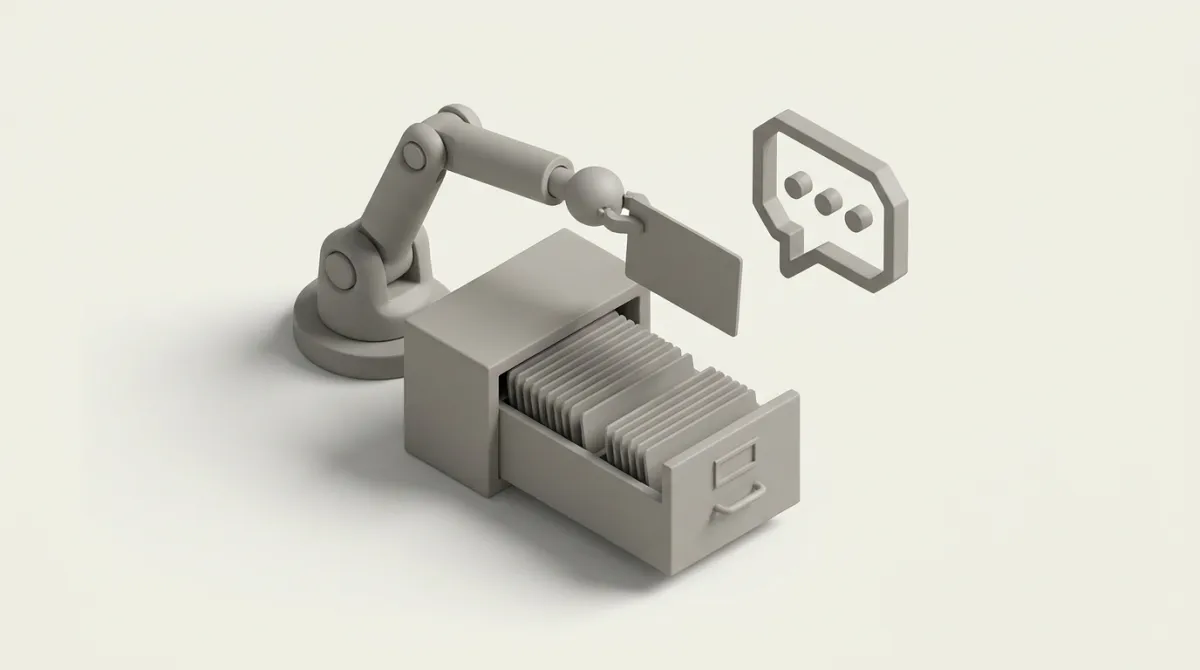
OpenAdLibrary provides a remote MCP endpoint for supported AI clients. Use the current connection instructions and inspect the tools returned by your authenticated session. Tool availability, access limits and corpus counts can change. First-seen records identify collection observations, not necessarily newly launched campaigns.
Updated July 2026.
Meta advertisers already have this pattern: Foreplay shipped an ad library MCP for Meta and TikTok creative research earlier this year. Native discovery networks — Taboola, Outbrain, MGID, Revcontent, the MSN feed — had nothing, which is consistent with the channel's history: there was no public native ad library at all until recently (the backstory is in what is a native ad library). This MCP server is that library, made callable by agents.
What is MCP, in one minute#
MCP (Model Context Protocol) is an open standard, introduced by Anthropic in late 2024 and since adopted across the major AI platforms, that lets AI assistants call external tools. A server publishes a catalog of tools — "search ads", "get brand", "list trending" — each with typed inputs and outputs. The AI client (Claude, ChatGPT, Cursor, VS Code, or your own agent) reads the catalog and decides when to call what. You talk to the assistant in plain English; it handles the API mechanics, pagination, and follow-up calls.
MCP can let a client call structured research tools within a conversation. The time saved depends on the task, client and data; this article contains no measured time comparison.
What the OpenAdLibrary MCP exposes#
Connect with a supported authentication method and inspect the current tool list. Historical tool and corpus counts are dated observations, not a guarantee of present access.
| Cluster | Example tools | What agents do with it |
|---|---|---|
| Ad search | search_ads, get_creative, walk_ads_keyset, sync_ads_changes |
Find live ads by network, country, vertical, advertiser or text; sync deltas |
| Brands & advertisers | list_brands, get_brand, search_advertisers, batch_brands, get_brand_hierarchy |
Resolve who is really behind an ad; profile a competitor's whole portfolio |
| Landing pages | list_landing_pages, get_landing_page, get_landing_page_ads |
Pull the traced destination funnel behind a creative |
| Market intel | get_trending, get_share_of_voice, get_keyword_trends, list_new_entrants, get_network_profile |
Spot rising advertisers, measure vertical dominance, compare networks |
| Publishers & supply chain | list_publishers, get_publisher_monetization, get_supply_chain_publisher |
See which sites run which networks and who monetizes where |
| Workflow | watch_advertiser, list_watchlist, save_search, list_boards, list_notifications |
Persist watchlists and searches the agent can check on schedule |
Inspect each returned record and its available evidence fields. A tool result may lack a creative, destination or trace; do not fill missing fields with assumptions.
What you can actually do with it#
Competitor research without the tab-farm#
A research workflow can resolve a brand, search its captured ads and inspect available destination evidence. Check the current tool schema and result completeness at each step rather than assuming a fixed call sequence covers every record.
Creative ideation from proven winners#
Observation span can help select examples for inspection. It does not establish profit or continuous delivery. Any distribution of spans needs a stated cohort, collection window and calculation before it is presented as a benchmark.
Longevity and fatigue checks on demand#
Recurring research requires scheduling support in the client or another authorized system. Providing MCP tools does not itself schedule a job or authorize messages or writes.
Vertical and network scouting#
Ask: "Compare Taboola vs MGID for the entertainment vertical: creative volume, top advertisers, and new entrants in the last 30 days." Tools like get_network_profile, get_share_of_voice and list_new_entrants were built for exactly this aggregation. For background on how the networks differ, MGID vs Taboola is the human-written version.
Setup walkthrough#
The remote endpoint is https://mcp.openadlibrary.com/mcp. Repository code supports OAuth and public-data API keys supplied through an Authorization: Bearer header or x-api-key header. Use the method supported by your client and current OpenAdLibrary instructions; do not put secrets in URLs or shared transcripts.
Check the current account plan and quota before running a workflow. The historical request allowances and price in this article are not verified current entitlements.
For Claude or another client, follow that product's current remote-MCP connection flow. Support for OAuth, custom headers and configuration files differs across clients; do not assume a desktop connector accepts CLI configuration.
claude mcp add --transport http openadlibrary \
  https://mcp.openadlibrary.com/mcp \
  --header "Authorization: Bearer oal_YOUR_KEY"
Configuration formats differ across clients. Treat the following mcpServers object as a client-specific example only, and use the documented schema for the product and version you actually run.
{
  "mcpServers": {
    "openadlibrary": {
      "url": "https://mcp.openadlibrary.com/mcp",
      "headers": { "Authorization": "Bearer oal_YOUR_KEY" }
    }
  }
}
Verify that the client actually lists tools and makes an authenticated tool call. Inspect the returned records and any errors; an answer containing plausible names or numbers is not proof that the connection worked.
Observe the actual account quota and rate-limit responses. Do not assume a fixed request allowance or rate from an older article.
A worked example: competitor teardown in one session#
The following is an illustrative workflow, not a recorded firsthand session or a promise that every named tool is currently available.
Resolve the intended entity, search a bounded window and inspect result metadata, pagination and truncation. Report only the records actually returned; do not treat a limited response as a complete market census.
Turn 2: "For the top advertiser, pull their longest-observed creatives and the landing pages behind them. What is the funnel structure?" The agent chains get_brand, search_ads sorted by observed lifetime, and get_landing_page_ads. You learn whether the winners run quiz funnels, advertorials or straight product pages — the difference between copying a headline and understanding a strategy.
Turn 3: "Add the top three advertisers to my watchlist and save this search." The agent calls watch_advertiser and save_search, so next week's session starts with "what changed in my watchlist?" instead of starting over.
This workflow illustrates how tools can support research. It is not a measured comparison of manual and automated completion time.
Prompting patterns that get good answers#
Ad-data agents fail in predictable ways, and three habits prevent most failures.
Scope before you sweep. "Show me winning ads" forces the agent to guess at network, geo and vertical, burning quota on broad calls. "US Taboola ads in insurance observed 14+ days" gets a precise tool call on the first try — which matters on a metered key.
Ask for the evidence, not just the conclusion. Have the agent return creative IDs, first-seen dates and advertiser labels alongside its summary. Agents summarize confidently; the discipline of citing rows keeps them honest and makes the output verifiable in the dashboard.
Read the tool's field definitions. A first-to-last observation span is not continuous campaign runtime, and a bounded collection window can censor either endpoint.
For AI builders: beyond the chat clients#
A client can combine research tools with other authorized capabilities where supported. Scheduling, email delivery and account writes require their own integrations and explicit authorization; they are not implied by access to the research endpoint.
Plan bounded queries using the current account's documented quotas and actual response limits. Historical allowances should not be used to size an automated job.
Where the data comes from (and why agents can trust it)#
Captured labels and domains support attribution but do not always establish the legal advertiser, payer or agency. Preserve the underlying record and state uncertainty.
A last-seen timestamp reports the most recent captured observation. It does not prove that the ad is running at the moment of the query.
MCP vs the dashboard: when to use which#
The dashboard remains better for visual browsing — scanning creative grids, eyeballing image styles, the serendipity work described in how to find winning native ad angles. The MCP wins whenever the question is compound ("find X, then for each, check Y"), scheduled (weekly digests), or feeds another system (a brief, a report, a model). Most practitioners will end up using both: browse to build intuition, delegate to agents for repetition.
Check the actual window and retention scope returned by the tool. Do not assume every query or statistic uses the same rolling window.
The bottom line#
Use the current tool list, account limits and connection documentation when deciding whether the integration fits a task. Verify results against returned evidence and keep historical counts clearly dated.