Español
 Português (Brasil)
 Français
 Deutsch
 Italiano
 Nederlands
 Polski
 Svenska
 Türkçe
 Русский
 日本語
日本語 한국어
한국어 简体中文
简体中文 Tiếng Việt
 Bahasa Indonesia
 繁體中文
繁體中文 Čeština
 Dansk
Dansk Norsk (bokmål)
 Suomi
Suomi Ελληνικά
 Română
 Magyar
 Українська
 ไทย
ไทย हिन्दी
 العربية
 עברית
עבריתAd Cloaking: How It Works and How Auditable Evidence Exposes It
Cloaking shows ad reviewers a clean page while real users land somewhere else, and only residential-grade click-trace evidence proves the two versions exist.

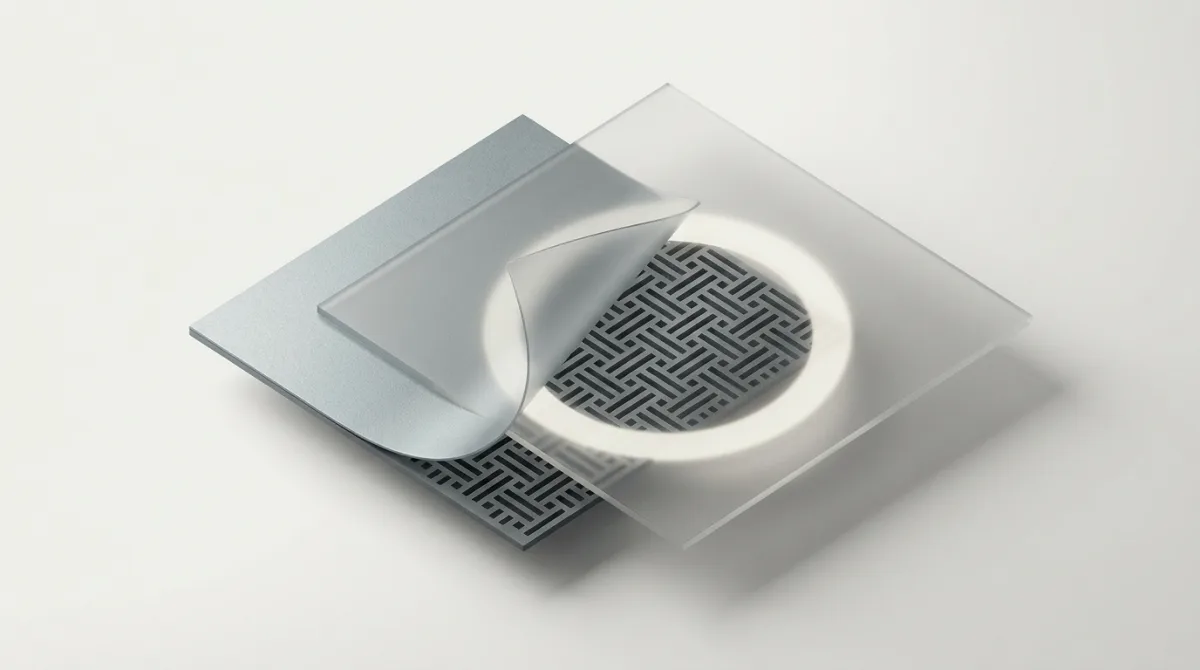
Cloaking beats almost every ad-review system for one stupid, simple reason: the page that breaks the rules is never the page that gets reviewed. The cloaker shows the moderator a clean page and shows the user a different one. No clever copywriting, no design trickery. Just two pages wearing one click URL. Once you understand that split, you understand why a screenshot of the ad never gets a platform to act, and why the only evidence that bites comes from the user's side of the fork.
This guide walks through cloaking mechanism-first, then shows how auditable click-trace evidence captured from the open web exposes the gap between what reviewers see and what real users actually land on. It sits inside our wider Brand Protection in Native Advertising coverage.
What ad cloaking actually is#
Ad cloaking is serving different content to different visitors of the same ad or URL. Reviewers and bots get a clean, policy-compliant "safe page." Real users get routed somewhere else. Because moderation only ever sees the safe page, the ad sails through review even though the live experience violates policy. Detecting it means proving both versions exist.
The mechanics tell you where the evidence lives. Cloaking is a server-side decision made at the instant of the click, based on signals the visitor carries in with them. For a short definition, see the Ad Cloaking glossary entry, and for how it plays out in performance and arbitrage campaigns, the Cloaking (Affiliate Marketing) entry.
Worth grounding this in scale. We index live public native ads, and as of June 2026 the OpenAdLibrary index holds 589,036 creatives from 25,933 advertisers across 42 networks, with 926,259 captured landing pages behind them. Cloaking hides in that last number. The creative is the easy part to see. The destination is where the lie lives, and it is the part platforms struggle to inspect.
How the reviewer-versus-user split works#
A cloaking script sits between the ad's click URL and the real destination. Every incoming click triggers one question: real user, or someone checking the ad? It decides using a stack of signals.
- IP reputation and geo. Datacenter and known crawler ranges get flagged instantly. Residential IPs from the campaign's target country read as real users.
- User-agent and headers. Automated reviewers and scrapers carry tell-tale agent strings, missing headers, or no referrer.
- Device fingerprint. Screen size, fonts, timezone, rendering quirks. These separate a headless browser from a real phone or laptop.
- Behavior and history. Cookies, prior visits, mouse movement, timing. A human looks nothing like a one-shot automated fetch.
Score as a reviewer or bot, and the script hands back the safe page: a neutral product overview, a generic article, a tidy review that lines up with the ad copy. Score as a real user in the right geo, and the script hands back the live path, usually through a bridge page and into the actual offer.
The reviewer is not being tricked by a clever page. The reviewer is being shown a different page entirely. That is why writing better creative reviews never catches cloaking, and why the evidence has to come from the user's side of the split.
This is also the exact line that separates cloaking from allowed personalization. Platforms permit serving different pages for language, geography, or connection speed, as long as the promoted product stays the same for everyone. Google files cloaking under its Circumventing Systems policy, where the violation is hiding the true destination, not the act of varying a page. The practical test: do the core offer and claims match across audiences?
Cloaking versus legitimate page variation#
| Signal | Allowed personalization | Cloaking |
|---|---|---|
| Reason for variation | Language, geo, device, connection speed | Visitor identified as reviewer or bot |
| Promoted product | Same for everyone | Different offer for real users |
| Page shown to reviewer | Same product as users see | A clean "safe page" users never receive |
| Final destination | Matches the display URL | Often a mismatched domain or redirect chain |
| Intent | Improve the user experience | Bypass ad review |
The right-hand column is what a destination mismatch flag is built to catch. The problem is structural: a platform can only inspect the destination it gets served, and a cloaker simply never serves it the bad one.
Where cloaking shows up in native#
Native placements are a natural home for cloaking because the gap between headline and destination is already wide by design. The ad is a curiosity-gap teaser. The path to the offer runs through one or more intermediary pages. That structure gives a cloaker plenty of room to fork traffic without the ad itself looking suspicious.
You can see the curiosity-gap pattern in the wild. Here is a live finance teaser we captured on Taboola:

Finance is the most cloaking-adjacent vertical we track. Across the index there are 17,232 finance creatives, more than any other category, ahead of insurance (15,629) and health (14,895). On Taboola alone, finance runs second only to health (5,558 finance creatives against 6,048 health), and on Outbrain finance is the single largest vertical at 2,640 creatives. These are exactly the categories where a "safe page" full of compliant disclaimers can hide a very different real offer.
Health teasers carry the same DNA. The headline promises a list, the destination decides whether you see a tidy article or an advertorial funnel:

Two adjacent patterns travel with cloaking and are worth recognizing.
- Copycat brand abuse. A cloaked path that lands on a fake "as seen on TV" page or a spoofed retailer is usually built on a copycat landing page. We cover the full pattern in Copycat Landing Pages: How Scammers Clone Brands in Native Ads.
- Trademark misuse in the ad layer. When the cloaked offer trades on a brand's name or logo to win the click, the creative itself is often infringing, which we break down in Trademark Infringement in Ads.
In both cases cloaking is the delivery mechanism and the brand harm is the payload. You cannot address the payload until you can prove the delivery.
How auditable evidence exposes the discrepancy#
The whole technique rests on one assumption: that nobody captures the user's version of the page in a form you can set side by side against the reviewer's version. Break that assumption and cloaking becomes visible.
Auditable evidence means a captured record a third party can verify without taking your word for it. For a cloaking case that record needs four parts.
- The ad as served, with its real creative image at full quality and the placement it ran on, so the entry point is fixed in time.
- The full click chain, every redirect hop from the click URL through any bridge page to the final landing page, so the path is reconstructable.
- The destination as a real user sees it, captured from a residential network in the campaign's target geo and across devices, so you are sampling the user side of the split rather than the safe page.
- Timestamps and longevity, because a cloaked offer that runs for weeks across many publishers is a deliberate operation, not a one-off test.
This is exactly the record OpenAdLibrary is built to produce. We capture live public native ads, preserve the real creative image, classify the ad-tech supply chain behind each placement, and follow each click to the advertiser's landing page (without clicking live ads), so you can see the destination users actually reach. Because that capture runs from real residential exits and varied devices rather than a flagged datacenter crawler, it tends to land on the live path instead of the safe page, which is the entire point.
On longevity: every creative in our index carries an observed run length, and right now that span reaches up to about 28 days of continuous observation per creative. Plenty of the persistent runners are exactly the curiosity-gap formats cloakers love. A SmartAsset finance teaser ("Ask a Pro: How Can I Avoid Paying Taxes on IRA Withdrawals?") has been observed running 28 straight days on Outbrain, and a cluster of "What's your IQ?" quiz ads on the Microsoft Audience Network have held the same 28-day mark. (To be clear, those are observed run lengths from our own index, not a claim that any specific advertiser is cloaking. Separately, the industry lore about "90-day winners" is general affiliate folklore, not something our index measures.) The point stands: a teaser that runs for weeks across many publishers is the persistence signature that tells you a discrepancy is worth escalating rather than ignoring. You can spy on these placements directly with our native ad spy tool.
A practical detection workflow#
You do not need a lab to start. The method below works whether you run it by hand or through tooling.
- Fix the entry point. Save the ad creative, the publisher placement, and the visible click URL. This is what a reviewer would have approved.
- Sample the user side. Reach the destination from a residential connection in the target country, ideally on more than one device. If all you have is a desktop on a datacenter VPN, assume you are looking at the safe page.
- Record the whole chain. Capture every redirect hop and the final domain. A mismatch between the display domain and the final domain is your first hard signal.
- Compare versions. Put the reviewer-side page and the user-side page next to each other. Different products, different claims, or a different brand confirm the split.
- Establish persistence. Note how long the offer has run and across how many publishers. Persistence separates a scam operation from a misconfiguration.
- Package it. Bundle the creative, the redirect chain, the screenshots, the timestamps, and the geo so the evidence stands on its own.
That last package is what turns a hunch into something a platform, an affiliate network, or a regulator can act on. Our companion guide, How to Report a Scam Ad (And Document the Evidence), covers where to send it and how to format it for each recipient.
Here is the kind of high-claim creative that makes the user-side check non-negotiable. The headline promises a tested product result, but the page a residential user gets may bear no resemblance to the one a reviewer approved:

Why this matters for affiliates, buyers, and brands#
The people who need this skill are not only fraud investigators. A media buyer studying a competitor's funnel needs to know whether the page in front of them is the real one or the safe one. A compliance lead inside an affiliate marketing program needs to verify that partners send traffic where they claim. A brand team needs to catch cloaked paths exploiting its name before its customers do. In every case the requirement is identical: reach the user's version of the page and prove it differs from the approved one.
Cloaking only works in the dark gap between what reviewers see and what users get. Auditable, residential-grade click-trace evidence closes that gap. Once both versions of a page exist in a verifiable record, the technique that defeats moderation defeats itself.
Want to see the real destination behind native ads, not the safe page? Start free and browse 200 ads with no card.
Sources: Google Ads Circumventing Systems policy, Google Ads Destination mismatch policy.