
 Español
 Português (Brasil)
 Français
 Deutsch
 Italiano
 Nederlands
 Polski
 Svenska
 Türkçe
 Русский
 日本語
 한국어
 简体中文
 Tiếng Việt
 Bahasa Indonesia
 繁體中文
 Čeština
 Dansk
 Norsk (bokmål)
 Suomi
 Ελληνικά
 Română
 Magyar
 Українська
 ไทย
 हिन्दी
 العربية
 עברית
Hook Rate
Hook rate is the share of people exposed to an ad who stop scrolling or reading and engage with it in the first few seconds, a quick read on whether your creative grabs attention at all.

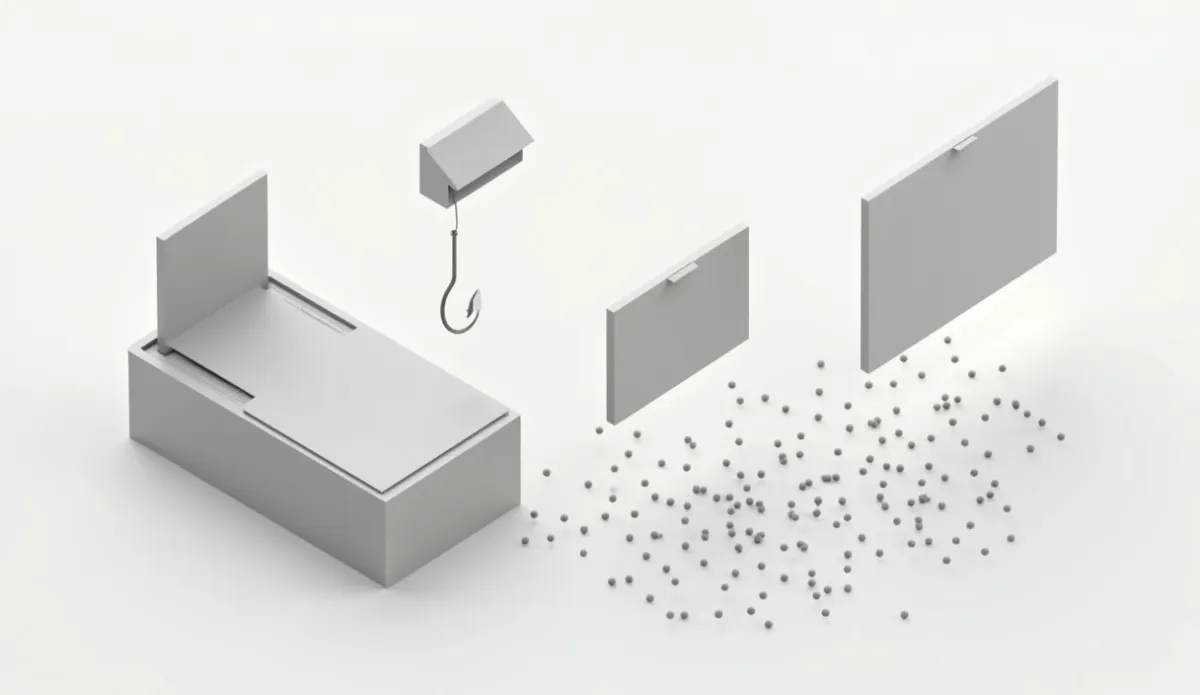
Hook rate is the percentage of people who see an ad and stop to engage with it, whether that's clicking a native headline, watching the first few seconds of a video, or tapping into a carousel, rather than scrolling or reading past it. It's a proxy for how well the opening moment of a creative, the headline, thumbnail, or first frame, grabs attention before anything else about the offer matters.
Why hook rate gets measured separately from CTR#
Click-through rate tells you whether the whole ad converts attention into a click, but it blends two very different failures together: nobody noticed the ad, or people noticed it and weren't interested enough to click. Hook rate isolates the first half of that problem. On video-heavy formats it's often measured as the percentage of viewers who watch past the first 3 seconds; on native and content-discovery formats it's closer to impression-to-click on the headline and thumbnail alone, before the reader ever sees the landing page.
How it plays out in native advertising#
On networks like Taboola, Outbrain, and MGID, the widget only shows a headline and a thumbnail image competing against a dozen other stories on the same page. That's a brutal, compressed test of hook strength: you get one line of text and one image to earn a click before the reader's eye moves on. Media buyers who study ad creative analysis treat the headline and image as the hook, and everything past the click (the landing page, the offer, the pre-lander) as a separate stage with its own conversion math. A weak hook caps your results no matter how good the rest of the funnel is, because low volume never reaches the parts you optimized.
What moves hook rate#
Specificity, curiosity, and pattern interrupts tend to outperform generic claims. "Wrinkles: Most People Use Lotions. Koreans Do This Instead" is doing more hook work than a plain product benefit statement, because it creates a curiosity gap the reader has to click to close. Buyers researching native ad headline formulas will notice most high-performing patterns lean on a specific detail, a surprising claim, or a direct question rather than broad adjectives. Image choice matters just as much: a close, high-contrast, slightly unusual photo tends to stop the scroll better than clean stock photography.
Using competitive data to find strong hooks#
Because hook rate is hard to see from outside an account, buyers rely on a proxy: how long an ad keeps running. An ad that keeps running for weeks has probably kept clearing whatever hook-rate bar the algorithm and the advertiser's budget require, though longevity is a signal, not proof. Browsing examples of long-running native ads across networks, or looking up a specific brand's captured ad creatives in OpenAdLibrary's ad spy tool, shows which headline and image patterns advertisers keep running, a better starting point than guessing from first principles.