MSN Content Syndication: How Publishers Get Into the Feed
Getting your content into the Microsoft Start feed is a separate program from MSN's native advertising. Here's how the application process, editorial bar, and revenue model actually work.


Getting your content into the Microsoft Start feed is a separate program from MSN's native advertising. Here's how the application process, editorial bar, and revenue model actually work.

News sites sell ad inventory through at least two channels with completely different price floors: negotiated direct or programmatic display, and self-serve native feed placements.

Ecommerce, finance and travel dominate MSN's native feed. Here's the advertiser and vertical breakdown from an index of 281,839 live MSN creatives, plus who's actually buying there.

Microsoft Advertising blends native placements into Search campaigns by default. Here's exactly where the exclusion setting lives, why advertisers use it, and when Audience Network is worth keeping as its own channel.

Is MediaGo traffic quality good? What captured MediaGo creatives by vertical can and cannot show about it, and how to vet the traffic yourself before committing ad budget.

MSN's native feed runs on the Microsoft Audience Network — but resold partner demand fills a slice of it too. Here is the click-chain evidence, plus the five-step method for profiling any publisher's ad networks.

Two of the longest-observed creatives in our captures are hearing aid ads. Why the niche fits native feeds so well (demographics, economics, stigma) and what its five recurring angles teach any media buyer.

In travel, native ads often let the price do the selling from inside the headline. Examples from our June captures, including two creatives priced $5,299 and $5,999 that may be a price test, and how to read the churn.

Ten real creatives captured from the Microsoft Audience Network: the advertisers, observed run times, and the headline mechanics each one uses.

Estimate Microsoft Audience campaign costs from the selected buying model, conversion economics and clearly labeled planning scenarios.

Similar-looking native ads, different machinery: Taboola's open-web publisher network versus Microsoft's own surfaces with first-party and LinkedIn profile targeting. Where ads run, targeting, bidding and how to research each.

Insurance advertisers can compare native networks by the offers and markets they permit, available placement and audience controls, and measured cost per accepted lead. Creative counts describe captured examples, not lead quality.

A June capture of 13,793 travel creative records, with Flight Centre's price-led ads as examples, and what such examples can and cannot show about offers, price presentation, funnels and measurement.

Game user acquisition is concentrated in a few walled-garden auctions, and native is one open-web channel to test as a supplement. Captured game ad examples, browser and app destinations, measurement and a bounded test plan.

A planning sequence for standalone Microsoft Audience campaigns: UET tracking, campaign settings, targeting, image ad specs and early monitoring, with what to confirm in Microsoft's current documentation.

Microsoft Audience campaigns offer LinkedIn-based professional targeting alongside in-market audiences, remarketing and customer match. How each option works, what to verify, and how to layer them without choking volume.

A guide to the main native advertising platforms (Taboola, Outbrain (Teads), MGID, Revcontent, Microsoft Audience Network, MediaGo, Yahoo), the buying questions to ask each, and what public creative counts cannot establish.

How to evaluate Microsoft Audience Network traffic with placement reporting, tracking checks and qualified outcomes. A creative archive cannot establish traffic quality, relative price or why a campaign did badly.

In our June 2026 captures, the Microsoft Audience Network supplied more native creatives than Taboola, which reflects collection coverage, not market size. Who the network may suit, its drawbacks, and who should pass.

Network share of 725,882 native creatives captured as of July across 49 networks: Microsoft, Taboola and Outbrain account for roughly 82% of what we captured, by creative count, not revenue. Table, method and caveats inside.

Seven captured examples of rebate, eligibility and comparison messages from an insurance-classified sample, with notes on adjacent products and the limits of classifying ads from captures.

An observational review of a July 2026 sample of 281,839 captured Microsoft Audience Network creatives: formats, examples, and the cost, audience and performance questions a test must answer.

Check each network's current image specifications for the exact format you buy, then export the crops from one sharp master. Verified Outbrain and Realize examples, plus the crop-survival rules that matter more than pixels.

A July 2026 sample recorded 257,553 first-seen MSN creatives in 30 days, a collection statistic, not market share. How the MSN feed works, what msft-ssp and adnxs wrappers show in captured click paths, and how to research it.

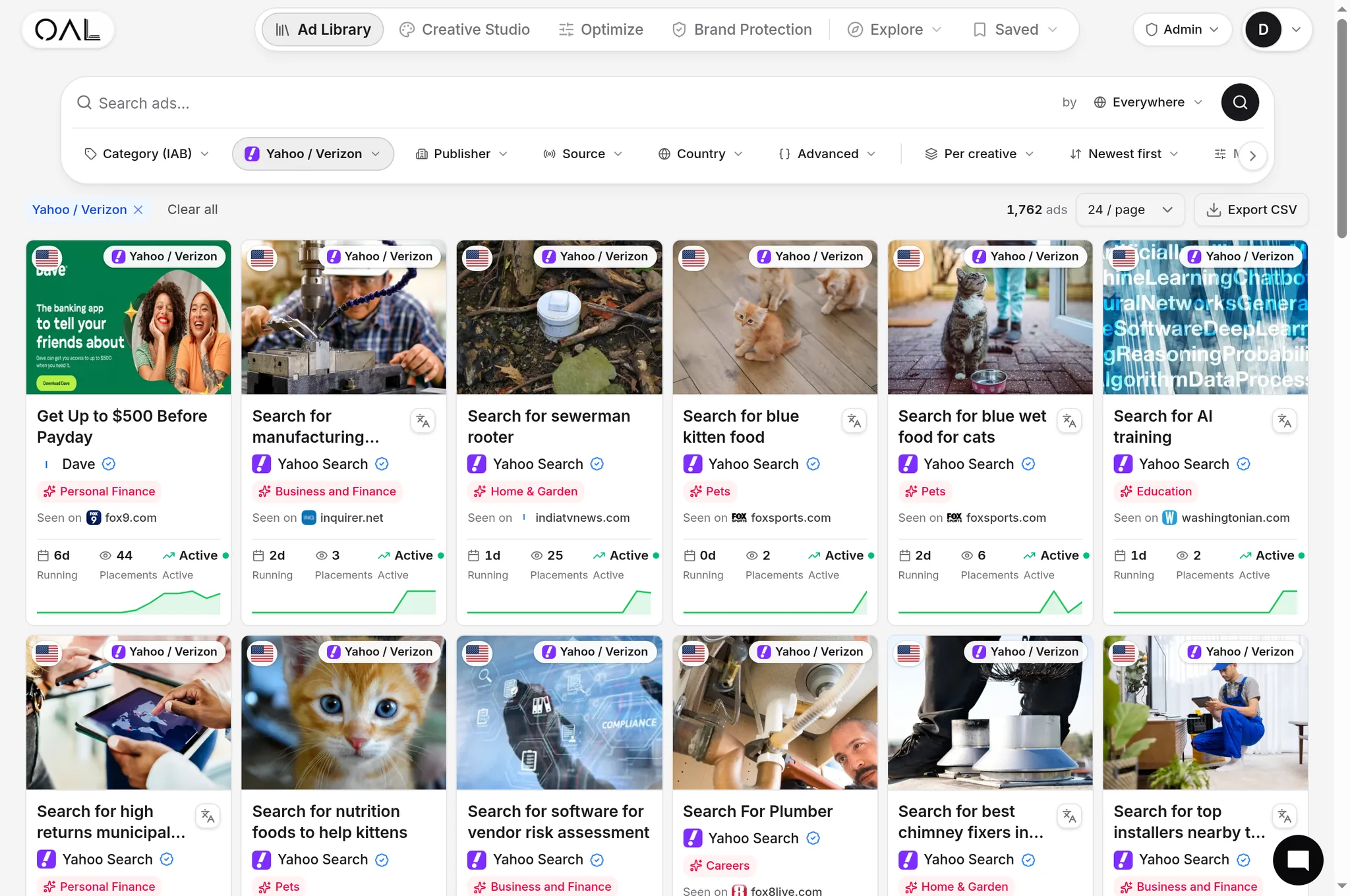
Yahoo Gemini is gone, but "Yahoo native" still trips up buyers: here is how to work out who serves the ads in 2026, how to buy them, where MSN fits, and how to study captured creatives.

MSN native ads are sponsored image-and-headline units shown in MSN's pages and feeds, styled to match the stories around them. They can be bought through Microsoft Advertising and some other native platforms.