Español
 Français
 Deutsch
 Italiano
 Nederlands
 Polski
 Svenska
 Türkçe
 Русский
 日本語
日本語 한국어
한국어 简体中文
简体中文 Tiếng Việt
 Bahasa Indonesia
 繁體中文
繁體中文 Čeština
 Dansk
Dansk Norsk (bokmål)
 Suomi
Suomi Ελληνικά
 Română
 Magyar
 Українська
 ไทย
ไทย हिन्दी
 العربية
 עברית
עבריתHearing Aid Ad Examples: Why This Niche Owns Native Feeds
Two of the longest-running creatives in the entire index are hearing aid ads. Why the niche fits native feeds so well — demographics, economics, stigma — and what its five recurring angles teach any media buyer.

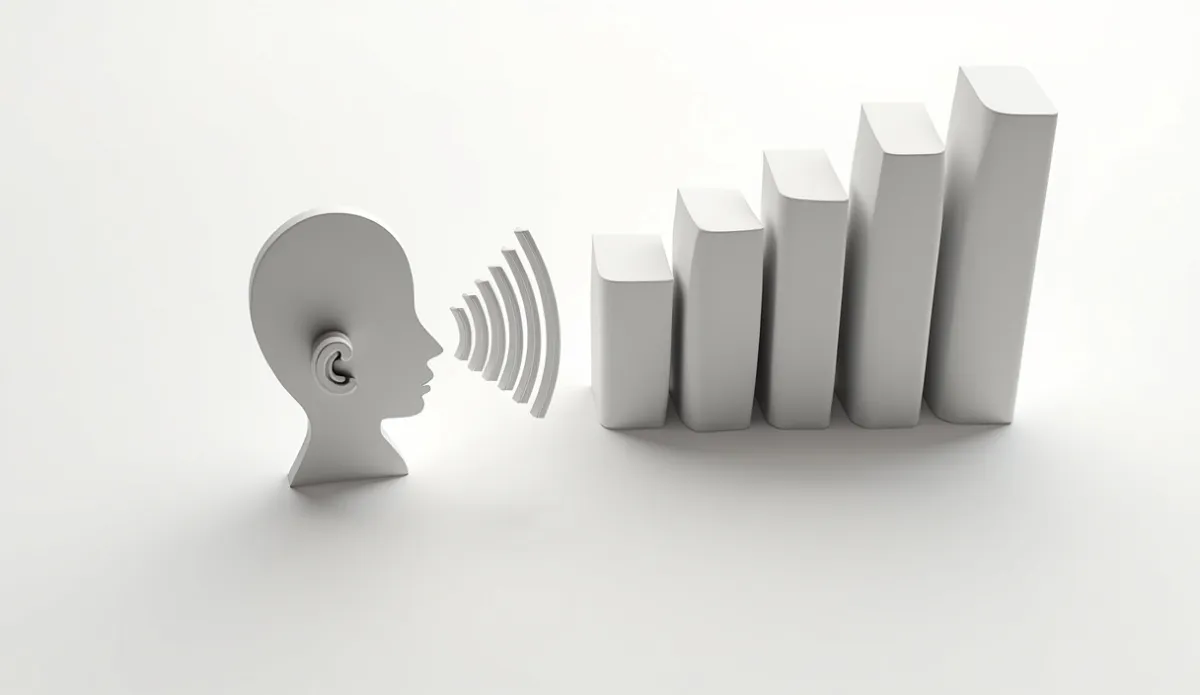
Hearing aid ads saturate native feeds because the channel and the customer are a near-perfect match: content-recommendation audiences skew older, the product carries clinic-level customer value that can fund expensive funnels, and the purchase is researched privately — in a feed — rather than announced in a store. The evidence is in the run times: two of the longest-running creatives in OpenAdLibrary's index of 725,000+ native creatives (June 2026) are hearing ads — Audika's Taboola creative at 37 days observed and Boots Hearingcare's Microsoft Audience Network creative at 38. This article explains why the niche owns the placement, breaks down the live ads, and maps the angle taxonomy behind them.
Why hearing aids own native feeds#
Four structural reasons, none of them accidental:
- The audience is already there. News portals and content-recommendation widgets over-index on 55+ readers — the exact demographic hearing loss addresses. Native networks reach that demographic at scale that social channels struggle to match; the Microsoft Audience Network in particular is a core placement, covered in the MSN native ads guide.
- The economics fund the funnel. Hearing care combines a high-ticket device with years of clinic relationship value. That customer value supports content funnels, quiz pre-landers, and repeated paid touches that a $30 product could never afford.
- The purchase is consideration-heavy. Nobody impulse-buys hearing care. A vertical that requires education is a vertical built for advertorials — the ad starts a conversation the landing page finishes.
- Stigma favors the feed. Many buyers research hearing loss privately before ever admitting it aloud. An in-feed article click is anonymous in a way a showroom visit is not; the channel's discretion is a product feature.
The category sits inside health, the single largest native vertical — 24,472 classified creatives in the index as of June 2026, per the top native ad verticals breakdown.
The advertiser mix has also widened. Since the United States legalized over-the-counter hearing aids in 2022, DTC device brands have joined the clinic networks and lead-gen aggregators in the same feed slots — which means more creative variety to study and more bid pressure on the same audience. The niche now runs the full spectrum from national pharmacy brands to single-product dropship-style sellers, and they are distinguishable mainly by their landing pages.
Two live hearing aid ads that refuse to die#
Audika — "Struggling to Hear Clearly? Discover a Device Transforming Lives." Taboola, 37 days observed.
Three deliberate choices in eleven words. The second-person problem question ("Struggling to Hear Clearly?") makes the reader self-diagnose before the sale starts. "A Device" — not "a hearing aid" — sidesteps the category's stigma; the reader can be curious about a device without conceding they need a hearing aid. And "Transforming Lives" promises the outcome, not the mechanism, leaving the curiosity gap open for the click.
Boots Hearingcare — "Discover comfortable and discreet hearing solutions at Boots." Microsoft Audience Network, 38 days observed.
This one sits in the longest-running cohort of the entire index — see the longest-running native ads. The load-bearing word is "discreet": the copy answers the category's biggest unspoken objection (everyone will see it) before any benefit claim. "Comfortable" handles objection two. And the retail anchor — a national pharmacy brand — imports decades of trust into a category crowded with unknown sellers.
Both ads have held feed slots for five-plus weeks. Advertisers cut losing creatives in days, so run time at this length is the strongest public signal of profitability — the reasoning is in ad longevity as a winning signal.
The hearing aid angle taxonomy#
Across the niche's live creatives, five angles recur:
- The problem question. "Struggling to hear clearly?" Self-diagnosis as qualification — the click is an admission, which makes it a high-intent click.
- Discretion and invisibility. "Discreet," "nearly invisible," "no one will notice." Objection-first copy for a stigma-driven category.
- The technology generation. "A device transforming lives," "new device" framing — selling the idea that hearing tech quietly leapt a generation, so whatever the reader rejected years ago no longer applies.
- Eligibility and subsidy. The adjacent senior-health pattern: the index's longest-running cohort includes a "This government Rebate May Cover Part of Your Health Premium" creative (38 days observed). Eligibility framing pervades senior verticals because "check if you qualify" converts — but it is also the angle most likely to drift into implying official programs that don't exist. Keep it literal and disclosed, per the FTC's rules for advertorials and native ads.
- The comparison listicle. "Best hearing aids of the year" advertorials that rank devices — classic affiliate and lead-gen territory where the ranking's sponsor usually wins it.
Which of these is a hook and which is an angle matters when you swipe them — the taxonomy is in hook vs angle vs claim.
The funnel: quiz, eligibility check, clinic booking#
Hearing traffic rarely lands on a product grid. The dominant chains in the niche:
- Ad → advertorial → clinic booking. The article educates (the technology-generation story), then routes to a "find a clinic near you" booking step. Brands with physical networks — the Audika and Boots model — run this.
- Ad → quiz or eligibility check → lead form. "Answer 5 questions to see if you qualify" — the quiz is both engagement device and lead qualification. The lead is worked by phone, often for high-value fittings.
- Ad → comparison listicle → affiliate offer. The performance-marketing end of the niche: a ranked "best of" advertorial where the sponsoring device usually tops the table, monetized per sale or per lead.
If pre-sell pages are new territory, what a pre-lander is covers the mechanics and advertorial landing page examples shows the anatomy. OpenAdLibrary's 1.3 million+ landing captures (June 2026) mean you can open the actual funnel behind most hearing creatives rather than inferring it.
Compliance is the tripwire#
Hearing is a medical category, and the line between "device transforming lives" and an unsubstantiated medical claim is where accounts die. The long-running ads above are instructive precisely for their restraint: they promise discovery, comfort, and discretion — experiential claims a seller can stand behind — not restored hearing percentages or clinical outcomes. Add clear sponsorship disclosure on every advertorial step, and treat eligibility language with the same literalism you would want from an insurer. The aggressive end of the niche that ignores this feeds network bans and regulator sweeps.
A useful pre-launch check: read your headline as the network reviewer will. "Discover a device" survives; "hear like you're 25 again" will not, and neither will fake-clinical framing ("audiologists don't want you to know"). The niche's five-week runners prove you do not need the aggressive version — restraint and longevity are, in this vertical, the same strategy.
Research the niche before you spend#
The niche's economics attract sophisticated advertisers, which makes it one of the best free educations in native advertising:
- Search hearing-related creatives in the native ad spy tool across networks, and sort by longevity — the five-week runners above surfaced exactly this way.
- Separate the business models. Clinic brands, device DTC, lead-gen aggregators, and affiliate listicles all buy the same feed slots with different math. The landing capture tells you which you're looking at — and which playbook is worth copying for your economics. A clinic brand's patient lifetime value justifies creative patience a device affiliate cannot afford.
- Watch Taboola's health inventory via the Taboola spy page — health is Taboola's largest classified vertical at 11,982 creatives (June 2026), and hearing angles surface there continuously.
- Budget expectations, qualitatively: senior-health placements are competitive, and media buyers commonly report CPCs at the higher end of native ranges for these audiences — your geo and funnel quality will move this a lot. Treat any precise benchmark you read as somebody's campaign, not the market.