 Español
 Português (Brasil)
 Français
 Deutsch
 Italiano
 Nederlands
 Polski
 Svenska
 Türkçe
 Русский
 日本語
日本語 한국어
한국어 简体中文
简体中文 Tiếng Việt
 Bahasa Indonesia
 繁體中文
繁體中文 Čeština
 Dansk
Dansk Norsk (bokmål)
 Suomi
Suomi Ελληνικά
 Română
 Magyar
 Українська
 ไทย
ไทย हिन्दी
 العربية
 עברית
עבריתNative Ads for Brand Awareness: When the Format Fits the Goal
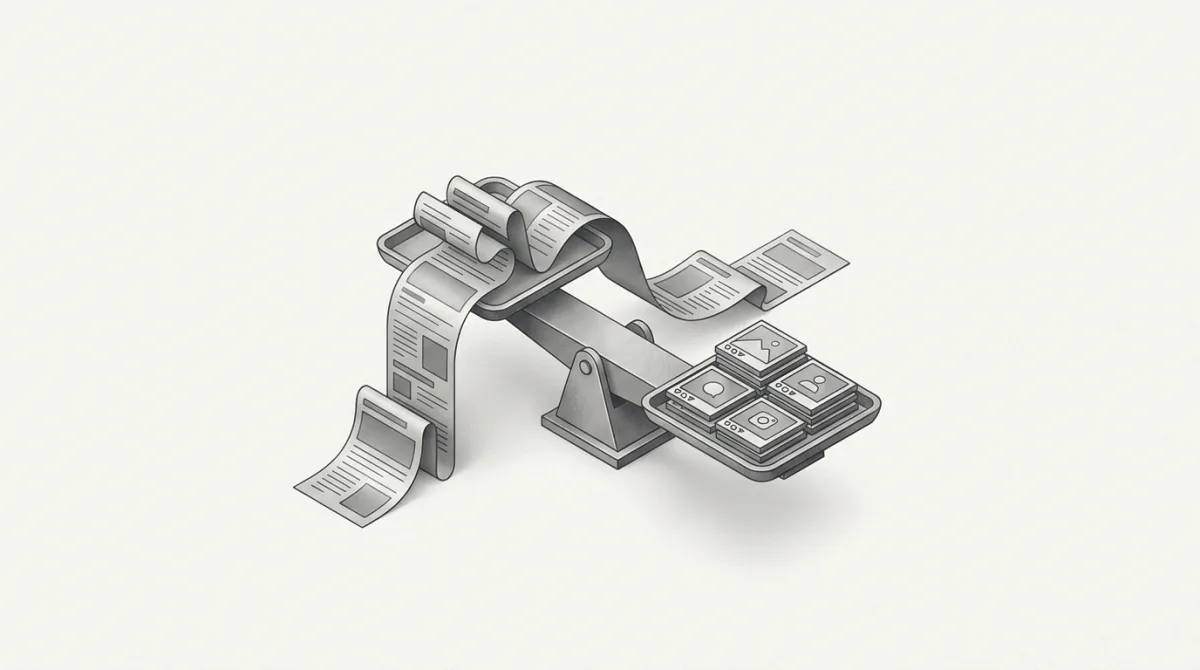
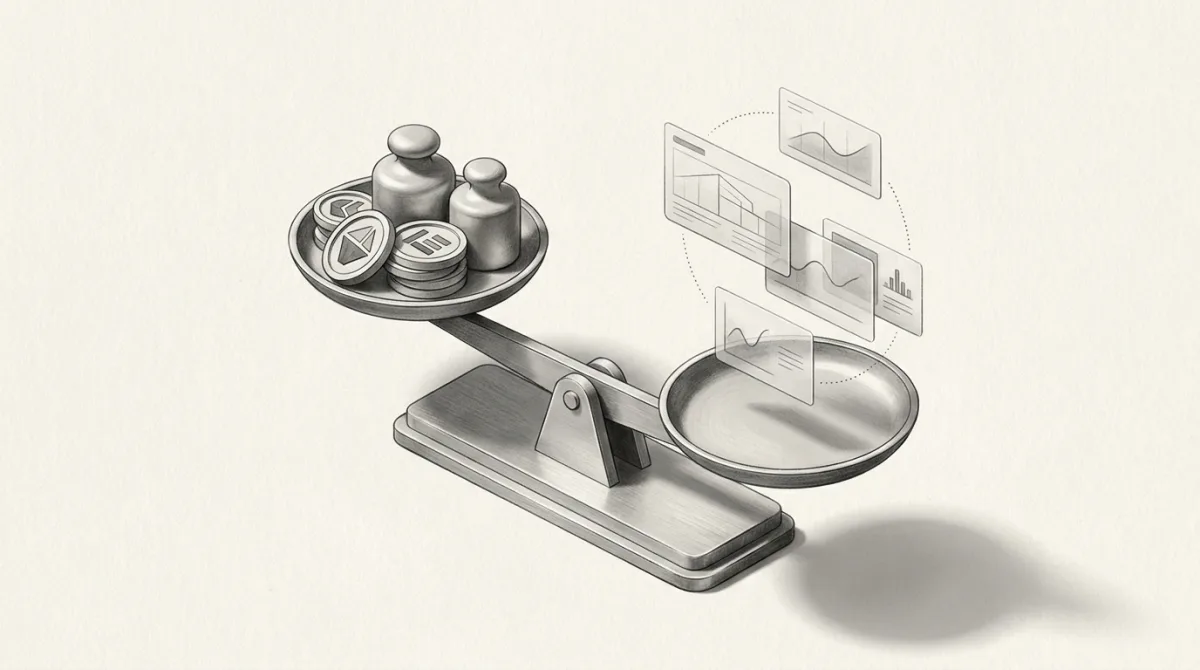
Native is strong for broad, cost-efficient reach across publisher content and weak for building a consistent visual brand identity. Knowing which awareness job you actually need decides whether it fits.


Native advertising works for brand awareness when the goal is broad, repeated visibility across trusted publisher context, but it's a weaker choice than social or video when the goal is building recognizable brand identity through consistent visuals and message control. It fits awareness campaigns that lean on reach and context, not campaigns that need tight creative control over how the brand is presented.
That's a more useful answer than a flat yes or no, because "brand awareness" covers two genuinely different jobs: getting a lot of people to see your name in a lot of places (native is strong here), and building a specific, consistent brand impression through repeated exposure to the same polished creative (native is weaker here, by design, because the format rewards headline and image variation over consistency).
Why native reach works for awareness#
Native placements sit inside publisher content that readers already trust and engage with, on comparison-shopping sites, news outlets, and niche content publishers, at a scale most brands can't match through direct-buy display. Networks like Taboola, Outbrain (now part of Teads), MGID and Revcontent collectively serve into thousands of publisher properties, which means a single native campaign can put a brand's name in front of readers across health, finance, entertainment and lifestyle content simultaneously.
Our index of 725,000+ live native creatives across 49 networks (June 2026) shows this breadth directly: MSN and Taboola alone each carry well over 200,000 classified creatives, spanning nearly every consumer vertical. That kind of distribution is exactly what a reach-driven awareness campaign needs, wide publisher coverage rather than a single dominant platform.
Why native struggles for brand identity building#
The tension is that native's biggest strength, blending into publisher content, works against consistent brand presentation. A native ad's whole design logic rewards curiosity-driven headlines and attention-grabbing images tailored to the specific publisher context, not a consistent logo treatment, color palette or tone that builds recognition over repeated views. Compare that to a Meta or connected-TV awareness buy, where the same polished, branded creative runs largely unchanged across placements, reinforcing the same visual identity every time.
This is one of the clearer trade-offs covered in our comparison of native ads vs Facebook ads for DTC: native tends to win on cost-efficient reach and direct-response performance, while social formats tend to win on consistent brand storytelling. If your awareness goal is specifically "people should recognize our logo and remember our tagline," native is the wrong primary tool, even though it can still support that goal as a secondary channel.
Where native awareness campaigns actually make sense#
- Category education. If you're introducing a genuinely new product category, a home-security gadget, a new supplement format, a niche financial product, native's curiosity-driven headline style is well suited to explaining "what is this thing" to a cold audience before you ever ask for a purchase.
- Retargeting-adjacent reach. Running native alongside a paid social or search campaign extends reach into publisher inventory those channels don't touch, useful for making sure a brand name shows up in more than one context during a consideration window.
- Local and niche coverage. For brands with a geographically concentrated or narrow-interest audience, native's publisher-level targeting (a specific site, a specific content vertical) can outperform the broader targeting available on major ad platforms.
- Budget-constrained testing. Because native CPCs are typically a fraction of what comparable reach costs on premium video or social placements, it's a lower-risk way to test messaging and creative angles before committing bigger budget to a brand campaign elsewhere.
None of this means native is a bad awareness channel on its own merits, it just means the awareness job it's good at is different from the one most marketers picture when they hear "brand awareness campaign." If the mental image is a polished TV-style spot reinforcing a logo, native won't deliver that. If the goal is simply making sure more of the right people have seen your name somewhere credible before they encounter your product elsewhere, it delivers that reliably and at a lower cost per impression than most alternatives.
What to measure instead of just impressions#
Raw impression counts are the easiest thing to report and the least useful thing to optimize toward. A native awareness campaign is working if you can show movement on metrics closer to the actual goal:
| What to track | Why it matters for awareness |
|---|---|
| Branded search lift | Rising searches for your brand name during the flight window is the clearest signal reach translated to recall |
| Direct-traffic increase | People typing your URL directly, rather than clicking through, suggests the ad registered |
| View-through conversions | A later conversion from someone who saw but didn't click the native ad, tracked via view-through attribution |
| Frequency and unique reach | Confirms you're building broad exposure rather than hammering the same small audience repeatedly |
Diversifying beyond a single channel#
Brands that lean entirely on one platform for awareness, most often Meta, take on real concentration risk: a policy change, a cost spike, or an account issue can wipe out the whole channel overnight. Native is one of the more accessible ways to spread that risk across a genuinely different distribution surface, publisher content rather than a social feed, without needing a connected-TV budget to do it. Our guide to diversifying beyond Meta ads covers the broader case for that spread, and our overview of the best native ad networks ranked by real ad volume is a useful starting point for picking which networks actually carry the reach an awareness campaign needs.
A realistic creative approach for awareness on native#
Because native rewards curiosity and specificity over polish, an awareness campaign built on native shouldn't try to force a traditional brand-campaign creative (a clean logo lockup, a tagline, minimal copy) into the format. It underperforms against the curiosity-driven creative the format's own algorithms and placements favor. A more workable approach keeps the brand name visible in the headline or image while still leading with a specific hook, "the surprising reason [Brand] customers switched from X" rather than a generic tagline execution. Our guide on native ad creative best practices covers image and headline patterns that hold up across networks, and pairing that research with a look at what's currently running via OpenAdLibrary's ad-intelligence tools is a faster way to calibrate creative than guessing at what "brand-safe" native looks like in the abstract.
What it costs to build reach this way#
Because native is bought largely on a cost-per-click basis rather than a flat CPM buy, budgeting for an awareness flight works differently than booking a display or video reach campaign. Media buyers commonly report Tier-1 desktop CPCs on major networks running from roughly a few cents up to under a dollar depending on vertical and competition, your niche and geo will move this a lot, and our full budgeting guide breaks down how to size a reach-focused native budget without accidentally optimizing it into a direct-response campaign in disguise. That distinction matters: an awareness flight optimized purely for cheapest CPC tends to drift toward the same curiosity-bait creative that performs on direct-response offers, which isn't necessarily what you want your brand associated with.
For affiliate and DTC teams running native primarily for performance rather than brand building, the calculus is different again, covered in our guide to native advertising for affiliate marketing, where the goal is immediate conversion rather than long-term recall.
The bottom line#
Native advertising is a legitimate awareness tool for reach, publisher-context diversity and cost-efficient exposure, and a weak tool for building tightly consistent brand identity through repeated, unchanged creative. Most brands running successful native awareness campaigns treat it as one leg of a multi-channel plan rather than the whole strategy, using it to widen reach and reinforce recognition alongside social and search, not to replace the channels that do the heavy lifting on visual brand consistency.