Español
 Português (Brasil)
 Français
 Deutsch
 Italiano
 Nederlands
 Polski
 Svenska
 Türkçe
 Русский
 日本語
日本語 한국어
한국어 简体中文
简体中文 Tiếng Việt
 Bahasa Indonesia
 繁體中文
繁體中文 Čeština
 Dansk
Dansk Suomi
Suomi Ελληνικά
 Română
 Magyar
 Українська
 ไทย
ไทย हिन्दी
 العربية
 עברית
עבריתCan People Tell Ads Are AI? The Perception Gap in Numbers
The real perception gap isn't AI versus real, it's polished versus rough. Here's what actually tips off native ad viewers, and where it genuinely matters.

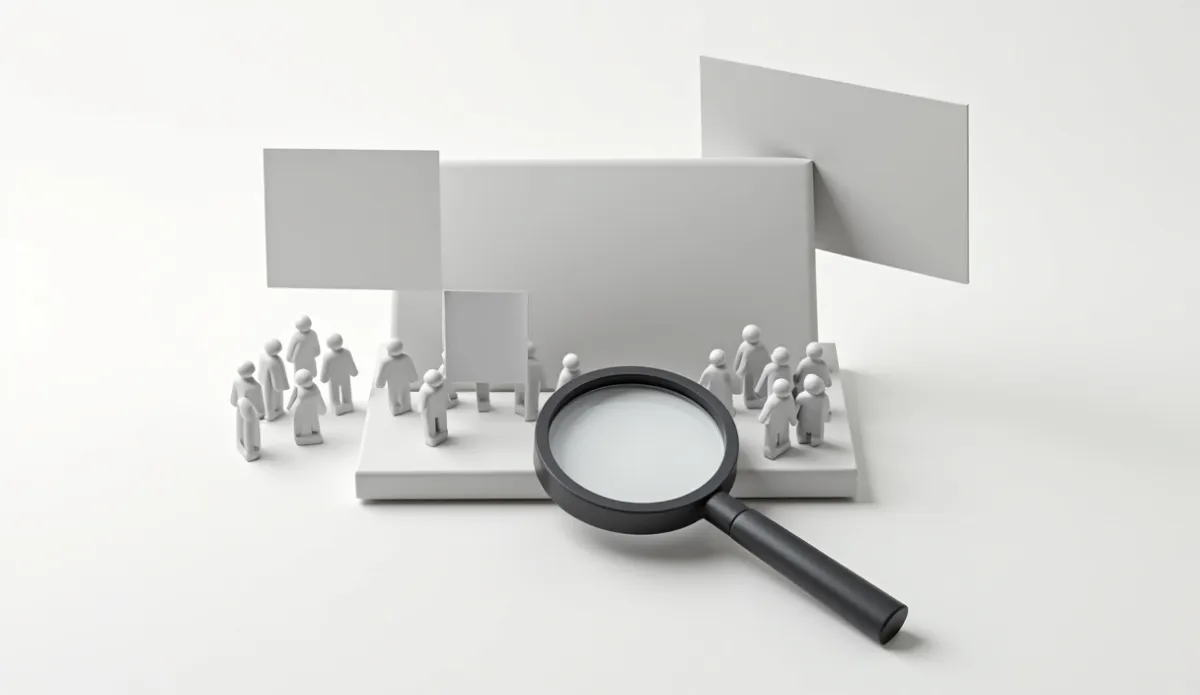
Most people can't reliably identify AI-generated ad creative on sight, especially in a native feed where they're skimming past headlines in a fraction of a second, but perception shifts hard once something looks too perfect: symmetrical faces, glassy skin, hands with the wrong number of fingers, or overlay text that doesn't quite parse. The real gap isn't between "AI" and "not AI." It's between polished and rough, and rough consistently reads as more trustworthy in native placements regardless of how the image was actually produced.
Why native ads are a different perception test than social feeds#
A social feed gets more sustained attention per post than a native widget sitting under an article. Users scanning a native placement are mid-read, low-attention, and moving fast, which means the bar for "does this look like a stock ad" matters more than the bar for "was this AI-generated." That's a big part of why candid, low-production visual style already dominates the highest-volume verticals in the index: it's not an aesthetic trend, it's a direct response to how little scrutiny an ad actually gets before someone decides to click or scroll past.
What actually tips people off#
- Generation artifacts. Malformed hands, garbled background text, repeated textures, and unnaturally perfect symmetry are still the most reliable tells across current image models.
- Vibe mismatch. An ultra-clean, professionally lit image paired with a headline promising a "grandma's home remedy" creates a credibility gap that a viewer feels even without consciously spotting the generation.
- Over-uniform features. Identical, unnaturally even skin texture or teeth across a face reads as synthetic even to viewers who couldn't explain why.
- Lighting that doesn't match the claimed setting. A headline describing an outdoor, natural-light scenario paired with an image lit like an indoor studio creates a subtle mismatch that registers as "off" even when a viewer can't name why.
What doesn't tip people off#
Believable everyday settings, phone-camera framing, and local context that actually matches the geo the ad is running in all pass without scrutiny, whether the source was a camera or a generative model. The signal viewers respond to is context plausibility, not provenance. This is worth internalizing because it changes where you should spend review time: checking whether a scene is plausible for the claimed geo and vertical catches far more actual problems than trying to guess whether an image was AI-generated in the first place.
Why "rough" keeps winning regardless of source#
The mechanism is straightforward once you name it: a native placement is competing with real articles for the same fraction of a second of attention, and anything that visually announces "this is an advertisement" gets filtered out by the same mental shortcut people use to skip past banner ads. A candid, imperfect image doesn't trigger that filter, whether it came from a phone camera or a generative model tuned to produce the same visual grammar. This is also why the advice to "make it look real" has outlasted several generations of image models. It was never really about authenticity. It was about avoiding the visual signature of an ad.
Does it matter for performance if people suspect AI involvement?#
Not much, on its own. Even if a share of viewers suspect an image was generated, the ad still performs if it delivers the emotional hook and doesn't visually announce itself as an ad. Performance in native creative is overwhelmingly about relevance and curiosity, not verified authenticity. Our breakdowns of best-performing native ads and the most common native ad angles both point at the same pattern: the winning variable is whether the creative earns a click, not whether a viewer could technically prove where the image came from.
What a rough A/B test on polish level actually shows#
If you want to settle the question for your own account rather than take it on faith, run a simple test: take one angle, produce two versions of the supporting image, one candid and imperfect, one clean and studio-styled, and hold the headline and offer constant across both. Media buyers who run this test repeatedly across verticals tend to see the candid version pull a meaningfully higher CTR, not because viewers consciously reject the polished one as "fake," but because the polished version reads as an interruption a beat faster than the candid one does. The test is cheap to run and settles the argument for your specific vertical and geo far better than any general rule can, since polish tolerance does shift somewhat by audience age and vertical.
The media buyer's actual takeaway#
Stop spending review time trying to determine whether a competitor's creative was AI-generated. It's rarely knowable with confidence, and it's the wrong question anyway. The useful question is whether the creative's visual style matches what's already earning attention in that vertical and network, which is a pattern you can check directly against live, currently-running creative with a native ad spy tool rather than guess at from a screenshot.
Where it does matter: trust and compliance#
Perception stops being a minor performance variable and becomes a real risk the moment an AI-generated image implies a specific real person's endorsement, mimics a competitor's protected creative too closely, or gets paired with copy that overclaims what the product does. That's the territory covered in our guides on trademark infringement in ads and copycat landing pages, and it's also exactly why FTC disclosure rules for advertorials exist in the first place: the concern regulators care about isn't "was this AI," it's "does this mislead the person looking at it."
A simple pre-flight check before you scale an AI creative#
- View the creative at native thumbnail size on a mobile screen, exactly as a real viewer would see it
- Check hands, background text, and facial symmetry for generation artifacts
- Ask whether the "story" the image implies actually matches the headline's claim
- Check for likeness or trademark issues if the image resembles a real, identifiable person or brand
- Run it past your compliance checklist before scaling budget behind it, especially in health, finance or insurance
What the scale of the data suggests#
Across networks like Taboola (206,145 creatives) and MSN (281,839 creatives) in OpenAdLibrary's index of 725,000+ native creatives (June 2026), candid, home-and-lifestyle style imagery dominates regardless of network. If overtly synthetic-looking images consistently tanked performance, you'd expect the market to have shifted back toward stock photography or real photoshoots at scale. It hasn't, which tells you the market cares about the visual grammar the image follows, not its origin.
What this means for creative testing budgets#
If polish doesn't buy trust the way it might in a display or social placement, that changes where testing budget should go. Spend less time and money on a single, highly-produced hero image and more on generating a wider spread of angle variants, since angle and hook variety is doing more of the performance work than image production value in this channel. A media buyer moving budget from social to native for the first time often over-invests in production quality out of habit, and that's usually the first thing worth correcting.
Common mistakes#
- Assuming more polish builds more trust, when the opposite is usually true in a native feed
- Skipping a hands-and-text artifact check before scaling spend on a creative
- Reusing the same AI-generated face across dozens of variants, which accelerates creative fatigue and starts to look suspicious in aggregate even if no single creative does
- Over-investing production budget in a single polished hero image instead of testing a wider spread of candid angle variants
Bottom line#
People aren't scanning native ads for AI fingerprints. They're scanning for anything that looks like an interruption, and a rough, candid AI image usually clears that bar just as well as a rough, candid photograph does. Spend your review time on artifacts, claim accuracy and likeness risk, not on whether a viewer could technically tell the difference.