English
 Español
 Português (Brasil)
 Français
 Deutsch
 Italiano
 Nederlands
 Polski
 Türkçe
 Русский
 日本語
日本語 한국어
한국어 简体中文
简体中文 Tiếng Việt
 Bahasa Indonesia
 繁體中文
繁體中文 Čeština
 Dansk
Dansk Norsk (bokmål)
 Suomi
Suomi Ελληνικά
 Română
 Magyar
 Українська
 ไทย
ไทย हिन्दी
 العربية
 עברית
עבריתHur mycket kostar native-annonser? En budgetguide för 2026
En praktikers uppdelning av vad native-annonsering verkligen kostar 2026: minimiinsättningar, CPC-intervall och testbudgetar som faktiskt avgör om du vinner, grundade i live annonsdata från Taboola, Teads, MGID och Revcontent.

Native-annonsering har ett rykte om prissättning. Nätverken visar upp ett $0,03 minimibud och en $10/dag startbudget, för att sedan tyst låta nya annonsörer bränna $1 500 på att lära sig att inget av talen är verkligt. Det ärliga svaret på "hur mycket kostar native-annonser" kommer i tre lager: minimiinsättningen för att öppna ett konto, CPC:n du faktiskt betalar för att vinna kvalitetstrafik, och den totala budget du behöver innan datan betyder något.
Den här guiden bryter ner alla tre över de stora nätverken 2026. Den visar dig också hur du kan dubbelkolla varje siffra mot vad annonsörer gör just nu, med hjälp av live annonsdata istället för magkänsla.
För kontext om skala: över OpenAdLibrary-indexet (juni 2026) spårar vi 25 933 annonsörer, 589 036 fångade kreativer och över 5,4 miljoner annonsobservationer över 42 nätverk. Det är poolen som siffrorna nedan läses mot.
Om du fortfarande bestämmer vilka plattformar du ska testa, börja med grundpelaren: Bästa native-annonsnätverken 2026 (Rankade efter verklig annonsvolym). Den här sidan förutsätter att du har begränsat valet och nu behöver budgetera.
Hur mycket kostar native-annonser 2026?#
CPC ligger ungefär $0,20 till $0,90 beroende på nätverk, enhet och bransch, med minimikontoinsättningar mellan $50 och $100 på de flesta self-serve-plattformar. Siffran som faktiskt avgör ditt öde är total testbudget: planera $2 000 till $5 000 per erbjudande, per nätverk innan resultaten är tillförlitliga. Det blir ungefär $50/dag för tidig signal och runt $300/dag för att lämna inlärningsfasen.
Klyftan mellan den annonserade miniminivån och den funktionella miniminivån är där de flesta nybörjare förlorar pengar. Så resten av den här guiden är byggd kring de funktionella siffrorna, inte de marknadsföringsmässiga.
De tre kostnaderna som faktiskt spelar roll#
När folk frågar vad native-annonser kostar, blandar de vanligtvis ihop tre separata saker. Dra isär dem så blir budgeteringen mycket tydligare.
- Minimiinsättning. Det engångsbelopp som finansierar och aktiverar ett konto. Lågt, mest symboliskt.
- CPC (kostnad per klick). Vad du betalar per klick i native-annonsauktionen. Det här är priset för trafik.
- Total testbudget. Det utlägg som krävs för att samla tillräckligt med konverteringar för att nätverkets algoritm ska optimera, och för att du ska kunna fatta ett säkert beslut om att behålla/avsluta. Det här är den verkliga kostnaden.
Behandla insättningen som en spärr, CPC:n som mätaren och testbudgeten som den faktiska räkningen. Insättningen släpper in dig. Testbudgeten är vad du bör planera runt.
Minimiinsättningar per nätverk#
Här är varje större self-serve-plattform för native-annonsering sätter sin inträdesgräns 2026. Det här är aktiveringsgolv, inte budgetar.
| Nätverk | Minimiinsättning | Prismodeller | Anteckningar |
|---|---|---|---|
| Taboola | ~$100 | CPC, CPM, vCPM | Self-serve; vissa konton ser ett ~$50 till $75 golv för annonsutlägg |
| Outbrain / Teads | Högre (hanterad onboarding) | CPC, CPM | Outbrain förvärvade Teads 2025; den kombinerade enheten kör under namnet Teads |
| MGID | ~$100 | CPC, CPM | Ofta den billigaste vägen till första data |
| Revcontent | ~$50 tröskel | CPC, vCPM | Annonsörsgodkännande styr nya konton; historiskt högre manuella miniminivåer |
Minimiinsättningen säger dig nästan ingenting om vad ett nätverk kostar att köra. En $50 Revcontent-insättning och en $100 MGID-insättning kommer båda att försvinna på en dag eller två av riktig testning. Budgetera för testet, inte för spärren.
En sak som insättningstabellen döljer: skalan är vilt ojämn mellan dessa nätverk. I vårt index står Taboola för 157 727 fångade kreativer. MGID har 49 689. Revcontent har 11 478. Teads, sedan rebrandingen, dyker upp med bara 55 (OpenAdLibrary, juni 2026). Om du vill ha en djup, likvid auktion med gott om konkurrenter att lära av, är Taboola i en annan viktklass. De billigare nätverken är verkliga, men du fiskar i en mindre damm.
En notis om raden Outbrain/Teads. Outbrain slutförde sitt förvärv av Teads i februari 2025 och rebrandade det kombinerade företaget under namnet Teads vid mitten av 2025. Om du läser äldre "Outbrain-prissättnings"-guider, går inträdesupplevelsen nu genom Teads onboarding, som lutar mer åt hanterat än det helt self-serve-flödet på MGID eller Revcontent. Vi täcker det sammanslagna plattformens positionering i Taboola vs Outbrain 2026: Dataunderstödd jämförelse (nu Teads).
CPC-intervall per nätverk#
CPC är mätaren, och den varierar mer efter bransch och enhet än efter nätverk. Mobil är konsekvent billigare än desktop. Finans, försäkring och andra högtickert-branscher kostar multipler av vad content arbitrage eller enkel lead-gen gör. Med den varningen, här är realistiska genomsnitt 2026.
| Nätverk | Typiskt CPC-intervall | Relativ kostnad | Bäst för |
|---|---|---|---|
| Taboola | ~$0,30 mobil / ~$0,60 desktop | Premium | Trafik med hög avsikt, brand-safe-lager |
| Outbrain / Teads | ~$0,20 till $0,50 (USA) | Premium | Kvalitetsutgivare, direct response |
| MGID | ~30 till 50 % under Taboola/Outbrain | Mellannivå | Prisvärd testning, bred räckvidd |
| Revcontent | Låg CPC, mycket hög volym | Budget | Volymspel, aggressiv kreativtestning |
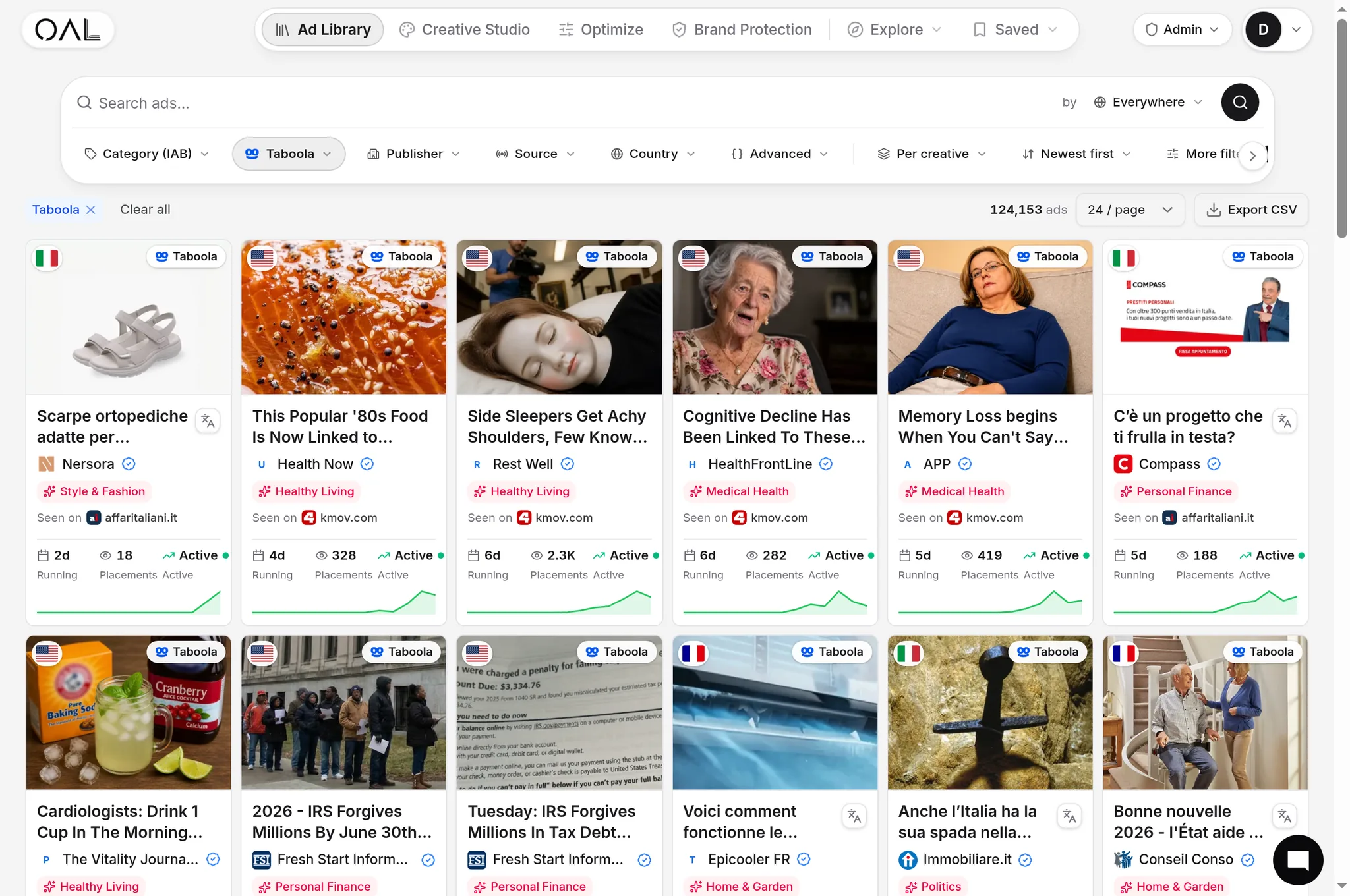
Anledningen till att finans- och försäkringsklick kostar så mycket är enkel: det är där alla är. Över hela indexet är finans den enskilt största branschen med 17 232 kreativer, med försäkring nära bakom på 15 629 och hälsa på 14 895 (OpenAdLibrary, juni 2026). Fler annonsörer som jagar samma placeringar innebär en hetare auktion och ett högre CPC. Om du går in i en av de branscherna, prissätta in konkurrensen innan du sätter ett bud.
Här är en live finansannons vi fångade som körs på Taboola, den typen av skatteskuld-vinkel som översvämmar den här branschen:

Två saker att internalisera från CPC-tabellen:
- Ett billigare klick är inte en billigare kund. MGID och Revcontent vinner på CPC, men trafikkvaliteten är mer varierande, så du spenderar mer på kreativ iteration och på att blockera skräputgivarsajter. Kostnaden flyttas bara från auktionen till din testbudget. Vi går djupare på denna avvägning i MGID vs Revcontent: Mellannivånätverk jämförda och Revcontent vs Taboola: Räckvidd, kostnad och annonsörmix jämförda.
- Din visade CPC är sällan din effektiva CPC. Budjusteringar, premiumplaceringar och algoritmens optimering innebär att det du faktiskt betalar per klick, din eCPC (effektiv kostnad per klick), avviker från ditt inställda bud. Budgetera mot det effektiva talet när du har några dagars data.
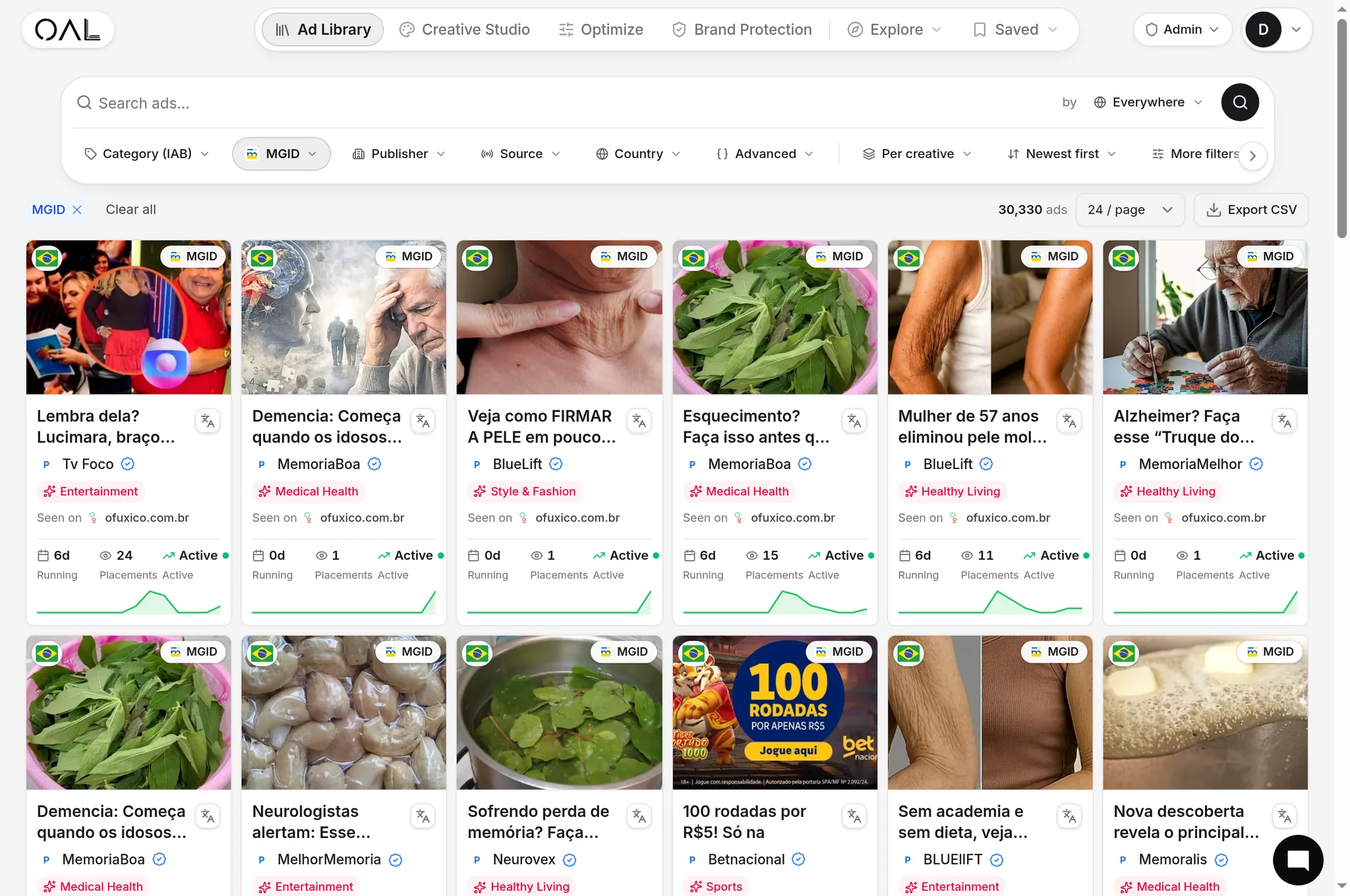
Nätverken specialiserar sig också, och det syns i deras kreativmix. Hälsa och finans dominerar Taboola (6 048 respektive 5 558 kreativer). MGID lutar hårt mot underhållning, med 8 904 underhållningskreativer mot 615 inom hälsa. Revcontent lutar mot hälsa och nutra. Om ditt erbjudande matchar ett nätverks styrka, hittar du fler jämförbara annonsörer att lära av och, ofta, en mer effektiv auktion.
För en fullständig bransch-för-bransch-uppdelning, se Native-annonser CPC-riktmärken 2026: Taboola, Teads, MGID, Revcontent.
Det verkliga talet: total testbudget#
Det här är siffran som nätverken tonar ner. Deras algoritmer, som alla programmatiska annonssystem, behöver en minsta volym av konverteringshändelser för att optimera. Svälta dem och de lämnar aldrig inlärningsfasen, vilket innebär att dina tidiga CPA inte är representativa för vad kampanjen kan göra vid mognad.
De fungerande tumreglerna för 2026:
- $50/dag är den absoluta miniminivån för att generera tillräckligt med signal för att algoritmen ska göra något alls.
- ~$300/dag är vad det typiskt krävs för att pålitligt lämna inlärningsfasen på Taboola eller Teads och stabilisera optimeringen.
- $2 000 till $5 000 totalt, per erbjudande, per nätverk, är en realistisk testbudget innan du har tillräckligt med konverteringar för att lita på ett beslut om att behålla/avsluta.
Så här översätts det till en vettig onboardingbudget beroende på vad du testar.
| Scenario | Daglig budget | Total testbudget | Tidslinje |
|---|---|---|---|
| Enskilt erbjudande, signalcheck | $50 till $100/dag | $1 500 till $2 000 | 2 till 4 veckor |
| Enskilt erbjudande, ordentlig validering | $200 till $300/dag | $3 000 till $5 000 | 2 till 3 veckor |
| Multinätverkstest (ett erbjudande) | $50 till $100/dag vardera | $5 000 till $8 000 | 3 till 4 veckor |
Det största budgeteringsmisstaget är att sprida en liten budget tunt. $500 över fyra nätverk lär dig ingenting. $500 på ett nätverk i tio dagar börjar lära dig något. Välj ett nätverk, finansiera det ordentligt, och expandera först när ett erbjudande bevisats. En förändring på mer än cirka 20 % i budget, bud, målgrupp eller kreativ kan återställa inlärningsfasen, så batcha dina ändringar istället för att pilla dagligen.
Hur du rättstorlekar din budget innan du sätter in pengar#
Du behöver inte gå in i native blint och låta de första $2 000 vara ren läropengar. Det bästa sättet att sätta realistiska kostnadsförväntningar är att studera annonsörer som redan vinner, för långlivdhet är en vinstsignal du kan läsa utifrån.
Det är precis vad OpenAdLibrary är byggd för. Den fångar live offentliga native-annonser över Taboola, Outbrain/Teads, MGID, Revcontent, Yahoo, MSN och mer, lagrar den riktiga kreativen i full kvalitet, och, utan att någonsin klicka på en liveannons, spårar varje klick till annonsörens landningssida eller pre-lander.
Hur ser en bevisad vinnare ut? Här är en hörselhjälpsannons från Nebroo som vi sett köras i 26 raka dagar på Taboola vid tidpunkten för fångsten. Ingen betalar för samma placering i nästan en månad om matten inte går ihop:

En snabb ärlighetsnotis om dagräkningar. Vårt index sträcker sig för närvarande upp till cirka 28 dagar av kontinuerlig observation per kreativ, så de längstkörande annonserna vi kan bekräfta sitter vid 28-dagarsstrecket. Den klassiska affiliate-läran om "90-dagarsvinnare" är generell branschvisdom, inte något vi har mätt. Behandla de två separat: vår 28-dagarsobservation är data; 90-dagarsregeln är folklore som råkar peka i samma riktning.
Även inom det 28-dagarsfönstret är mönstret tydligt. De längstkörande annonserna vi spårar domineras av quiz-funnels och lead-gen. "My IQ" har ensamt flera IQ-testkreativer som sitter på hela 28 dagar på Microsoft Audience Network. Hidden Hearings "Try next-gen hearing aids" nådde 28 dagar. SmartAssets "Ask a Pro: How Can I Avoid Paying Taxes on IRA Withdrawals?" nådde 28 dagar på Outbrain. När samma vinklar fortsätter att överleva längst, är det marknaden som säger vilka funnels som trycker pengar.

Tre saker i datan informerar din budget direkt:
- Långlivdhet och spridning. En kreativ som körts i veckor över många utgivare är nästan säkert lönsam. Det säger dig att CPC:n och funnel-ekonomin i den branschen fungerar, vilket minskar risken i din egen budplanering. Kortlivade annonser är tester som förmodligen misslyckades. Modellera inte din budget efter dem.
- Den verkliga annonsören bakom varje annons. Native-annonser dirigeras genom lager av programmatiska native-annonseringsmäklare och native-annonswidgetplaceringar. OpenAdLibrary klassificerar försörjningskedjan och visar den faktiska annonsören, så du vet vem du konkurrerar mot om lager.
- Hela funnlen. Klickspårning avslöjar landningssidans och pre-landerns struktur som toppannonsörer använder, den delen som avgör om ditt CPC blir en konvertering eller ett studsbesök.
Använd på detta sätt förvandlar ett native-annonsspionverktyg "hur mycket ska jag budgetera?" från en gissning till en evidensbaserad uppskattning. Du kan bekräfta att en bransch är aktiv, se hur länge vinnare håller utlägget uppe, och bakåtanalysera kombinationen av kreativ och landningssida innan du riskerar en cent.
Hem och solenergi är en annan live-kategori värd att titta på. Här är en subventionsvinkelannons vi spårat i 27 dagar på Taboola:

Sammanfattning: en exempelbudget för första månaden#
Anta att du testar ett enskilt lead-gen-erbjudande och vill ha en försvarbar plan istället för en vild gissning.
- Forskning först (gratis). Spendera några timmar på att bekräfta att din bransch är aktiv och identifiera 5 till 10 långkörande konkurrentkreativer och deras landningssidor. Kostnad: $0.
- Välj ett nätverk. Om budgeten är snäv, ger MGID eller Revcontent dig billigare data. Om du vill ha trafik med högre avsikt från dag ett, börja på Taboola eller Teads. Se MGID vs Taboola: Vilket native-nätverk vinner för din budget? för det beslutet.
- Finansiera det ordentligt. Sätt in dina $100, men planera runt en $3 000 testbudget på ungefär $150 till $200/dag.
- Håll ändringarna. Kör 5 till 8 kreativer, motstå redigeringar de första dagarna, och låt algoritmen samla signal innan du bedömer något.
- Läs domen på CPA, inte CPC. Ett $0,25-klick som aldrig konverterar är dyrare än ett $0,70-klick som gör det.
En realistisk, ärlig första månad på ett enskilt erbjudande kostar därför $3 000 till $5 000 för att få ett tydligt svar. Inte de $50 som insättningsskärmen antyder, och inte de $50 000 som vissa byråer citerar. Nätverken får golvet att se lågt ut. Algoritmen gör det verkliga golvet mycket högre.
Om du hellre inte vill lära dig det den hårda vägen, Börja gratis: bläddra bland live native-annonser utan kort, bekräfta att din bransch är aktiv, och se hur länge vinnarna har spenderat innan du budgeterar en enda dollar.