
 English
 Português (Brasil)
 Français
 Deutsch
 Italiano
 Nederlands
 Polski
 Svenska
 Türkçe
 Русский
 日本語
日本語 한국어
한국어 简体中文
简体中文 Tiếng Việt
 Bahasa Indonesia
 繁體中文
繁體中文 Čeština
 Dansk
Dansk Norsk (bokmål)
 Suomi
Suomi Ελληνικά
 Română
 Magyar
 Українська
 ไทย
ไทย हिन्दी
 العربية
 עברית
עברית¿Cuánto cuestan los anuncios nativos? Guía de presupuesto para 2026
Un desglose práctico del coste real de la publicidad nativa en 2026: depósitos mínimos, rangos de CPC y los presupuestos de prueba que realmente deciden si tienes éxito, basado en datos de anuncios en vivo de Taboola, Teads, MGID y Revcontent.

La publicidad nativa tiene un problema de reputación en cuanto a precios. Las redes muestran una puja mínima de $0.03 y un presupuesto inicial de $10/día, y luego dejan que los nuevos anunciantes quemen $1,500 aprendiendo que ninguna de esas cifras es real. La respuesta honesta a "cuánto cuestan los anuncios nativos" tiene tres capas: el depósito mínimo para abrir una cuenta, el CPC que realmente pagas para ganar tráfico de calidad y el presupuesto total que necesitas antes de que los datos signifiquen algo.
Esta guía desglosa las tres en las principales redes en 2026. También te muestra cómo contrastar cada cifra con lo que los anunciantes están haciendo ahora mismo, usando datos de anuncios en vivo en lugar de impresiones.
Para contexto de escala: en el índice de OpenAdLibrary (junio 2026) estamos rastreando 25,933 anunciantes, 589,036 creativos capturados y más de 5.4 millones de observaciones de anuncios en 42 redes. Esa es la base contra la que se leen las cifras a continuación.
Si aún estás decidiendo qué plataformas probar, empieza por el pilar: Mejores redes de anuncios nativos en 2026 (clasificadas por volumen real de anuncios). Esta página asume que ya has acotado y ahora necesitas presupuestar.
¿Cuánto cuestan los anuncios nativos en 2026?#
Los CPC rondan aproximadamente $0.20 a $0.90 según la red, dispositivo y vertical, con depósitos mínimos de cuenta entre $50 y $100 en la mayoría de plataformas de autoservicio. La cifra que realmente decide tu destino es el presupuesto total de prueba: planifica $2,000 a $5,000 por oferta, por red antes de que los resultados sean fiables. Eso se traduce en unos $50/día para señal temprana y alrededor de $300/día para salir de la fase de aprendizaje.
La brecha entre el mínimo anunciado y el mínimo funcional es donde la mayoría de principiantes pierde dinero. Así que el resto de esta guía se basa en las cifras funcionales, no en las de marketing.
Los tres costes que realmente importan#
Cuando la gente pregunta cuánto cuestan los anuncios nativos, suele mezclar tres cosas distintas. Sepáralas y el presupuesto se vuelve mucho más claro.
- Depósito mínimo. La cantidad única para financiar y activar una cuenta. Bajo, mayormente simbólico.
- CPC (coste por clic). Lo que pagas por clic en la subasta de anuncios nativos. Este es el precio del tráfico.
- Presupuesto total de prueba. El gasto necesario para reunir suficientes conversiones para que el algoritmo de la red optimice, y para que tú tomes una decisión confiable de mantener/eliminar. Este es el coste real.
Trata el depósito como un torniquete, el CPC como el taxímetro y el presupuesto de prueba como la factura real. El depósito te permite entrar. El presupuesto de prueba es en lo que deberías planificar.
Depósitos mínimos por red#
Aquí es donde cada plataforma principal de autoservicio de publicidad nativa establece su barrera de entrada en 2026. Son umbrales de activación, no presupuestos.
| Red | Depósito mínimo | Modelos de precios | Notas |
|---|---|---|---|
| Taboola | ~$100 | CPC, CPM, vCPM | Autoservicio; algunas cuentas ven un mínimo de gasto publicitario de ~$50 a $75 |
| Outbrain / Teads | Mayor (incorporación gestionada) | CPC, CPM | Outbrain adquirió Teads en 2025; la entidad combinada opera bajo el nombre Teads |
| MGID | ~$100 | CPC, CPM | Suele ser la vía más barata para obtener primeros datos |
| Revcontent | Umbral de ~$50 | CPC, vCPM | La aprobación del anunciante limita nuevas cuentas; históricamente mínimos manuales más altos |
El depósito mínimo te dice casi nada sobre lo que cuesta ejecutar una red. Un depósito de $50 en Revcontent y uno de $100 en MGID se evaporarán en uno o dos días de pruebas reales. Presupuesta para la prueba, no para el torniquete.
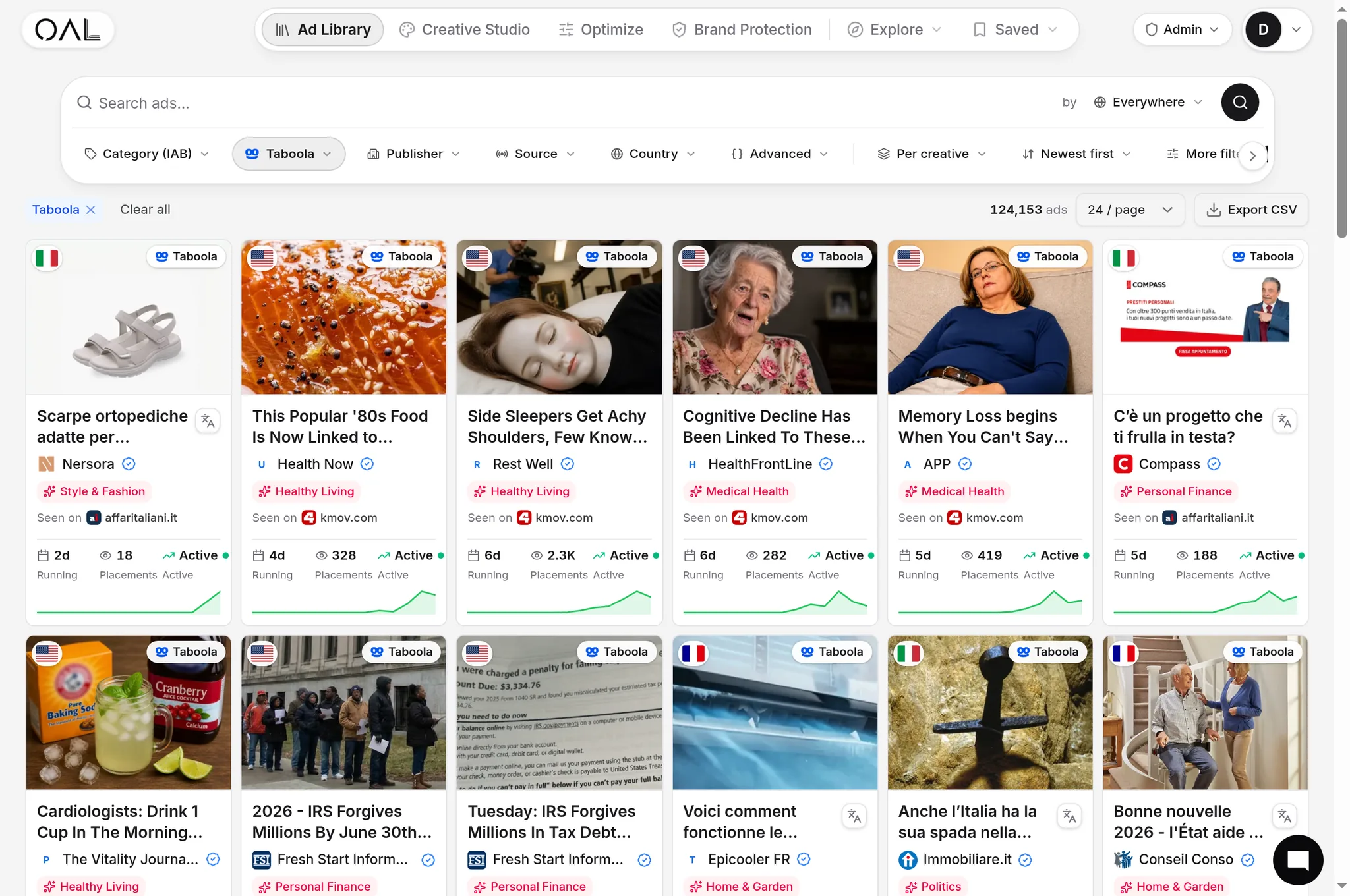
Una cosa que oculta la tabla de depósitos: la escala es tremendamente desigual entre estas redes. En nuestro índice, Taboola representa 157,727 creativos capturados. MGID tiene 49,689. Revcontent tiene 11,478. Teads, desde el rebranding, aparece con solo 55 (OpenAdLibrary, junio 2026). Si quieres una subasta profunda y líquida con muchos competidores para aprender, Taboola está en otra categoría. Las redes más baratas son reales, pero estás pescando en un estanque más pequeño.
Una nota sobre la línea Outbrain/Teads. Outbrain completó su adquisición de Teads en febrero de 2025 y rebautizó la empresa combinada bajo el nombre Teads a mediados de 2025. Si estás leyendo guías antiguas de "precios de Outbrain", la experiencia de entrada ahora pasa por la incorporación de Teads, que es más gestionada que el flujo totalmente de autoservicio de MGID o Revcontent. Cubrimos el posicionamiento de la plataforma fusionada en Taboola vs Outbrain en 2026: Comparación respaldada por datos (ahora Teads).
Rangos de CPC por red#
El CPC es el taxímetro, y varía más por vertical y dispositivo que por red. El móvil es consistentemente más barato que el escritorio. Finanzas, seguros y otros verticales de alto ticket cuestan múltiplos de lo que cuesta el arbitraje de contenido o la generación de leads simple. Con esa salvedad, aquí están los promedios realistas de 2026.
| Red | Rango típico de CPC | Coste relativo | Mejor ajuste |
|---|---|---|---|
| Taboola | ~$0.30 móvil / ~$0.60 escritorio | Premium | Tráfico de alta intención, inventario seguro para marca |
| Outbrain / Teads | ~$0.20 a $0.50 (EE.UU.) | Premium | Editores de calidad, respuesta directa |
| MGID | ~30 a 50% por debajo de Taboola/Outbrain | Medio | Pruebas asequibles, alcance amplio |
| Revcontent | CPC bajo, volumen muy alto | Presupuesto | Jugadas de volumen, pruebas creativas agresivas |
La razón por la que los clics de finanzas y seguros cuestan tanto es simple: ahí está todo el mundo. En todo el índice, finanzas es el vertical más grande con 17,232 creativos, con seguros cerca con 15,629 y salud con 14,895 (OpenAdLibrary, junio 2026). Más anunciantes compitiendo por los mismos espacios significa una subasta más caliente y un CPC más alto. Si entras en uno de esos verticales, incluye la competencia en el precio antes de fijar una puja.
Aquí tienes un anuncio financiero en vivo que capturamos ejecutándose en Taboola, del tipo de ángulo de deuda/impuestos que inunda este vertical:

Dos cosas para interiorizar de la tabla de CPC:
- Un clic más barato no es un cliente más barato. MGID y Revcontent ganan en CPC, pero la calidad del tráfico es más variable, así que gastas más en iteración creativa y en bloquear sitios de editores basura. El coste simplemente se traslada de la subasta a tu presupuesto de pruebas. Profundizamos en este trade-off en MGID vs Revcontent: Comparación de redes nativas de nivel medio y Revcontent vs Taboola: Alcance, coste y mix de anunciantes comparados.
- Tu CPC mostrado rara vez es tu CPC efectivo. Los ajustes de puja, las ubicaciones premium y la optimización del algoritmo hacen que lo que realmente pagas por clic, tu eCPC (coste efectivo por clic), se desvíe de tu puja establecida. Presupuesta según el número efectivo una vez tengas unos días de datos.
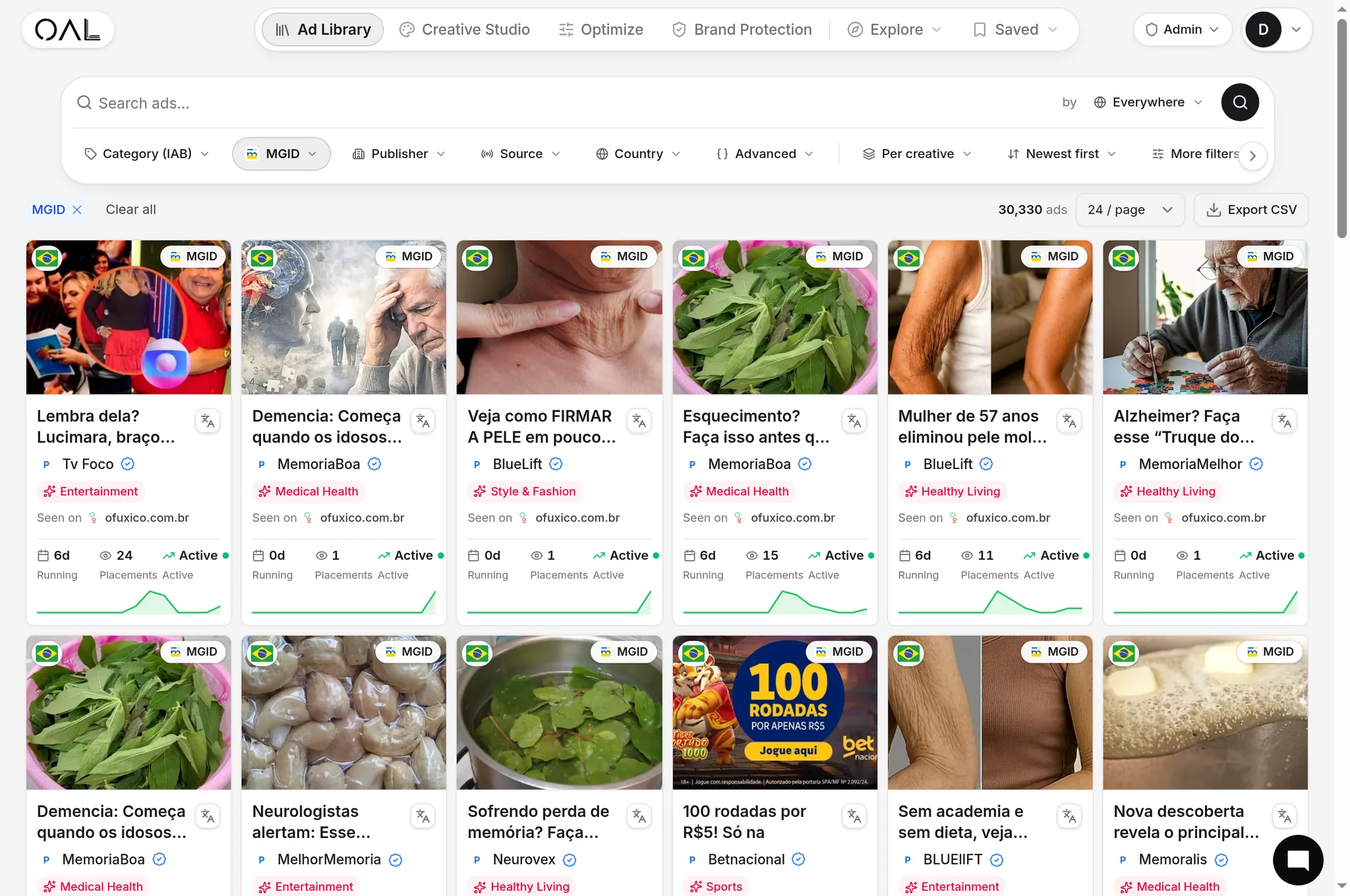
Las redes también se especializan, y se nota en su mix creativo. Salud y finanzas dominan Taboola (6,048 y 5,558 creativos respectivamente). MGID se inclina fuertemente hacia entretenimiento, con 8,904 creativos de entretenimiento frente a 615 de salud. Revcontent se inclina hacia salud y nutra. Si tu oferta coincide con la fortaleza de una red, encontrarás más anunciantes comparables para aprender y, a menudo, una subasta más eficiente.
Para un desglose vertical por vertical más completo, consulta Referencias de CPC de anuncios nativos 2026: Taboola, Teads, MGID, Revcontent.
La cifra real: presupuesto total de prueba#
Esta es la cifra que las redes minimizan. Sus algoritmos, como todo sistema de publicidad programática, necesitan un volumen mínimo de eventos de conversión para optimizar. Si los privas, nunca salen de la fase de aprendizaje, lo que significa que tus CPAs iniciales no son representativos de lo que la campaña puede hacer en madurez.
Las reglas prácticas de trabajo para 2026:
- $50/día es el mínimo absoluto para generar suficiente señal para que el algoritmo haga algo.
- ~$300/día es lo que suele tomar para salir de manera fiable de la fase de aprendizaje en Taboola o Teads y estabilizar la optimización.
- $2,000 a $5,000 total, por oferta, por red, es un presupuesto de prueba realista antes de tener suficientes conversiones para confiar en una decisión de mantener/eliminar.
Así se traduce eso en un presupuesto de incorporación sensato dependiendo de lo que estés probando.
| Escenario | Presupuesto diario | Presupuesto total de prueba | Cronología |
|---|---|---|---|
| Oferta única, verificación de señal | $50 a $100/día | $1,500 a $2,000 | 2 a 4 semanas |
| Oferta única, validación adecuada | $200 a $300/día | $3,000 a $5,000 | 2 a 3 semanas |
| Prueba multired (una oferta) | $50 a $100/día cada una | $5,000 a $8,000 | 3 a 4 semanas |
El mayor error de presupuestación es repartir un presupuesto pequeño. $500 en cuatro redes no te enseña nada. $500 en una red durante diez días empieza a enseñarte algo. Elige una red, finánciala adecuadamente y solo expande una vez que una oferta demuestre su valía. Un cambio de más del 20% aproximadamente en presupuesto, puja, audiencia o creativo puede reiniciar la fase de aprendizaje, así que agrupa tus cambios en lugar de retocar diariamente.
Cómo dimensionar tu presupuesto antes de depositar#
No tienes que entrar en el mundo nativo a ciegas y dejar que los primeros $2,000 sean pura enseñanza. La mejor manera de establecer expectativas de coste realistas es estudiar a los anunciantes que ya están ganando, porque la longevidad es una señal de beneficio que puedes leer desde fuera.
Para eso está construido exactamente OpenAdLibrary. Captura anuncios nativos públicos en vivo en Taboola, Outbrain/Teads, MGID, Revcontent, Yahoo, MSN y más, almacena el creativo real en calidad completa y, sin hacer clic nunca en un anuncio en vivo, rastrea cada clic hasta la landing page o pre-lander del anunciante.
¿Cómo se ve un ganador probado? Aquí tienes un anuncio de audífonos de Nebroo que habíamos visto ejecutarse durante 26 días seguidos en Taboola en el momento de la captura. Nadie paga por el mismo espacio durante casi un mes a menos que los números funcionen:

Una nota rápida de honestidad sobre los conteos de días. Nuestro índice actualmente abarca hasta unos 28 días de observación continua por creativo, así que los anuncios de mayor duración que podemos confirmar están en la marca de los 28 días. La sabiduría popular clásica de afiliados sobre "ganadores de 90 días" es folclore de la industria, no algo que hayamos medido. Trátalos por separado: nuestra observación de 28 días son datos; la regla de los 90 días es folclore que apunta en la misma dirección.
Incluso dentro de esa ventana de 28 días, el patrón es claro. Los anuncios de mayor duración que rastreamos están dominados por embudos de cuestionarios y generación de leads. Solo "My IQ" tiene múltiples creativos de test de IQ en los 28 días completos en Microsoft Audience Network. "Try next-gen hearing aids" de Hidden Hearing llegó a 28 días. "Ask a Pro: How Can I Avoid Paying Taxes on IRA Withdrawals?" de SmartAsset llegó a 28 días en Outbrain. Cuando los mismos ángulos siguen sobreviviendo más tiempo, es el mercado diciéndote qué embudos generan dinero.

Tres cosas en los datos informan directamente tu presupuesto:
- Longevidad y distribución. Un creativo que lleva semanas ejecutándose en muchos editores es casi seguro rentable. Eso te dice que el CPC y la economía del embudo en ese vertical funcionan, lo que reduce el riesgo de tu propia planificación de pujas. Los anuncios de corta duración son pruebas que probablemente fallaron. No modeles tu presupuesto con ellos.
- El anunciante real detrás de cada anuncio. Los anuncios nativos pasan por capas de intermediarios de publicidad nativa programática y ubicaciones de widget de anuncios nativos. OpenAdLibrary clasifica la cadena de suministro y revela al anunciante real, para que sepas contra quién compites por inventario.
- El embudo completo. El rastreo de clics revela la landing page y la estructura de pre-lander que usan los mejores anunciantes, la parte que decide si tu CPC se convierte en una conversión o una visita rebotada.
Usada así, una herramienta de espionaje de anuncios nativos convierte "¿cuánto debería presupuestar?" de una suposición en una estimación respaldada por pruebas. Puedes confirmar que un vertical está activo, ver cuánto tiempo los ganadores sostienen el gasto e invertir la combinación creativo-landing page antes de arriesgar un céntimo.
Hogar y solar es otra categoría en vivo que vale la pena observar. Aquí tienes un anuncio con ángulo de subvención que habíamos rastreado durante 27 días en Taboola:

Juntándolo todo: un presupuesto de primer mes de ejemplo#
Supón que estás probando una oferta única de generación de leads y quieres un plan defendible en lugar de una suposición.
- Investiga primero (gratis). Dedica unas horas confirmando que tu vertical está activo e identificando de 5 a 10 creativos de competidores de larga duración y sus landing pages. Coste: $0.
- Elige una red. Si el presupuesto es ajustado, MGID o Revcontent te dan datos más baratos. Si quieres tráfico de mayor intención desde el primer día, empieza en Taboola o Teads. Consulta MGID vs Taboola: ¿Qué red nativa gana para tu presupuesto? para esa decisión.
- Finánciala adecuadamente. Deposita tus $100, pero planifica en torno a un presupuesto de prueba de $3,000 a aproximadamente $150 a $200/día.
- Mantén los cambios. Ejecuta de 5 a 8 creativos, resiste las ediciones los primeros días y deja que el algoritmo reúna señal antes de juzgar nada.
- Lee el veredicto por CPA, no por CPC. Un clic de $0.25 que nunca convierte es más caro que un clic de $0.70 que sí lo hace.
Un primer mes realista y honesto en una sola oferta cuesta, por tanto, $3,000 a $5,000 para obtener una respuesta clara. No los $50 que implica la pantalla de depósito, ni los $50,000 que cotizan algunas agencias. Las redes hacen que el suelo parezca bajo. El algoritmo hace que el suelo real sea mucho más alto.
Si prefieres no aprenderlo por las malas, Empieza gratis: navega por anuncios nativos en vivo sin tarjeta, confirma que tu vertical está activa y observa cuánto tiempo han estado gastando los ganadores antes de presupuestar un solo dólar.