English
 Español
 Français
 Deutsch
 Italiano
 Nederlands
 Polski
 Svenska
 Türkçe
 Русский
 日本語
日本語 한국어
한국어 简体中文
简体中文 Tiếng Việt
 Bahasa Indonesia
 繁體中文
繁體中文 Čeština
 Dansk
Dansk Norsk (bokmål)
 Suomi
Suomi Ελληνικά
 Română
 Magyar
 Українська
 ไทย
ไทย हिन्दी
 العربية
 עברית
עבריתQuanto Custam os Anúncios Nativos? Um Guia de Orçamento para 2026
Uma análise prática do que a publicidade nativa realmente custa em 2026: depósitos mínimos, faixas de CPC e os orçamentos de teste que realmente decidem se você ganha, baseada em dados de anúncios ativos do Taboola, Teads, MGID e Revcontent.

A publicidade nativa tem um problema de reputação em relação aos preços. As redes oferecem um lance mínimo de US$ 0,03 e um orçamento inicial de US$ 10/dia, e depois deixam quietamente novos anunciantes queimarem US$ 1.500 aprendendo que nenhum desses números é real. A resposta honesta para "quanto custam os anúncios nativos" vem em três camadas: o depósito mínimo para abrir uma conta, o CPC que você realmente paga para ganhar tráfego de qualidade e o orçamento total que você precisa antes que os dados signifiquem alguma coisa.
Este guia detalha todos os três pontos nas principais redes em 2026. Ele também mostra como verificar cada número contra o que os anunciantes estão fazendo agora, usando dados de anúncios ativos em vez de sensações.
Para contexto de escala: no índice do OpenAdLibrary (junho de 2026) estamos rastreando 25.933 anunciantes, 589.036 criativos capturados e mais de 5,4 milhões de observações de anúncios em 42 redes. Essa é a base contra a qual os números abaixo são lidos.
Se você ainda está decidindo quais plataformas testar, comece pelo pilar: Melhores Redes de Anúncios Nativos em 2026 (Classificadas por Volume Real de Anúncios). Esta página assume que você já reduziu as opções e agora precisa fazer o orçamento.
Quanto custam os anúncios nativos em 2026?#
Os CPCs ficam aproximadamente entre US$ 0,20 e US$ 0,90 dependendo da rede, dispositivo e vertical, com depósitos mínimos de conta entre US$ 50 e US$ 100 na maioria das plataformas self-service. O número que realmente decide seu destino é o orçamento total de teste: planeje US$ 2.000 a US$ 5.000 por oferta, por rede antes que os resultados sejam confiáveis. Isso dá cerca de US$ 50/dia para sinal inicial e em torno de US$ 300/dia para sair da fase de aprendizado.
A lacuna entre o mínimo anunciado e o mínimo funcional é onde a maioria dos iniciantes perde dinheiro. Portanto, o resto deste guia é construído em torno dos números funcionais, não dos de marketing.
Os três custos que realmente importam#
Quando as pessoas perguntam quanto custam os anúncios nativos, geralmente estão misturando três coisas separadas. Separe-as e o orçamento fica muito mais claro.
- Depósito mínimo. O valor único para financiar e ativar uma conta. Baixo, principalmente simbólico.
- CPC (custo por clique). O que você paga por clique no leilão de anúncios nativos. Este é o preço do tráfego.
- Orçamento total de teste. O gasto necessário para coletar conversões suficientes para o algoritmo da rede otimizar e para você tomar uma decisão confiável de manter/cancelar. Este é o custo real.
Trate o depósito como uma catraca, o CPC como o taxímetro e o orçamento de teste como a conta real. O depósito te coloca dentro. O orçamento de teste é o que você deve planejar.
Depósitos mínimos por rede#
Aqui está onde cada grande plataforma self-service de publicidade nativa define sua barreira de entrada em 2026. Estes são pisos de ativação, não orçamentos.
| Rede | Depósito mínimo | Modelos de preços | Observações |
|---|---|---|---|
| Taboola | ~US$ 100 | CPC, CPM, vCPM | Self-serve; algumas contas veem um piso de gasto com anúncios de ~US$ 50 a US$ 75 |
| Outbrain / Teads | Maior (onboarding gerenciado) | CPC, CPM | Outbrain adquiriu Teads em 2025; a entidade combinada opera sob o nome Teads |
| MGID | ~US$ 100 | CPC, CPM | Frequentemente o caminho mais barato para os primeiros dados |
| Revcontent | Limite de ~US$ 50 | CPC, vCPM | Aprovação do anunciante barra novas contas; historicamente mínimos manuais mais altos |
O depósito mínimo diz quase nada sobre quanto custa rodar em uma rede. Um depósito de US$ 50 no Revcontent e um de US$ 100 no MGID vão evaporar em um ou dois dias de teste real. Orçamento para o teste, não para a catraca.
Uma coisa que a tabela de depósitos esconde: a escala é extremamente desigual entre essas redes. Em nosso índice, Taboola responde por 157.727 criativos capturados. MGID tem 49.689. Revcontent tem 11.478. Teads, desde o rebranding, aparece com apenas 55 (OpenAdLibrary, junho de 2026). Se você quer um leilão profundo e líquido com muitos concorrentes para aprender, Taboola está em uma classe de peso diferente. As redes mais baratas são reais, mas você está pescando em um lago menor.
Uma nota sobre a linha Outbrain/Teads. A Outbrain completou sua aquisição da Teads em fevereiro de 2025 e rebranding a empresa combinada sob o nome Teads até meados de 2025. Se você está lendo guias antigos de "preços da Outbrain", a experiência de entrada agora passa pelo onboarding da Teads, que é mais gerenciado do que o fluxo totalmente self-serve do MGID ou Revcontent. Cobrimos o posicionamento da plataforma fundida em Taboola vs Outbrain em 2026: Comparação Baseada em Dados (Agora Teads).
Faixas de CPC por rede#
CPC é o taxímetro, e varia mais por vertical e dispositivo do que por rede. Mobile é consistentemente mais barato que desktop. Finanças, seguros e outras verticais de alto ticket custam múltiplos do que arbitragem de conteúdo ou lead-gen simples. Com essa ressalva, aqui estão as médias realistas de 2026.
| Rede | Faixa típica de CPC | Custo relativo | Melhor adequação |
|---|---|---|---|
| Taboola | ~US$ 0,30 mobile / ~US$ 0,60 desktop | Premium | Tráfego de alta intenção, inventário brand-safe |
| Outbrain / Teads | ~US$ 0,20 a US$ 0,50 (EUA) | Premium | Publishers de qualidade, resposta direta |
| MGID | ~30 a 50% abaixo de Taboola/Outbrain | Médio | Testes acessíveis, alcance amplo |
| Revcontent | CPC baixo, volume muito alto | Orçamento | Jogadas de volume, testes de criativos agressivos |
A razão pela qual os cliques de finanças e seguros custam tanto é simples: é onde todo mundo está. Em todo o índice, finanças é a maior vertical única com 17.232 criativos, com seguros logo atrás com 15.629 e saúde com 14.895 (OpenAdLibrary, junho de 2026). Mais anunciantes disputando os mesmos espaços significa um leilão mais quente e um CPC mais alto. Se você está entrando em uma dessas verticais, precifique a competição antes de definir seu lance.
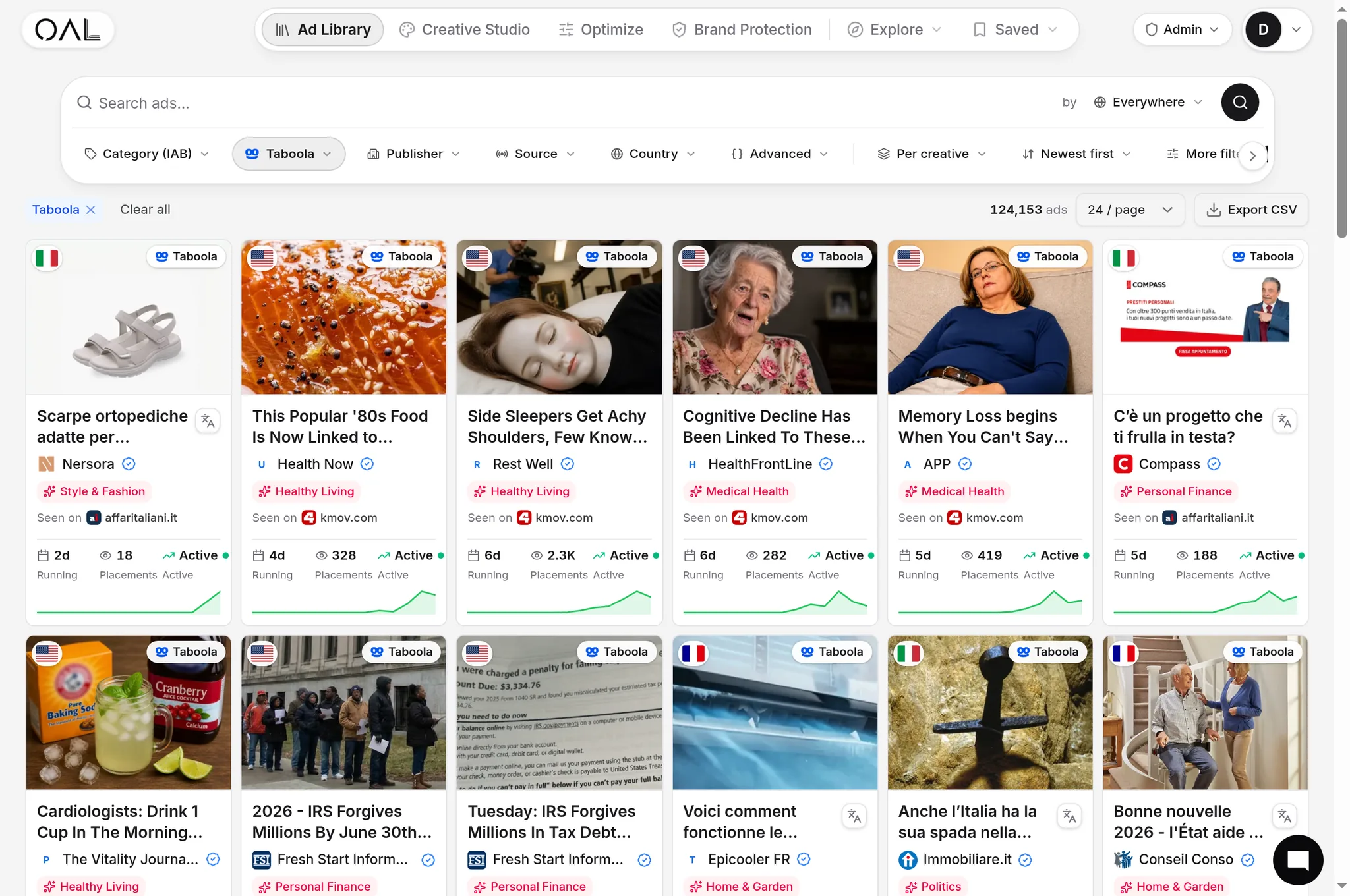
Aqui está um anúncio de finanças ativo que capturamos rodando no Taboola, o tipo de ângulo de dívida/imposto que inunda esta vertical:

Duas coisas para internalizar da tabela de CPC:
- Um clique mais barato não é um cliente mais barato. MGID e Revcontent ganham no CPC, mas a qualidade do tráfego é mais variável, então você gasta mais em iteração de criativos e bloqueio de sites de publisher de baixa qualidade. O custo apenas se move do leilão para seu orçamento de teste. Entramos a fundo nessa troca em MGID vs Revcontent: Redes Nativas de Médio Porte Comparadas e Revcontent vs Taboola: Alcance, Custo e Mix de Anunciantes Comparados.
- Seu CPC exibido raramente é seu CPC efetivo. Ajustes de lance, espaços premium e a otimização do algoritmo fazem com que o que você realmente paga por clique, seu eCPC (custo efetivo por clique), se afaste do lance definido. Faça o orçamento com base no número efetivo depois de ter alguns dias de dados.
As redes também se especializam, e isso aparece em seu mix de criativos. Saúde e finanças dominam o Taboola (6.048 e 5.558 criativos respectivamente). MGID pende fortemente para entretenimento, com 8.904 criativos de entretenimento versus 615 em saúde. Revcontent inclina-se para saúde e nutra. Se sua oferta corresponde à força de uma rede, você encontrará mais anunciantes comparáveis para aprender e, frequentemente, um leilão mais eficiente.
Para uma análise mais completa vertical por vertical, veja Benchmarks de CPC de Anúncios Nativos 2026: Taboola, Teads, MGID, Revcontent.
O número real: orçamento total de teste#
Esta é a figura que as redes minimizam. Seus algoritmos, como todo sistema de publicidade programática, precisam de um volume mínimo de eventos de conversão para otimizar. Privá-los e eles nunca saem da fase de aprendizado, o que significa que seus CPAs iniciais não são representativos do que a campanha pode fazer na maturidade.
As regras práticas de trabalho para 2026:
- US$ 50/dia é o mínimo absoluto para gerar sinal suficiente para o algoritmo fazer qualquer coisa.
- ~US$ 300/dia é o que normalmente leva para sair de forma confiável da fase de aprendizado no Taboola ou Teads e estabilizar a otimização.
- US$ 2.000 a US$ 5.000 no total, por oferta, por rede, é um orçamento de teste realista antes que você tenha conversões suficientes para confiar em uma decisão de manter/cancelar.
Aqui está como isso se traduz em um orçamento de onboarding sensato dependendo do que você está testando.
| Cenário | Orçamento diário | Orçamento total de teste | Cronograma |
|---|---|---|---|
| Oferta única, verificação de sinal | US$ 50 a US$ 100/dia | US$ 1.500 a US$ 2.000 | 2 a 4 semanas |
| Oferta única, validação adequada | US$ 200 a US$ 300/dia | US$ 3.000 a US$ 5.000 | 2 a 3 semanas |
| Teste multi-rede (uma oferta) | US$ 50 a US$ 100/dia cada | US$ 5.000 a US$ 8.000 | 3 a 4 semanas |
O maior erro de orçamento é espalhar um orçamento pequeno de forma fina. US$ 500 por quatro redes não ensina nada. US$ 500 em uma rede por dez dias começa a ensinar algo. Escolha uma rede, financie-a adequadamente e só expanda depois que uma oferta se provar. Uma mudança de mais de cerca de 20% no orçamento, lance, audiência ou criativo pode reiniciar a fase de aprendizado, então agrupe suas mudanças em vez de ajustar diariamente.
Como dimensionar corretamente seu orçamento antes de depositar#
Você não precisa entrar na publicidade nativa às cegas e deixar os primeiros US$ 2.000 serem pura taxa de aprendizado. A melhor maneira de definir expectativas de custo realistas é estudar anunciantes que já estão ganhando, porque a longevidade é um sinal de lucro que você pode ler de fora.
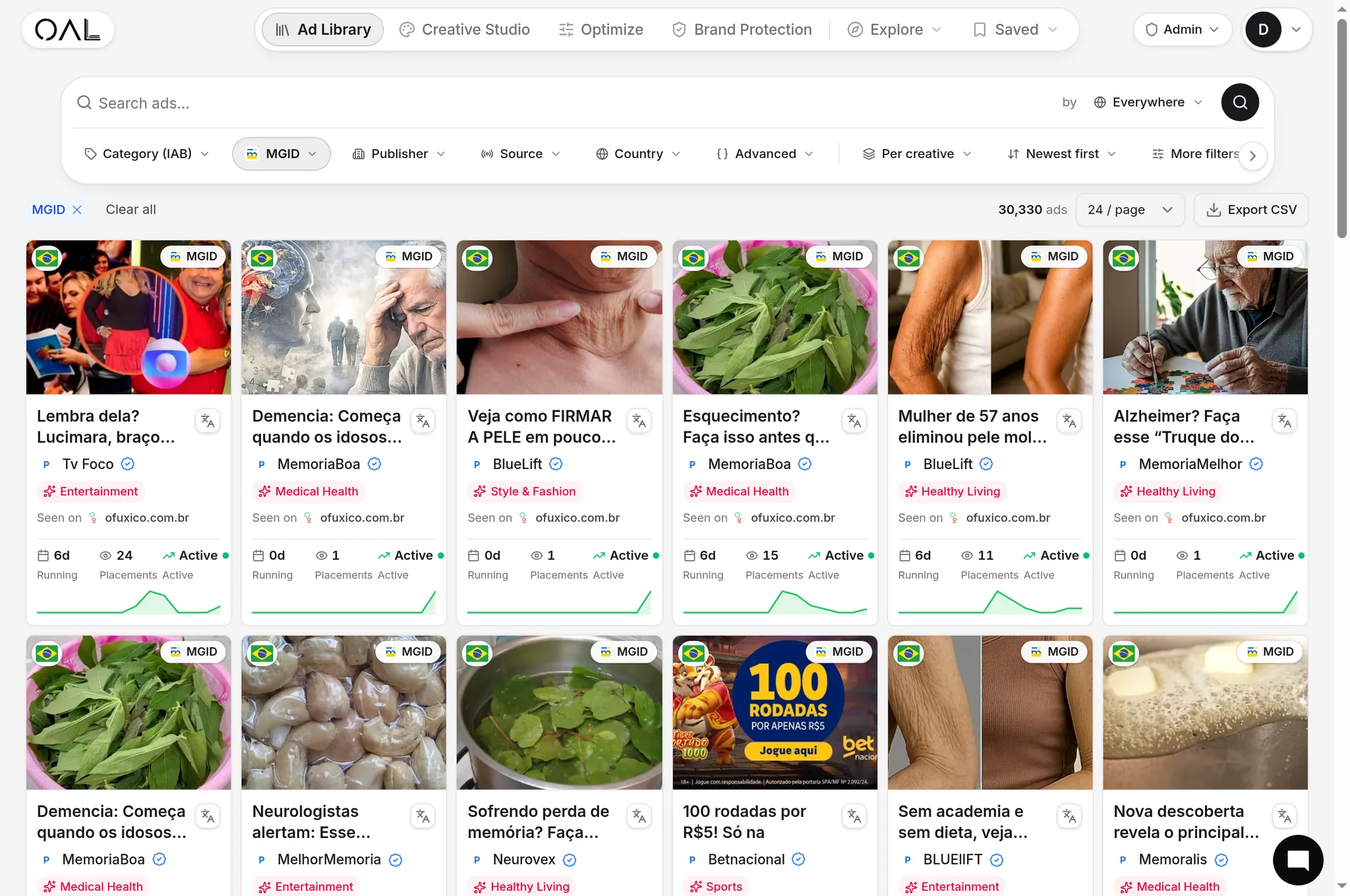
É exatamente para isso que o OpenAdLibrary foi construído. Ele captura anúncios nativos ativos e públicos no Taboola, Outbrain/Teads, MGID, Revcontent, Yahoo, MSN e mais, armazena o criativo real em qualidade total e, sem nunca clicar em um anúncio ativo, rastreia cada clique até a página de destino ou pré-lander do anunciante.
Como é um vencedor comprovado? Aqui está um anúncio de aparelho auditivo da Nebroo que observamos rodar por 26 dias seguidos no Taboola no momento da captura. Ninguém paga pelo mesmo espaço por quase um mês a menos que a matemática funcione:

Uma nota rápida sobre honestidade nas contagens de dias. Nosso índice atualmente abrange até cerca de 28 dias de observação contínua por criativo, então os anúncios de execução mais longa que podemos confirmar estão na marca de 28 dias. A sabedoria clássica de afiliados sobre "vencedores de 90 dias" é folclore do setor, não algo que medimos. Trate os dois separadamente: nossa observação de 28 dias é dado; a regra de 90 dias é folclore que aponta na mesma direção.
Mesmo dentro dessa janela de 28 dias, o padrão é claro. Os anúncios de execução mais longa que estamos rastreando são dominados por funis de quiz e lead-gen. "My IQ" sozinho tem múltiplos criativos de teste de QI no limite total de 28 dias na Microsoft Audience Network. "Try next-gen hearing aids" da Hidden Hearing atingiu 28 dias. "Ask a Pro: How Can I Avoid Paying Taxes on IRA Withdrawals?" da SmartAsset atingiu 28 dias no Outbrain. Quando os mesmos ângulos continuam sobrevivendo por mais tempo, é o mercado te dizendo quais funis geram dinheiro.

Três coisas nos dados informam diretamente seu orçamento:
- Longevidade e distribuição. Um criativo que está rodando há semanas em muitos publishers quase certamente é lucrativo. Isso te diz que o CPC e a economia do funil naquela vertical funcionam, o que reduz o risco do seu próprio planejamento de lance. Anúncios de vida curta são testes que provavelmente falharam. Não modele seu orçamento neles.
- O anunciante real por trás de cada anúncio. Anúncios nativos passam por camadas de intermediários de publicidade nativa programática e espaços de widget de anúncio nativo. O OpenAdLibrary classifica a cadeia de suprimentos e revela o anunciante real, para que você saiba contra quem está competindo pelo inventário.
- O funil completo. O rastreamento de cliques revela a página de destino e a estrutura de pré-lander que os principais anunciantes usam, a parte que decide se seu CPC se transforma em uma conversão ou uma visita perdida.
Usada dessa forma, uma ferramenta de espionagem de anúncios nativos transforma "quanto devo orçar?" de um palpite em uma estimativa baseada em evidências. Você pode confirmar que uma vertical está ativa, ver quanto tempo os vencedores sustentam o gasto e fazer engenharia reversa da combinação criativo-página de destino antes de arriscar um centavo.
Casa e solar é outra categoria ativa que vale a pena observar. Aqui está um anúncio com ângulo de subsídio que rastreamos por 27 dias no Taboola:

Juntando tudo: um exemplo de orçamento do primeiro mês#
Suponha que você esteja testando uma única oferta de lead-gen e quer um plano defensível em vez de um palpite.
- Pesquise primeiro (grátis). Passe algumas horas confirmando que sua vertical está ativa e identificando 5 a 10 criativos de concorrentes de longa duração e suas páginas de destino. Custo: US$ 0.
- Escolha uma rede. Se o orçamento é apertado, MGID ou Revcontent te dão dados mais baratos. Se você quer tráfego de alta intenção desde o primeiro dia, comece no Taboola ou Teads. Veja MGID vs Taboola: Qual Rede Nativa Vence para Seu Orçamento? para essa decisão.
- Financie adequadamente. Deposite seus US$ 100, mas planeje em torno de um orçamento de teste de US$ 3.000 a aproximadamente US$ 150 a US$ 200/dia.
- Segure as mudanças. Execute 5 a 8 criativos, resista a edições nos primeiros dias e deixe o algoritmo coletar sinal antes de julgar qualquer coisa.
- Leia o veredito no CPA, não no CPC. Um clique de US$ 0,25 que nunca converte é mais caro que um clique de US$ 0,70 que converte.
Um primeiro mês realista e honesto em uma única oferta, portanto, custa US$ 3.000 a US$ 5.000 para obter uma resposta limpa. Não os US$ 50 que a tela de depósito implica, e não os US$ 50.000 que algumas agências cotam. As redes fazem o piso parecer baixo. O algoritmo faz o piso real ser muito mais alto.
Se você prefere não aprender isso da maneira difícil, Comece grátis: navegue por anúncios nativos ativos sem cartão, confirme que sua vertical está ativa e veja quanto tempo os vencedores estão gastando antes de orçar um único dólar.