How to Track Competitor Landing Page Changes Automatically
A competitor's landing page can change while the ad stays the same. Here's a practical way to capture, diff and monitor those changes on a schedule without manually revisiting URLs.


A competitor's landing page can change while the ad stays the same. Here's a practical way to capture, diff and monitor those changes on a schedule without manually revisiting URLs.

You can't see a competitor's conversions or profit, but longevity, angle reuse, placement spread and landing-page stability can help you shortlist ads worth studying. Here's how to read each signal and where it misleads.

A visit to a competitor's ad or landing page can expose request and browser information, and whether it can be linked to you depends on the data and setup. What may show up, and how captured ads reduce direct research traffic.

Platforms don't publish competitor ad spend for ordinary commercial ads, on any channel. Here's what Google Ads, Meta's Ads Library and native networks show you instead, and how far the remaining proxies can take a rough estimate.

The Meta Ad Library is free and requires no login, but ordinary commercial ads show no spend and, outside EU-delivered ads, little targeting detail. Here's how to search it properly and where its real limits are.

Google's Ads Transparency Center is the free, official way to see a competitor's Google ads. Here's how to search it properly, and the entire ad category it doesn't cover at all.

Downloading a competitor's landing page takes two minutes. What separates professionals from cloners is what happens next: ripping tools, the legal line, and a rip-to-learn workflow that turns a page into ideas you can test.

Every paid channel leaves fingerprints. Work through four evidence layers — landing URLs, official libraries, redirect chains, observed placements — and a competitor's channel mix falls out in under an hour.

Official ad libraries won't tell you when a competitor launches something new, so you have to keep checking. Alerts flip that by comparing captures over time and notifying you of changes, subject to coverage and capture lag.

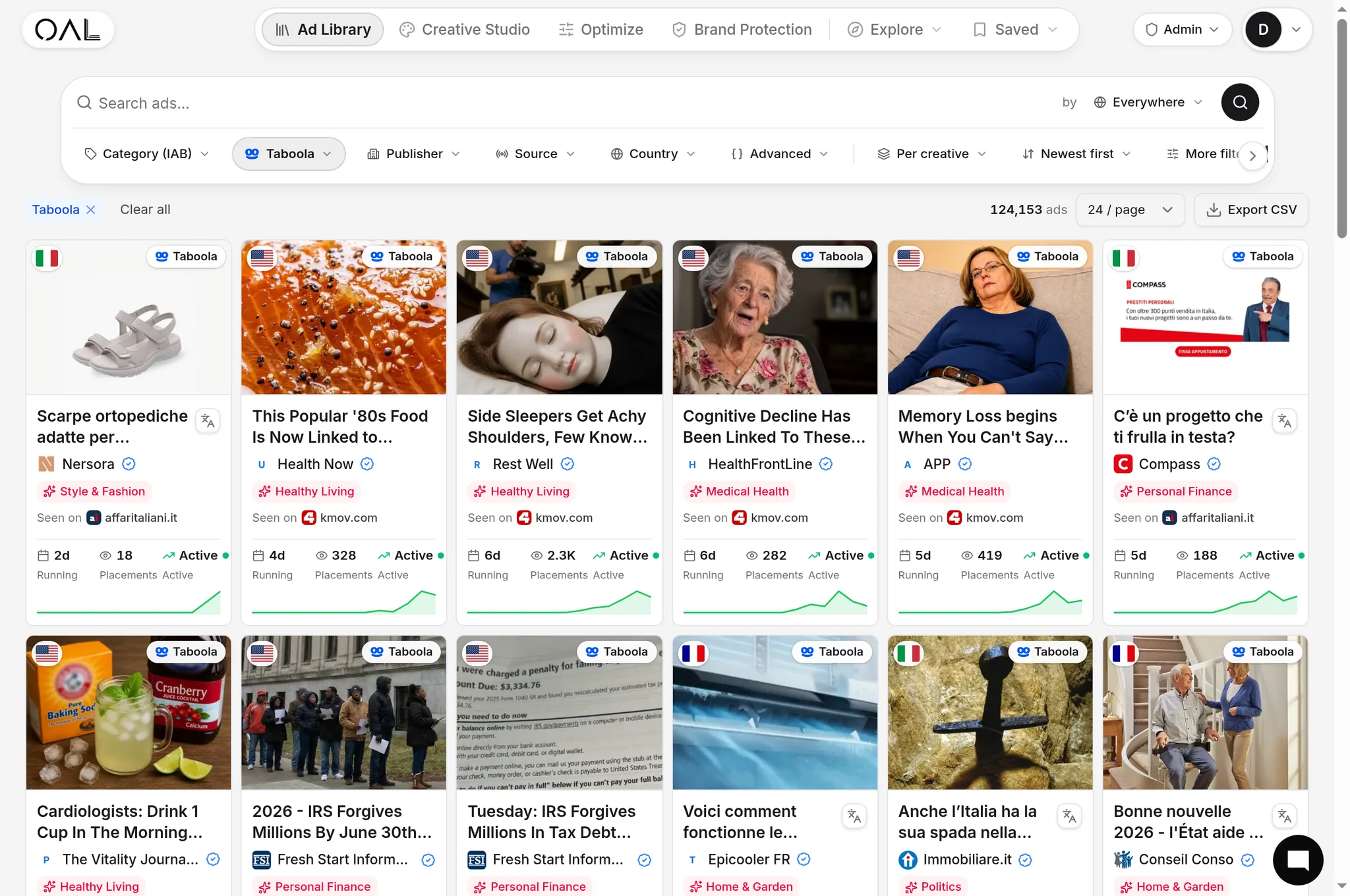
Taboola has no official ad library, but captured Taboola ads can be researched by brand or domain. The lookup workflow, the five signals worth recording, and how to interpret an empty result.

The hard part of competitor research isn't seeing the ad, it's finding where the click lands, so here's how to trace a native ad to its observed landing page, capture the evidence, and read the funnel.

Looking at the ads competitors show the public is generally lawful in the US and EU, and the EU now requires the largest platforms to publish ad repositories. The risk sits in how you collect and what you copy.

A native ad is just the doorway; here is how to walk the full chain behind it, from creative to SSP to click tracker to pre-lander to offer page, and read what each link reveals about a competitor's strategy.

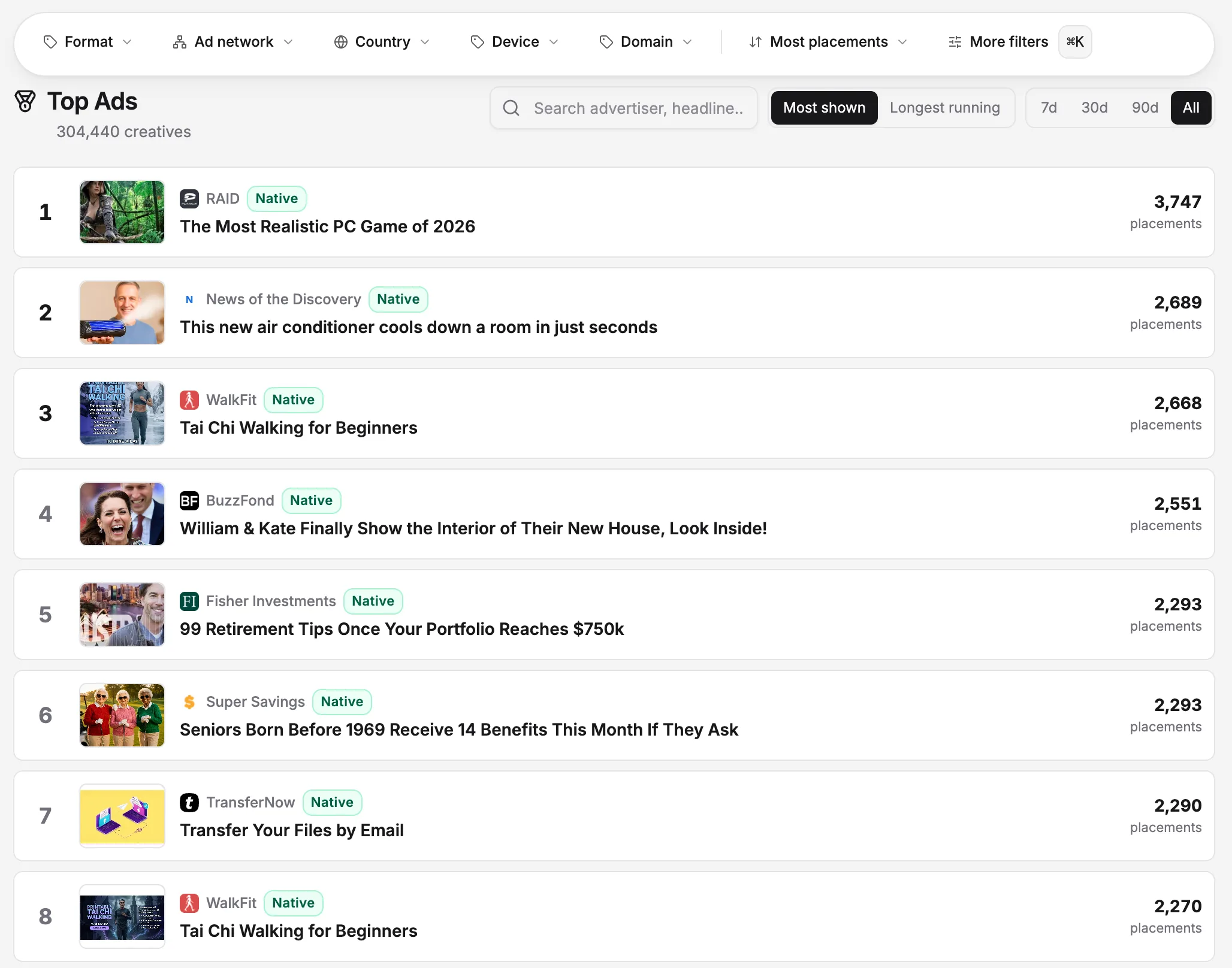
Native ads sit in plain sight below many articles. Here is how to look for who is buying them, read the creative and supply chain behind each placement, and follow the recorded destination without clicking live ads.

A practitioner's guide to spying on competitor ads across native, display and social: what to capture, how to read it without overclaiming, where the legal lines sit, and a weekly workflow that turns screenshots into decisions.

The Google Ads Transparency Center is Google's free public tool for looking up an advertiser and the ads it has served across Search, Display, YouTube, and Gmail, with verified and unverified advertisers labelled.

The Meta Ad Library is Meta's public archive of ads on Facebook, Instagram and other Meta apps, searchable by keyword, Page and country. What it shows depends on the ad type and where the ad ran.