English
 Español
 Português (Brasil)
 Français
 Deutsch
 Italiano
 Polski
 Svenska
 Türkçe
 Русский
 日本語
日本語 한국어
한국어 简体中文
简体中文 Tiếng Việt
 Bahasa Indonesia
 繁體中文
繁體中文 Čeština
 Dansk
Dansk Norsk (bokmål)
 Suomi
Suomi Ελληνικά
 Română
 Magyar
 Українська
 ไทย
ไทย हिन्दी
 العربية
 עברית
עבריתMerkenrechtelijke inbreuk in advertenties: een detectiegids voor merkbescherming
Merkenmisbruik verbergt zich zelden in de advertentietekst; het verbergt zich in het creatieve materiaal, de echte adverteerder achter de wederverkopersnaam en de landingspagina na de klik. Hier leest u hoe merkteams bewijs vastleggen dat een verwijderingsverzoek of juridische beoordeling overleeft.

De meeste merkinbreuk in advertenties wordt gemist omdat merkteams op de verkeerde plaats zoeken. Ze zoeken naar hun naam in advertentietekst, vinden niets alarmerends en gaan verder. Het probleem is dat de inbreuk bijna nooit zit in de koptekst die een mediabuyer schreef om de review te doorstaan. Het zit in de creatieve afbeelding, de adverteerdersidentiteit verborgen achter een wederverkopersaccount en de landingspagina die laadt na de klik. Tegen de tijd dat een klant klaagt, loopt de campagne al weken en is het bewijs alweer verdwenen.
Deze gids is voor merk-, juridische en affiliate-compliance teams die inbreuk moeten bewijzen, niet alleen vermoeden. Detectie en documentatie zijn hetzelfde probleem. U kunt geen geloofwaardig verwijderingsverzoek of een cease-and-desist indienen op basis van een vermoeden. U heeft een controleerbare bewijsketen nodig, vastgelegd voordat deze verdwijnt.
Wat telt daadwerkelijk als merkenrechtelijke inbreuk in advertenties#
Merkenrechtelijke inbreuk in advertenties is het onbevoegd gebruik van een beschermd merk, of een verwarrend gelijkend merk, in reclame die waarschijnlijk consumenten doet geloven dat uw merk het geadverteerde product heeft gemaakt, goedgekeurd, gesponsord of ermee verbonden is. Onder Amerikaans recht is de toets waarschijnlijkheid van verwarring, niet het bewijs dat iemand daadwerkelijk is misleid.
Dat woord waarschijnlijkheid is waar beoefenaars de wet in beide richtingen verkeerd begrijpen. Twee recente hogerberoepsbeslissingen bepalen de grens. In het Ninth Circuit's Lerner & Rowe v. Brown Engelhardt en het Second Circuit's 1-800 Contacts v. Warby Parker oordeelden de rechtbanken dat simpelweg bieden op het handelsmerk van een concurrent als zoekwoord, zonder dat merk in de advertentie te tonen, over het algemeen geen waarschijnlijkheid van verwarring creëert. In het Warby Parker-geval weigerde de rechtbank inbreuk te vinden, zelfs al leende de landingspagina de kleur en lay-out van de eiser, omdat de advertentietekst zelf geen gedeelde merken toonde.
De praktische les snijdt aan de andere kant voor merkbescherming. Alleen bieden op zoekwoorden is een zwakke zaak. Maar op het moment dat uw merk verschijnt in het zichtbare creatieve materiaal, de weergavenaam, de koptekst, of als een claim van autorisatie op de landingspagina, verschuift de analyse en moet uw bewijs precies die oppervlakken vastleggen. Detectie moet de klik volgen. Het kan niet stoppen bij de advertentieruimte.
Hier is het soort advertentie dat het punt maakt. Dit live financiën-creatief leunt zwaar op een nep-autoriteitsframe ("IRS Forgives Millions") onder een generieke uitgeversnaam. Vervang "IRS" door het logo van een merk en u heeft schoolboekimitatie, en een tekstuele scan zou het nooit lezen.

De sterkste inbreukzaken worden niet opgebouwd uit wat een adverteerder in zijn tekst schreef. Ze worden opgebouwd uit het gat tussen het merk waarvan een consument denkt dat hij erop klikt en de adverteerder die hij daadwerkelijk bereikt.
Voor het bredere programma waar dit in past, zie onze pijler over merkbescherming in native advertising, en de glossariumvermelding over merkbescherming in advertenties voor de fundamentele definities.
De vier oppervlakken waar inbreuk zich verbergt#
Native advertenties hebben veel meer aanvalsoppervlak dan zoektekstadvertenties. Het creatieve materiaal is een afbeelding en de toeleveringsketen is gelaagd. Behandel elk oppervlak als een aparte bewijslaag.
| Oppervlak | Hoe inbreuk eruitziet | Waarom teams het missen |
|---|---|---|
| Creatieve afbeelding | Uw logo, verpakking, mascotte of productfoto gebruikt zonder licentie; een bijna identiek look-alike merk | Tekstuele monitoring leest de pixels nooit |
| Adverteerder / weergavenaam | Een wederverkoper- of arbitrageaccount die zich voordoet als uw merk of een "officieel" kanaal | De getoonde naam is vaak niet de echte koper |
| Ad-tech tussenpersoon | De DSP, SSP of het netwerk dat de plaatsing serveert, die u vertelt wie u moet notificeren | Onzichtbaar zonder classificatie van de toeleveringsketen |
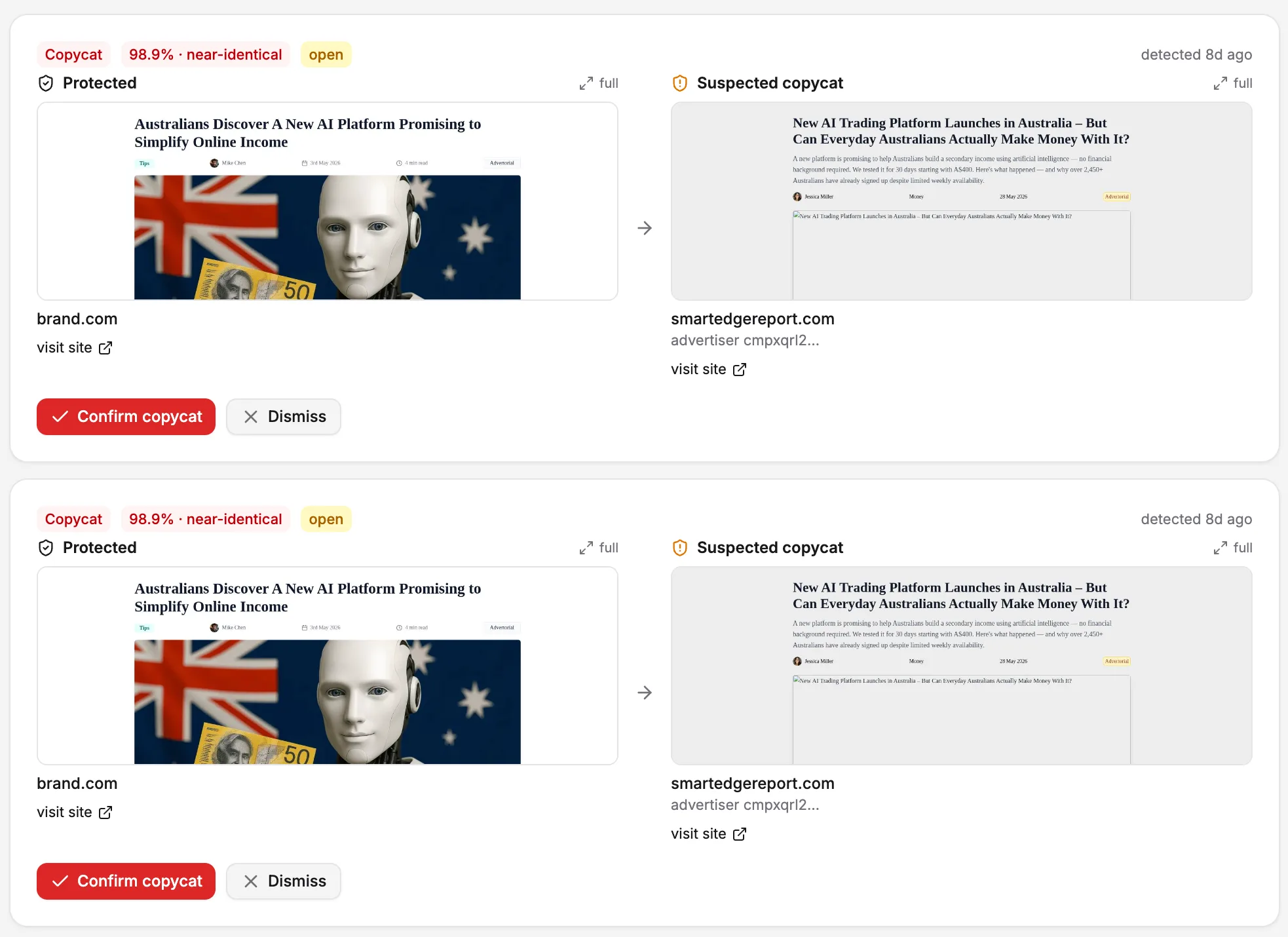
| Landingspagina / pre-lander | "Officiële winkel," nep-goedkeuring, vervalste checkout of een copycat-kloon | Verdwijnt of verbergt zich als u alleen de advertentie screenshot |
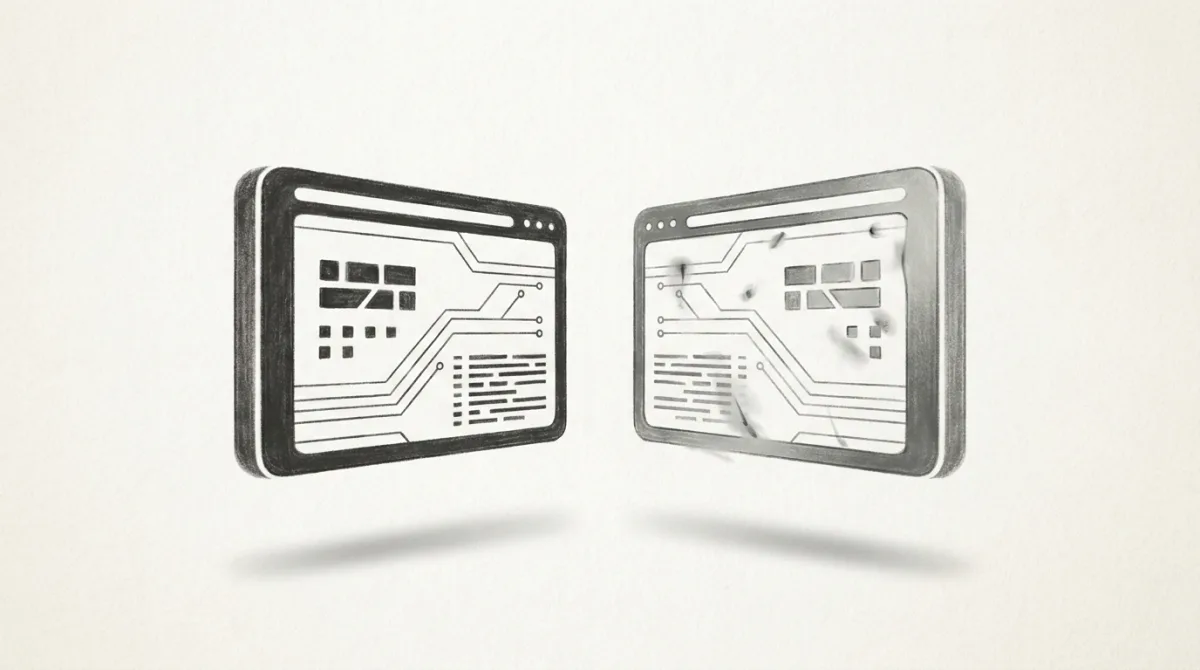
Native advertising en programmatic native maken de tweede en derde rij vooral glad. Een advertentie kan door meerdere tussenpersonen gaan, en de entiteit die in de advertentie-eenheid wordt genoemd, is vaak een affiliate of arbitrageaccount, niet de merchant die de order uitvoert. Dezelfde dynamiek komt voor in programmatic en display advertising, waar geautomatiseerd kopen het zichtbare merk loskoppelt van de verantwoordelijke partij.
Gezondheids- en supplementenadvertenties zijn de grootste overtreders voor de eerste rij. Ze leunen op geleende autoriteit ("MDs Identify...") en standaard medische beeldtaal, en een namaak die uw merkproductfoto of artsgoedkeuring gebruikt, ziet er identiek uit aan een legitieme totdat u het traceert.

De landingspagina is het oppervlak dat een zwakke zaak in een sterke verandert. Een pre-lander die claimt "geautoriseerde wederverkoper" te zijn, uw trade dress reproduceert of doorverwijst naar een vervalste checkout is direct bewijs van consumentenverwarring. Dat is ook precies waar copycat landing pages opereren en waar ad cloaking wordt ingezet om reviewers een schone pagina te tonen terwijl echte gebruikers naar de inbreukmakende worden gestuurd.
Een detectieworkflow die bruikbaar bewijs oplevert#
Detectie en documentatie zijn één pijplijn. Bouw het zo dat elke vondst al een indieningsklaar dossier is.
- Definieer de watchlist. Uw exacte merken, veelvoorkomende spelfouten en homoglyfen, productnamen, "officiële" en "geautoriseerde wederverkoper" formuleringen, en de namen van legitieme distributeurs zodat u geautoriseerd gebruik kunt scheiden van imitatie.
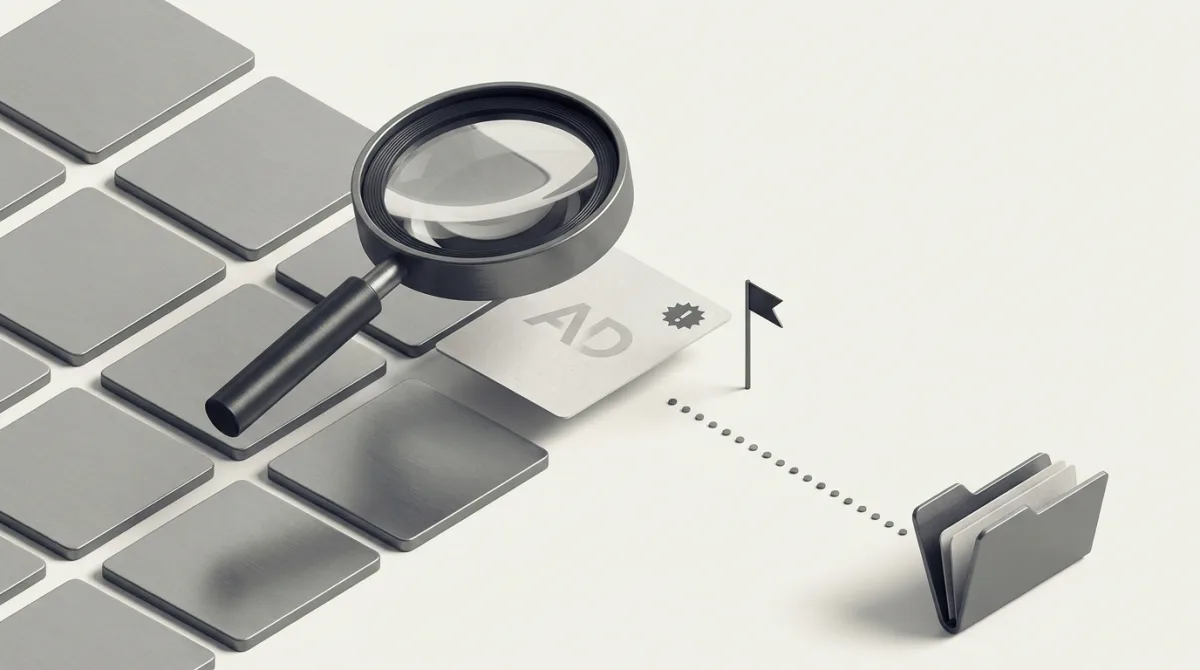
- Monitor het creatieve materiaal, niet alleen de tekst. Match tegen vastgelegde advertentie-afbeeldingen, omdat logo- en trade-dress-misbruik nooit verschijnt als doorzoekbare tekst. Dit is waar een native ad spy tool die het creatieve materiaal in volledige kwaliteit opslaat, zijn plaats verdient.
- Identificeer de echte adverteerder. Identificeer de koper achter de weergavenaam en de tussenpersonen in het pad. Of u te maken heeft met een rogue affiliate, een arbitrageaccount of een vervalser, bepaalt wie u moet notificeren en hoe.
- Volg de klik zonder te klikken. Leg de landingsbestemming en eventuele pre-lander op het pad vast, zonder een echte gefactureerde klik te genereren. Dat beschermt u tegen een verborgen kwaadaardige pagina en voorkomt dat u het budget van de inbreukmaker uitgeeft aan een verificatiebezoek.
- Leg duurzaamheid en verspreiding vast. Registreer eerste- en laatst-gezien data, elke plaatsing en elke geo. Een creatief dat wekenlang over veel uitgevers loopt, is een opzettelijke, winstgevende inbreuk, geen eenmalige fout, en dat patroon versterkt zowel de urgentie als het schadenarratief.
- Bevries een getimestampd dossier. Vergrendel het creatieve materiaal, de adverteerder, het toeleveringspad, de bestemmings-URL, plaatsingen en data in één gedateerd artefact voordat de campagne roteert.
De reden om stappen twee tot en met zes te automatiseren is verval. Native creatieven roteren snel en inbreukmakende campagnes roteren nog sneller, vaak precies omdat de operators verwacht te worden gerapporteerd. Bewijs dat een week te laat wordt vastgelegd, is vaak bewijs dat niet meer bestaat.
Hoe snel is snel? Over de 589.000+ creatieven die we hebben vastgelegd (OpenAdLibrary-index, juni 2026), is de langste continue run die we hebben waargenomen op één creatief ongeveer 28 dagen. De echt duurzame winnaars zijn de saaie, complianten: een SmartAsset IRA-belastinguitleg op Outbrain, een "Combat Siege"-game-advertentie, een reeks "My IQ"-quizcreatieven op het Microsoft Audience Network, elk vasthoudend voor het volledige 28-dagen venster. Inbreukmakende campagnes gedragen zich zelden zo. Ze branden en roteren, wat precies is waarom een late screenshot waardeloos is en een capture van dezelfde week goud waard is. (Opmerking: de "90-day winner"-regel die u in affiliate-kringen hoort, is industrielore, niet onze meting. Onze index beslaat momenteel tot ongeveer vier weken continue observatie per creatief.)
Wat een indieningsklaar bewijspakket bevat#
Een enkele screenshot is de zwakst mogelijke indiening. Netwerken, registrars en platforms triageren op volledigheid, en rechtbanken ook. Een geloofwaardig pakket beantwoordt elke "en wat dan"-vraag voordat deze wordt gesteld.
- Het creatieve materiaal in volledige resolutie, dat het inbreukmakende merk of de trade dress toont zoals de consument het zag.
- De adverteerdersidentiteit zoals weergegeven, plus de geïdentificeerde koper waar deze verschilt.
- De toeleveringsketen: welk netwerk en welke tussenpersonen de plaatsing hebben geserveerd, zodat de kennisgeving de partij bereikt die kan handelen.
- De bestemming: de landingspagina-URL en eventuele pre-lander, vastgelegd langs het echte klikpad.
- Reikwijdte en duur: plaatsingen, geolocaties en eerste/laatst-gezien data die schaal en intentie vaststellen.
- Tijdstempels op elk element, zodat het dossier reproduceerbaar is in plaats van anekdotisch.
Dit is ook de payload die een platformrapport effectief maakt. Onze begeleidende gids over hoe u een scam-advertentie meldt en het bewijs documenteert loopt door waar elk item hoort in een netwerk- of platformklacht, en de brand safety glossariumvermelding kadert waarom dit ertoe doet buiten juridische blootstelling.
Waar moet u uw monitoring eerst op richten? Volg het geld. Financiën leidt onze hele index met 17.232 creatieven, gevolgd door verzekeringen (15.629) en gezondheid (14.895), van de tien topverticals (OpenAdLibrary-index, juni 2026). Op Taboola alleen, ons grootste netwerk met 157.727 creatieven, staan gezondheid en financiën bovenaan de stapel. Dit zijn de categorieën waar imitatie het best betaalt, dus daar krijgt een merkbeschermingswatchlist de meeste grip.

Hoe regelgeving de bewijslast verschuift#
Het disclosure-klimaat beweegt in het voordeel van merkeigenaren, wat systematische vastlegging waardevoller maakt, niet minder.
In de EU vereist de Digital Services Act dat platforms gebruikers voor elke advertentie laten zien dat het een advertentie is, wie de adverteerder is en wie ervoor heeft betaald. Artikel 39 verplicht Very Large Online Platforms om doorzoekbare advertentierepositories te onderhouden, inclusief adverteerdersidentiteit, targetingparameters en campagneduur. De DSA vereist ook dat online marktplaatsen verkopersinformatie verifiëren voordat ze worden vermeld, en laat gekwalificeerde rechthebbenden optreden als "trusted flaggers" wiens kennisgevingen prioriteit krijgen. Niets hiervan verwijdert de noodzaak om uw eigen bewijs vast te leggen, maar het geeft een goed gedocumenteerde kennisgeving veel meer hefboom.
In de VS betekent de houding van de FTC tegen misleidende en imitatie-advertenties, gecombineerd met de Lanham Act-verwarringsstandaard, dat een georganiseerd dossier van waar en hoe uw merk is misbruikt het verschil maakt tussen een kennisgeving die wordt uitgevoerd en een die in een wachtrij blijft staan. De rode draad door beide regimes is hetzelfde: de partij die arriveert met controleerbaar, reproduceerbaar bewijs bepaalt het tempo.
Waar OpenAdLibrary in past#
De moeilijke delen van deze workflow zijn de delen die vervallen. Het vastleggen van het creatieve materiaal in volledige kwaliteit voordat het roteert. Het identificeren van de echte adverteerder achter een wederverkopersnaam. Het classificeren van de ad-tech toeleveringsketen. Het volgen van de klik naar de landingspagina zonder een live klik te besteden of een verborgen pagina te activeren.
OpenAdLibrary legt live publieke native advertenties vast over Taboola, Outbrain, MGID, Revcontent, Teads, Yahoo en MSN, slaat het echte creatieve materiaal op in volledige kwaliteit, labelt de toeleveringsketen en traceert elke klik naar zijn landingsbestemming. Vanaf juni 2026 is dat 589.036 creatieven van 25.933 adverteerders over 42 netwerken, met 926.259 landingspagina-captures en meer dan 5,4 miljoen advertentie-observaties achter de duurzaamheids- en verspreidingssignalen die een verdwaalde test scheiden van een industriële inbreukcampagne. Het is open en betaalbaar waar Adbeat, Anstrex en AdSpy $80 tot $400 per maand kosten, en de API en MCP-toegang laten merkteams monitoring rechtstreeks in een bestaande alerting-pijplijn integreren.
Start gratis en blader door 200 advertenties zonder kaart om te zien hoe de voetafdruk van uw merk er daadwerkelijk uitziet in het native ecosysteem.