English
 Español
 Português (Brasil)
 Français
 Deutsch
 Italiano
 Nederlands
 Svenska
 Türkçe
 Русский
 日本語
日本語 한국어
한국어 简体中文
简体中文 Tiếng Việt
 Bahasa Indonesia
 繁體中文
繁體中文 Čeština
 Dansk
Dansk Norsk (bokmål)
 Suomi
Suomi Ελληνικά
 Română
 Magyar
 Українська
 ไทย
ไทย हिन्दी
 العربية
 עברית
עבריתNaruszenie znaku towarowego w reklamach: Przewodnik wykrywania dla ochrony marki
Nadużycia znaków towarowych rzadko ukrywają się w treści reklamy; ukrywają się w kreacji, prawdziwym reklamodawcy stojącym za nazwą odsprzedawcy oraz na stronie docelowej po kliknięciu. Oto jak zespoły ds. marki gromadzą dowody, które przetrwają proces usuwania lub przegląd prawny.

Większość nadużyć znaków towarowych w reklamach jest przeoczana, ponieważ zespoły ds. marki szukają w złym miejscu. Szukają swojej nazwy w treści reklamy, nie znajdują nic niepokojącego i idą dalej. Problem w tym, że naruszenie prawie nigdy nie znajduje się w nagłówku napisanym przez kupującego media, aby przejść przegląd. Ukrywa się w obrazie kreacji, tożsamości reklamodawcy schowanej za kontem odsprzedawcy oraz na stronie docelowej, która ładuje się po kliknięciu. Zanim klient zgłosi skargę, kampania trwa już tygodniami, a dowody zdążyły się wycofać.
Ten przewodnik jest dla zespołów ds. marki, prawnych i zgodności partnerskich, które muszą udowodnić naruszenie, a nie tylko je podejrzewać. Wykrywanie i dokumentowanie to ten sam problem. Nie można złożyć wiarygodnego wniosku o usunięcie lub wezwania do zaprzestania działania w oparciu o przeczucie. Potrzebny jest weryfikowalny łańcuch dowodów, przechwycony zanim zniknie.
Co faktycznie liczy się jako naruszenie znaku towarowego w reklamach#
Naruszenie znaku towarowego w reklamach to nieautoryzowane użycie chronionego znaku lub znaku na tyle podobnego, że może wprowadzać w błąd, w reklamie, która może sprawić, że konsumenci uwierzą, iż Twoja marka wyprodukowała, poparła, sponsorowała lub jest powiązana z reklamowanym produktem. Zgodnie z prawem USA testem jest prawdopodobieństwo wprowadzenia w błąd, a nie dowód, że ktokolwiek faktycznie został oszukany.
To słowo prawdopodobieństwo jest miejscem, gdzie praktycy mylą się w obie strony. Dwa ostatnie orzeczenia apelacyjne wyznaczają granicę. W sprawach Ninth Circuit Lerner & Rowe v. Brown Engelhardt oraz Second Circuit 1-800 Contacts v. Warby Parker sądy uznały, że samo licytowanie znaku towarowego konkurenta jako słowa kluczowego, bez pokazywania tego znaku w reklamie, generalnie nie stwarza prawdopodobieństwa wprowadzenia w błąd. W sprawie Warby Parker sąd odmówił uznania naruszenia, nawet mimo że strona docelowa zapożyczyła kolorystykę i układ strony powodowej, ponieważ sama treść reklamy nie zawierała wspólnych znaków.
Praktyczna lekcja działa jednak w drugą stronę dla ochrony marki. Same licytacje słów kluczowych to słaby przypadek. Ale w momencie, gdy Twój znak pojawi się w widocznej kreacji, nazwie wyświetlanej, nagłówku lub jako roszczenie o autoryzację na stronie docelowej, analiza się zmienia i Twoje dowody muszą dokładnie przechwytywać te powierzchnie. Wykrywanie musi podążać za kliknięciem. Nie może zatrzymać się na slocie reklamowym.
Oto rodzaj reklamy, który ilustruje tę kwestię. Ta żywa kreacja finansowa mocno opiera się na fałszywej ramie autorytetu („IRS Forgives Millions”) pod ogólną nazwą wydawcy. Zamień „IRS” na logo marki, a otrzymasz podręcznikowe podszywanie się, którego skanowanie tylko tekstu nigdy by nie wychwyciło.

Najsilniejsze przypadki naruszeń nie są budowane na podstawie tego, co reklamodawca napisał w swojej treści. Są budowane na podstawie luki między marką, którą konsument myśli, że klika, a reklamodawcą, z którym faktycznie się kontaktuje.
Aby zobaczyć szerszy program, w który to wpisuje, zobacz nasz filar dotyczący ochrony marki w reklamach natywnych oraz wpis w glosariuszu dotyczący ochrony marki w reklamach dla podstawowych definicji.
Cztery powierzchnie, na których ukrywa się naruszenie#
Reklamy natywne mają znacznie większą powierzchnię ataku niż tekstowe reklamy wyszukiwania. Kreacja jest obrazem, a łańcuch dostaw jest warstwowy. Traktuj każdą powierzchnię jako oddzielną warstwę dowodową.
| Powierzchnia | Jak wygląda naruszenie | Dlaczego zespoły to przeoczają |
|---|---|---|
| Obraz kreacji | Twoje logo, opakowanie, maskotka lub zdjęcie produktu użyte bez licencji; znak niemal identyczny, naśladujący | Monitorowanie tylko tekstowe nigdy nie odczytuje pikseli |
| Reklamodawca / nazwa wyświetlana | Odsprzedawca lub konto arbitrażowe podszywające się pod Twoją markę lub „oficjalny” kanał | Wyświetlana nazwa często nie jest prawdziwym kupującym |
| Pośrednik ad-tech | DSP, SSP lub sieć wyświetlająca miejsce, która informuje, kogo powiadomić | Niewidoczny bez klasyfikacji łańcucha dostaw |
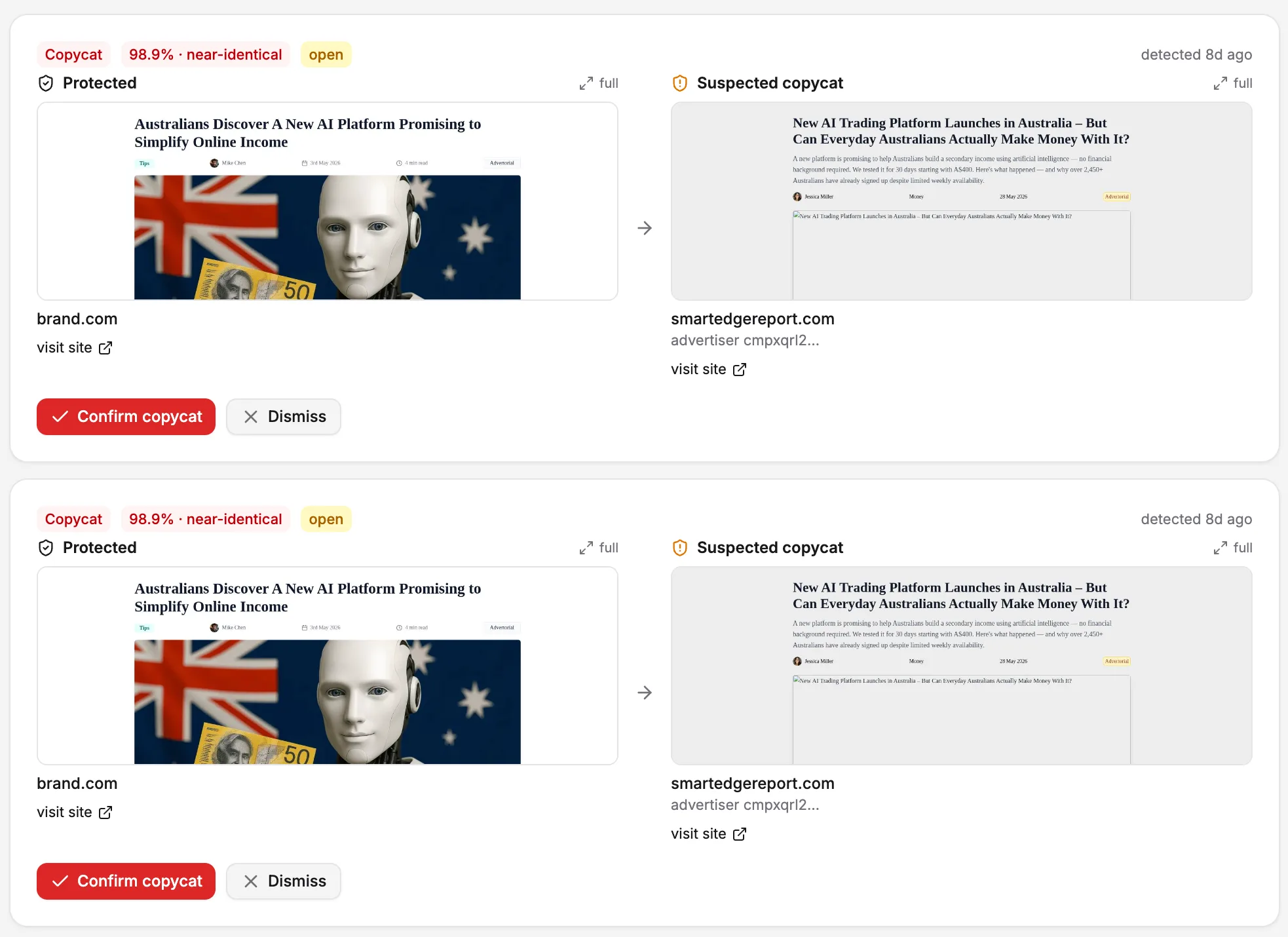
| Strona docelowa / pre-lander | „Oficjalny sklep”, fałszywe poparcie, podrobiona strona płatności lub kopia klon | Znika lub jest ukryta, jeśli tylko zrzutujesz reklamę |
Reklamy natywne i programmatic native sprawiają, że drugi i trzeci wiersz są szczególnie śliskie. Reklama może przejść przez kilku pośredników, a podmiot wymieniony w jednostce reklamowej to często partner lub konto arbitrażowe, a nie sprzedawca realizujący zamówienie. Ta sama dynamika pojawia się w reklamach programmatic i display, gdzie automatyczne zakupy oddzielają widoczną markę od odpowiedzialnej strony.
Reklamy zdrowotne i suplementów są najgorszymi przestępcami w pierwszym wierszu. Opierają się na zapożyczonym autorytecie („MDs Identify...”) i stockowych obrazach medycznych, a podróbka używająca zdjęcia produktu Twojej marki lub poparcia lekarza wygląda identycznie jak legalna, dopóki jej nie wytropisz.

Strona docelowa to powierzchnia, która zamienia słaby przypadek w silny. Pre-lander, który twierdzi, że jest „autoryzowanym sprzedawcą”, odtwarza Twój wygląd handlowy (trade dress) lub kieruje do podrobionej strony płatności, jest bezpośrednim dowodem wprowadzenia konsumenta w błąd. To także dokładnie miejsce, w którym działają strony docelowe naśladujące oryginał oraz gdzie stosuje się ukrywanie reklam (ad cloaking), aby pokazać recenzentom czystą stronę, podczas gdy prawdziwi użytkownicy trafiają na naruszającą.
Proces wykrywania, który generuje użyteczne dowody#
Wykrywanie i dokumentowanie to jeden proces. Zbuduj go tak, aby każde znalezisko było od razu gotowym do złożenia zapisem.
- Zdefiniuj listę obserwacyjną. Twoje dokładne znaki, częste literówki i homoglify, nazwy produktów, sformułowania typu „oficjalny” i „autoryzowany odsprzedawca” oraz nazwy legalnych dystrybutorów, aby oddzielić autoryzowane użycie od podszywania się.
- Monitoruj kreację, nie tylko tekst. Dopasowuj do przechwyconych obrazów reklam, ponieważ nadużycia logo i wyglądu handlowego nigdy nie pojawiają się jako przeszukiwalny tekst. Tutaj narzędzie do szpiegowania reklam natywnych, które przechowuje kreację w pełnej jakości, znajduje swoje uzasadnienie.
- Ustal prawdziwego reklamodawcę. Zidentyfikuj kupującego stojącego za nazwą wyświetlaną oraz pośredników na ścieżce. To, czy masz do czynienia z nieuczciwym partnerem, kontem arbitrażowym czy podrabiaczem, decyduje o tym, kogo powiadomisz i jak.
- Podążaj za kliknięciem bez klikania. Przechwyć miejsce docelowe i wszelkie pre-landery na ścieżce, bez generowania rzeczywistego, płatnego kliknięcia. Chroni Cię to przed ukrytą złośliwą stroną i unika wydawania budżetu naruszającego na wizytę weryfikacyjną.
- Przechwyć długość trwania i zasięg. Zapisz daty pierwszego i ostatniego wyświetlenia, każde miejsce i każdą geolokalizację. Kreacja działająca tygodniami na wielu wydawcach to celowe, dochodowe naruszenie, a nie jednorazowy błąd, a ten wzorzec wzmacnia zarówno pilność, jak i narrację o szkodach.
- Zamroź zapis ze znacznikiem czasu. Zablokuj kreację, reklamodawcę, ścieżkę dostaw, docelowy URL, miejsca i daty w jednym datowanym artefakcie, zanim kampania się zmieni.
Powodem automatyzacji kroków od drugiego do szóstego jest zanikanie. Kreacje natywne rotują szybko, a naruszające kampanie rotują jeszcze szybciej, często właśnie dlatego, że operatorzy spodziewają się zgłoszeń. Dowody przechwycone z tygodniowym opóźnieniem często są dowodami, które już nie istnieją.
Jak szybko to szybko? Wśród ponad 589 000 kreacji, które przechwyciliśmy (indeks OpenAdLibrary, czerwiec 2026), najdłuższy ciągły okres działania pojedynczej kreacji, jaki zaobserwowaliśmy, to około 28 dni. Naprawdę trwałymi zwycięzcami są te mdłe, zgodne: wyjaśnienie podatkowe SmartAsset IRA na Outbrain, reklama gry „Combat Siege”, seria kreacji quizów „My IQ” w Microsoft Audience Network, każda utrzymująca się przez pełne 28-dniowe okno. Naruszające kampanie rzadko zachowują się w ten sposób. Wypalają się i rotują, dlatego właśnie spóźniony zrzut ekranu jest bezwartościowy, a przechwycenie w tym samym tygodniu jest na wagę złota. (Uwaga: zasada „90-dniowego zwycięzcy”, o której słyszy się w kręgach afiliacyjnych, to branżowa legenda, a nie nasz pomiar. Nasz indeks obejmuje obecnie do około czterech tygodni ciągłej obserwacji na kreację.)
Co zawiera gotowy do złożenia pakiet dowodów#
Pojedynczy zrzut ekranu to najsłabszy możliwy wniosek. Sieci, rejestratorzy i platformy triagują na podstawie kompletności, tak samo jak sądy. Wiarygodny pakiet odpowiada na każde „a co potem” zanim zostanie zadane.
- Kreację w pełnej rozdzielczości, pokazującą naruszający znak lub wygląd handlowy tak, jak widział go konsument.
- Tożsamość reklamodawcy taką, jak wyświetlana, plus ustalonego kupującego, jeśli się różni.
- Łańcuch dostaw: która sieć i pośrednicy wyświetlili miejsce, aby zawiadomienie dotarło do strony, która może działać.
- Miejsce docelowe: URL strony docelowej i wszelkie pre-landery, przechwycone wzdłuż rzeczywistej ścieżki kliknięcia.
- Zasięg i czas trwania: miejsca, geolokalizacje oraz daty pierwszego/ostatniego wyświetlenia, ustalające skalę i intencję.
- Znaczniki czasu na każdym elemencie, aby zapis był powtarzalny, a nie anegdotyczny.
To także ładunek, który sprawia, że zgłoszenie na platformie jest skuteczne. Nasz towarzyszący przewodnik jak zgłosić oszukańczą reklamę i udokumentować dowody omawia, gdzie każda pozycja trafia w skardze do sieci lub platformy, a wpis w glosariuszu bezpieczeństwo marki (brand safety) wyjaśnia, dlaczego to ma znaczenie wykraczające poza ekspozycję prawną.
Gdzie najpierw skierować monitoring? Podążaj za pieniędzmi. Finanse prowadzą w całym naszym indeksie z 17 232 kreacjami, przed ubezpieczeniami (15 629) i zdrowiem (14 895), spośród dziesięciu głównych branż (indeks OpenAdLibrary, czerwiec 2026). W samej Tabooli, naszej największej sieci z 157 727 kreacjami, zdrowie i finanse znajdują się na szczycie. To kategorie, w których podszywanie się opłaca się najlepiej, dlatego właśnie lista obserwacyjna ochrony marki ma tam największą skuteczność.

Jak regulacje przesuwają ciężar dowodowy#
Środowisko ujawniania informacji zmienia się na korzyść właścicieli marek, co sprawia, że systematyczne przechwytywanie jest bardziej wartościowe, a nie mniej.
W UE ustawa o usługach cyfrowych (Digital Services Act) wymaga od platform, aby umożliwiały użytkownikom zobaczenie dla każdej reklamy, że jest to reklama, kto jest reklamodawcą i kto za nią zapłacił. Artykuł 39 zobowiązuje Bardzo Duże Platformy Online do utrzymywania przeszukiwalnych repozytoriów reklam, w tym tożsamości reklamodawcy, parametrów targetowania i czasu trwania kampanii. DSA wymaga również od rynków internetowych weryfikacji informacji o sprzedawcy przed wystawieniem oferty i pozwala uprawnionym podmiotom praw działać jako „zaufani sygnalizatorzy”, których zgłoszenia mają priorytet. Nic z tego nie usuwa potrzeby gromadzenia własnych dowodów, ale daje dobrze udokumentowanemu zawiadomieniu znacznie większą siłę przebicia.
W USA stanowisko FTC przeciwko reklamom wprowadzającym w błąd i podszywającym się, w połączeniu ze standardem wprowadzania w błąd z ustawy Lanham Act, oznacza, że uporządkowany zapis gdzie i jak Twój znak został niewłaściwie użyty stanowi różnicę między zawiadomieniem, które zostanie podjęte, a takim, które trafi do kolejki. Wspólna nić obu reżimów jest taka sama: strona, która przybywa z weryfikowalnymi, powtarzalnymi dowodami, wyznacza tempo.
Miejsce OpenAdLibrary#
Trudnymi częściami tego procesu są te, które zanikają. Przechwycenie kreacji w pełnej jakości przed jej rotacją. Ustalenie prawdziwego reklamodawcy stojącego za nazwą odsprzedawcy. Klasyfikacja łańcucha dostaw ad-tech. Podążanie za kliknięciem do strony docelowej bez wydawania żywego kliknięcia lub uruchamiania ukrytej strony.
OpenAdLibrary przechwytuje żywe publiczne reklamy natywne w sieciach Taboola, Outbrain, MGID, Revcontent, Teads, Yahoo i MSN, przechowuje prawdziwą kreację w pełnej jakości, oznacza łańcuch dostaw i śledzi każde kliknięcie do jego miejsca docelowego. Stan na czerwiec 2026 to 589 036 kreacji od 25 933 reklamodawców w 42 sieciach, z 926 259 przechwyceń stron docelowych i ponad 5,4 miliona obserwacji reklam stojących za sygnałami długości trwania i zasięgu, które oddzielają przypadkowy test od przemysłowej kampanii naruszającej. Jest otwarty i przystępny cenowo, podczas gdy Adbeat, Anstrex i AdSpy kosztują od 80 do 400 USD miesięcznie, a dostęp do API i MCP pozwala zespołom ds. marki podłączyć monitoring bezpośrednio do istniejącego potoku alertów.
Rozpocznij za darmo i przeglądaj 200 reklam bez podawania karty, aby zobaczyć, jak naprawdę wygląda ślad Twojej marki w ekosystemie natywnym.