English
 Español
 Português (Brasil)
 Français
 Deutsch
 Italiano
 Polski
 Svenska
 Türkçe
 Русский
 日本語
日本語 한국어
한국어 简体中文
简体中文 Tiếng Việt
 Bahasa Indonesia
 繁體中文
繁體中文 Čeština
 Dansk
Dansk Norsk (bokmål)
 Suomi
Suomi Ελληνικά
 Română
 Magyar
 Українська
 ไทย
ไทย हिन्दी
 العربية
 עברית
עבריתMGID Advertentiekosten in 2026: CPC-tarieven per regio & minimumstorting
MGID heeft geen tarievenkaart — je CPC wordt bepaald door veiling, regio en creative CTR. Dit zijn de bereiken die mediabuyers per tier vaak melden, de stortingsmechanismen en hoe je een testbudget bepaalt dat daadwerkelijk tot een oordeel leidt.


MGID is een van de goedkoopste manieren om native traffic op betekenisvolle schaal te kopen. Het netwerk voert een CPC-veiling zonder gepubliceerde tarievenkaart; mediabuyers melden vaak klikken van onder een cent in Tier-3 regio's tot ongeveer $0,10–$0,40 voor competitieve Tier-1 desktopplaatsingen, en de minimumstorting voor self-serve wordt vaak genoemd rond het $100-teken. Geen van deze cijfers is officieel — MGID prijst via veiling, dus je vertical, creative CTR en regio bepalen wat je daadwerkelijk betaalt. Deze gids legt uit hoe MGID-prijzen werken, de CPC-bereiken die professionals per geotier melden, de mechanismen van storting en budget, de kosten die niemand specificeert, en hoe je een test bepaalt die een echt oordeel oplevert in plaats van een dure schouderophaling.
Hoe MGID-prijzen werken#
MGID verkoopt klikken. Je stelt een CPC-bod per campagne in — aanpasbaar per regio en plaatsing — en het netwerk rangschikt je teasers tegen concurrerende advertenties op basis van effectieve opbrengst voor de uitgever, wat in de praktijk betekent: je bod vermenigvuldigd met je click-through rate. Twee gevolgen volgen:
- CTR is geld. Een teaser die twee keer de CTR behaalt, kan dezelfde plaatsing winnen tegen een aanzienlijk lager bod. Creative testing is geen leuk extraatje bij MGID; het is het prijsmechanisme.
- Concurrentie bepaalt je werkelijke kosten, niet een tarievenkaart. Er is geen tarievenkaart. De bodemprijs in een rustige Tier-3 regio en de gangbare prijs in Amerikaanse health lead generation verschillen met twee ordes van grootte.
MGID biedt ook geautomatiseerde biedfuncties die CPC's aanpassen naar een conversiedoel zodra je tracking data terugvoert naar het platform. Ze kunnen op schaal helpen, maar hebben echt conversievolume nodig om van te leren — op een nieuw account met weinig data leest handmatig CPC-bieden met bewuste plaatsingsregels meestal beter. Functienamen en mechanismen veranderen; raadpleeg de huidige documentatie van MGID voordat je een strategie bouwt rond een specifiek biedproduct.
Als je nieuw bent op het netwerk, behandelt Hoe MGID werkt formaten, targeting en accountsetup. Dit artikel blijft bij kosten.
MGID CPC-tarieven per geotier (veel gerapporteerd)#
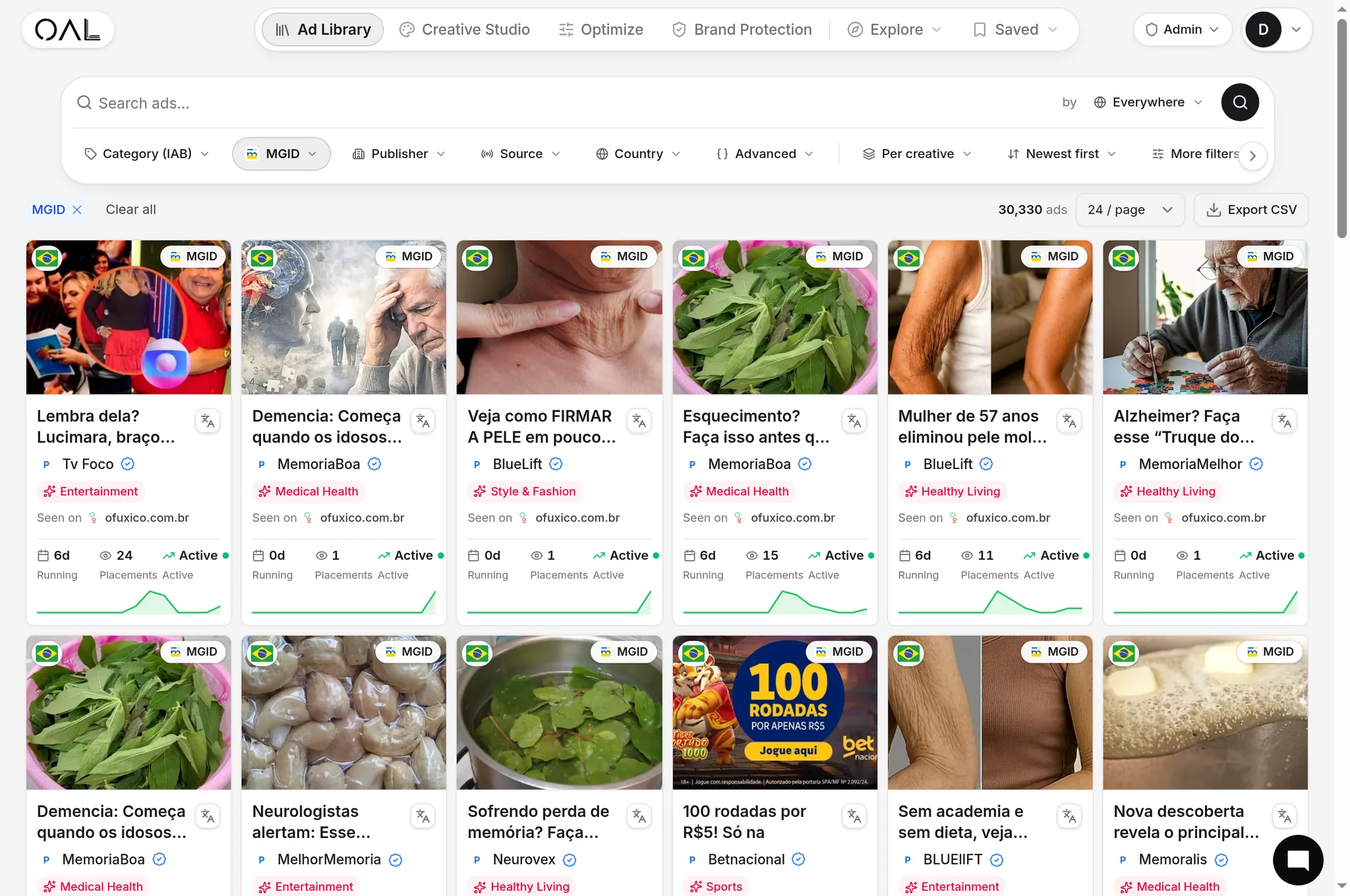
MGID's bereik is ongewoon globaal — de live MGID-creatives in de index van OpenAdLibrary bevatten advertenties die draaien in het Grieks en een lange staart van niet-Engelstalige markten — en Tier-2/Tier-3 bereik is een van de echte sterke punten van het netwerk. Door professionals gerapporteerde CPC-bereiken clusteren als volgt:
| Geotier | Veel gerapporteerd CPC-bereik |
|---|---|
| Tier-1 desktop (VS, VK, CA, AU, DE…) | ~$0,10 – $0,40 |
| Tier-1 mobiel | ~$0,04 – $0,20 |
| Tier-2 (Oost-Europa, LATAM, SEA…) | ~$0,01 – $0,10 |
| Tier-3 | ~$0,003 – $0,03 |
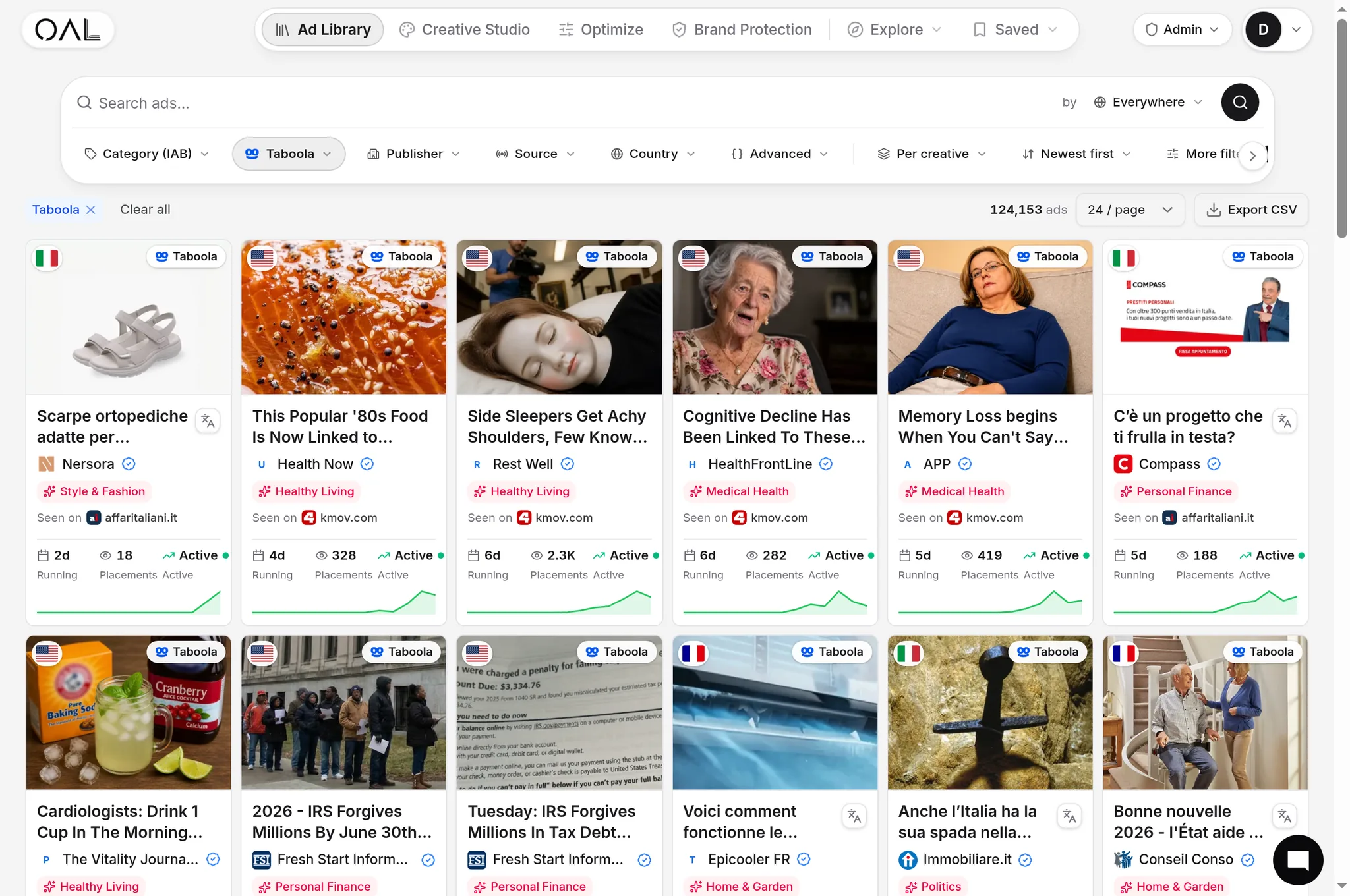
Beschouw deze tabel als een vuistregel, geen offerte: dit zijn bereiken die mediabuyers vaak melden, ze verschuiven in de tijd, en populaire verticalen schieten door de bovenkant ervan heen. Wat de tiers betekenen — en waarom buyers campagnes eromheen structureren — wordt behandeld in Tier 1 / Tier 2 / Tier 3 regio's. Voor hoe MGID's prijzen zich verhouden tot Taboola, Teads en Revcontent, zie de native ads CPC-benchmarks.
Minimumstorting en dagelijkse budgetten#
MGID's instapdrempel is een van de laagste in native advertising. De minimumstorting voor self-serve wordt al lang genoemd op ongeveer $100, en dagelijkse campagnebudgetten kunnen laag genoeg starten zodat een test in één regio geen grote toezegging vereist. Bevestig de huidige bedragen bij aanmelding — ze variëren per regio, valuta en accounttype, en managed accounts (die met een dedicated rep komen) hebben hogere bestedingsverwachtingen.
De praktische waarschuwing: een lage instapkost maakt gedisciplineerd budgetteren belangrijker, niet minder. Het is gemakkelijk om ondergekapitaliseerd binnen te wandelen, $100 over vijf regio's en tien teasers te spreiden, veertig klikken per cel te verzamelen en precies niets te leren. Goedkope traffic vereist nog steeds statistisch betekenisvol volume.
Wat je MGID CPC echt beïnvloedt#
Vier hefbomen domineren:
- Regio en verticale concurrentie. Van de 62.765 live MGID-creatives in de index van OpenAdLibrary (juli 2026) is entertainment-stijl content verreweg de grootst geclassificeerde vertical met ongeveer 14.000 creatives — maar de direct-response geldverticalen (gezondheid, verzekeringen, financiën) zijn waar de veilingen echt opwarmen, omdat adverteerders met bewezen funnels daar de biedingen blijven verhogen.
- Teaser CTR. Omdat de veiling effectief prijst op bod × CTR, betaalt een verouderde of zwakke teaser een stijgende effectieve tol. Wanneer je CPC omhoog kruipt bij een constant bod, is creative fatigue de eerste verdachte.
- Plaatsingskwaliteit: whitelist vs run-of-network. RON-klikken zijn deels goedkoop omdat ze zwakke plaatsingen bevatten. Het standaard playbook is om met RON te beginnen om plaatsingsdata te verzamelen, en dan de sites die converteren te whitelisten — je gemiddelde CPC stijgt, maar je kosten per conversie dalen.
- Apparaat en traffictype. Mobiele inventory is overvloediger en goedkoper; desktopklikken kosten meer maar converteren vaak beter voor overwogen aanbiedingen. Test ze als aparte campagnes, nooit gemengd.
De kosten die de CPC-tabel nooit toont#
Alleen budgetteren voor media is de klassieke MGID-fout. Echte testbudgetten moeten ook opnemen:
- Creative productievolume. MGID beloont 10–20 teasers per campagne, ververst als ze vermoeid raken. Of dat nu ontwerptijd of AI-tools zijn, het is een echte kostenpost.
- Tracking. Een tracker of postback-installatie is niet-onderhandelbaar voor plaatsingsniveau opschoning; budgeteer voor de tools en de installatie-uren.
- Ontdekkingsuitgaven. De RON-fase — betalen voor klikken van plaatsingen die je later zult blacklisten — is lesgeld. Whitelist-discipline verkleint het; niets elimineert het.
- Verliezende angles. De meeste angles verliezen. De winnaars moeten de begraafplaats terugbetalen, daarom zijn per-angle klikbudgetten belangrijk.
- Tijd. Plaatsingsreviews, teaser-verversingen en biedaanpassingen zijn een terugkerende operationele belasting. MGID-traffic is deels goedkoop omdat de optimalisatielabor van jou is.
Budgetteren voor een realistische MGID-test#
Een test die een oordeel kan produceren ziet er zo uit:
- Eén regio per keer. Gemengde regiostatistieken zijn onleesbaar; kies één markt en laat die afronden.
- 2–3 angles, 5–7 teasers elk. Genoeg creative variatie zodat de veiling iets vindt wat het bevalt.
- Een paar honderd klikken per overlevende angle voordat je het CPA beoordeelt — rekenkundig zijn 400 klikken tegen een $0,05 mobiele CPC ongeveer $20 aan media; dezelfde klikken tegen een $0,30 Tier-1 desktop CPC is $120.
- Een opschooncyclus. Bekijk plaatsingen elke paar dagen; blacklist niet-converters, en lees de cijfers dan opnieuw.
Bij elkaar komt een single-geo Tier-2 test van drie angles vaak uit op enkele honderden dollars; dezelfde testopzet op Tier-1 desktop loopt in de vier cijfers. Of MGID's goedkope klikken converteren is dan een landingspagina- en aanbiedingsvraag, geen trafficvraag — Media Buying voor Native Ads behandelt de volledige teststructuur.
Betaal geen veilingprijzen voor publieke informatie#
De helft van een typisch MGID-testbudget gaat naar het herontdekken van dingen die de live output van het netwerk al toont: welke angles een vertical domineren, welke teasers weken overleven, hoe de funnels van concurrenten er achter de klik uitzien. OpenAdLibrary indexeert 62.765 live MGID-creatives met adverteerders, waargenomen looptijden, regiogegevens en getraceerde landingspagina's — blader ze door in de MGID ad library of via /spy/mgid. De filter met de hoogste waarde is longevity: een advertentie die 30+ dagen heeft gedraaid is waarschijnlijk winstgevend, en het modelleren van bewezen angles voor je eerste storting vermindert de ontdekkingsuitgaven die de meeste mislukte tests domineren.
Hoe MGID-kosten zich verhouden tot andere native netwerken#
MGID's klikken zijn goedkoper dan de premium netwerken (Taboola, Outbrain/Teads) en concurrerend met de rest van de midden-tier. Dat is niet automatisch een voordeel: goedkopere traffic heeft meer variatie in plaatsingskwaliteit, dus effectieve CPA — niet CPC — is het getal om tussen netwerken te vergelijken. MGID vs Taboola en MGID vs Revcontent vergelijken de netwerken rechtstreeks, en Hoeveel kosten native ads? zet de budgetberekening voor elk groot netwerk naast elkaar.
De conclusie: MGID-advertentiekosten zijn laag, beheersbaar en ongewoon gevoelig voor creative kwaliteit. Buyers die arriveren met teaservolume, een opschoonroutine en regiobeheersing krijgen vaak Tier-1 klikken voor tientallen centen en Tier-2/3 klikken voor centen. Buyers die dat niet doen, zullen ontdekken dat zelfs goedkope klikken snel oplopen.