English
 Español
 Português (Brasil)
 Français
 Deutsch
 Italiano
 Nederlands
 Svenska
 Türkçe
 Русский
 日本語
日本語 한국어
한국어 简体中文
简体中文 Tiếng Việt
 Bahasa Indonesia
 繁體中文
繁體中文 Čeština
 Dansk
Dansk Norsk (bokmål)
 Suomi
Suomi Ελληνικά
 Română
 Magyar
 Українська
 ไทย
ไทย हिन्दी
 العربية
 עברית
עבריתKoszt reklam w MGID w 2026 r.: Stawki CPC według regionów i minimalna wpłata
MGID nie ma cennika — Twoje CPC ustala aukcja, region geograficzny i CTR kreacji. Oto zakresy powszechnie zgłaszane przez media buyerów według tierów, mechanika depozytu oraz jak oszacować budżet testowy, który faktycznie pozwoli podjąć decyzję.


MGID to jeden z najtańszych sposobów na zakup ruchu natywnego na znaczącą skalę. Sieć prowadzi aukcję CPC bez publikowanego cennika; media buyerzy powszechnie zgłaszają kliknięcia od poniżej centa w regionach Tier-3 do około 0,10–0,40 USD za konkurencyjne miejsca desktopowe w Tier-1, a minimalna wpłata w self-serve jest powszechnie podawana na poziomie około 100 USD. Żadna z tych liczb nie jest oficjalna — MGID ustala ceny w aukcji, więc to Twoja branża, CTR kreacji i region decydują, ile faktycznie zapłacisz. Ten przewodnik wyjaśnia, jak działa wycena MGID, zakresy CPC zgłaszane przez praktyków według tierów geograficznych, mechanikę depozytu i budżetu, koszty, których nikt nie rozpisuje, oraz jak oszacować test, który da rzeczywistą odpowiedź, a nie kosztowne rozczarowanie.
Jak działa wycena MGID#
MGID sprzedaje kliknięcia. Ustawiasz stawkę CPC na kampanię — regulowaną według regionu i miejsca docelowego — a sieć rankuje Twoje teasery względem konkurencyjnych reklam na podstawie efektywnego przychodu dla wydawcy, co w praktyce oznacza Twoją stawkę pomnożoną przez współczynnik klikalności (CTR). Wynikają z tego dwa konsekwencje:
- CTR to pieniądze. Teaser, który osiąga dwukrotnie wyższy CTR, może wygrać to samo miejsce przy znacząco niższej stawce. Testowanie kreatyw w MGID nie jest opcją — to mechanizm ustalania ceny.
- Twoją rzeczywistą cenę ustala konkurencja, a nie cennik. Nie ma cennika. Dolna granica w mało aktywnym regionie Tier-3 i obowiązująca stawka w amerykańskim lead generation w branży zdrowotnej różnią się o dwa rzędy wielkości.
MGID oferuje również funkcje automatycznego licytowania, które dostosowują stawki CPC do celu konwersji, gdy Twoje dane śledzenia trafią z powrotem na platformę. Mogą one pomóc na dużą skalę, ale potrzebują realnej liczby konwersji do nauki — na świeżym koncie z niewielką ilością danych, ręczne licytowanie CPC z przemyślanymi regułami miejsc zwykle daje lepsze rezultaty. Nazwy funkcji i ich mechanika się zmieniają; sprawdź aktualną dokumentację MGID przed zbudowaniem strategii wokół konkretnego produktu licytowania.
Jeśli jesteś nowy w sieci, artykuł Jak działa MGID omawia formaty, targetowanie i konfigurację konta. Ten artykuł skupia się na kosztach.
Stawki CPC w MGID według tierów geograficznych (powszechnie zgłaszane)#
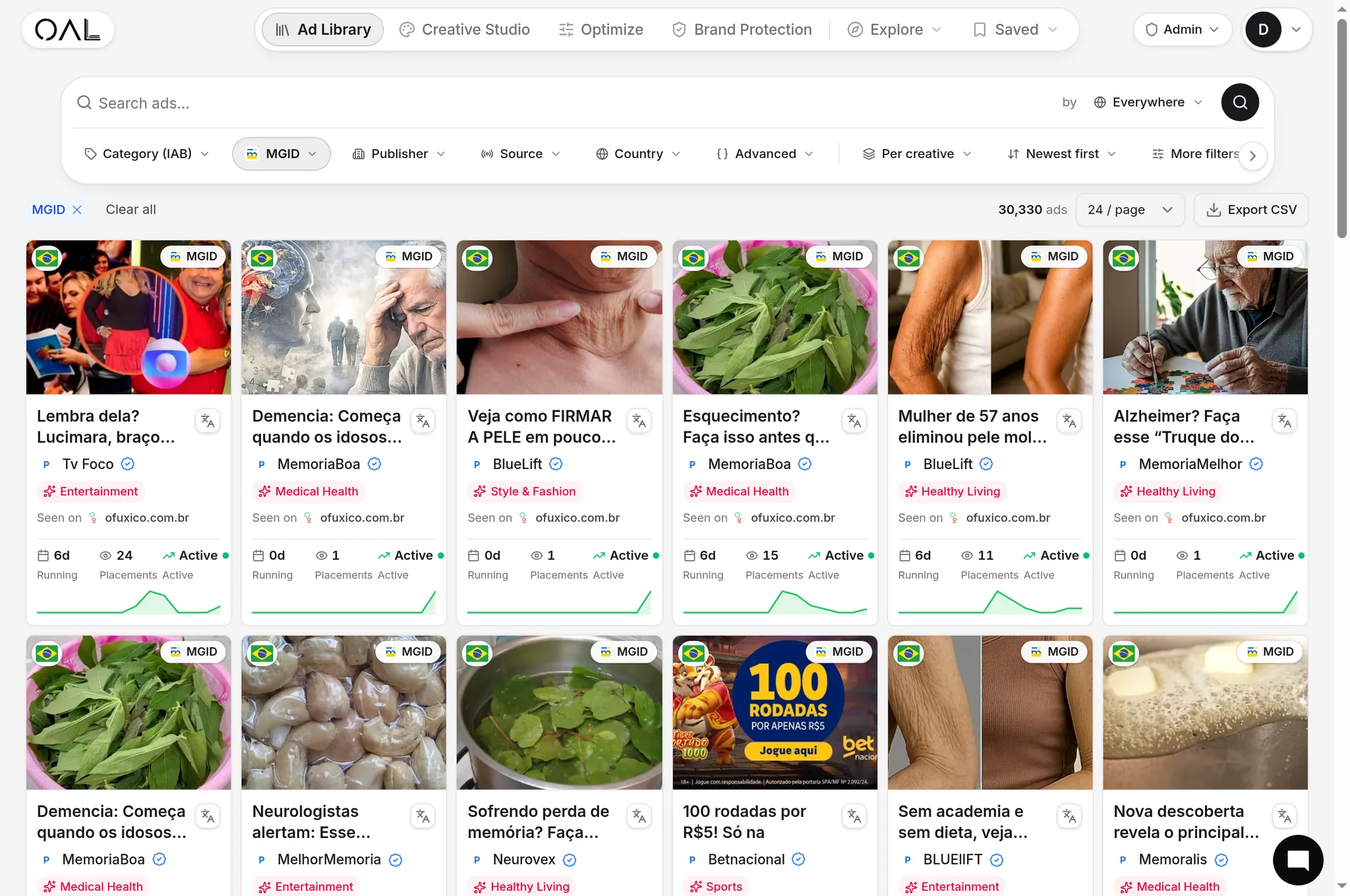
Zasięg MGID jest niezwykle globalny — żywe kreacje MGID w indeksie OpenAdLibrary obejmują reklamy działające po grecku i w długim ogonie rynków nieanglojęzycznych — a dotarcie do Tier-2/Tier-3 jest jedną z prawdziwych mocnych stron sieci. Zgłaszane przez praktyków zakresy CPC grupują się następująco:
| Tier geograficzny | Powszechnie zgłaszany zakres CPC |
|---|---|
| Tier-1 desktop (USA, UK, Kanada, Australia, Niemcy…) | ~0,10 – 0,40 USD |
| Tier-1 mobile | ~0,04 – 0,20 USD |
| Tier-2 (Europa Wschodnia, Ameryka Łacińska, Azja Południowo-Wschodnia…) | ~0,01 – 0,10 USD |
| Tier-3 | ~0,003 – 0,03 USD |
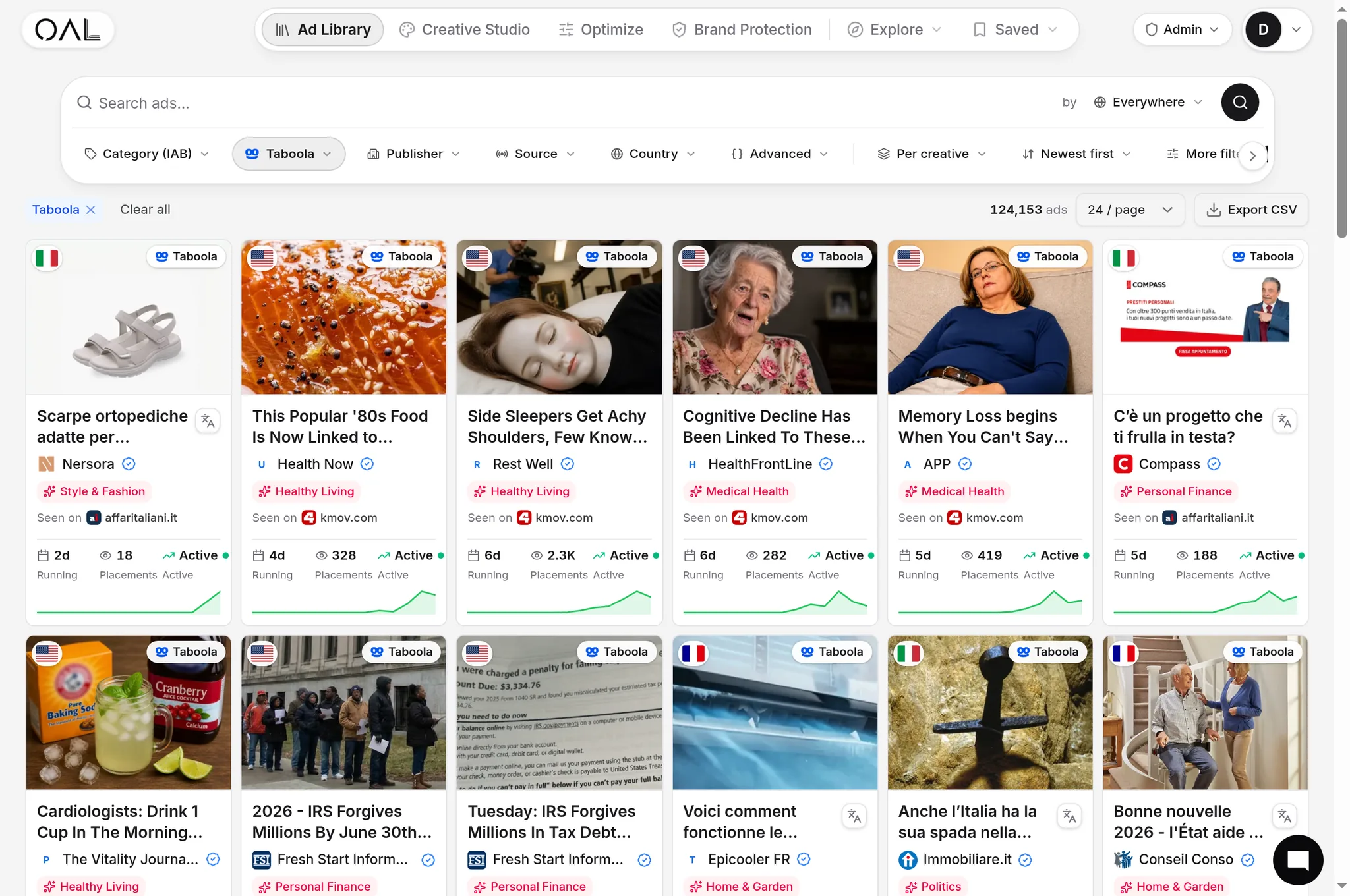
Traktuj tę tabelę jako heurystykę, a nie cytat: to zakresy powszechnie zgłaszane przez media buyerów, zmieniają się w czasie, a gorące branże przebijają ich górne granice. Znaczenie tierów — i dlaczego buyerzy wokół nich strukturyzują kampanie — omówiono w artykule Regiony Tier 1 / Tier 2 / Tier 3. Aby zobaczyć, jak wycena MGID wypada na tle Tabooli, Teads i Revcontent, zobacz Benchmarki CPC reklam natywnych.
Minimalna wpłata i budżety dzienne#
Próg wejścia w MGID jest jednym z najniższych w reklamie natywnej. Minimalna wpłata w self-serve od dawna jest podawana na poziomie około 100 USD, a dzienne budżety kampanii mogą zaczynać się na tyle nisko, że test w jednym regionie nie wymaga dużego zobowiązania. Potwierdź aktualne kwoty przy rejestracji — różnią się one w zależności od regionu, waluty i typu konta, a konta zarządzane (z dedykowanym opiekunem) wiążą się z wyższymi oczekiwaniami wydatków.
Praktyczne ostrzeżenie: niski koszt wejścia czyni dyscyplinę budżetową ważniejszą, a nie mniej ważną. Łatwo jest wejść z niedostatecznym kapitałem, rozproszyć 100 USD na pięć regionów i dziesięć teaserów, zebrać czterdzieści kliknięć na wariant i nie dowiedzieć się absolutnie nic. Tani ruch nadal wymaga statystycznie znaczącej liczby.
Co naprawdę wpływa na Twoje CPC w MGID#
Dominują cztery dźwignie:
- Konkurencja geograficzna i branżowa. Spośród 62 765 żywych kreacji MGID w indeksie OpenAdLibrary (lipiec 2026), treści typu rozrywkowego są zdecydowanie największą sklasyfikowaną branżą z około 14 000 kreacji — ale to w branżach money verticals z bezpośrednią odpowiedzią (zdrowie, ubezpieczenia, finanse) aukcje faktycznie się rozgrzewają, ponieważ to tam reklamodawcy ze sprawdzonymi lejami stale podnoszą stawki.
- CTR teasera. Ponieważ aukcja efektywnie wycenia na podstawie stawki × CTR, przestarzały lub słaby teaser płaci rosnącą efektywną cenę. Gdy Twoje CPC rośnie przy stałej stawce, pierwszym podejrzanym jest zmęczenie kreatywą.
- Jakość miejsca docelowego: whitelist vs run-of-network. Kliknięcia RON są tanie częściowo dlatego, że obejmują słabe miejsca. Standardowa playbook to rozpoczęcie od RON w celu zebrania danych o miejscach, a następnie stworzenie białej listy (whitelist) stron, które konwertują — Twoje średnie CPC rośnie, ale koszt pozyskania (CPA) spada.
- Urządzenie i typ ruchu. Zasoby mobilne są bardziej dostępne i tańsze; kliknięcia desktopowe kosztują więcej, ale często lepiej konwertują dla ofert wymagających przemyślenia. Testuj je jako osobne kampanie, nigdy nie mieszaj.
Koszty, których tabela CPC nigdy nie pokazuje#
Planowanie budżetu tylko na media to klasyczny błąd w MGID. Rzeczywisty budżet testowy musi również uwzględniać:
- Wolumen produkcji kreatywnej. MGID nagradza 10–20 teaserów na kampanię, odświeżanych w miarę ich zmęczenia. Niezależnie od tego, czy to czas projektanta, czy narzędzia AI, to realna pozycja kosztowa.
- Śledzenie. Konfiguracja trackera lub postbacków jest niezbędna do odsiewania miejsc na poziomie szczegółowym; uwzględnij w budżecie koszt narzędzi i czasu konfiguracji.
- Wydatki na odkrywanie. Faza RON — płacenie za kliknięcia z miejsc, które później trafią na czarną listę — to czesne. Dyscyplina whitelist ją zmniejsza; nic jej nie eliminuje.
- Nieudane pomysły (angles). Większość pomysłów przegrywa. Zwycięzcy muszą spłacić koszt cmentarzyska, dlatego tak ważne są budżety na kliknięcia dla każdego pomysłu.
- Czas. Przeglądy miejsc docelowych, odświeżanie teaserów i korekty stawek to powtarzające się obciążenie operacyjne. Ruch MGID jest tani częściowo dlatego, że praca optymalizacyjna należy do Ciebie.
Budżetowanie realistycznego testu w MGID#
Test, który może dać odpowiedź, wygląda następująco:
- Jeden region na raz. Statystyki z mieszanych regionów są nieczytelne; wybierz jeden rynek i pozwól mu się rozstrzygnąć.
- 2–3 pomysły (angles), po 5–7 teaserów każdy. Wystarczająca różnorodność kreatywna, aby aukcja znalazła coś, co jej się podoba.
- Kilka setek kliknięć na przetrwały pomysł przed oceną jego CPA — w ujęciu arytmetycznym, 400 kliknięć przy CPC 0,05 USD na mobile to około 20 USD za media; te same kliknięcia przy CPC 0,30 USD na desktopie w Tier-1 to 120 USD.
- Cykl odsiewania. Przeglądaj miejsca docelowe co kilka dni; dodawaj niekonwertujące na czarną listę, a następnie ponownie analizuj liczby.
Razem wzięte, test w jednym regionie Tier-2 dla trzech pomysłów zazwyczaj mieści się w kilkuset dolarach; ten sam schemat testowy na desktopie w Tier-1 kosztuje cztery cyfry. To, czy tanie kliknięcia MGID konwertują, jest wtedy kwestią strony lądowania i oferty, a nie ruchu — artykuł Media Buying dla reklam natywnych omawia pełną strukturę testu.
Nie płać cen aukcyjnych za informacje publiczne#
Połowa typowego budżetu testowego w MGID idzie na ponowne odkrywanie rzeczy, które sieć już pokazuje w swoich aktywnych wyjściach: które pomysły dominują w branży, które teasery przetrwują tygodniami, jak wyglądają leje konkurencji za kliknięciem. OpenAdLibrary indeksuje 62 765 żywych kreacji MGID z danymi reklamodawców, obserwowanym czasem działania, danymi geograficznymi i śledzonymi stronami lądowania — przeglądaj je w bibliotece reklam MGID lub przez /spy/mgid. Najcenniejszym filtrem jest długowieczność: reklama, która działa 30+ dni, prawdopodobnie jest opłacalna, a modelowanie sprawdzonych pomysłów przed pierwszą wpłatą redukuje wydatki na odkrywanie, które dominują w większości nieudanych testów.
Jak koszty MGID wypadają na tle innych sieci natywnych#
Kliknięcia w MGID są tańsze niż w sieciach premium (Taboola, Outbrain/Teads) i konkurencyjne wobec reszty średniego tieru. To nie jest automatycznie zaleta: tańszy ruch wiąże się z większą zmiennością jakości miejsc docelowych, więc porównywać między sieciami należy efektywny CPA — a nie CPC. Artykuły MGID vs Taboola oraz MGID vs Revcontent porównują sieci bezpośrednio, a Ile kosztują reklamy natywne? przedstawia kalkulację budżetu dla każdej większej sieci obok siebie.
Podsumowując: koszty reklam w MGID są niskie, kontrolowalne i niezwykle wrażliwe na jakość kreatywną. Buyerzy, którzy przychodzą z dużą liczbą teaserów, rutyną odsiewania i dyscypliną geograficzną, często uzyskują kliknięcia Tier-1 za dziesiątki centów, a Tier-2/3 za grosze. Ci, którzy tego nie robią, odkryją, że nawet tanie kliknięcia szybko się sumują.